

If you worship at, study in, work in, or administer one of the Jodhpur properties said to be affected by Waqf claims, a headline can make an unresolved dispute sound like an accomplished transfer. Do not read it that way.
The immediate question is narrower: what has the court restrained, what remains undecided, and what should a temple committee, school administrator, public official, resident, or concerned citizen do next? The responsible response begins with exact property records, the operative court order, and disciplined language.
What the High Court actually froze
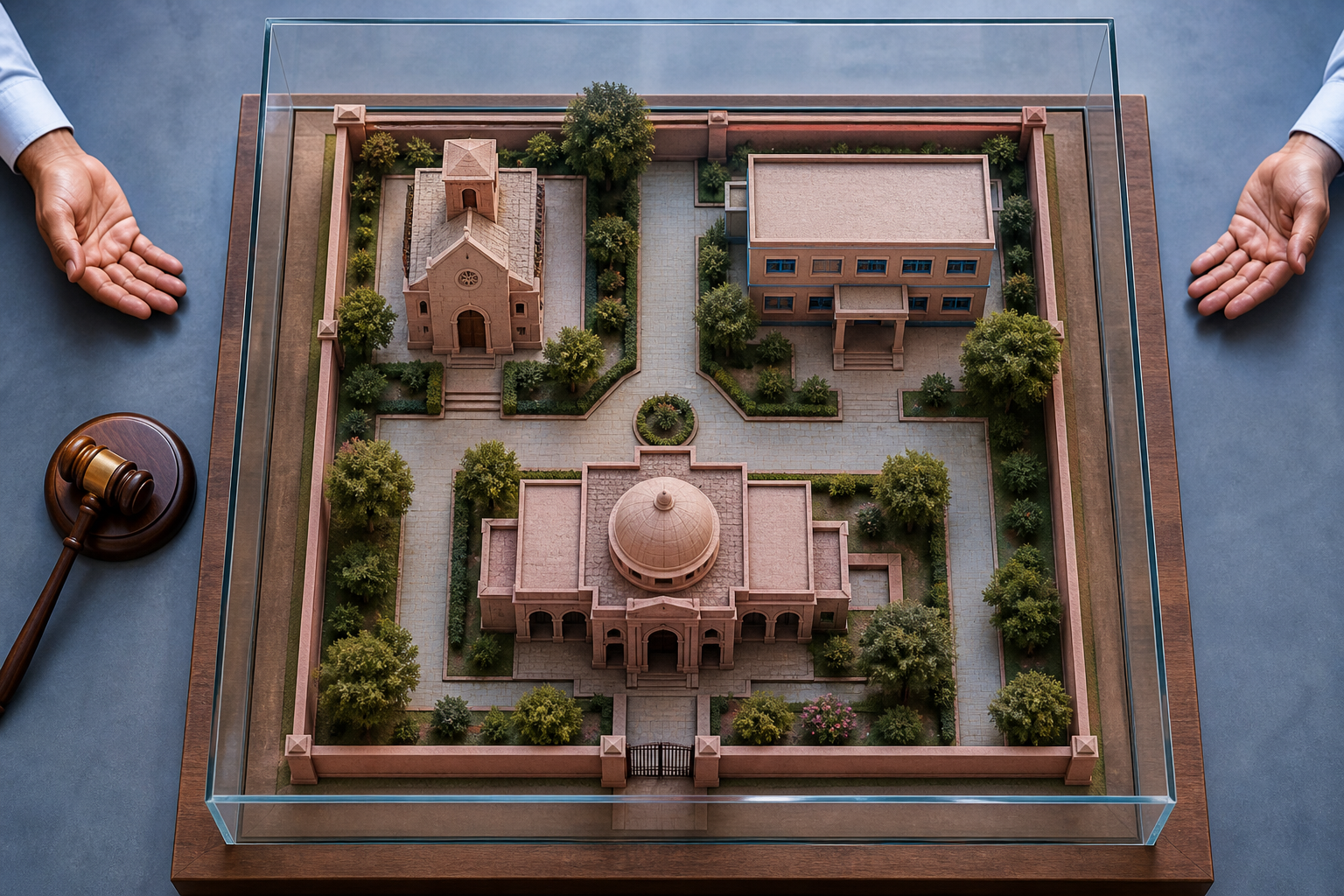
The Rajasthan High Court registered a suo motu public interest litigation after multiple properties in Jodhpur were reportedly identified as Waqf property. The disputed set was said to include temples, schools, judges’ residences, and other public properties.
At the stage described, the court ordered status quo and halted mutation, transfer, or modification of the disputed properties. Those three restraints matter. Mutation concerns changes in official land or revenue records. Transfer concerns an attempt to pass an interest from one party to another. Modification can affect the physical or recorded condition that the court is trying to preserve.
This is an interim protective position, not a final declaration that every Waqf claim is valid or invalid. A status-quo direction preserves the field while the dispute is examined. It does not identify the ultimate owner merely by being issued. Likewise, the court’s decision to begin a suo motu PIL tells you how judicial scrutiny began; it does not tell you how the title questions will end.
There is also a time-sensitive qualification. The available facts describe the order at a particular procedural stage. Before relying on it in a representation, public statement, or property decision, obtain the latest operative order and check whether the restraint has been continued, clarified, enlarged, or replaced.
Four distinctions that prevent a serious misreading

- A claim or entry is not the same as adjudicated title. A property may be described as Waqf in a list or official record while ownership, boundaries, classification, or the legal basis of that description remains contested. Say that a property was “listed” or “claimed” unless a final order establishes more.
- Mutation is not the whole title inquiry. Mutation generally updates an administrative land record. Such an entry can have practical consequences, but it does not necessarily resolve every question about the origin and validity of title. Deeds, grants, surveys, acquisition records, institutional records, prior orders, and possession history may all require examination.
- Status quo is not victory for either side. It protects the disputed position against change. Treating an interim restraint as a final judgment can mislead occupants, weaken public credibility, and encourage actions that may conflict with the court’s direction.
- Each parcel needs its own evidence. A temple, a school, and a judge’s residence may appear in the same controversy without sharing the same chain of title or administrative history. Evidence about one property should not be assumed to prove the status of another.
These distinctions do not diminish the seriousness of reported claims over temples or public assets. They make the response stronger. If you want a disputed entry corrected, broad outrage cannot substitute for identifying the exact parcel, the contested record, the authority that created it, and the evidence that contradicts it.
Build a property file before making the public case
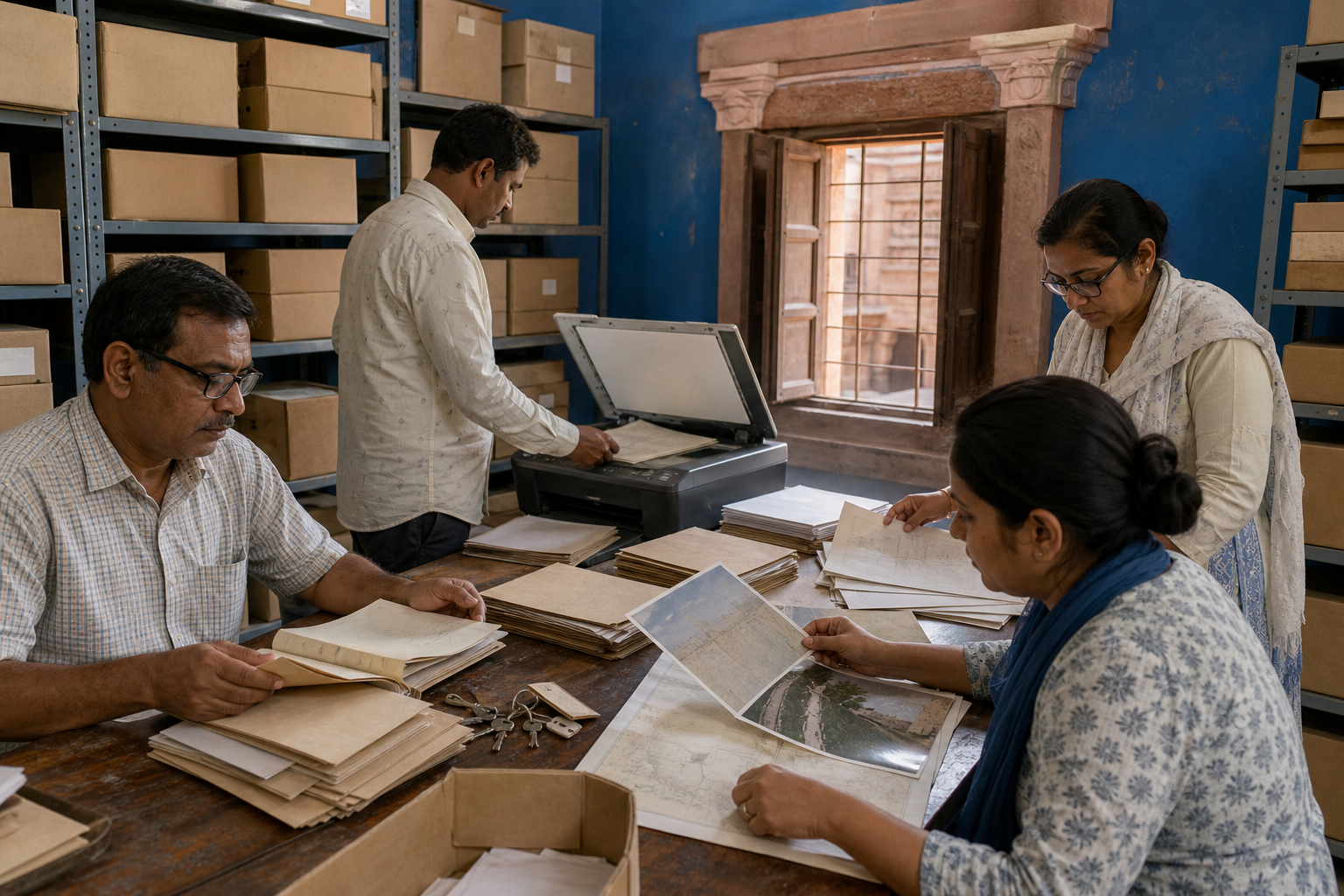
For a temple community, protecting a sacred site requires both reverence and documentary discipline. Dharma does not require imprecision. Stewardship includes preserving the records through which a temple’s legal identity, boundaries, management, and continuous use can be demonstrated.
If your institution may be affected, create one indexed property file. Do not begin with social-media screenshots. Begin with the identifiers and documents that allow an advocate or court to match a claim to the actual land.
- Fix the property’s identity. Record its full address, plot or khasra number where applicable, municipal identifier, area, boundaries, adjoining properties, and the name under which each department records it. Note every spelling variation. A dispute can be obscured when two records describe the same land differently or use an old identifier.
- Obtain the operative material. Secure the latest court order and any available schedule or annexure identifying the disputed parcels. Request the exact Waqf entry, survey reference, notification, order, or other instrument being relied upon. If the underlying basis is not supplied, record what was requested, from whom, and when.
- Collect the chain of title. Assemble deeds, grants, allotment or acquisition records, prior court or administrative orders, revenue entries, municipal records, maps, and any succession documents. Arrange them chronologically rather than placing them in an unsorted bundle.
- Separate title evidence from use evidence. Tax receipts, utility bills, repair invoices, photographs, festival records, school records, and witness accounts may help establish possession or continuous use. They should not automatically be presented as title documents. Label each item for what it can actually prove.
- Preserve temple-management records. Keep trust or society registrations, committee resolutions, donation records, endowment documents, inventories, and records of renovations or religious observance. Where originals are fragile, scan them at readable resolution and store copies in more than one controlled location.
- Create a one-page chronology. For every material event, list the date, issuing authority, document number, property description, and change allegedly made. Highlight gaps and contradictions without inventing explanations for them.
- Use one authorised channel. A temple committee, school, residents’ body, or other custodian should nominate a representative to coordinate records and counsel. Conflicting affidavits, duplicated applications, and speculative public claims can make a sound case harder to present.
Do not remove signs, change locks, enter restricted premises, begin construction, demolish anything, or alter official records in response to the controversy. Such conduct can destroy evidence, create civil or criminal exposure, or conflict with a status-quo direction. If a named property faces an immediate administrative or physical action, take the documents to an advocate experienced in Rajasthan land, revenue, and Waqf disputes before acting.
Public oversight should proceed parcel by parcel
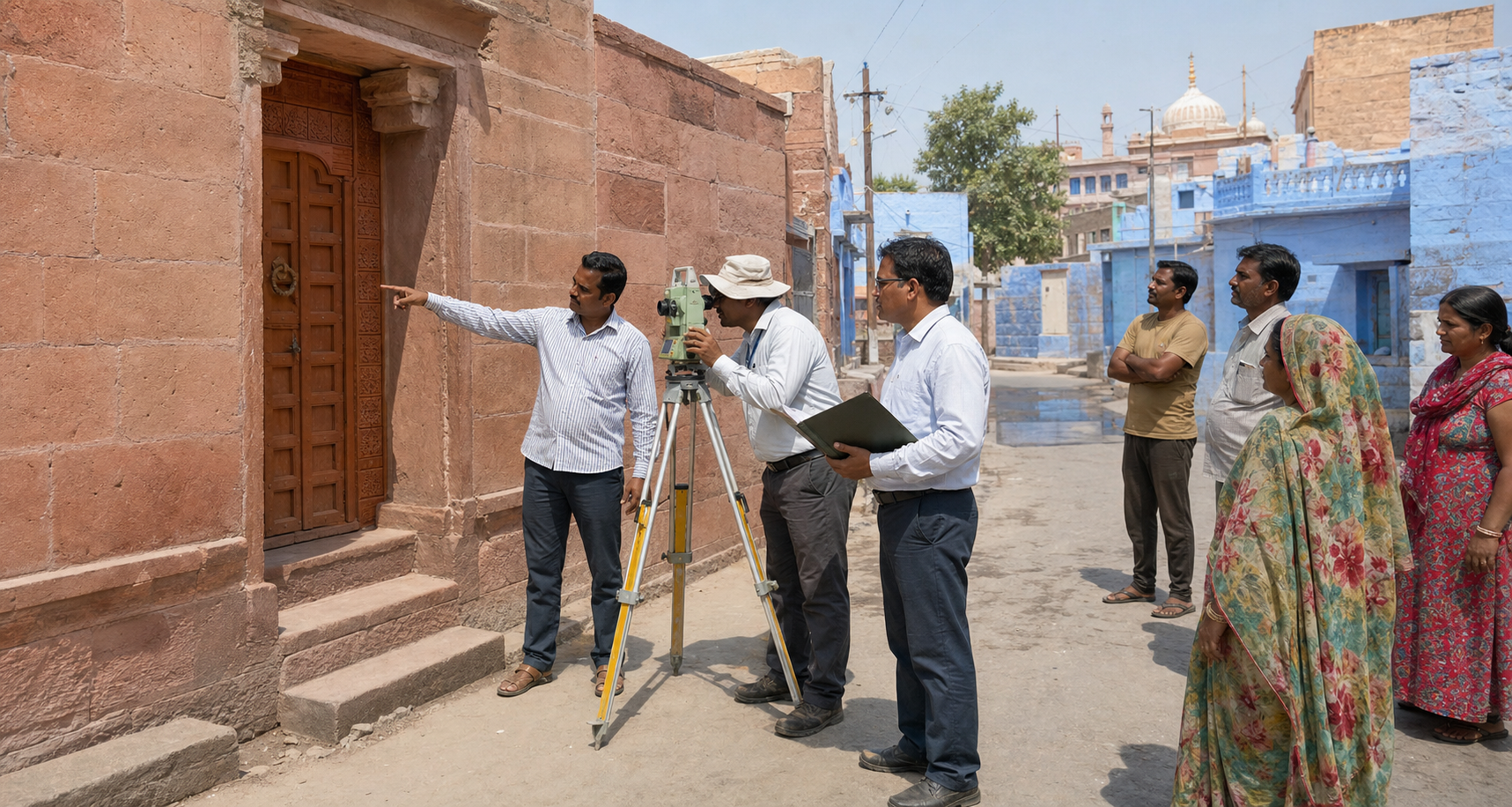
The appearance of temples, schools, judges’ residences, and other public assets in the same dispute raises an obvious administrative question: how did each property receive the classification now under scrutiny? That question should be answered through an auditable record trail, not a collective assumption that every entry has the same origin.
Citizens, affected institutions, and elected representatives can ask the district administration and relevant departments for a property-wise account addressing five points:
- Which exact parcels fall within the court’s restraint, identified by official property numbers and boundaries?
- Which record first described each parcel as Waqf property, and on what date and authority was that description entered?
- What document or proceeding was treated as the legal basis for the entry?
- Do revenue, municipal, institutional, survey, acquisition, or departmental records describe the same land differently?
- What controls are preventing mutation, transfer, or modification while the status-quo direction applies?
A useful official response should attach parcel-level details. A general assurance that “the matter is being examined” does not let a temple trust, school, public department, or resident verify whether its property has been correctly identified. Conversely, an unexplained spreadsheet or viral image should not be treated as conclusive merely because it contains an official-looking column.
Public language should be equally exact. Use “reportedly listed as Waqf property” or “subject to a Waqf claim” where that is the known position. Do not turn “listed” into “seized,” or an interim order into a final cancellation. Name the affected parcel when possible. Link to the operative order or official record when it becomes available. Precision protects the credibility of temple advocacy and keeps attention on the documents that must be answered.
The same discipline applies to disagreement. Challenge an entry, process, or legal basis without threatening officials, occupants, or members of another religious community. Collective accusations do not establish title. They can also shift attention away from the administrative accountability that the dispute demands.
Key takeaways for affected custodians and citizens
- The High Court’s reported status-quo order restrains mutation, transfer, and modification; it is not, by itself, a final title judgment.
- Do not treat a Waqf claim, list, mutation entry, and adjudicated ownership as interchangeable concepts.
- Match every disputed claim to an exact parcel before drawing a conclusion about it.
- Build an indexed record containing property identifiers, the latest court order, the challenged entry, title documents, use evidence, maps, and a chronology.
- Do not alter the site or records. Seek qualified legal help if an affected property faces immediate action.
- Demand a property-wise public audit and describe the dispute with language no broader than the evidence supports.
If you are responsible for a potentially affected institution, your next move is concrete: obtain the latest operative order and the exact parcel schedule, then compare those identifiers with certified property records. If the identifiers match, place the full file before qualified counsel. If they do not, document the mismatch and seek formal clarification rather than assuming that either the headline or the local record is correct.
Future orders should be read for three things: which properties remain within the case, what records each claimant must produce, and whether the court changes the interim restraint. Track those developments through the judicial record. That is how concern for temples and public assets becomes durable, evidence-led protection.
References
