
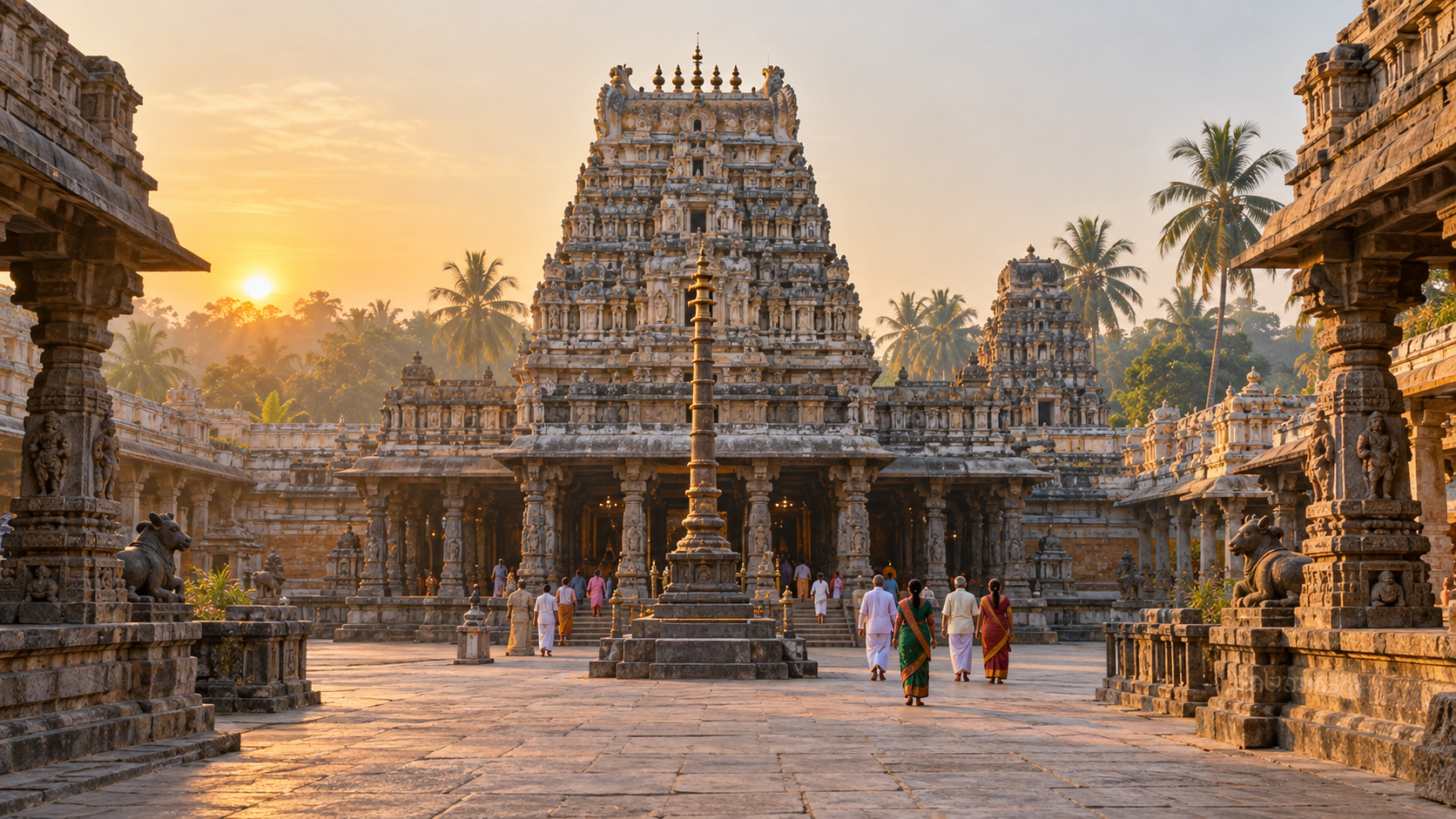
If you are planning darshan at Draksharamam, or trying to understand why Manikyamba belongs among the great Shakti shrines, one distinction will save you considerable confusion: this is both a physical place and a sacred claim about the relationship between Devi and the land. Treating only one side seriously makes the Peetham harder to understand.
You do not need an elaborate itinerary or a disputed body-part identification to begin. Start with what is clear, keep traditional claims in their proper frame, and let Manikyamba remain the center of your attention.
Begin with three claims that should not be confused
The geographical claim is straightforward: the temple is located in Draksharamam town in the East Godavari district of Andhra Pradesh. This tells you where the shrine stands.
The traditional claim concerns its sacred status. Draksharamam is revered as one of the 18 Maha Shakti Peethas. This tells you how worshippers place it within a major devotional grouping.
The theological claim explains what that status means. Shakti Peethas are believed to mark places where parts of Sati’s body fell. The sacred narrative joins Sati, Shiva, grief, Shakti and geography; the land is not merely the setting in which the story occurs, but part of the story’s religious meaning.
A map can establish a location, but it cannot establish devotional rank in the same way. Tradition can establish a shrine’s place in worship, but it should not be disguised as an archaeological measurement. If you are explaining Draksharamam to someone else, use precise language: it is located in Andhra Pradesh and revered as a Maha Shakti Peetham. That wording respects both geography and faith.
Why Manikyamba must remain more than a name on a list
Peetham carries the sense of a seat or locus of sacred presence. At Draksharamam, Manikyamba is the name through which you approach that presence. Saying only “the Shakti temple” loses the shrine’s particular identity. Saying “Manikyamba at Draksharamam” keeps Devi, place and tradition together.
This matters because a checklist can quietly flatten every Shakti Peetham into the same destination. The Peethas participate in a shared sacred narrative, but each is encountered through its own name and living tradition. The common story provides the connection; Manikyamba gives this Peetham its devotional focus.
The Sati narrative also teaches through sacred geography. Fragmentation does not end in meaninglessness. Places associated with the fallen parts become seats of Shakti, allowing grief and separation to be remembered through continuing divine presence. You need not reduce this teaching to a literal-versus-symbolic argument. For a devotee, sacred narrative can shape worship, memory and conduct without behaving like an ordinary historical report.
When you approach the shrine, therefore, ask more than “Which body part fell here?” Ask what it means to enter a place where Devi is remembered as present. The first question seeks a label. The second prepares you for darshan.
Handle variant Peetham traditions without forcing certainty
A frequent mistake is to assume that every authentic enumeration of Shakti Peethas must be identical. Calling Draksharamam one of the 18 Maha Shakti Peethas identifies a particular major grouping. It does not, by itself, settle every broader enumeration or every regional detail connected with Sati’s body.
Differences in a list or body-part identification do not automatically cancel the shrine’s devotional standing. They may reflect different textual, regional or lineage traditions. Before deciding that two claims contradict each other at the deepest level, check what each claim is actually trying to identify.
- Which grouping is being used? A list of 18 is making a more specific claim than an unrestricted list of Shakti Peethas.
- Which Devi is named? At Draksharamam, keep Manikyamba at the center rather than importing the identity of another Peetham.
- Is the detail local or universal? A temple’s living tradition may preserve a particular identification without requiring every other enumeration to use the same one.
- Does the disagreement concern the shrine or a supporting detail? A difference about one associated detail is not necessarily a denial of the Peetham itself.
If you repeat a specific body-part claim, identify it as the tradition you actually encountered rather than presenting it as the only Hindu account. If you cannot verify that detail, leave it open. Precision includes knowing when not to manufacture certainty.
Prepare for darshan without inventing temple details
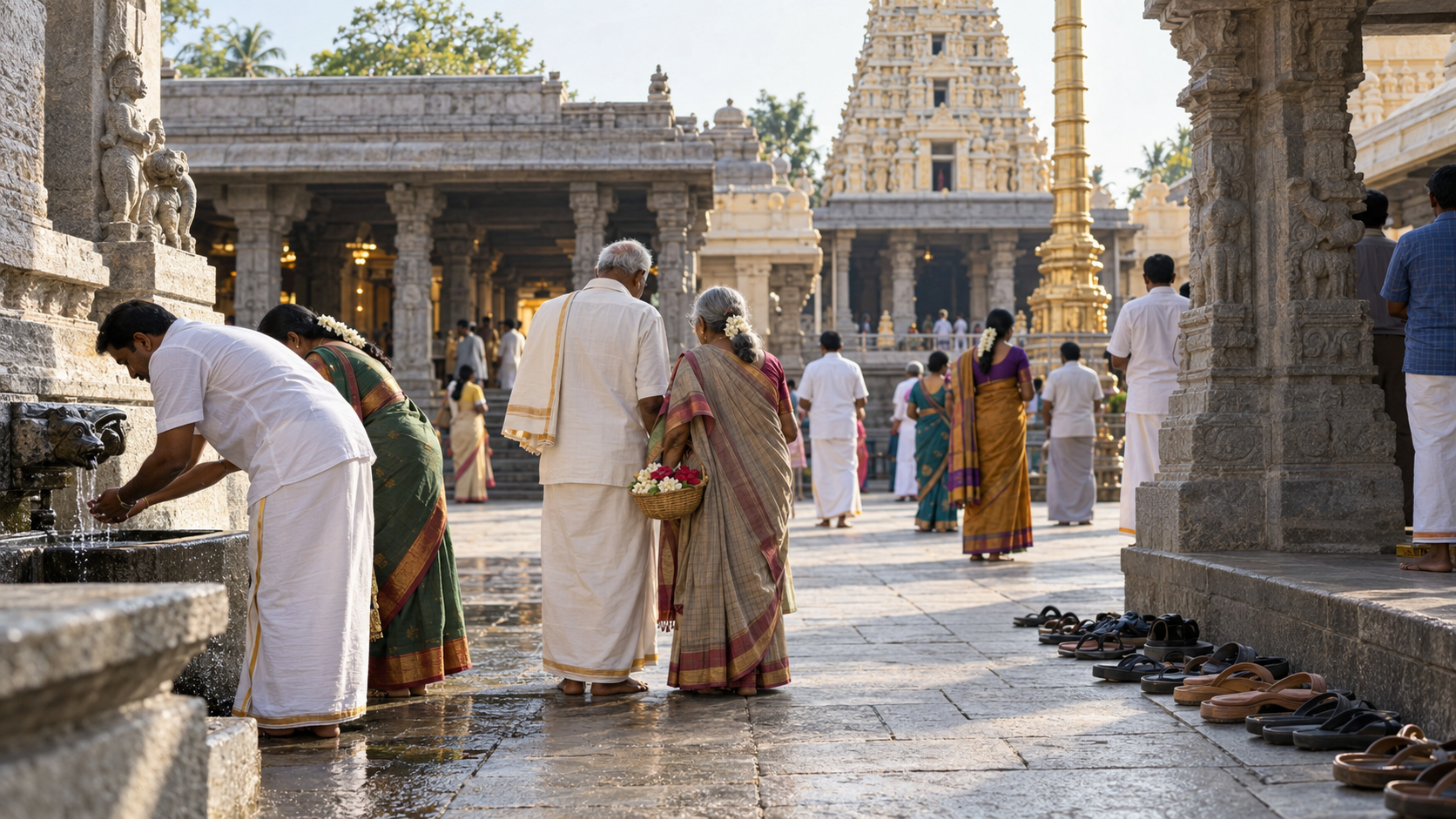
A useful preparation keeps devotion specific while leaving practical details open to verification. Temple hours, access arrangements, permitted offerings and photography rules can change; confirm them through a current temple or local channel close to your visit rather than relying on an undated schedule.
- Learn the complete identification. Remember the three connected terms: Manikyamba, Draksharamam and Maha Shakti Peetham.
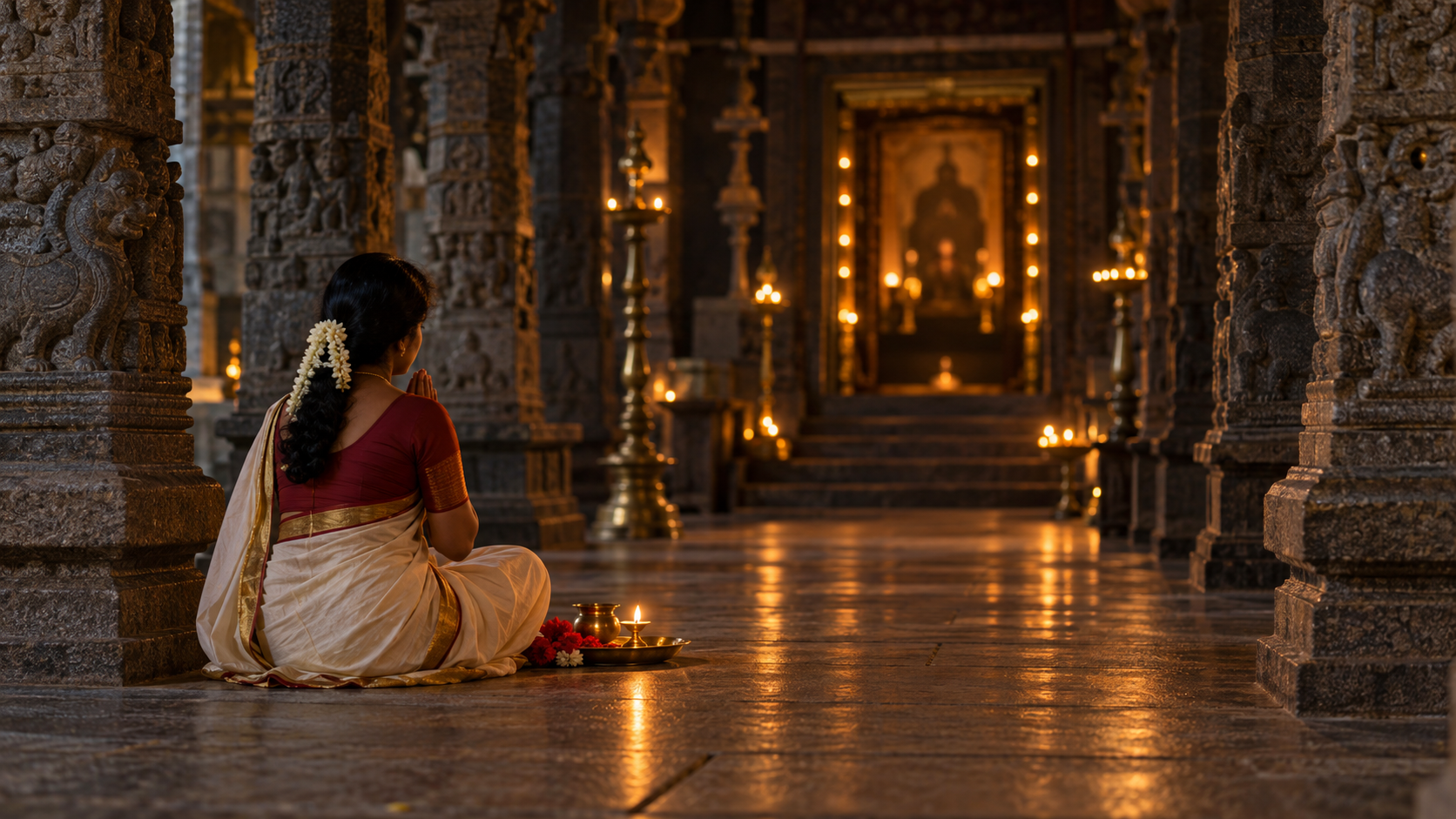
- Choose a simple intention. Decide whether you are coming for prayer, gratitude, reflection or to understand the Peetham tradition. One clear intention is more useful than a long borrowed script you do not understand.
- Let the living temple guide ritual practice. Ask locally about offerings, sequence, dress and conduct instead of assuming that the custom of another Shakti shrine applies here unchanged.
- Distinguish what you observe from what you hear. A sign, a ritual you witness and a devotee’s explanation are different kinds of information. Record them separately if you plan to write or teach about the visit.
- Leave space after darshan. Do not rush immediately into the next item on an itinerary. A few quiet minutes will help you notice whether the encounter changed your understanding of Shakti, sacred place or the Sati narrative.
If you are studying from home, use the same discipline. Make three columns in your notes: established location, traditional identification and personal interpretation. Put each claim in the correct column. This simple practice prevents devotional meaning from being presented as a map fact, and it prevents academic caution from stripping the tradition of its sacred purpose.
Key takeaways
- Draksharamam is a temple town in the East Godavari district of Andhra Pradesh, and Manikyamba is the Devi at the center of this Peetham tradition.
- The shrine is revered as one of the 18 Maha Shakti Peethas, a specific major grouping within Shakti worship.
- The Peetham identity belongs to the sacred narrative in which parts of Sati’s body fell and different places became associated with Shakti’s presence.
- You do not have to force every Peetham enumeration or associated detail into one uniform list.
- For exact ritual practices and local identifications, follow the living tradition at Draksharamam rather than importing assumptions from another shrine.
If you visit, carry one complete sentence with you: “I am approaching Manikyamba at Draksharamam, revered as a Maha Shakti Peetham.” It is enough to orient your attention while leaving room for the temple itself to teach you the rest.


References

Leave a Reply
You must be logged in to post a comment.