
-
Unlock the Paths of Yoga: A Comprehensive Guide to Hatha, Kundalini, Ashtanga, Kriya, Jivamukti

This comprehensive guide clarifies five major pathsHatha, Kundalini, Ashtanga, Kriya, and Jivamuktishowing how each unites body, breath, and mind while honoring shared dharmic ethics across Hinduism, Buddhism, Jainism, and Sikhism. Readers discover the philosophical foundations, core methods (asana, pranayama, bandhas, mudras, meditation), and practical safety cues that make practice sustainable. The article demystifies yogic anatomy…
-
The Curse of Immediacy: Reclaiming Kshama and Dhairya for Deep Focus in a Digital Age

Modern life rewards speed yet quietly punishes impatience with poor judgment, anxiety, and brittle relationships. This essay examines Kshama (forbearance) and Dhairya (steadfast patience) as precise antidotes drawn from Hindu philosophy and aligned with Buddhist, Jain, and Sikh insights. It clarifies the terms linguistically and textually, situates them within the Bhagavad Gita, Vedānta’s preparatory disciplines,…
-
Idle Mind Is the Devil’s Workshop: A Dharmic, Scientific Guide to Focus and Virtue

This article reframes the proverb ‘An idle mind is the devil’s workshop’ through a dharmic and scientific lens, unifying insights from Hinduism, Buddhism, Jainism, and Sikhism with contemporary psychology. It distinguishes restorative rest from unstructured idleness and shows how right effort, seva, and mindfulness reduce rumination and impulsivity. Readers gain a practical framework: align purpose…
-
Pure Mind Beyond Desire: A Rigorous Path to Moksha in the Gita, Upanishads, and Yoga

This article offers a rigorous, text-anchored exploration of the Hindu ideal of a pure mind free from desire, linking it to moksha in the Bhagavad Gita, the Upanishads, and Patanjali’s Yogasutra. It clarifies the difference between eliminating compulsive craving and nurturing dharma-aligned intention, avoiding the common pitfall of suppression or nihilism. Readers gain a practical…
-
Master Your Breath, Still Your Mind: Kapila’s Precise Yogic Protocol in SB 3.28.8

SB 3.28.8 presents Kapila’s concise blueprint for meditation: a sanctified, secluded space; an easy, erect posture (svasti samāsīnaḥ); and regulated breath control. The verse aligns environment, asana, and pranayama to quiet the senses and stabilize attention for dhyana. Practical guidance includes seat preparation, spinal alignment, and gentle ratios such as 4–4 progressing to 4–6 exhalations.…
-
From Restless Mind to Inner Clarity: How Yoga Rewires the Brain, Body, and Behavior

Yoga reframes a “restless” mind as a dynamic wave and offers precise methods to organize that energy into clarity, steadiness, and purpose. Patanjali’s ashtanga integrates ethics, postures, breath, and meditation, while parallel practices in Buddhism, Jainism, and Sikhism affirm unity in spiritual diversity. Evidence links yoga to better autonomic balance, reduced stress reactivity, improved mood,…
-
Pranavopasana: Mastering Om for Self‑Realization, Inner Calm, and Dharmic Unity
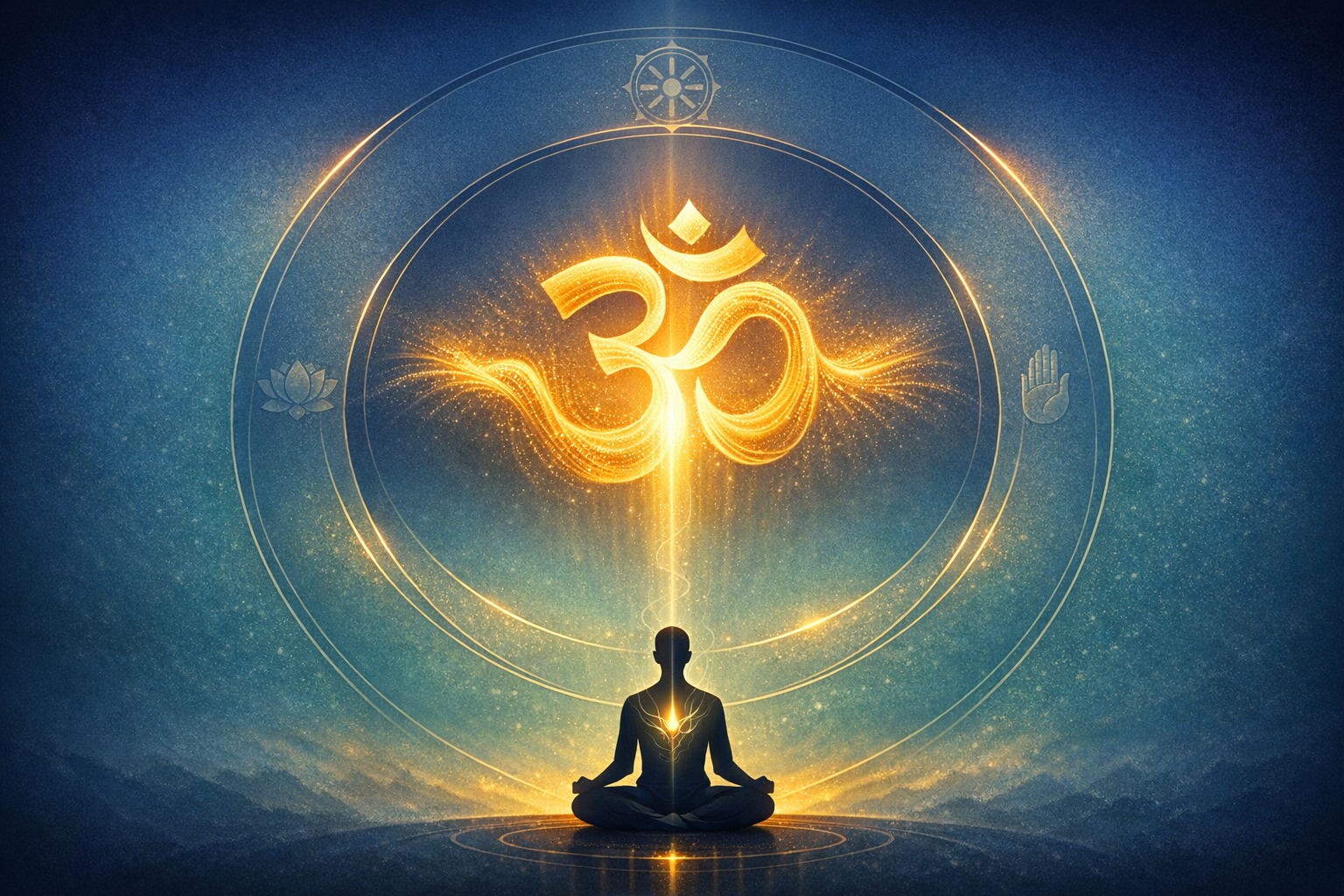
Pranavopasanameditation on the Pranava (ॐ)is a disciplined path in Hinduism and Advaita Vedanta that moves attention from sound to silence and from symbol to the Ultimate Reality. Drawing on the Upanishads, Bhagavad Gita, and Patanjali, it unites devotion, meditation, and inquiry into a coherent practice for Self-realization. The article explains the A–U–M arc, the turiya…
-
Beyond Ego (Ahamkara): Atman, Attachment, and Liberation across Hindu, Buddhist, Jain, Sikh Paths

This comprehensive analysis explains how Hinduism, aligned with Buddhism, Jainism, and Sikhism, understands internal attachment as self-identification with ego (ahamkara/asmita). It clarifies core doctrinesAtman–Brahman, avidya–adhyasa, and the Yoga kleshaswhile mapping practical methods in Karma Yoga, Bhakti, Jnana, and Raja Yoga. Readers gain a technical yet accessible framework using Pancha Kosha Viveka, samskara theory, and Gita-based…
-
When Mistakes Happen: A Dharma-Guided, Science-Backed Playbook for Calm, Compassionate Resilience

Errors are inevitable, but responses can be principled, compassionate, and effective. This essay synthesizes dharmic wisdom from Hinduism, Buddhism, Jainism, and Sikhism with evidence-based tools from behavioural science and reliability engineering to offer a practical protocol for handling mistakes. Readers will learn a five-step responseregulate, acknowledge, repair, learn, and recommitthat protects relationships while improving systems.…
-
Mastering the Modern Mind: Bhagavad-gita, Patanjali, and Dharmic Paths to Clarity

Delivered at Hsuan Chuang University (Hsinchu City, Taiwan) on 18 March 2026, this lecture by Dr. Kenneth Valpey (HH Krishna Kshetra Swami) offers a rigorous, practical roadmap for mastering the modern mind. It integrates the Bhagavad-gita, the Yoga Sutras of Patanjali, and allied dharmic traditions to explain manas, buddhi, citta, and the five koshas. Listeners…
-
Kundalini Tantra Unveiled: A Scientific, Dharmic Guide to Awakening the Serpent Power

This comprehensive guide presents Kundalini Tantra as a precise, ethical, and integrative science shared across dharmic traditions. It clarifies yogic anatomy (nadis, chakras, sushumna nadi) and explains how breathwork, bandhas, mudras, mantra, and meditation organize subtle energy safely. A stepwise 12-week framework details how to build foundations with yama-niyama, asana, and pranayama before progressing to…
-
Yoga and Psychological Stress Relief: Evidence-Based Pathways to Calm, Clarity, and Resilience

HH Krishna Kshetra Swami’s address at China Medical University highlighted how the classical yoga tradition approaches stress through systematic preparation of the minduniting meditation, Pranayama, and ethics. This comprehensive analysis bridges those insights with contemporary psychophysiology, explaining how slow breathing boosts vagal tone, meditation reshapes attention and emotion, and ethical congruence reduces cognitive load. Practical…
-
Shattering the Illusion of Ego: How Pride Sabotages Liberation across Dharmic Traditions

Pridewhether named ahamkara, asmita, mana, or haumaiemerges as a shared obstacle to liberation across Hinduism, Buddhism, Jainism, and Sikhism. This essay synthesizes scriptural anchors from the Bhagavad Gita, Upanishads, and Yoga Sutra with parallel insights from Buddhist, Jain, and Sikh teachings to show how egoic inflation thrives on the illusion of separation. Readers will gain…
-
Inside Vijayanagara’s Golden Age: Kavi Sarvabhauma Srinatha’s Daring Challenge to Arunagirinatha
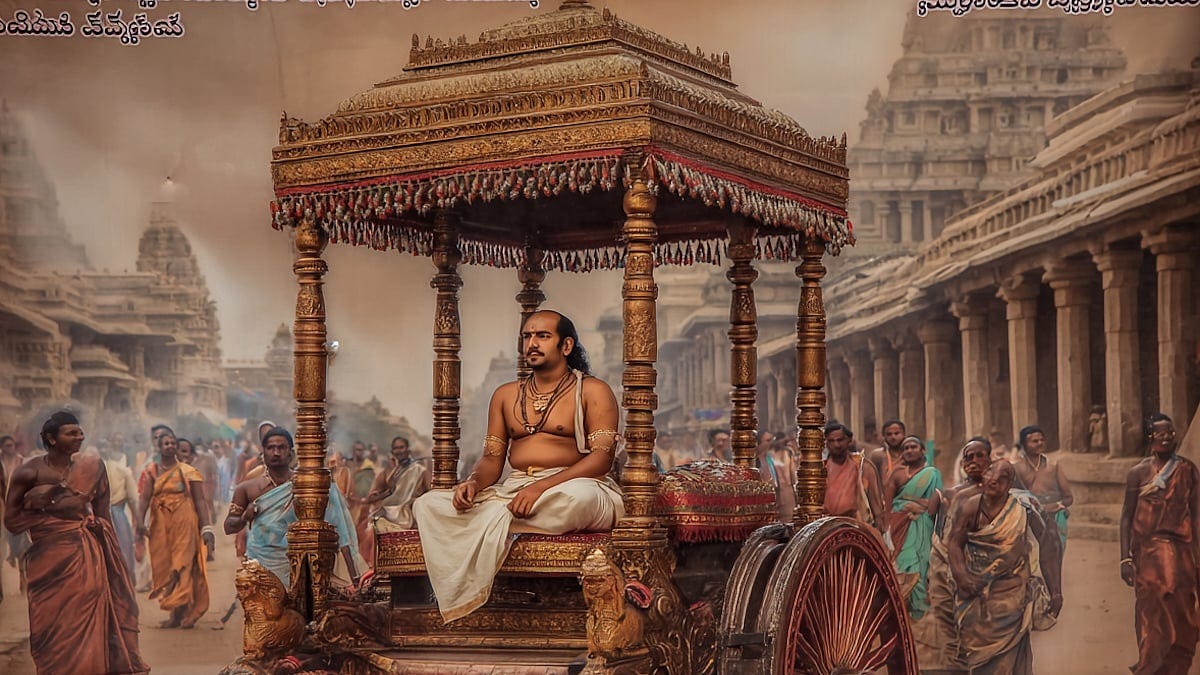
Set during the golden age of the Vijayanagara Empire, this episode from Kavisārvabhaomuḍu reconstructs how Kavi Sarvabhauma Srinatha strategically challenged the Vidyādhikāri Arunagirinatha in a high-stakes courtly contest. Readers discover how a subtle Sanskrit deviceapaśabdābhāsacan invert a debate by disguising correctness as error. The narrative explains why grammar (anchored in Panini, Vararuchi, and Patañjali) is…
-
Patanjali’s Kriya Yoga Decoded: Tapas, Svadhyaya, Ishvara-Pranidhana for God-Union

Patanjali defines Kriya Yoga as a threefold disciplinetapas, svadhyaya, and Ishvara-pranidhana (Yoga Sutra 2.1)designed to attenuate afflictions and cultivate samadhi (2.2). This synthesis of disciplined effort, self-study, and surrender functions as both foundation and consummation of practice, guiding seekers toward union with God as understood in the Yoga Sutras. The discussion clarifies how each limb…
-
Conquer the Kleshas: Patanjali’s Yoga Sutras on Ending Suffering and Reclaiming Clarity

This in-depth guide explains Patanjali’s doctrine of kleshasthe inner afflictions that fuel sufferingand shows how the Yoga Sutras translate diagnosis into a practical path of freedom. Readers learn the five kleshas (avidya, asmita, raga, dvesha, abhinivesha), their activation states, and how they perpetuate karma and samskaras. The article details Kriya Yoga and Ashtanga Yoga as…
-
Why Devotional Focus Suddenly Turns Sensualand Science-Backed Ways to Steady the Mind

Devotional focus can collapse into sensual distraction with surprising speed because material desire functions like a gravitational pull on attention. Classical frameworks from Hinduism, Buddhism, Jainism, and Sikhism explain this shift through gunas, kleshas, hindrances, and the five thieves, while neuroscience highlights cue-driven reward predictions and attentional capture. A practical, evidence-aligned toolkit helps steady the…
-
The World as a Roadside Inn: A Dharmic Guide to Impermanence, Detachment, and Freedom

This essay explores the classic dharmic metaphor of the world as a roadside inn to clarify impermanence, detachment, and ethical action. A teaching story of a mendicant and a king introduces the theme, which is then examined through the Bhagavad Gita, Upanishads, Patanjali’s Yoga Sutra, and Jain, Buddhist, and Sikh perspectives. Readers learn how anitya…
-
Overcoming Inner Battles in Meditation: Hindu-Yogic, Buddhist, Jain, Sikh Tools for Calm

Meditation across the dharmic traditions often collides with restlessness, distracting thoughts, emotional agitation, doubt, and subtle resistance. Drawing on the Yoga Sutras of Patanjali and the Bhagavad Gitaalongside Buddhist, Jain, and Sikh parallelsthis piece delivers a technical, evidence-informed roadmap to stabilize dhyana. Readers learn how to diagnose obstacles (antaraya), regulate arousal with breath awareness and…
-
Unlocking Kayavyūhajñāna: Patañjali’s Nabhi Chakra Insight into Yogic Inner Anatomy

Kayavyūhajñāna in the Yoga Sūtras points to a precise, embodied insight: by samyama on the nābhi-cakra, practitioners gain reliable knowledge of the body’s inner organization. This long-form guide situates the sūtra within Patañjali’s Vibhūti Pāda, unpacks the commentarial tradition, and outlines a practical, ethical method grounded in yama–niyama, breath awareness, and non-reactive attention. Drawing bridges…