
-
Yama Dvitiya 2025 (Bhai Dooj): The Complete, Essential Guide to Date, Rituals, and Meaning
Yama Dvitiya (Yam Dwitiya), the final day of Diwali, falls on October 23, 2025, corresponding to Kartika Shukla Dwitiya. Known regionally as Bhai Dhooj, Bhai Bij, or Bhai Beej, the festival honors the sacred bond between siblings through tilak, aarti, and blessings inspired by the legend of Yama and Yamuna. The observance completes the Diwali…
-
Discover Chaturthi Karman: The Essential Fourth‑Day Rite Sealing Hindu Marriage

Chaturthi Karman (Caturthikarman) is a significant Hindu marriage rite observed on the fourth day after the wedding, consecrating the couple’s entry into the grihastha ashrama. It marks consummation within a sacred framework, aligning devotion, auspicious timing, and family blessings. The rite commonly includes purification, simple prayers or homa, and elders’ aśīrvāda, culminating in the couple’s…
-
Bharat: The Natural Home for Sanatanis (Hindus, Buddhists, Jains, and Sikhs)
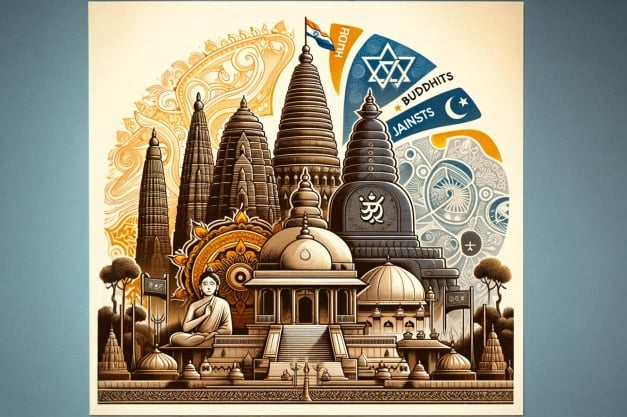
“Bharat: The Natural Home for Sanatanis (Hindus, Buddhists, Jains, and Sikhs)” explores why India is the intrinsic homeland for these ancient religions. The post highlights India’s historical roots as the birthplace of these faiths, its rich cultural and spiritual heritage, and the preservation of ancient knowledge and texts. It emphasizes the socio-cultural practices and festivals…
-
Hello New York Times: Time to Eat Your Elitism. This is India’s Century.

The blog post titled addresses the New York Times’ biased and racist coverage of India over the years. The post discusses how Western media, including the New York Times, has portrayed India as a backward and unscientific country, but recent achievements like the successful Chandrayaan 3 mission challenge that narrative. It delves into historical examples…
-
Some Protagonists of Sacred Traditions: The Book that Sanctifies Every Hindu Home

This blog post introduces the English translation of D.V. Gundappa’s seminal work, “Vaidikadharmasampradāyastharu,” now titled “Some Protagonists of Sacred Traditions.” It pays tribute to both the original work and its insightful author, emphasizing the book’s ability to deliver spiritual wisdom and inner peace. The introduction explores the absence of extensive philosophical quotations, focusing instead on…
-
When Chapatis Forged the First War of Indian Independence: A Hidden Event

In this intriguing blog post, we delve into the historical significance of the chapati, a simple Indian bread, in the context of the 1857 Indian War of Independence against the East India Company. We explore the widespread distribution of chapatis across North India and its enigmatic role in mobilizing the masses, sparking conspiracy theories and…
-
A Historical Journey with the Banana

This blog post explores the deep-rooted significance of the banana in the Sanatana civilization. From its mentions in Hindu rituals to its poetic symbolism, the banana is celebrated for its multifaceted roles in the culture. With insights into the Sanskrit synonyms for banana and its importance for Indian sages following Ahimsa (non-injury), the post also…