
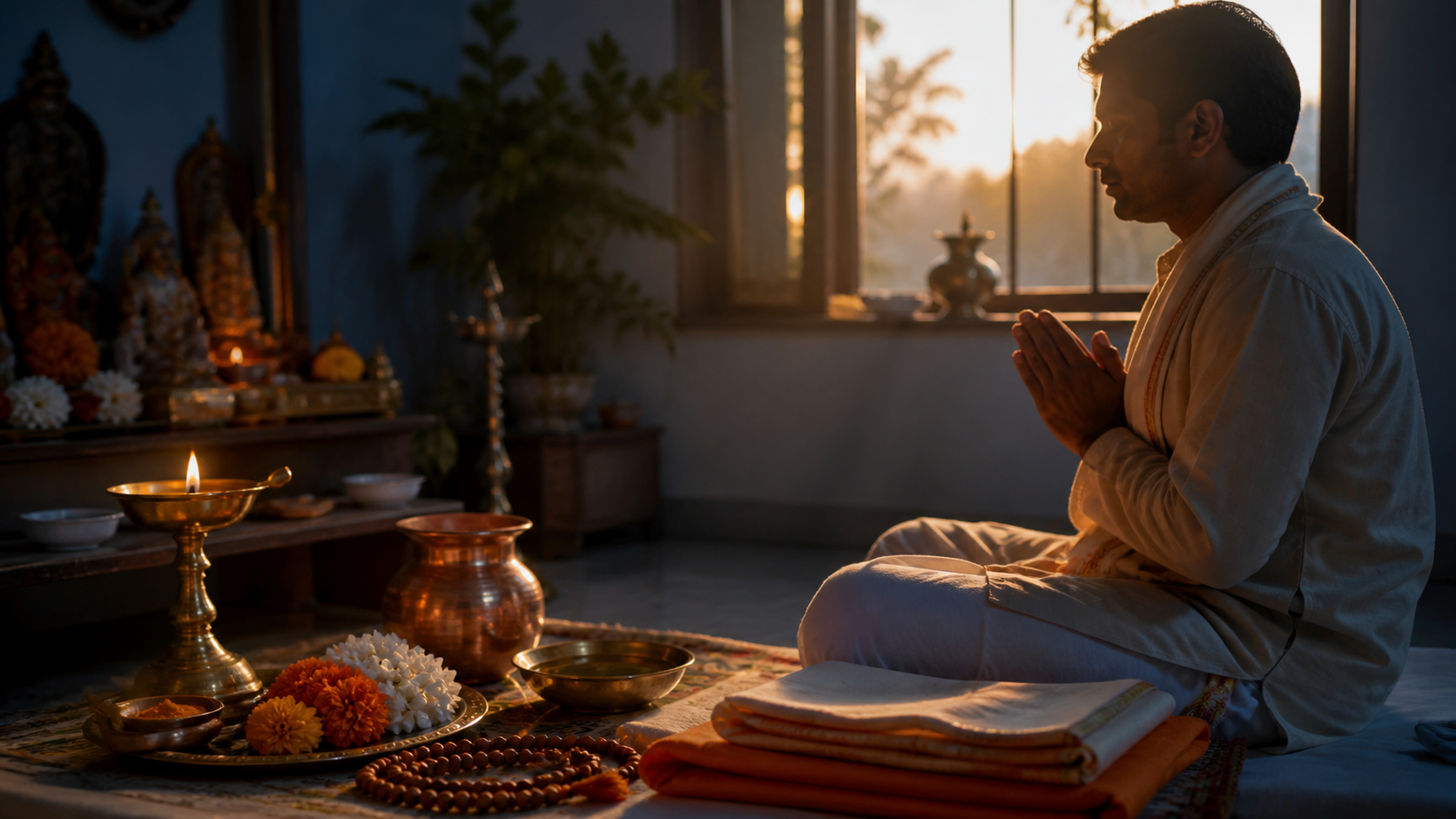
If you are planning puja, vrata, japa, or a temple visit for Tuesday, October 28, 2025, the main detail is easy to miss: the date does not carry one tithi from midnight to midnight. Sashti ends during the early morning, and Saptami governs the rest of the day.
For ordinary daytime worship, you will generally treat October 28 as Shukla Paksha Saptami. If a formal observance depends on the tithi at sunrise, a particular muhurta, or your sankalpa time, verify the calculation for your city before fixing the ritual.
The tithi changes at 3:34 AM
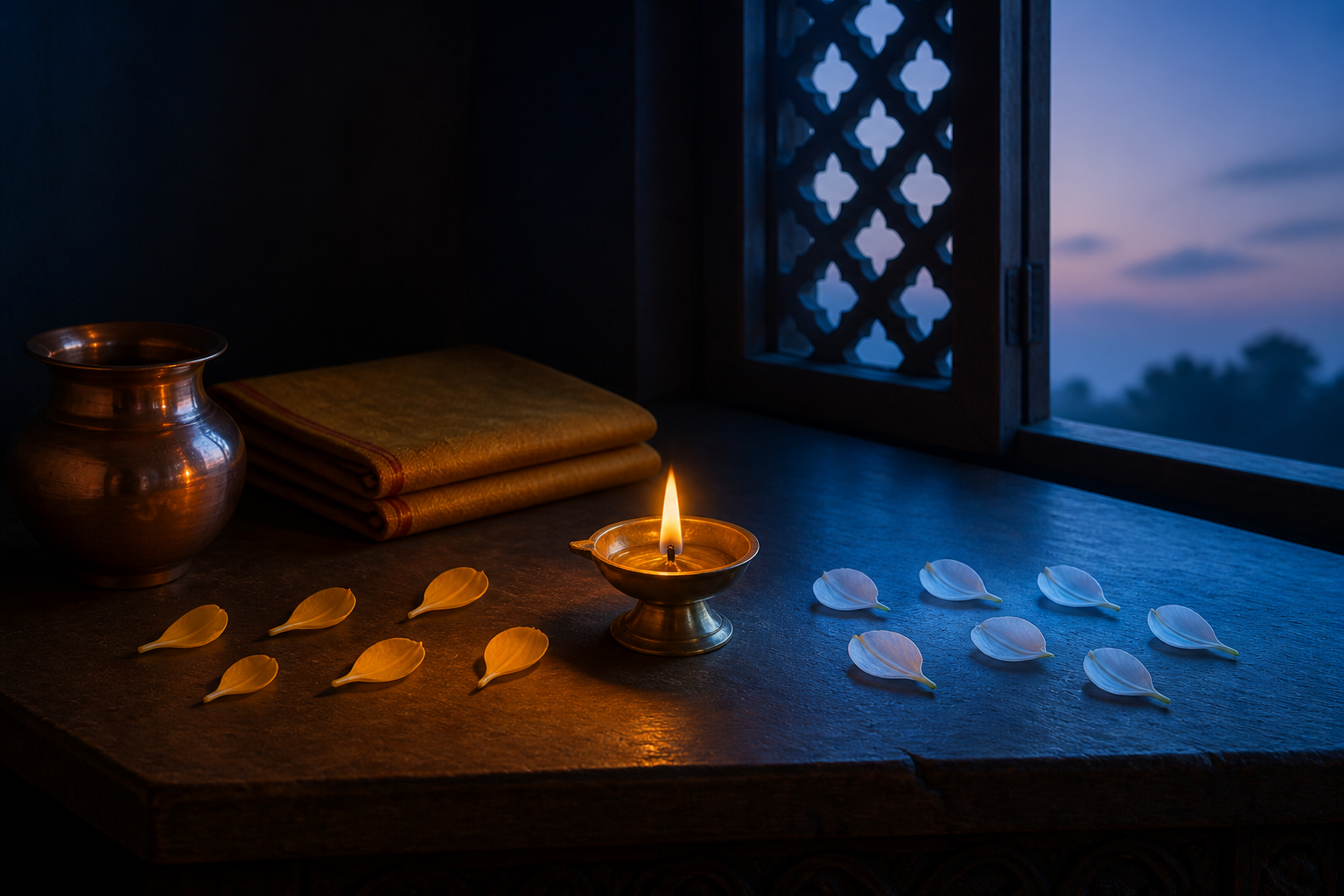
The general Panchang reckoning for most regions places Shukla Paksha Sashti until 3:34 AM on October 28, followed by Shukla Paksha Saptami from 3:34 AM onward. Saptami is the seventh lunar day of Shukla Paksha, the bright or waxing half of the lunar cycle.
| Time on October 28, 2025 | Active tithi | How to use it |
|---|---|---|
| Until 3:34 AM | Shukla Paksha Sashti | Use Sashti only for an activity that actually occurs before the transition under your local calculation. |
| From 3:34 AM onward | Shukla Paksha Saptami | Use Saptami for ordinary morning, daytime, and evening planning, subject to local verification. |
This is why asking which tithi belongs to a civil date can produce an incomplete answer. A tithi is a lunar division, not a fixed weekday or midnight-to-midnight unit. It may begin or end at any clock time. The useful question is therefore: which tithi is active when you intend to perform the observance?
Key takeaways for October 28
- The civil day is Tuesday, October 28, 2025.
- Shukla Paksha Sashti continues only until 3:34 AM in the general reckoning.
- Shukla Paksha Saptami begins at 3:34 AM and continues through the remainder of the date.
- If your puja or japa begins after the stated transition, Saptami is the relevant tithi under that reckoning.
- The date and tithi alone do not establish the Nakshatra, the Moon’s Rashi, or a suitable muhurta.
- Use a location-specific Panchang for a formal vrata, samskara, sankalpa, or community event.
How to apply the date without making a timing mistake
A general calendar entry is enough when you simply want to know the day’s lunar rhythm. It is not always enough when the validity or customary timing of an observance depends on a precise boundary. Use the following sequence before committing to a time.
- Identify what you are planning. A regular home puja, quiet study period, or act of seva does not usually require the same level of calendrical precision as a samskara, formal vrata, or temple programme.
- Set the correct location. Select the city where the ritual will occur, not the location of relatives joining remotely and not a default city left in an app.
- Check the active tithi at the actual ritual time. Do not select Sashti or Saptami merely because one of those names appears beside the date.
- Confirm the rule followed by your tradition. Some observances are determined by the tithi present at sunrise, while others depend on a specified part of the day. Your family tradition, sampradaya, temple, or officiating priest should determine which rule applies.
- Verify the other Panchang elements separately. If the occasion requires Nakshatra, Moon Rashi, or an auspicious interval, read those values directly from the same local Panchang rather than inferring them from Saptami.
That last step matters because two people can agree that the daytime tithi is Saptami yet still need different clock times for a location-sensitive ceremony. Longitude, latitude, time conventions, and the computational method used by the Panchang can affect the displayed schedule.
A simple way to observe Shukla Paksha Saptami
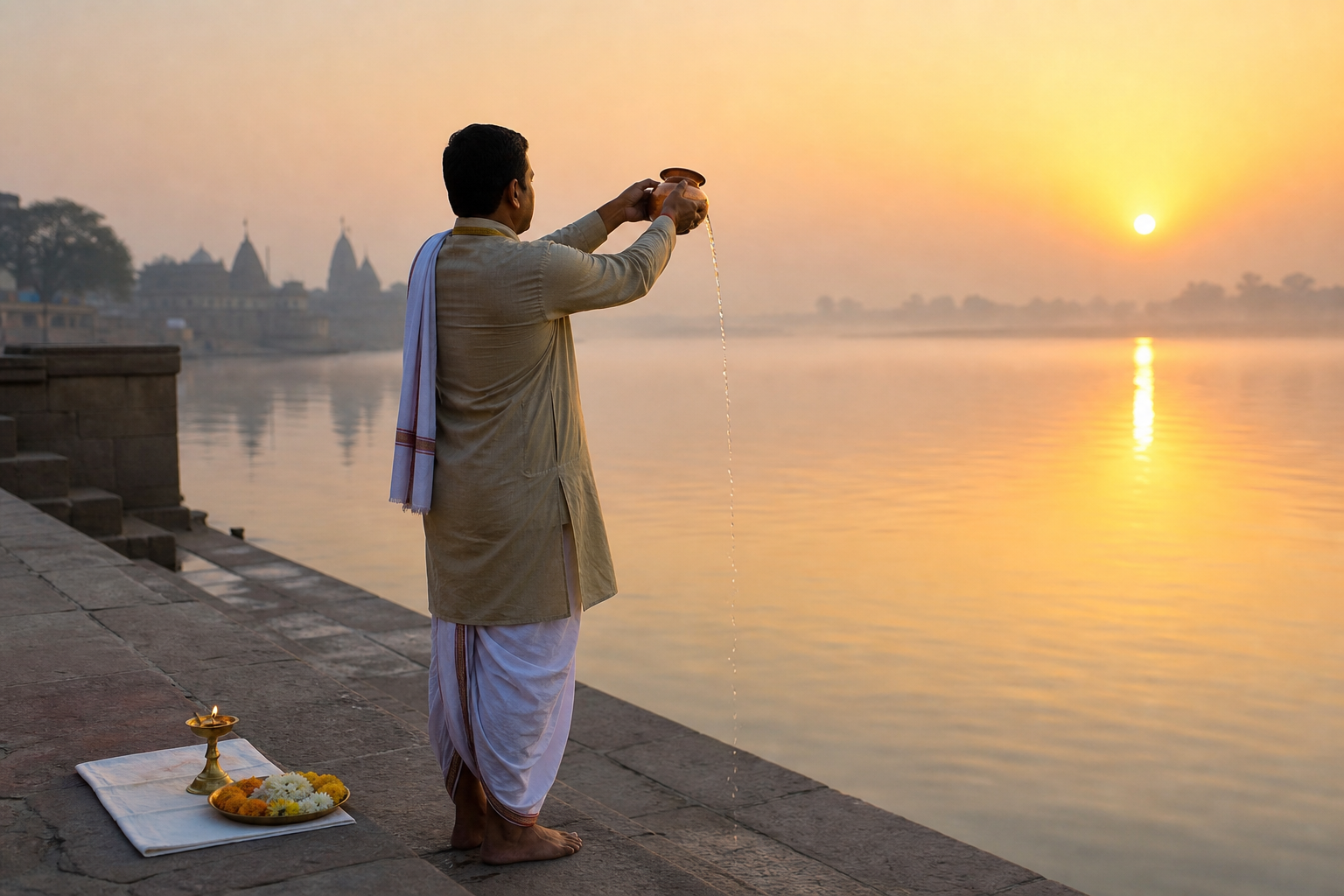
Shukla Paksha Saptami is commonly approached as a day of renewal, clarity, and steady movement while the Moon is waxing. That meaning can shape your practice without turning every ordinary day into an elaborate ceremony.
If you are not following a prescribed vrata, choose one modest practice that you can complete with attention:
- Begin the morning with your customary prayer or a short period of japa after confirming that Saptami is active in your location.
- Resume a neglected passage of scriptural or philosophical study and give it a fixed, uninterrupted period.
- Complete one delayed dharmic responsibility rather than adding several new resolutions.
- Offer practical seva to your household, temple, or community without treating it as a performance.
- Close the day with a brief review of whether your actions produced greater steadiness or merely more activity.
These are ways to work with the character traditionally associated with Saptami, not universal ritual requirements. If your lineage prescribes a particular deity, mantra, offering, or vrata procedure, that inherited discipline takes priority over a general suggestion.
What you cannot determine from the tithi alone

Do not fill missing Panchang fields by guesswork. Knowing that Saptami is active does not reveal the day’s Nakshatra, the Moon’s Rashi, or the best muhurta for a specific undertaking. These are distinct calculations and must be checked independently.
An auspicious time is also not a blanket property of the entire date. The window appropriate for one purpose may not answer the needs of another. If you are arranging a samskara, making a formal sankalpa, or coordinating a temple gathering, record the city, intended activity, local date, start time, tithi, Nakshatra, Moon Rashi, and the muhurta recommended for that purpose. Keeping those details together prevents a general Panchang reading from being mistaken for a complete ritual determination.
For October 28, begin with the firm practical distinction: Sashti before the early-morning transition, Saptami afterward. Then match the precision of your calendar check to the importance of the observance. A regular daytime practice can proceed under Saptami; a ceremony tied to exact timing deserves confirmation from a trusted local Panchang and the tradition guiding the rite.
References
