

If you are deciding when to perform Purnima worship on Monday, March 2, the civil date alone will mislead you. The day begins under Shukla Paksha Chaturdashi, while Purnima arrives only in the evening.
Under the commonly cited Indian Panchang timing, Chaturdashi continues until 17:18 on March 2, after which Purnima lasts until 04:33 on March 3. Use that sequence to understand the day, but replace the clock times with a city-specific Panchang before fixing a vrata, puja, or muhurta.
The tithi changes at 17:18, not at civil midnight

A tithi is determined by the changing angular separation between the Sun and Moon, measured in steps of 12 degrees. It therefore begins and ends according to astronomical conditions rather than the boundaries of a Gregorian date. One civil day can contain parts of two tithis, exactly as March 2 does.
| Part of the observance window | Commonly cited timing | What it means for you |
|---|---|---|
| Shukla Paksha Chaturdashi | Until 17:18 on March 2 | Morning, midday, and most afternoon practices belong to Chaturdashi under this timing. |
| Purnima | After 17:18 on March 2 | Evening worship can be placed within Purnima once the local transition has occurred. |
| End of Purnima | 04:33 on March 3 | The tithi ends in the early hours of the next civil date under the stated schedule. |
This corrects two common mistakes. A puja held on the morning of March 2 is not automatically a Purnima puja merely because a calendar labels the date as a full-moon observance. Conversely, you do not need to wait for civil midnight: once Purnima begins in your locality, the lunar day is already present.
The 17:18 and 04:33 boundaries should not be copied blindly outside the locality for which they were calculated. Longitude, latitude, and time zone affect the displayed clock time. Verify your city before treating either boundary as a ritual deadline, especially if your chosen time falls close to the transition.
Choose the observance rule before choosing the clock time
The right time depends on what you are actually observing. Chaturdashi sadhana, a general Purnima practice, and a lineage-specific Purnima vrata do not necessarily use the same rule. Some traditions give importance to the tithi’s presence in the evening; others determine the observance through its presence at sunrise. March 2 is precisely the kind of date on which that distinction changes the answer.
- Name the observance. Decide whether you are completing Chaturdashi practice, beginning Purnima worship, or following a specific vrata or family tradition.
- Check the governing rule. Ask whether your sampradaya or household uses evening presence, sunrise presence, or another established criterion for that observance.
- Confirm the local tithi. Use a Panchang calculated for the city where the practice will occur, not merely the city of a temple, relative, or online publisher.
- Keep away from the boundary. If you have flexibility, do not schedule a tithi-dependent sankalpa within a few minutes of the published transition. Small locality differences matter most at the edge.
If your purpose is the preparatory discipline of Shukla Chaturdashi, complete it before the locally verified end of Chaturdashi. If your purpose is Purnima worship, begin after the locally verified start of Purnima. Under the cited schedule, that means before 17:18 for the former and after 17:18 for the latter.
Do not assume that the words “March 3” make the following morning preferable. The cited Purnima ends at 04:33, and your lineage may require a particular relationship between the tithi and sunrise. When a formal vrata is involved, the tradition’s rule takes priority over a convenient reading of the civil calendar.
Build auspicious and avoided periods from local daylight
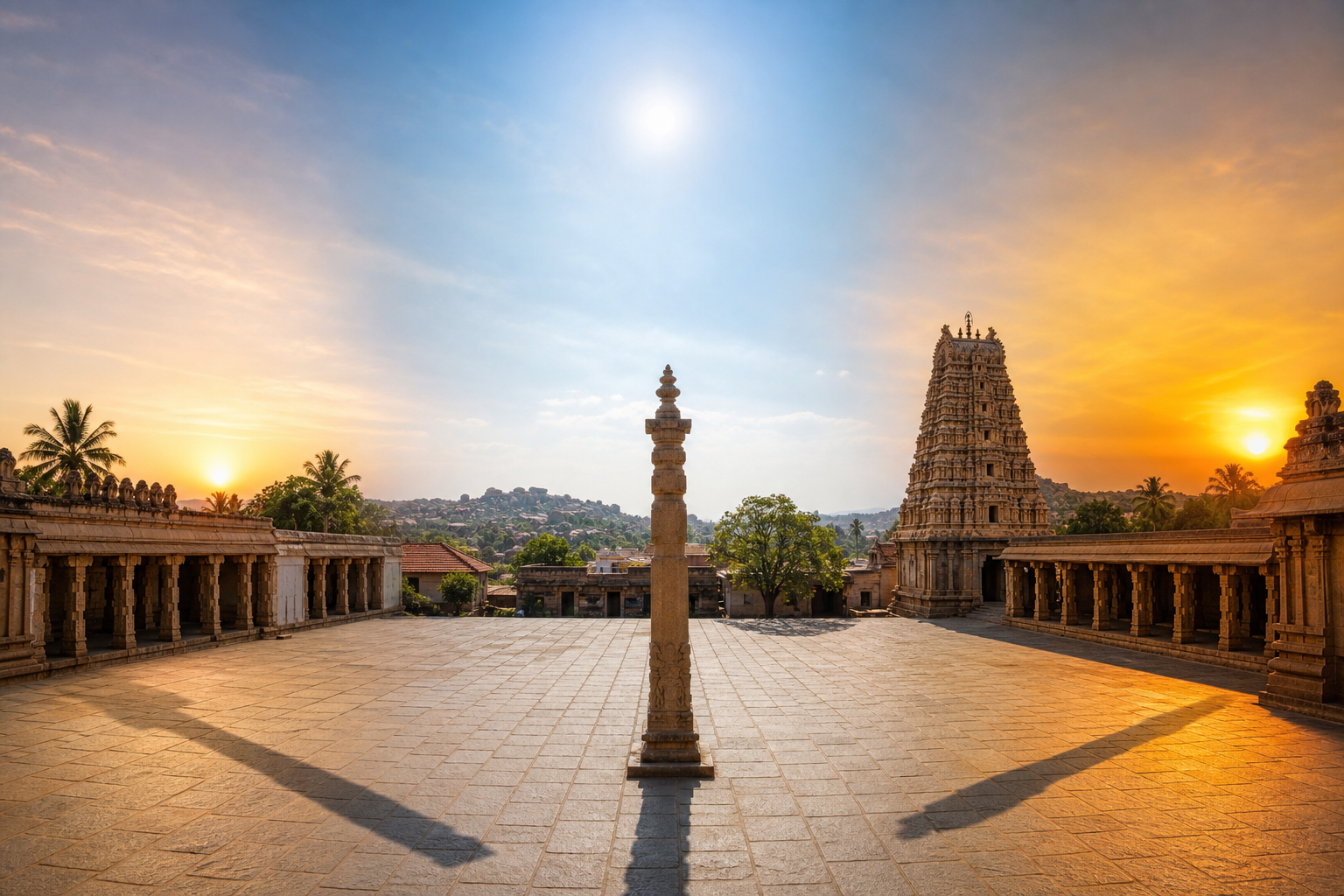
Brahma Muhurta and Abhijit Muhurta can help you place a spiritual practice, but neither changes the active tithi. Brahma Muhurta is approximately the period from 1 hour 36 minutes before local sunrise until 48 minutes before sunrise. It is well suited to japa, pranayama, and dhyana. On March 2, however, that early-morning period occurs before the evening transition into Purnima under the cited schedule, so it belongs to Chaturdashi.
Abhijit Muhurta is centered on local solar noon and extends roughly 24 minutes on either side. It can be used for sankalpa, quiet worship, or a decisive action when your tradition accepts it. Because March 2’s Purnima begins only in the evening under the stated timing, that day’s Abhijit period does not turn a midday act into a Purnima observance.
If your household avoids Rahu Kalam, Yamaganda, and Gulikai, calculate them from local sunrise and sunset. Divide the full daylight duration into eight equal segments. For Monday, Rahu Kalam occupies the second segment, Yamaganda the fourth, and Gulikai the sixth.
For illustration only, a day running exactly from 06:00 to 18:00 produces eight 90-minute segments. Monday’s Rahu Kalam would then be 07:30-09:00, Yamaganda 10:30-12:00, and Gulikai 13:30-15:00. These are not fixed year-round clock times. If your sunrise or sunset differs, all three windows shift.
The practical order is simple: identify the correct tithi first, apply your lineage’s observance rule second, and then use local muhurta and avoided periods to refine the choice. An auspicious-looking clock window cannot compensate for selecting the wrong tithi.
Do not guess the Nakshatra or mix zodiac systems
Near this full moon, the sidereal Sun is in Kumbha, so the opposing full Moon generally falls in Simha. The Moon may be in Purva Phalguni or Uttara Phalguni Nakshatra around the Purnima period, but the exact boundary is time- and location-dependent. That general seasonal pattern is useful for orientation, not for selecting a Nakshatra-specific muhurta.
If your ritual depends on the active Nakshatra, look it up for the exact city and intended hour. Do not infer it from the date, and do not choose between Purva Phalguni and Uttara Phalguni by approximation. A boundary can pass during the same evening in which the tithi changes.
The Panchang uses a sidereal zodiac referenced to the fixed stars. A tropical zodiac listing from a general horoscope is based on a different framework and cannot substitute for the Rashi or Nakshatra fields in a traditional Panchang. Confirm that the calendar you open is actually using the sidereal system before relying on its sign placement.
A workable observance for the Chaturdashi-to-Purnima transition
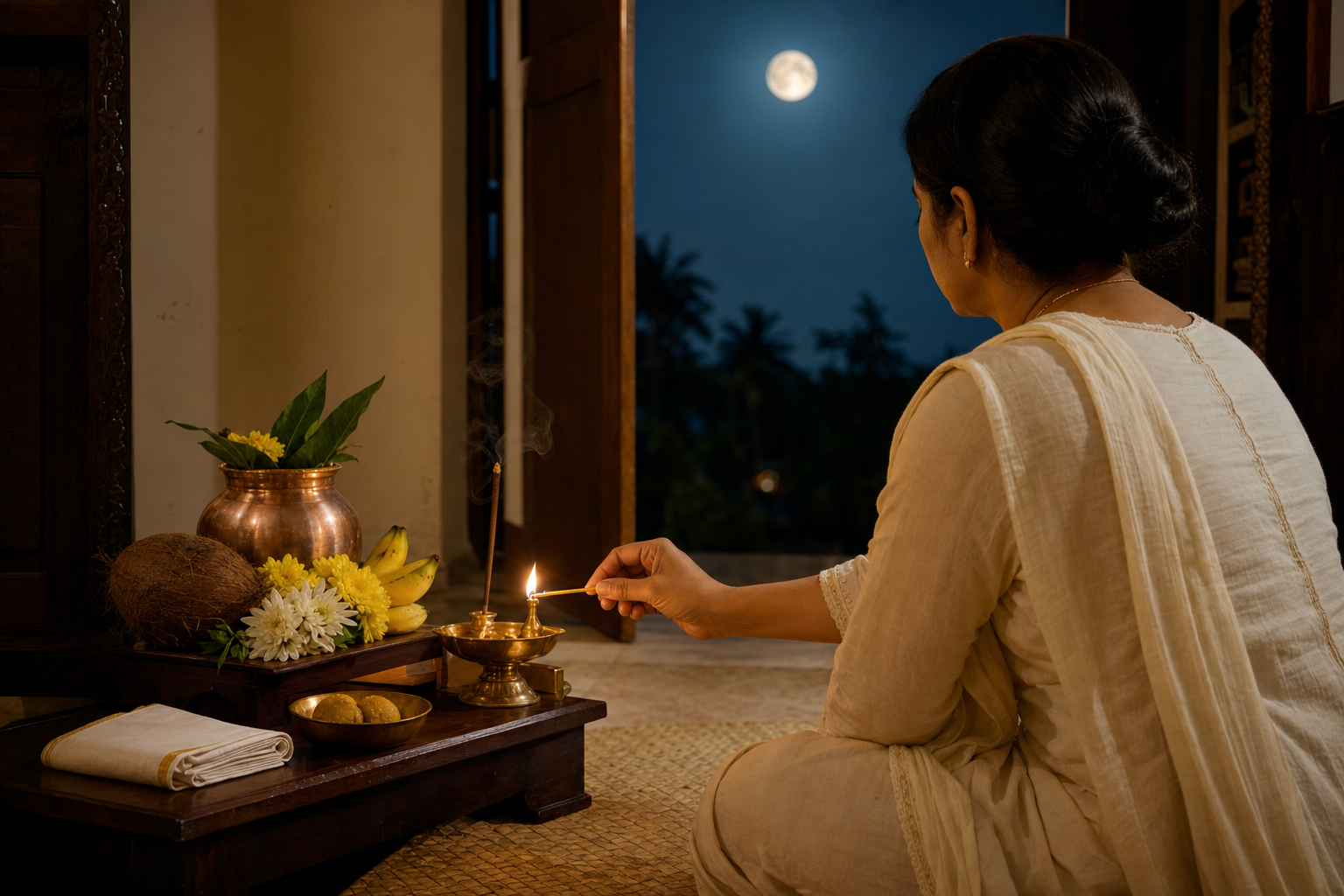
You can let the two-part lunar day shape the practice rather than treating the transition as a scheduling inconvenience. Chaturdashi lends itself to preparation and completion; Purnima carries the sense of ripening, clarity, and fullness. The change at dusk gives you a natural point at which to move from inward preparation to worship, generosity, or renewed discipline.
- Before the local Chaturdashi deadline: finish the sadhana or unfinished religious duty you have already undertaken, sit for japa, and prepare the puja space without pretending Purnima has begun early.
- After the local Purnima begins: light a deepa, state a clear sankalpa, perform the worship taught in your tradition, and conclude with daana or another concrete act of kindness.
- If a complete ritual is not possible: choose one sincere practice rather than assembling an improvised ceremony. Japa, meditation, scriptural reading, and charity all fit the day’s spiritual purpose.
Hindu households may observe Purnima through Satya Narayana Puja, sacred bathing, mantra recitation, and daana. Choose only the elements that belong to your family or sampradaya; a Panchang supplies timing, not initiation into an unfamiliar ritual.
The full moon also carries meaning across other Dharmic paths, but their disciplines should not be flattened into a single generic ceremony. Buddhist practitioners may connect the full moon with Uposatha, ethical renewal, and meditation. Many Jains may emphasize vrata, svadhyaya, and contemplation. Sikh practice now primarily follows the Nanakshahi solar calendar, even though the association of Guru Nanak’s Gurpurab with Kartik Purnima preserves an important historical lunar connection. Respectful kinship does not require pretending that every community follows the same calendar rule.
For personal reading, select a passage from the scripture you already receive as authoritative: the Upanishads, Dhammapada, Jain Agamas, or Gurbani, as appropriate. The useful question is not how many practices you can fit into one evening. It is whether the chosen practice leaves you more truthful, restrained, compassionate, and ready to serve.
Key takeaways for March 2, 2026
- Monday, March 2 begins under Shukla Paksha Chaturdashi in the commonly cited schedule.
- Purnima begins at 17:18 on March 2 and ends at 04:33 on March 3 under that schedule.
- Use a city-specific Panchang before fixing a formal vrata, puja, Nakshatra, or muhurta.
- Follow your lineage’s rule about evening or sunrise presence; the Gregorian date is not enough.
- Brahma Muhurta and Abhijit Muhurta refine timing but do not change which tithi is active.
- Near this full moon, Simha Rashi and Purva or Uttara Phalguni are reasonable general expectations, not substitutes for an exact local calculation.
Check your city’s tithi boundaries now, then write down whether your practice belongs before or after the transition. Once that decision is settled, March 2 becomes straightforward: use Chaturdashi for deliberate preparation and enter Purnima with one clear, tradition-rooted act.
References
