

You have chosen a civil date for a Magha Shukla observance, but your Panchang shows the tithi changing before the day ends. Should you perform the ritual in the morning, wait for the transition, or move it to another date?
The dependable answer begins with one distinction: the date on your phone is not the ritual clock. A tithi can begin or end at any hour, and its local boundary must be read together with the rule of the particular vrata, puja, or remembrance you intend to observe.
Start with the governing tithi, not the printed date
Magha Shukla Paksha is the waxing half of the lunar month of Magha. Within it, Ashtami, Dashami, Ekadashi, and the other tithis are lunar days rather than midnight-to-midnight civil dates. That is why an observance cannot always be scheduled correctly from a festival date alone.
Before making a sankalpa or arranging a family ritual, record five things:
- The governing tithi. Identify whether the observance belongs to Ashtami, Ekadashi, or another lunar day.
- The local start and end times. Use a Panchang calculated for the city where you will actually perform the observance.
- The observance rule. A tithi boundary tells you what lunar day is present; your sampradaya determines how that boundary is applied when choosing the civil date or fasting period.
- The ritual sequence. Note whether nitya karmas such as Sandhya Vandana must be completed before the special observance.
- Any supporting time window. If your household considers Nakshatra, Abhijit Muhurta, Rahu Kalam, or hora, check those only after establishing the correct tithi.
Location matters because tithi boundaries and related Panchang intervals can vary with longitude, latitude, and almanac convention. A time copied from another city may be close enough to look convincing while still being wrong for your sankalpa. Select your actual location rather than the nearest major city by habit.
Keep tithi and muhurta in separate columns when planning. The tithi answers, “Which lunar observance is active?” A muhurta answers, “Which interval within the available day is preferred for a particular act?” Rahu Kalam does not replace the tithi calculation, and an attractive Abhijit Muhurta does not turn one tithi into another.
How to handle a tithi that changes during the day
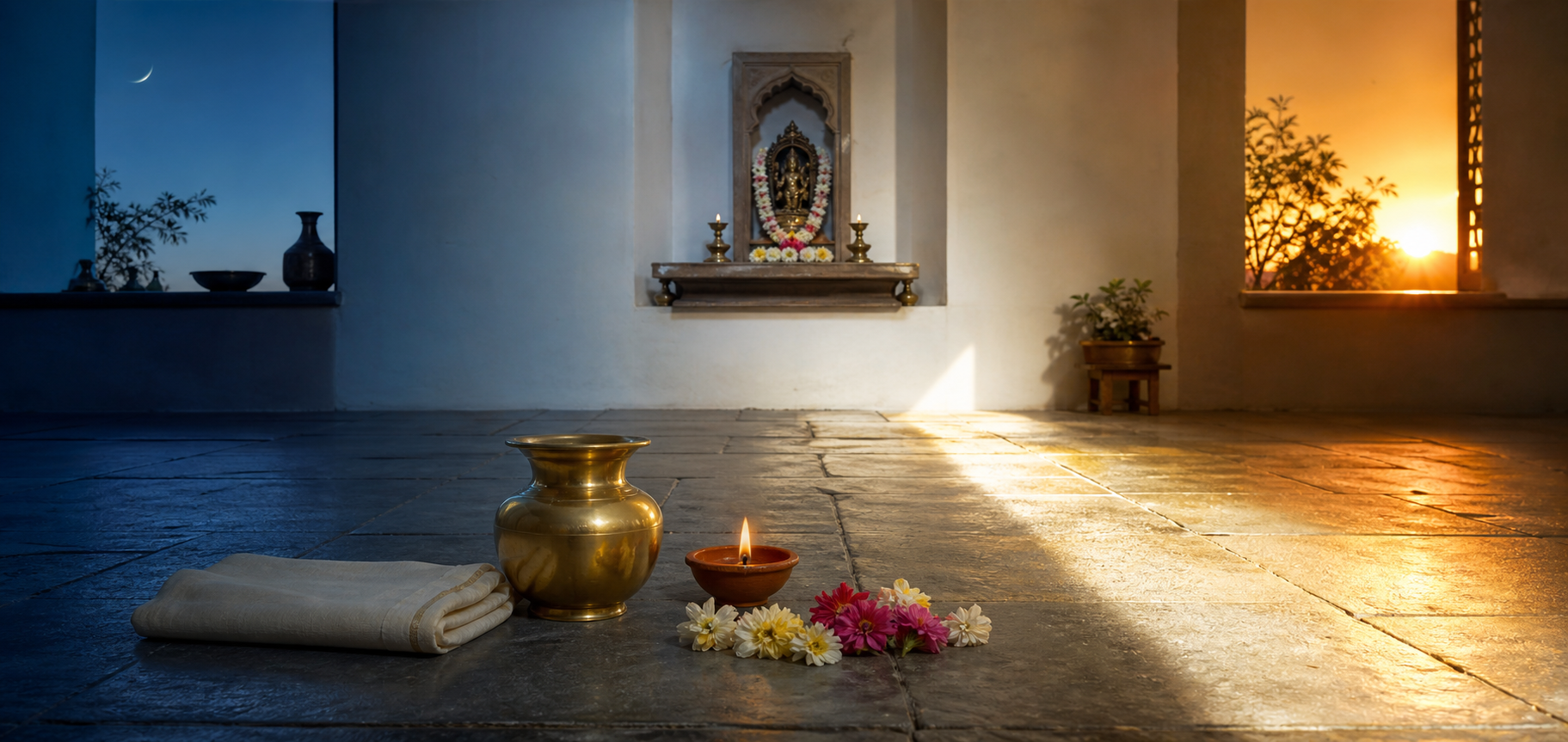
A transition day is easier to manage when you stop treating the whole civil date as one ritual unit. Divide the day at the local tithi boundary, then assign practices according to the tithi present and the vrata rule you follow.
Consider Wednesday, January 28, 2026. In most regions, Shukla Dashami continues until about 2:00 PM and Ekadashi follows. The wording “in most regions” is important: 2:00 PM is a planning example, not a universal boundary for every location.
Read such an entry in three passes:
- Before the transition: Dashami is the prevailing tithi. A household may use this period for orderly preparation, a simple sankalpa, lighting a diya, or brief stotra recitation.
- After the transition: Ekadashi is present. Japa, dhyana, bhajan, mindful charity, and sattvic conduct fit the contemplative direction of the tithi.
- For the vrata itself: Do not assume that the moment Ekadashi begins automatically determines the complete fasting schedule. Apply the Ekadashi rule received through your family, temple, or sampradaya.
This prevents two common mistakes. The first is performing a tithi-bound ritual simply because the festival name appears beneath a date on a calendar. The second is beginning or ending a vrata from the transition time alone without checking the lineage rule governing observance.
If your Panchang also displays Nakshatra, Rashi, Abhijit Muhurta, Rahu Kalam, and hora, write them down as a second layer. They may help you choose when to begin a discretionary puja, dana, or sankalpa, but they should not be confused with the calculation that identifies the tithi itself.
A workable Bhishma Ashtami schedule
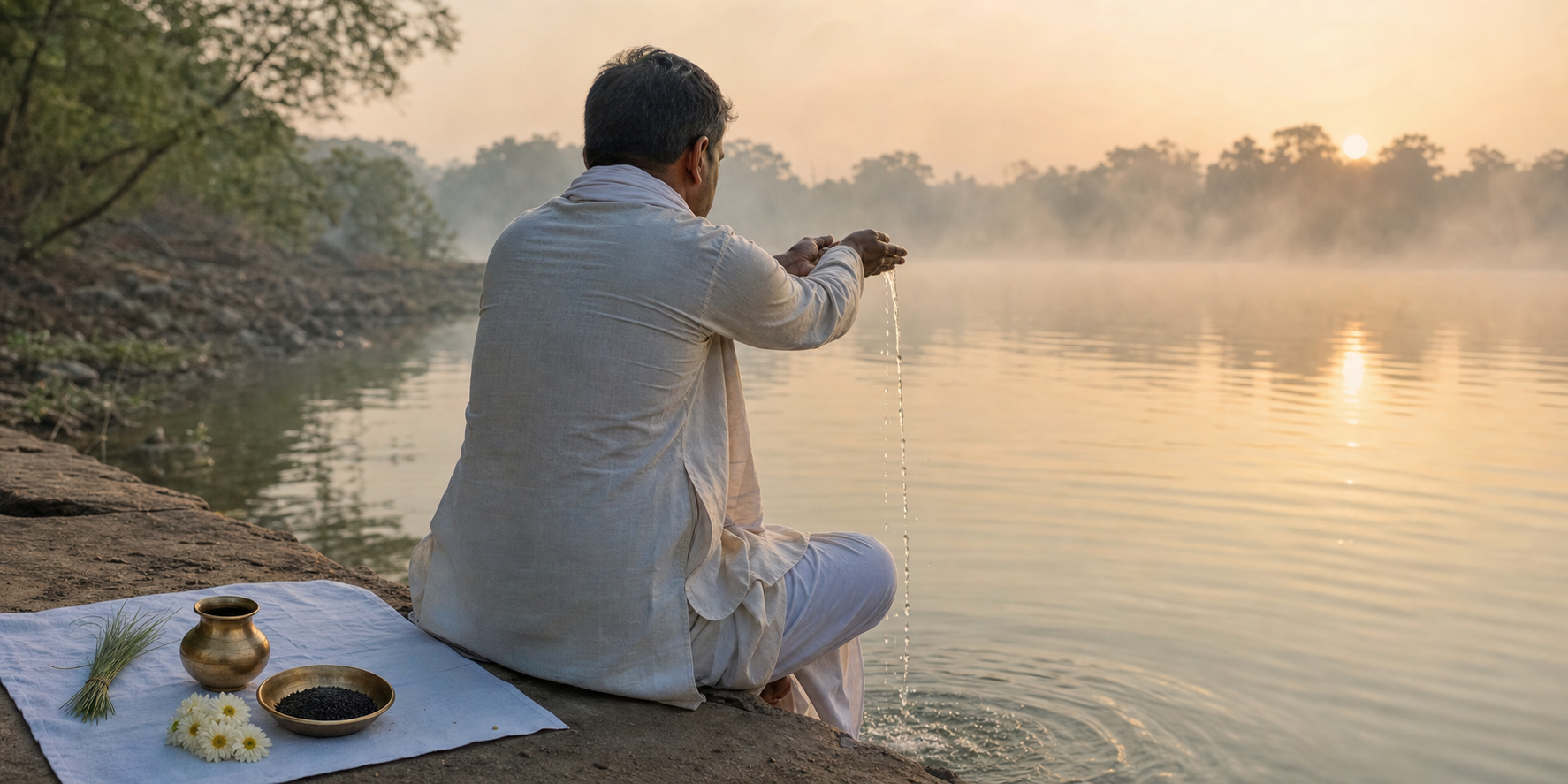
Bhishma Tarpanam is associated with Magha Shukla Ashtami. It honours Bhishma Pitamaha as a guardian and teacher of Dharma while joining remembrance, gratitude, self-restraint, and ethical resolve. Because formal tarpana procedures can carry family and sampradaya distinctions, separate the common devotional framework from lineage-specific mantras.
Once your local Panchang confirms Ashtami, use this sequence:
- Prepare the space. Choose a clean, quiet place. Facing east or north is customary. Keep clean water in a copper or steel vessel, a plate for the offerings, black sesame, and darbha or kusha grass if available. Flowers, tulasi leaves, and akshata may be added where customary.
- Settle the mind. Bathe and wear clean clothing. Moderate speech and a light, sattvic diet help preserve the reflective character of the observance.
- Complete nitya karmas first. Sandhya Vandana and other regular duties precede Bhishma Tarpanam where they form part of your daily discipline.
- Make a precise sankalpa. State the place, civil date, prevailing tithi, and purpose: remembrance of Bhishma Pitamaha and a resolve to strengthen steadfastness in Dharma.
- Perform achamana and invocation. Bring attention to the act through quiet breathing and achamana. “Om Namo Narayanaya” or “Om Namo Bhagavate Vasudevaya” may be used for Vishnu invocation.
- Offer til and water. Place darbha as prescribed if you know the family procedure. Offer a small quantity of black sesame with water while remembering Bhishma respectfully. Use the mantra received in your lineage; do not manufacture a formal mantra from an abbreviated internet instruction.
- Recite and reflect. Recite the Vishnu Sahasranama in full when possible. If time or ability does not permit that, offer selected names with attention. The Bhishma-stuti in Srimad Bhagavatam 1.9.33-43 and Mahabharata passages concerning Bhishma’s teachings can support reflection on truthfulness, courage, restraint, and service.
- Close deliberately. Offer a peace prayer such as “Sarve bhavantu sukhinah,” bow inwardly or physically to elders, teachers, and ancestors, and share prasada at home when feasible.
The items serve the act; they are not a test of worthiness. If darbha, flowers, akshata, or a preferred vessel cannot be obtained, clean water, focused remembrance, and sincere recitation preserve the accessible devotional core. Someone living away from the family home can make a simple symbolic water offering, recite Vishnu’s names, and contemplate Bhishma’s teachings.
Do not confuse that accessible form with permission to improvise every detail of a formal ancestral rite. If your family uses prescribed hand positions, darbha arrangements, mantras, or eligibility rules, ask an elder or knowledgeable priest before replacing them. Simplicity is appropriate when it is honest; invented precision is not.
When Panchangs or family instructions differ
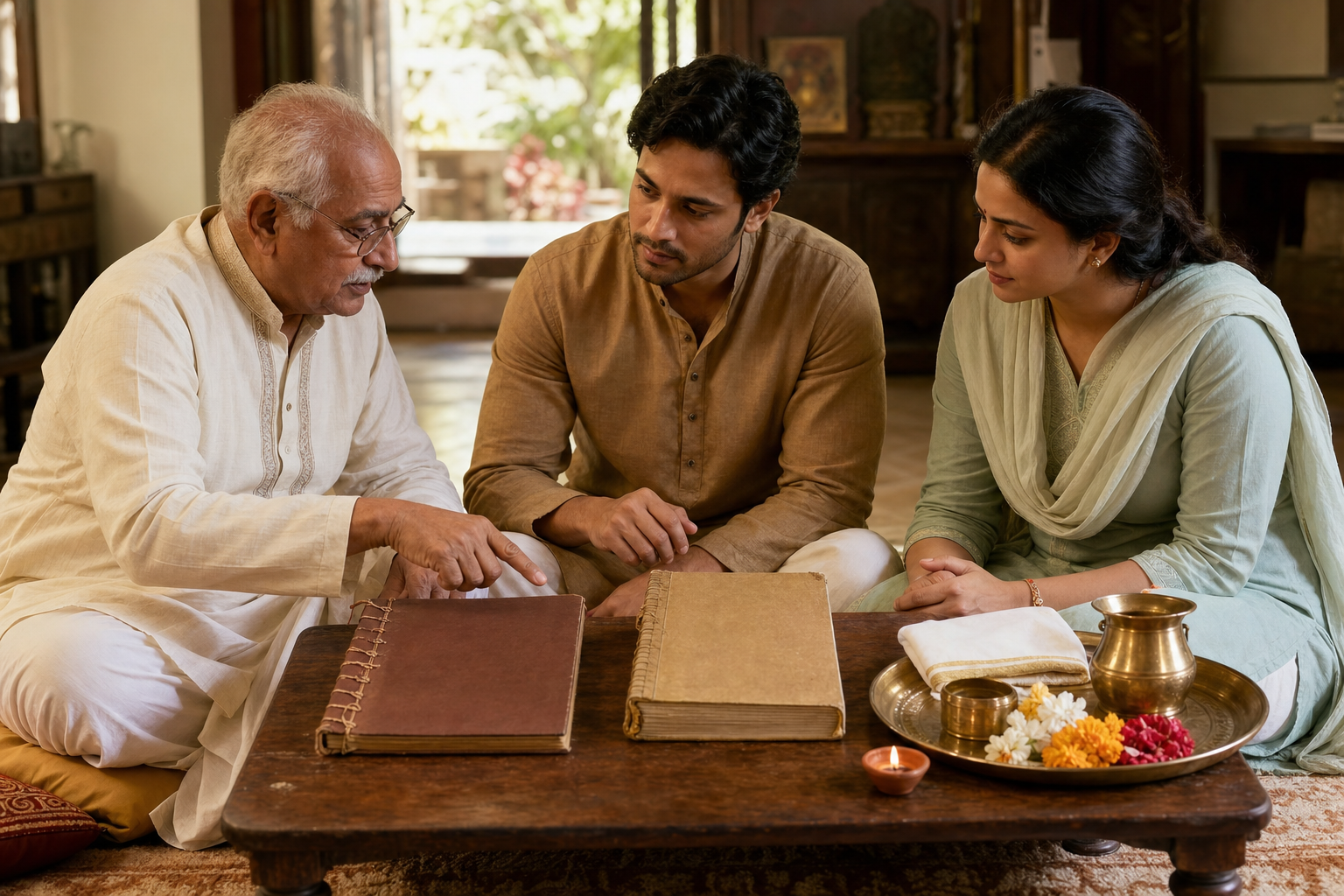
Two Panchangs can appear to disagree because they were calculated for different locations or follow different almanac conventions. Two households can also observe the same tithi differently because ritual application belongs to living sampradaya, not calculation alone. Treat these as separate questions.
- Resolve the location first. Compare calculations for the same city. Discard a timetable meant for another time zone or region.
- Check what is actually different. One entry may show the start of a tithi while another emphasizes its end. Write both boundaries on a single timeline before concluding that they conflict.
- Identify the decision you must make. Choosing when Ashtami is present is a calculation question. Choosing which civil day receives a particular vrata is a tradition question.
- Preserve an established family practice. If your household has a consistent procedure, ask the elder or priest who understands that procedure how the local tithi should be applied.
- Use a modest form when no detailed instruction is available. A clean space, local tithi awareness, water, japa, remembrance, and sattvic conduct are better than confidently inventing technical ritual details.
When seeking help, do not ask only, “What date is Bhishma Ashtami?” Give the priest or elder your city, the start and end times shown in your Panchang, and the exact practice you intend to perform. That turns a vague calendar question into a ritual decision they can answer.
Key takeaways and your next planning step
- A civil date is only the container; the local tithi is the first timing reference.
- A midday tithi change divides the day, but it does not by itself settle every vrata rule.
- Check location-specific Panchang data before looking at Nakshatra, Abhijit Muhurta, Rahu Kalam, or hora.
- For Bhishma Ashtami, complete regular nitya karmas before the special tarpanam where that is your established discipline.
- Use a simple devotional form when materials are unavailable, but consult your lineage before changing formal mantras or ancestral-rite procedures.
For your next Magha Shukla observance, make two calendar entries rather than one. In the first, record the locally calculated tithi window. In the second, set a preparation reminder to gather the ritual items, choose the text you will recite, and resolve any lineage question before the observance begins.
That small discipline keeps the Panchang in its proper role: not as a decorative festival list, but as a practical bridge between cosmic rhythm, inherited practice, and the promise you make in sankalpa.
References
- DharmaRenaissance Blog – Bhishma Tharpanam Vidhi on Bhishma Ashtami: Sacred Step-by-Step Procedure, Mantras, Slokas & Meaning
- DharmaRenaissance Blog – January 28, 2026 Panchang: Shukla Dashami to Ekadashi Timing, Tithi Guide & Good Time
