
If you are deciding when to keep Ekadashi in June 2026, the practical answer is straightforward in most regions: observe the vrata on Thursday, June 11, and plan to perform parana on the following morning. The important caution is that neither the widely circulated 5:53 PM tithi change nor a generic parana estimate should replace the timings for your city.
The evening transition into Dwadashi does not mean you should break the fast at once. Ekadashi observance is governed by sunrise-based rules, while parana belongs to the proper Dwadashi window after sunrise. Here is how to verify the day, follow a workable schedule, and avoid the timing mistakes that commonly arise when one Panchang is used for several locations.
Key takeaways for June 11
- Thursday, June 11, 2026, is Krishna Paksha Ekadashi across most regions, with Ekadashi continuing until approximately 5:53 PM before Dwadashi begins.
- Do not treat 5:53 PM as the time to eat. The vrata is normally concluded through parana on Dwadashi after sunrise, subject to your local and sectarian rules.
- For many locations, the expected parana day is Friday, June 12. Vaishnava practitioners should also avoid Hari Vasara, the first quarter of Dwadashi.
- Your almanac may call this Apara Ekadashi or Achala Ekadashi. A different name can reflect Amanta and Purnimanta month reckoning rather than a different observance.
- Thursday’s Rahu Kaal, Yamaganda, and Gulika Kaal must be calculated from local sunrise and sunset. The familiar clock ranges are illustrations, not universal timings.
- Do not guess the Nakshatra, Chandra Rashi, Yoga, or Karana from the date alone. Check their values for your location and for the particular time at which you need them.
First settle the date according to your tradition
A civil date begins at midnight, but a vrata is not assigned merely by asking which tithi occupies the largest number of clock hours. Ekadashi determination is generally tied to the tithi present at local sunrise. That is why an evening change into Dwadashi can still produce an unambiguous Ekadashi observance on June 11 and a next-morning parana.
Smarta practice ordinarily observes the civil day on which Ekadashi is present at sunrise. Vaishnava practice applies an additional test: it avoids Dashami-viddha Ekadashi, where the required sunrise condition is affected by Dashami, and prefers a clean Ekadashi. If a temple calendar and a general-purpose calendar give different instructions, the difference may arise from these rules rather than from an astronomical error. Follow one calendar that applies the rules of your sampradaya instead of combining the fasting date from one calculation with the parana time from another.
The name can create a second, unnecessary confusion. Depending on the regional calendar and whether the month is counted by the Amanta or Purnimanta system, this Krishna Paksha observance may be identified as Apara Ekadashi or Achala Ekadashi. The devotional purpose remains the same: self-restraint, remembrance of dharma, clarity of intention, and conduct made gentler by conscious discipline.
Before June 11, open a reliable Panchang configured for your actual city and write down these entries:
- Local sunrise and sunset on June 11.
- Whether Ekadashi is present at sunrise.
- The local-clock time at which Ekadashi ends and Dwadashi begins.
- Local sunrise on June 12.
- The end of Hari Vasara, if your practice observes that restriction.
- The permitted parana opening and cutoff.
- Rahu Kaal, Yamaganda, and Gulika Kaal if you are planning a new undertaking.
- Nakshatra, Chandra Rashi, Yoga, and Karana only if your sankalpa or planned rite requires them.
This short record prevents the most common error: copying one time from a calendar prepared for another city while assuming every other part of the schedule remains valid. Time zones affect the displayed clock time, while latitude, longitude, and the relation between the tithi and local sunrise affect how the observance is applied.
A practical vrata schedule from sunrise to parana
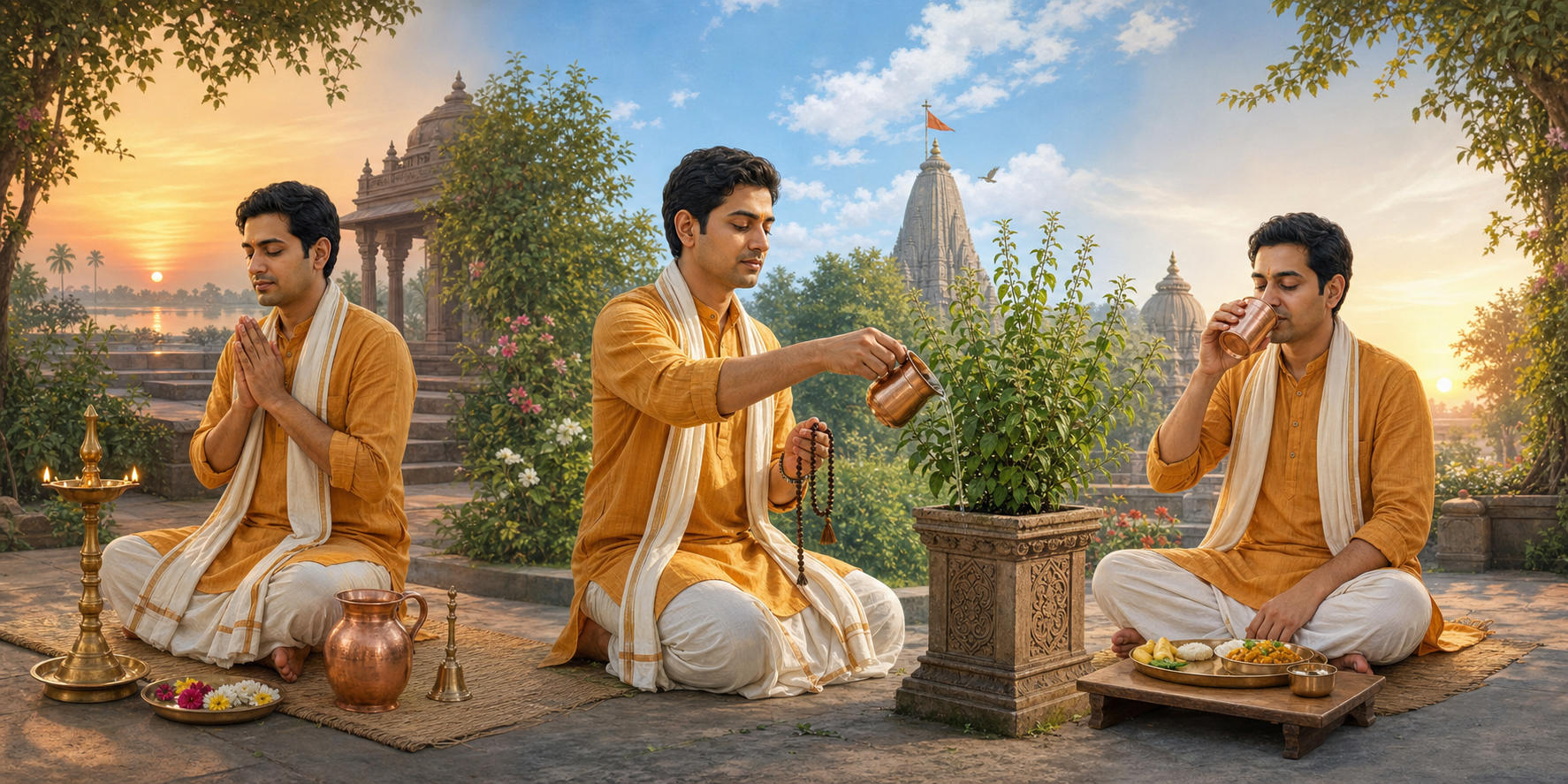
You do not need to fill every hour with ritual activity. A sustainable observance has a clear beginning, a disciplined daytime rhythm, and a correctly timed conclusion.
- Before or around sunrise on June 11: Rise early and make a definite sankalpa appropriate to your household and tradition. Confirm the next morning’s parana window now; waiting until the fast is nearly over invites avoidable uncertainty.
- During the morning: Give the quieter part of the day to japa, dhyana, worship, or a short reading from the Bhagavad-Gita or Bhagavata Purana. Choose a manageable commitment and keep it attentively rather than accumulating practices you cannot complete.
- Through the day: Treat restraint in speech, anger, consumption, and distraction as part of the vrata. Dana, kindness, reverence toward elders, and practical help within the household give the discipline an ethical expression.
- At the evening tithi transition: In many regional calculations, Ekadashi ends at about 5:53 PM and Dwadashi follows. This is a calendar transition, not an automatic instruction to break the fast. Continue according to your vrata rules and the parana directions in your local Panchang.
- After sunrise on June 12: Perform parana while Dwadashi remains in force. Vaishnava practice waits until Hari Vasara has ended. Complete the vrata with gratitude and take fruit, phalahara, or a light sattvic preparation according to the custom you follow.
A vrata should not become a health gamble. If fasting conflicts with your medical needs, do not treat a calendar page as medical instruction. Follow qualified medical guidance, and observe the day through prayer, japa, dana, mindful speech, and simple sattvic food as appropriate. Members of the household who are not fasting can still protect the contemplative character of the day by keeping meals and activity simple.
Use Thursday’s muhurta without copying generic clock times
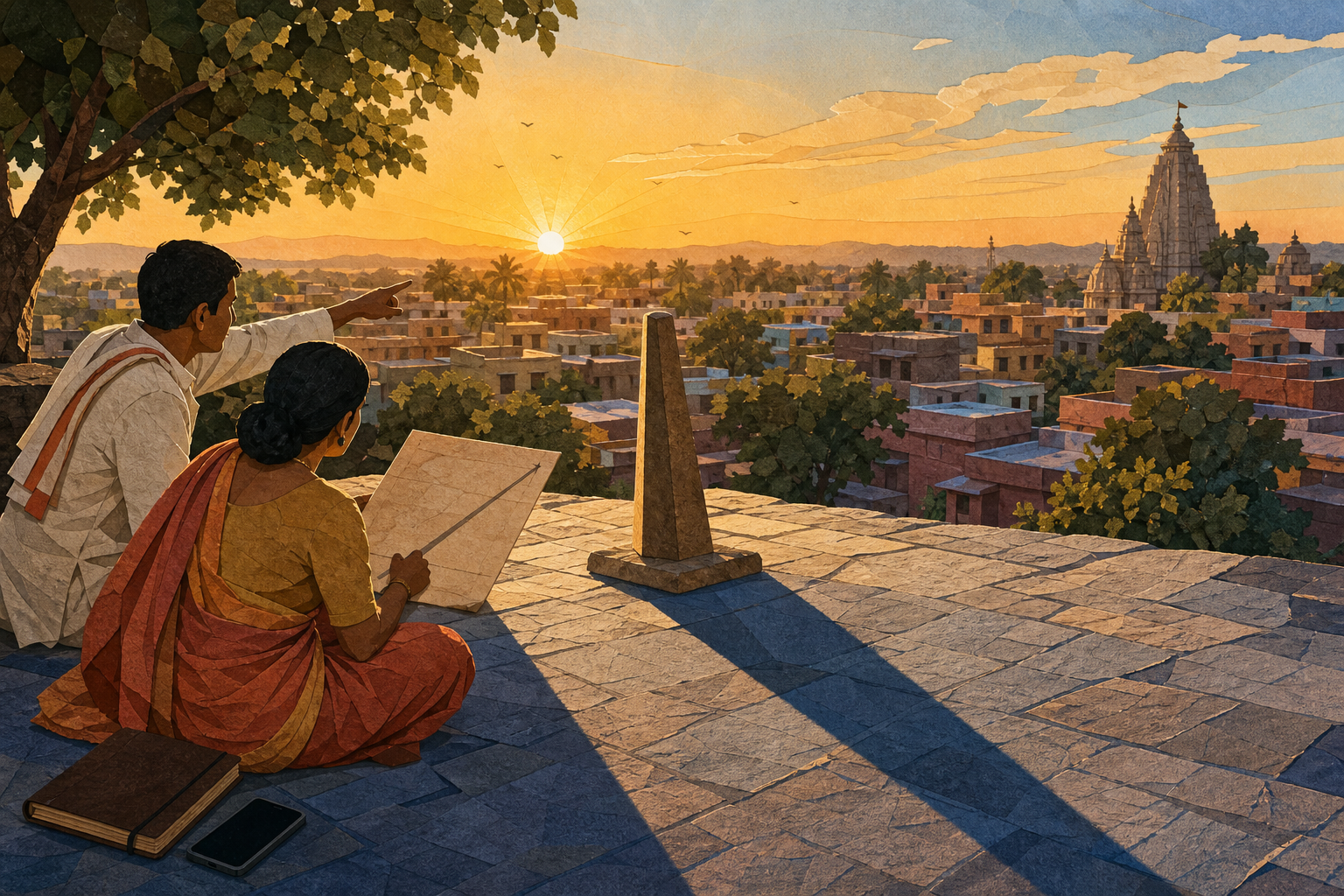
Abhijit Muhurat is useful when a dharmic or necessary undertaking cannot easily be moved to another day. It is centered on local solar noon and extends for roughly 24 minutes on either side. Solar noon is not automatically 12:00 PM on the civil clock, so obtain the actual interval from a location-aware Panchang rather than creating it by adding and subtracting minutes from noon.
Rahu Kaal, Yamaganda, and Gulika Kaal are derived differently. The daylight interval from sunrise to sunset is divided into eight equal parts, and each Thursday period occupies a particular segment. The table below shows the rule and a simple twelve-hour-day illustration.
| Period | Thursday daylight segment | If sunrise is 6:00 AM and sunset is 6:00 PM | Practical use |
|---|---|---|---|
| Yamaganda | First segment | About 6:00-7:30 AM | Avoid initiating new work |
| Gulika Kaal | Third segment | About 9:00-10:30 AM | Avoid initiating new work |
| Rahu Kaal | Sixth segment | About 1:30-3:00 PM | Avoid initiating new work |
Those sample ranges work only when daylight lasts exactly from 6:00 AM to 6:00 PM. If your local day is longer, shorter, earlier, or later, every segment changes. Use the table to understand the calculation, not as a ready-made schedule for Toronto, Delhi, London, Singapore, or any other city.
For a small errand, message, or routine decision, Choghadiya can provide a simpler secondary check. Amrit, Shubh, and Labh are treated as favorable; Chal is neutral; Rog, Kal, and Udveg are avoided for beginnings. Do not let this quick method override a formal muhurta selected for a substantial samskara or household rite.
The same demand for local precision applies to Nakshatra and Chandra Rashi. The Moon moves through roughly one Nakshatra each day and may cross a Rashi boundary near the time you plan to act. Ask for the value at sunrise if it is needed for the day’s sankalpa, or at the actual event time if it is needed for muhurta. Yoga, calculated from the combined solar and lunar longitudes, and Karana, representing half of a tithi, provide further refinement. They are useful when your rite calls for that granularity; they should not be filled in by inference when the local values are unavailable.
Keep the discipline larger than the food rule
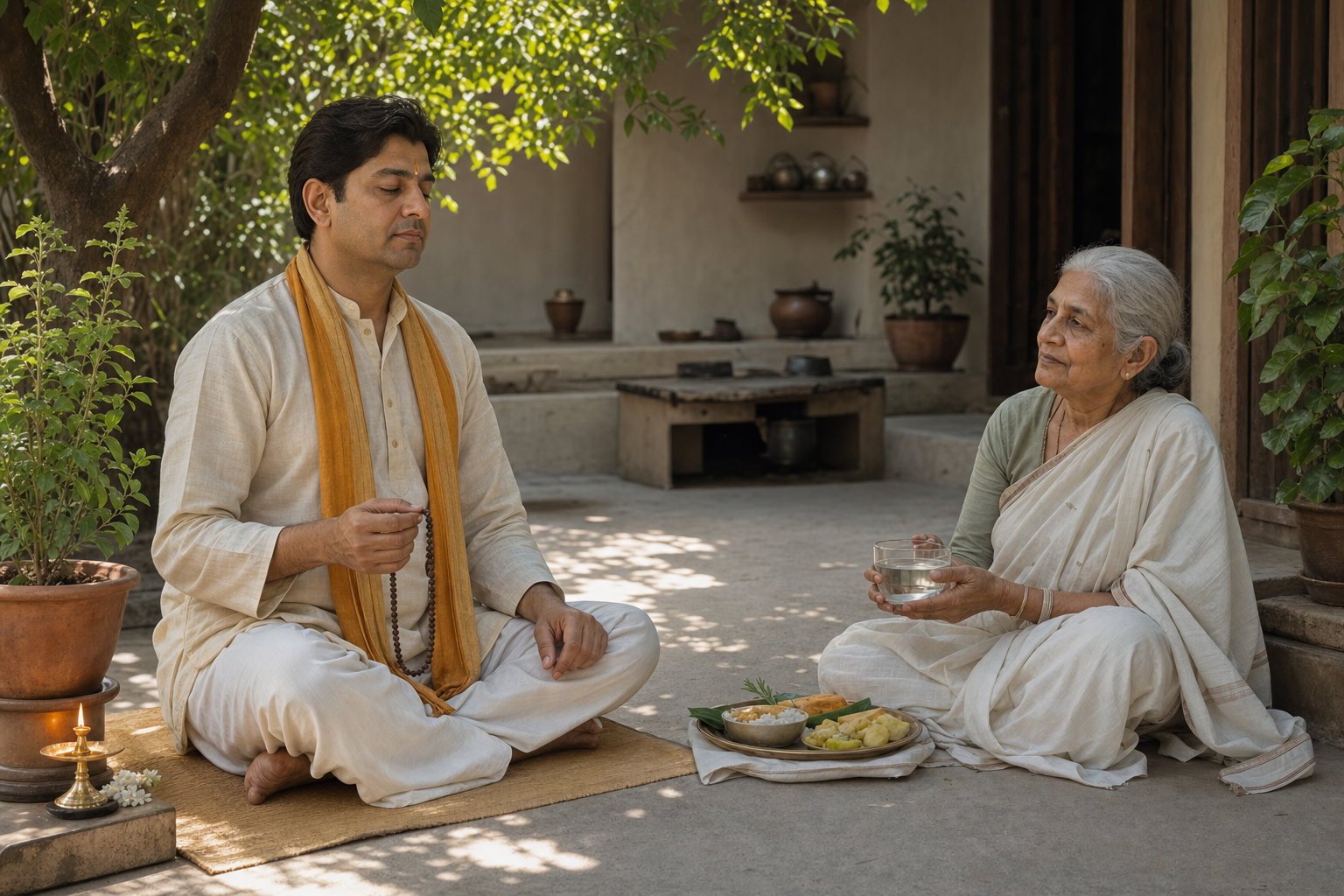
The calendar tells you when to observe, but your conduct determines what the observance becomes. It is possible to keep an exact food restriction while spending the day in quarrel, agitation, or compulsive distraction. That preserves the outer rule and loses much of its purpose. Choose one restraint that reaches your ordinary behavior: pause before harsh speech, reduce unnecessary consumption, finish a neglected act of seva, or set aside an undisturbed period for remembrance.
Families need not demand identical levels of fasting from every member. One person may keep the formal vrata while another maintains simple sattvic meals, joins the reading, assists with worship, or participates in dana. A calm household supports the observant more effectively than policing everyone’s plate.
This union of lunar observance and ethical renewal is recognizable across the wider Dharmic family. Buddhist Uposatha emphasizes renewed discipline, Jain Posadha joins fasting with ahimsa and purification, and Sikh life gives central place to simran, seva, and inner restraint. These practices are not interchangeable rites, but their shared seriousness helps us see why kindness and self-mastery cannot be separated from religious observance.
Your most useful preparation is therefore small and concrete. Before June 11, save your city’s Panchang entry, record the June 12 parana opening and cutoff, decide what discipline you will actually keep, and arrange a light sattvic meal for the conclusion. Once those decisions are made, the day can be given to vrata instead of last-minute calendar searching.
References
