
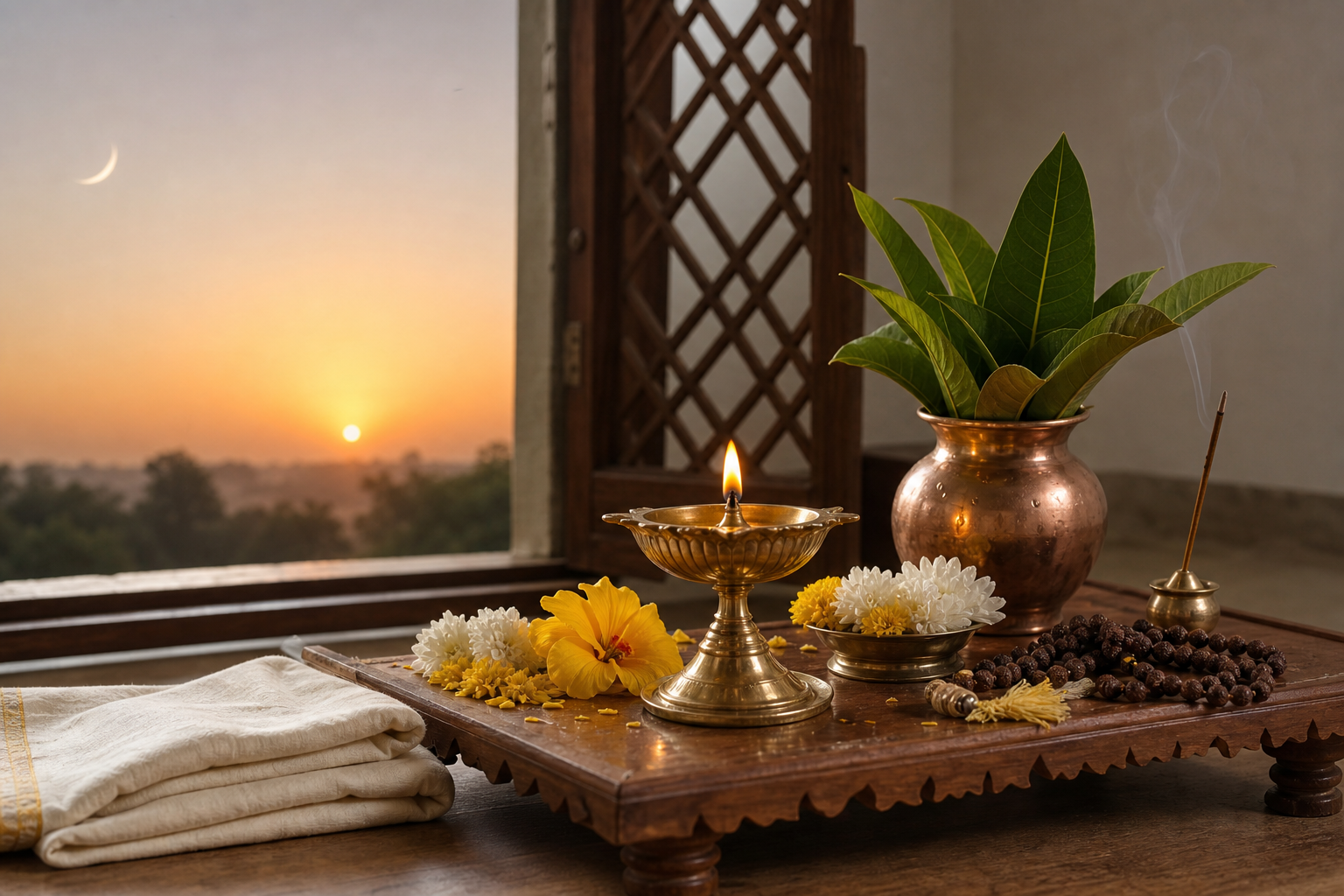
If you are deciding whether Friday, January 23 should be treated as Chaturthi or Panchami, the practical answer for ordinary daytime worship is Panchami in most regions. Shukla Paksha Chaturthi continues until 1:17 AM, after which Shukla Paksha Panchami prevails for the remainder of the date.
That answers the tithi question, but it does not give you a universal shubh muhurta, Nakshatra, or Rashi. Those details require a Panchang calculated for your location. The useful approach is to separate the broad identity of the day from the precise local timing of a ritual or important undertaking.
January 23 Panchang at a glance
| Calendar element | Reading | How to use it |
|---|---|---|
| Date | January 23, 2026 | Use this civil date when selecting your city-specific Panchang. |
| Weekday | Friday | Confirm that your calendar is displaying the correct date and time zone. |
| Paksha | Shukla Paksha | The Moon is in its waxing half, giving the day a general orientation toward growth and constructive effort. |
| Opening tithi | Chaturthi until 1:17 AM | This matters mainly for observances performed near the overnight transition. |
| Following tithi | Panchami after 1:17 AM | For most locations, regular morning and daytime observances fall within Panchami. |
| Exact muhurta, Nakshatra, and Rashi | Location-dependent | Check a reliable local Panchang rather than copying another city’s timings. |
A tithi is a lunar division, so it does not begin and end neatly at midnight like a civil date. This is why one date can contain part of Chaturthi and part of Panchami. The transition time tells you which tithi is operating when an observance actually begins.
You do not need to begin worship at 1:17 AM merely because the tithi changes then. If your normal puja takes place after waking, Panchami is the relevant devotional setting in most regions. The boundary becomes important when a vrata, sankalpa, temple service, or family custom has a rule tied to the tithi at a particular time.
Use the 1:17 AM transition without making a calendar mistake
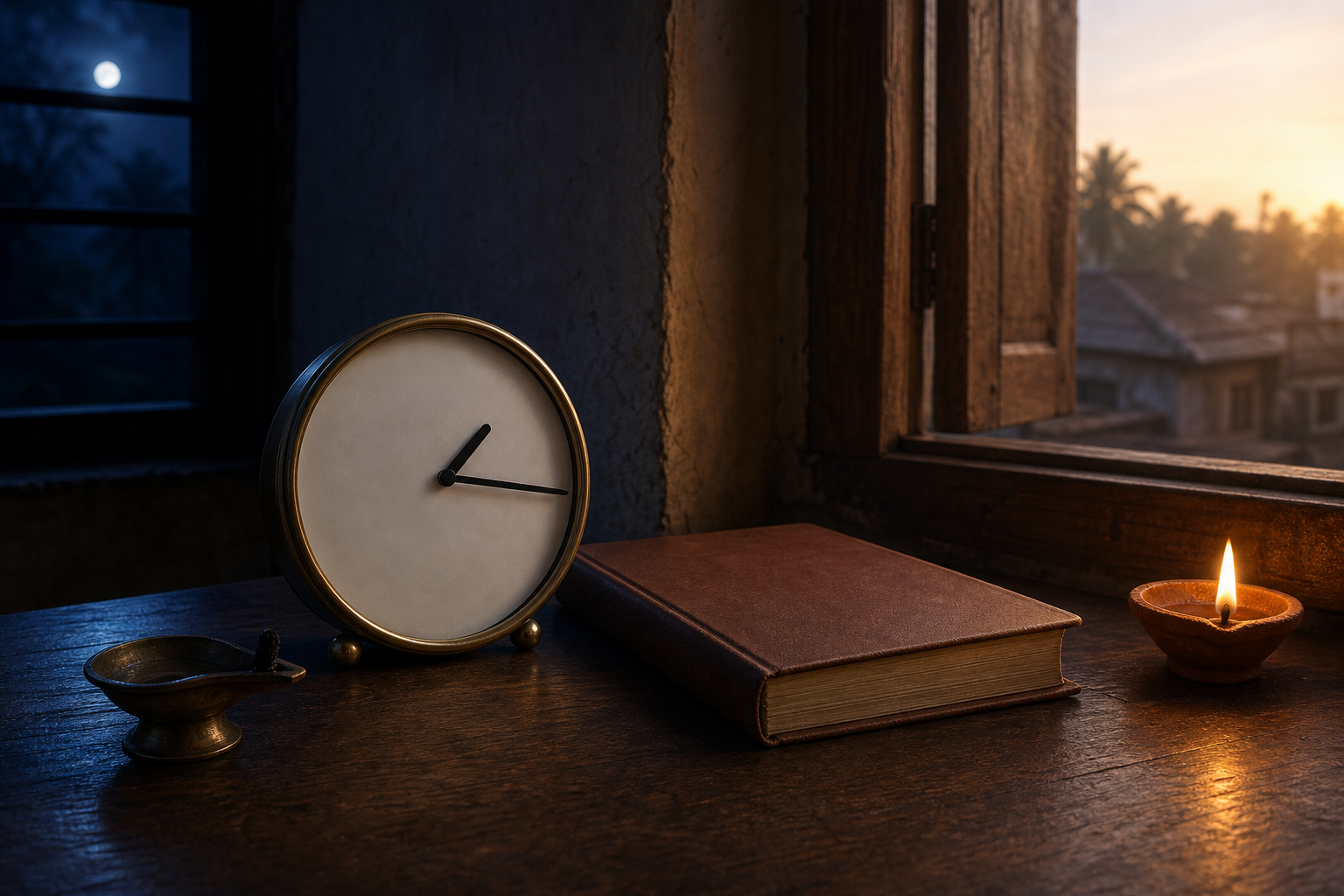
The safest decision depends on what you are planning. A simple daily observance needs less calculation than a formal ceremony, and an activity near the tithi boundary needs more precision than one performed well into the day.
- For ordinary morning puja, sacred reading, or seva: use Panchami as the day’s working tithi in most regions.
- For worship before or close to 1:17 AM: verify the transition in your own city’s Panchang before deciding whether the act belongs to Chaturthi or Panchami.
- For a vrata governed by sunrise or another prescribed ritual moment: follow the rule of your sampradaya and the local tithi at that moment. The civil date alone is not enough.
- For a temple or family ceremony: follow the temple’s calendar or the officiating priest’s local calculation. A general Panchami label is not a complete ceremonial muhurta.
- For relatives joining from another country or time zone: do not assume one printed clock time applies everywhere. Either let each household follow its local Panchang or agree to follow the location where the principal rite is being conducted.
The distinction matters because a correct tithi can still be paired with the wrong local clock time. Time zones, sunrise, sunset, and regional calculation practices can shift the displayed schedule. Treat 1:17 AM as the general reference supplied for the date, not as a clock value to transplant unchanged into every city.
Check these local details before choosing a shubh muhurta

Panchami describes the lunar day; it does not make every minute equally suitable for every activity. A shubh muhurta is a narrower window. Its calculation can depend on local sunrise and sunset as well as the day’s Yoga and Karana. Nakshatra and Rashi add further context when your observance or family tradition uses them.
Use this short verification process if the exact timing matters:
- Select the correct city. Use the place where the observance will occur, not your birthplace, family hometown, or the city where a calendar was published.
- Confirm the date and time zone. Make sure the Panchang is showing Friday, January 23, 2026 for that location.
- Read the tithi ending time. Verify when Chaturthi ends and Panchami begins locally, especially if your activity is near the overnight boundary.
- Record the relevant Nakshatra, Yoga, and Karana. Note their ending times as well as their names; a change during your planned window may affect a formal selection.
- Check Rashi only where it is used. If your custom considers the Moon’s Rashi or a person’s own astrological factors, use the locally calculated entry rather than inferring it from the date.
- Choose a muhurta for the actual activity. A suitable time for routine worship is not automatically the prescribed time for every vrata, samskara, or family ceremony.
You do not need this full checklist for a lamp offering, personal prayer, or a few minutes of svadhyaya. It is most useful when a rule depends on sunrise, an observance begins near 1:17 AM, or several people must coordinate a formal rite. Precision should serve dharma, not turn a simple daily practice into anxiety.
Build a practical Panchami observance around learning and service
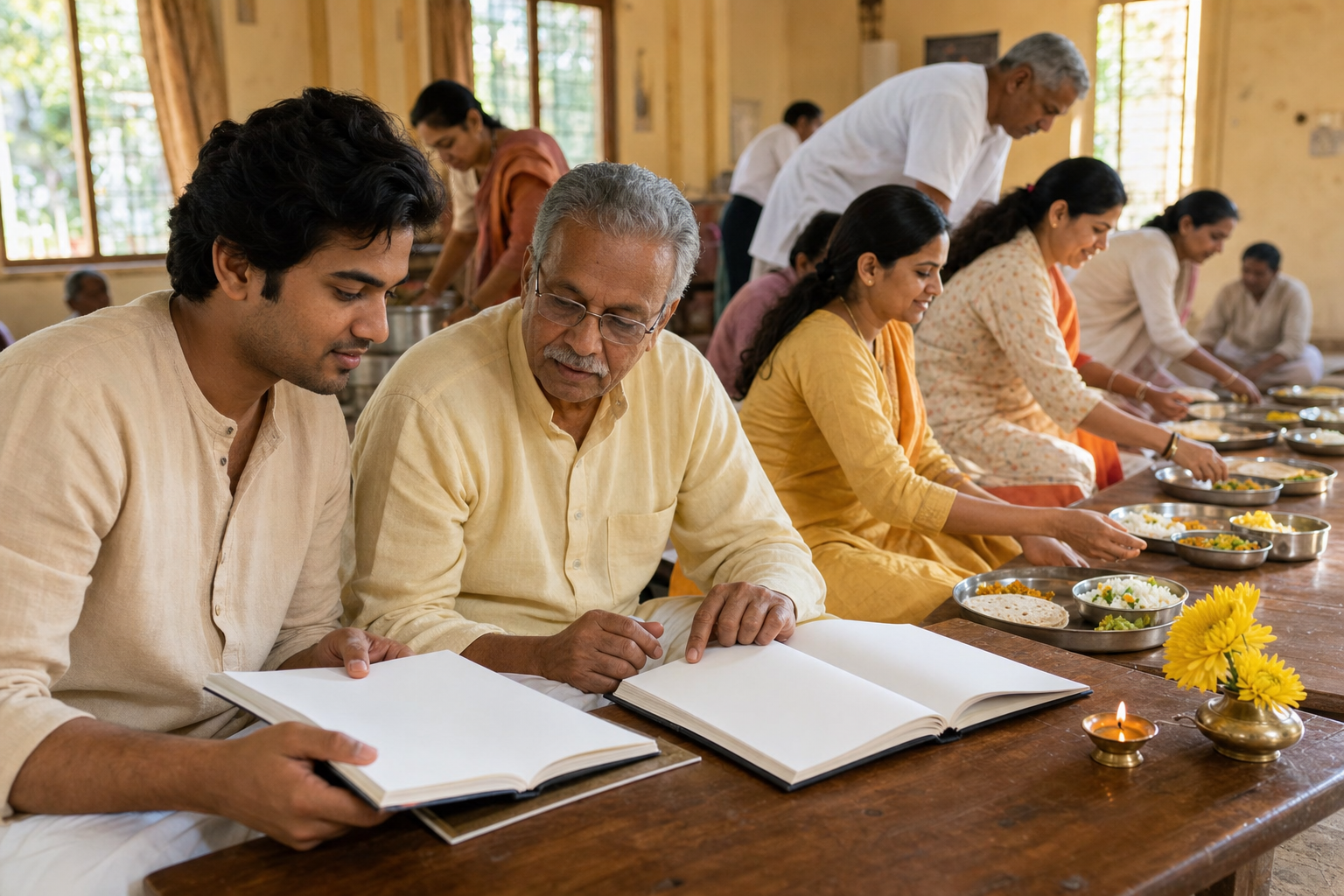
The movement from waxing Chaturthi into Panchami offers a natural devotional arc. Chaturthi can be approached through discipline and steady effort; Panchami supports learning, gentle expansion, and purposeful forward movement. These are guiding themes rather than universal ritual commands, so your family and sampradaya customs remain primary.
If no specific vrata has been prescribed for you, a simple Panchami routine can give the day structure without inventing obligations:
- Begin with your customary morning worship. Keep the sankalpa appropriate to the practice you actually follow. There is no need to add an unfamiliar rite simply because the tithi is Panchami.
- Give time to svadhyaya. Select one passage from a sacred text or teaching in your tradition. Read slowly enough to identify one instruction you can carry into the day.
- Turn the reading into conduct. Choose one concrete act of seva: help someone with a task, share food or prasad, support a community need, or offer patient attention where it is needed.
- Close with gratitude. An evening lamp, prayer, or quiet recollection can mark what moved forward and what still requires disciplined effort.
This structure also works in a household containing different Dharmic practices. Family members do not have to pretend their rites are identical. They can retain their own disciplines while meeting in shared commitments to study, restraint, service, gratitude, and respect for sacred time.
Key takeaways
- Friday, January 23, 2026 begins with Shukla Paksha Chaturthi, which continues until 1:17 AM.
- Shukla Paksha Panchami follows and remains the operative tithi for the rest of the date in most regions.
- For ordinary daytime puja, study, temple visits, and seva, Panchami is the practical working tithi.
- Do not copy an exact muhurta, Nakshatra, or Rashi from another location; verify the city, time zone, sunrise-based schedule, Yoga, and Karana.
- A formal vrata or ceremony should follow its prescribed rule and the relevant local calculation, not merely the date’s general Panchami designation.
- A simple observance can combine customary worship, svadhyaya, one concrete act of seva, and evening gratitude.
Before January 23, save a Panchang set to the city where you will worship, or confirm the schedule with the temple conducting the rite. Once the timing is settled, choose one passage to study and one act of service to complete. That gives Panchami a lived purpose instead of leaving it as another label on the calendar.
References
