
You have decided to keep a vrata, but your family calendar gives one date, the temple announces another, and an app displays a third. Do not choose whichever date is most convenient. First determine what each calendar is measuring.
A dependable observance comes from matching the vow to its governing tithi, your location, and the practice of your household or sampradaya. Once those are settled, the ritual itself can be simple.
A sacred date is a rule, not merely a square on a calendar

A Gregorian date runs from midnight to midnight. A Hindu observance may instead be governed by a tithi, the tithi present at local sunrise, a particular part of that tithi, a nakshatra, a pre-dawn period, or a temple’s inherited ritual rule. A tithi can begin or end during a civil day, so two adjacent dates may both appear in otherwise competent calendars.
This is why the question “What date is the vrata?” is often incomplete. Ask five questions instead:
| Question | Calendar layer | What you should record |
|---|---|---|
| In which sacred month does it occur? | Masa | The regional month name and the calendar convention being used |
| Is it in the bright or dark half? | Paksha | Shukla Paksha or Krishna Paksha |
| Which lunar day governs it? | Tithi | The tithi name and its local beginning and ending times |
| Does a part of the day matter? | Sunrise or muhurta | Pre-dawn, sunrise, daytime, evening, or another specified window |
| Whose observance rule applies? | Sampradaya, household, or temple | The authority you intend to follow for this vrata |
Month conventions also matter. An Amanta calendar concludes the lunar month at amavasya, while other regional reckonings can label part of the same lunar cycle differently. If your panchang offers a calendar-system setting, do not change it simply to make one screen match another. Use the convention followed by your household or the temple where you will worship.
The 2026 Avighna Vrata offers a clear example. Its identity is Falgun Shukla Chavithi-Panchami, with February 22 as the principal date. The Gregorian date helps you make plans, but the sacred definition is the lunar-month, paksha, and two-tithi combination. Local sunrise and tithi timings still need to be checked.
Resolve conflicting dates in a disciplined order
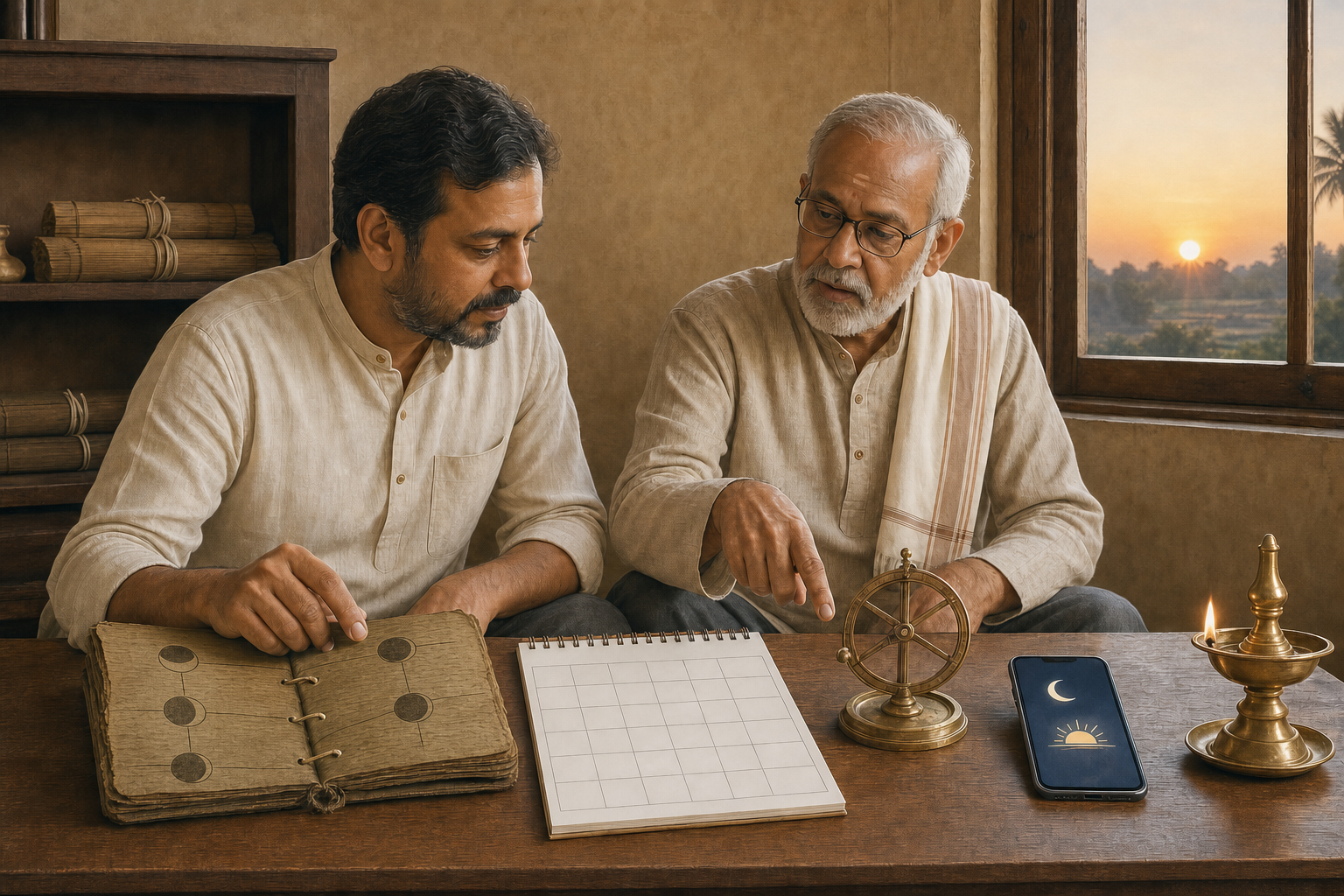
Most calendar disputes become manageable when you stop comparing date labels and compare the assumptions beneath them. Work through the following sequence before announcing a family observance.
- Name the exact observance. “Ekadashi” is not enough if you mean Vaikunta Ekadasi at a particular temple. “Magha practice” is not enough if you mean a daily Magh Snan rather than a special amavasya or purnima observance.
- Set your actual location. Use the city where you will perform the vrata, not the city where a relative lives and not Indian Standard Time if you are observing abroad. Tithi boundaries and sunrise are local.
- Choose the tradition before comparing results. A household panchang, a sampradaya calendar, and a temple schedule can answer related but different questions. Decide whether you are planning household worship, keeping a lineage-specific vrata, or attending a temple festival.
- Write down the full tithi window. Record when the tithi begins, when it ends, and whether it is present at local sunrise. A date without these details cannot explain why another calendar chose the adjacent day.
- Check the required time of practice. A pre-dawn bath, a sunrise offering, an all-day fast, and an evening puja do not use the same decision rule merely because they occur during one tithi.
- Confirm public worship separately. A temple’s gate opening, procession, alankaram, or special darshan is an operational schedule as well as a sacred observance. Follow the temple’s announcement for attendance even if your household practice uses another local convention.
If two calendars still differ, preserve the distinction rather than declaring one fraudulent. You can keep your household vrata according to your family’s trusted panchang and attend temple worship according to that temple’s schedule. What you should not do is silently combine rules from several calendars until they produce your preferred date.
A Gregorian year can also contain two occurrences of an annual lunar observance. At Chennai’s Triplicane Parthasarathy Temple, Vaikunta Ekadasi was listed on January 10 and December 30 in 2025. Those are two occurrences within the same civil year, not two optional dates for one event. Label each entry fully before sending it to relatives or adding it to a shared calendar.
Match your planning method to the kind of observance
For a vrata spanning two tithis
Do not compress a two-stage vrata into a single generic festival reminder. For Avighna Vrata, Chavithi can hold the sankalpa and beginning of Ganesha worship, while Panchami can consolidate the discipline and dedicate its fruit. Put both days on your calendar, even when one is described as the principal date.
Your preparation note might include a morning bath, a sattvic meal plan or suitable fast, Ganesha puja, durva grass, flowers, modaka, mantra-japa, and an act of dana. “Om Gam Ganapataye Namah” is an appropriate short mantra within the observance described here. The point of the two-day structure is not to double the quantity of ritual objects. It is to carry one intention steadily from beginning to completion.
For a month-long discipline
A monthly observance needs a repeatable routine, not thirty elaborate ceremonies. Magh Snan is centered on a bath before sunrise, ideally during Brahma Muhurta, and may be followed by sankalpa, japa, Surya arghya, and dana. Mauni Amavasya and Maghi Purnima receive particular emphasis during the month.
Build the routine around what you can keep consistently: wake, bathe, sit for a defined period of silence or japa, offer arghya at sunrise, and begin ordinary duties. Add the special tithis to your calendar as deeper observance days. If you cannot travel to a tirtha, a sincere home bath remains available; some households add Ganga jal or tila according to their custom. Lack of a particular material should not become an excuse to abandon truthfulness, restraint, or charity.
For a temple-centered festival
A temple festival requires two plans: your vrata and your visit. Vaikunta Ekadasi at the Triplicane Parthasarathy Temple includes Ekadashi discipline, Vishnu Sahasranama or pasuram recitation, and darshan through the Paramapada Vasal. Your personal calendar should therefore contain the fast or devotional practice, while a separate entry should contain the temple’s current admission and darshan instructions.
For a crowded darshan, confirm the temple notice close to the event, arrive early, carry minimal baggage, and plan hydration, transport, and mobility support for elders or children. Do not infer gate-opening times from the tithi alone. The sacred calendar identifies the observance; the temple controls the public schedule.
Build a vrata that protects its purpose
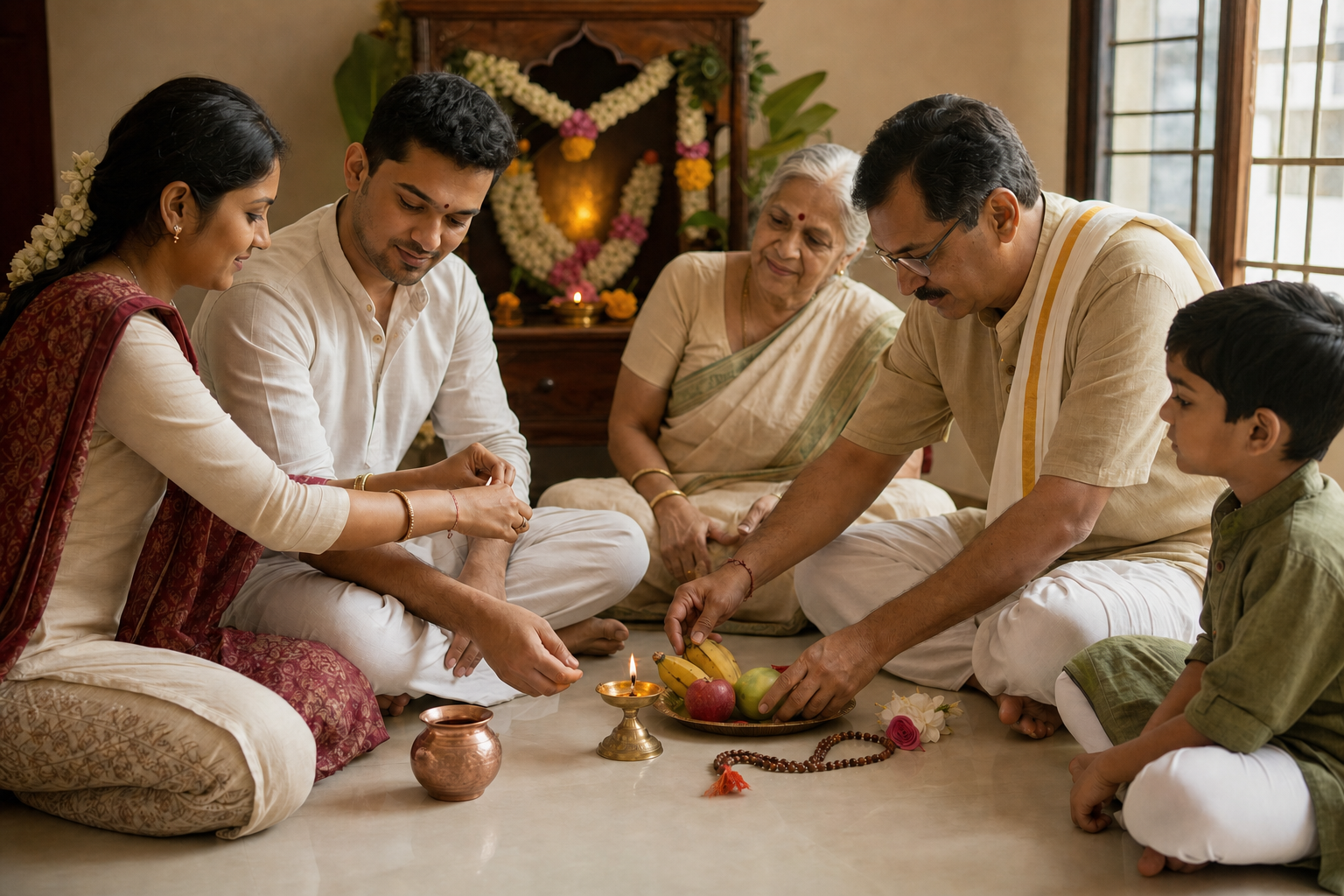
Once the date is settled, resist turning the observance into a shopping list. A useful vrata plan has a small number of elements, each tied to dharma.
- State a concrete sankalpa. Name the vrata, the discipline you will keep, and the quality you intend to cultivate. For an obstacle-removing Ganesha vrata, that might be steadiness in one righteous responsibility rather than a vague wish for success.
- Prepare the body and space. Bathe, clean the worship area, arrange only the offerings your custom calls for, and keep the beginning unhurried.
- Choose one central devotional act. Puja, mantra-japa, parayana, meditation, or temple darshan should carry the observance. Aarti and supplementary offerings can support it, but they should not crowd out attention.
- Define restraint precisely. Decide in advance whether your vrata uses a complete fast, a limited fast, a sattvic diet, silence, reduced distraction, or another discipline accepted in your tradition.
- Connect worship with conduct. Pair prayer with dana, seva, patient speech, non-harm, or assistance to someone who faces a real obstacle. This prevents the vow from becoming a private request detached from responsibility.
- Close deliberately. Offer the fruit of the practice, note what the discipline revealed, and carry one commitment into the following week.
A food fast is not a test of personal worth. If fasting could interfere with medication, a health condition, pregnancy, frailty, or recovery from illness, do not ignore that risk for the sake of appearances. Follow appropriate medical guidance and ask a trusted family elder or acharya how to retain the vrata through a suitable diet, japa, charity, or another form of restraint.
Treat sacred places and ritual materials with the same care. Do not leave plastic, food packaging, cloth, lamps, or non-biodegradable offerings in rivers or temple tanks. Carry waste out, use modest eco-friendly offerings, and support a clean-up effort where one is available. Reverence for a tirtha includes protecting its living water.
Key takeaways for your next observance
- A festival name plus a Gregorian date is not enough; record masa, paksha, tithi, location, and the governing tradition.
- Use a panchang calculated for the place where you will actually observe the vrata.
- When calendars disagree, compare tithi windows, local sunrise, month convention, and observance rules before comparing date labels.
- Keep household practice and temple attendance as separate calendar entries when they follow different authorities.
- Plan a two-tithi vrata across both stages, a month-long vrata as a repeatable routine, and a temple festival as both a spiritual practice and a logistical visit.
- Adapt the intensity of fasting when health requires it, but preserve sankalpa, devotion, ethical restraint, and dana.
For your next vrata, begin by writing one complete line: observance, location, calendar tradition, tithi window, and main practice. Confirm that line with your trusted local panchang or temple. Once it is clear, put the preparation time and the observance window on your calendar and let the vow shape your conduct, not merely your schedule.
References
- DharmaRenaissance Blog — Avighna Vrata 2026 (Falgun): Auspicious Date, Chaturthi-Panchami Significance, and Blessings
- DharmaRenaissance Blog — Magh Snan Mahatmya: Profound Significance of the Holy Magha Dip for Purity and Moksha
- DharmaRenaissance Blog — Vaikunta Ekadasi at Triplicane Parthasarathy Temple, Chennai: 2025 Dates, Rituals, Sacred Darshan
