
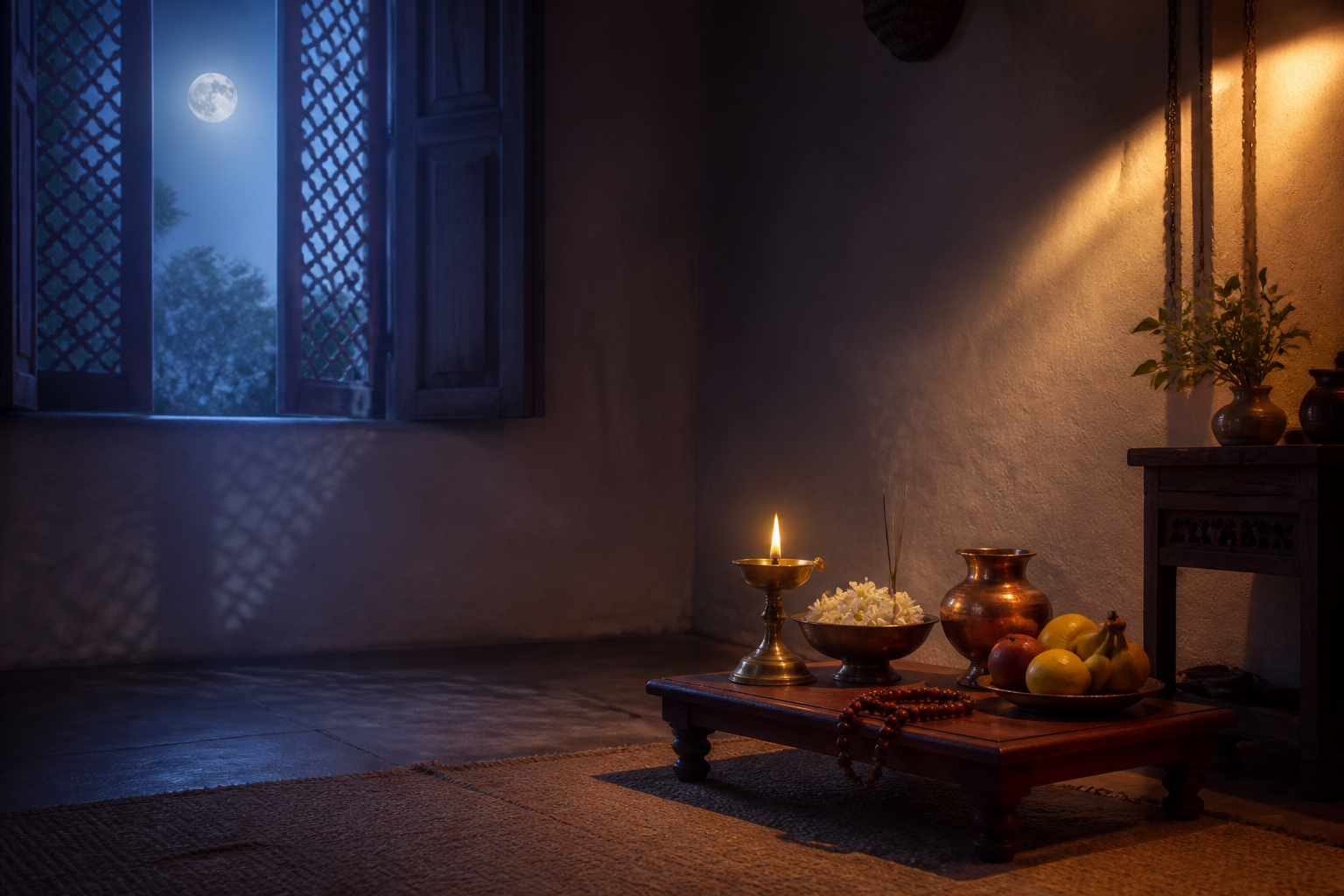
If you are trying to decide whether Friday, December 5, 2025 should be observed as Purnima or Krishna Paksha Pratipada, the practical answer is: both occur on the same civil date. Purnima continues until 5:18 AM, after which Krishna Paksha Pratipada begins.
The early hours therefore retain the character of the full-moon tithi, while the rest of the day belongs to the first tithi of the waning fortnight. You can respect that transition without making the observance complicated: confirm the timing for your location, keep any Purnima-focused practice in the applicable window, and let the later hours turn toward reflection, simplification, and steady spiritual discipline.
The tithi changes within the civil date
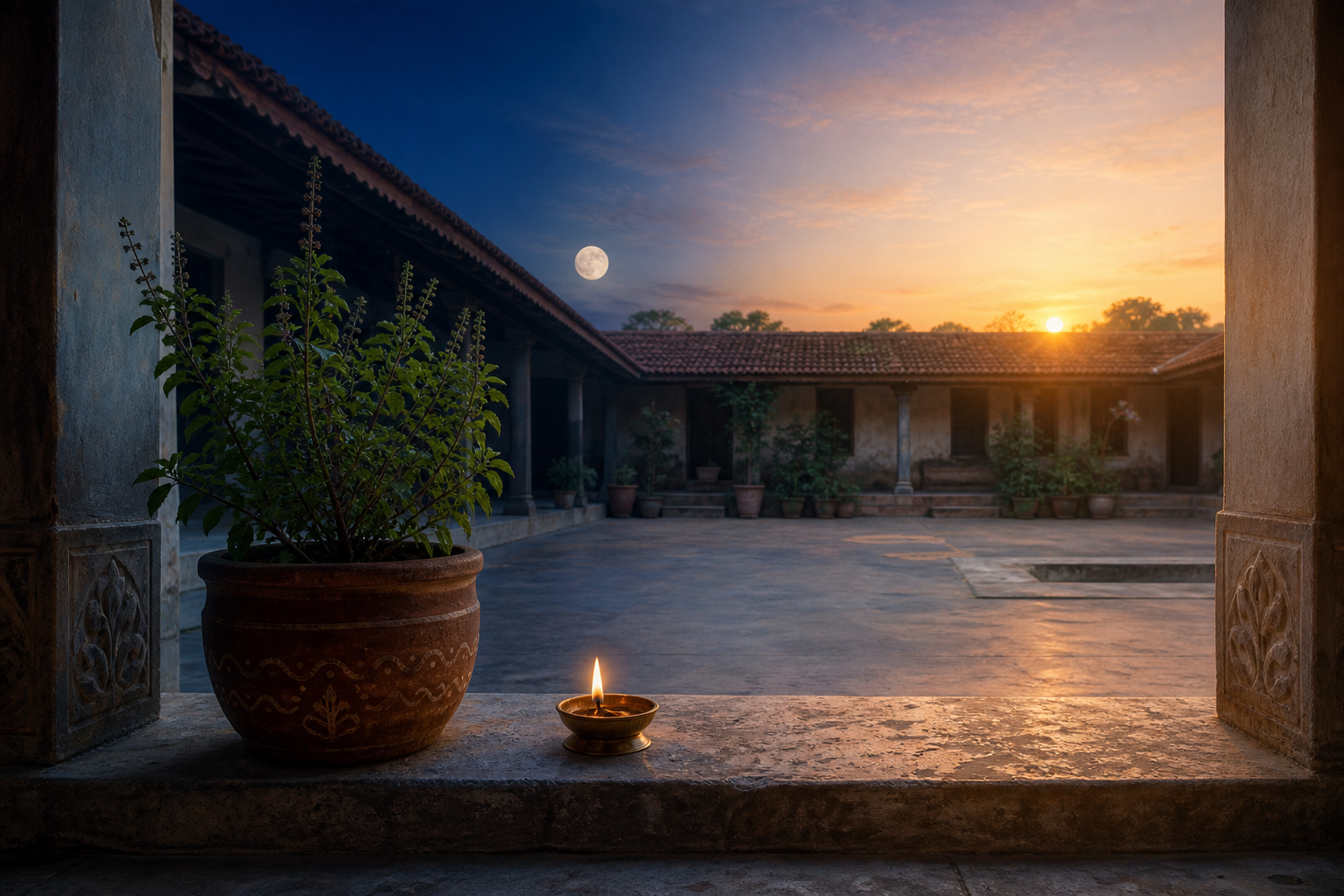
A calendar date begins at midnight, but a tithi follows the lunar cycle and can change at any point during that date. That distinction matters on December 5. Calling the entire day Purnima overlooks the morning transition; calling the entire day Krishna Paksha Pratipada overlooks the Purnima interval with which it begins.
| Period | Tithi | Practical emphasis |
|---|---|---|
| From the start of December 5 until 5:18 AM | Purnima | Worship, japa, scriptural study, charity, and gratitude |
| From 5:18 AM until 3:01 AM on the following civil date | Krishna Paksha Pratipada | Meditation, reflection, simplifying routines, and beginning the waning fortnight deliberately |
The 3:01 AM endpoint falls on the following civil date. It should not be read as 3:01 AM earlier on December 5. That small distinction prevents a common scheduling error when a tithi begins on one date and ends after midnight on the next.
These timings are commonly used across many regions, but they are not a universal substitute for a location-specific Panchang. Local calculations can vary slightly. If you are arranging a formal vrata, temple observance, sankalpa, or ceremony tied to the tithi, check a trusted regional Panchang or the calendar followed by your temple or family tradition before fixing the time.
Do not infer Nakshatra, Rashi, or a Shubh Muhurat from these tithi timings alone. Those are separate Panchang elements, and their applicable times depend on location and calculation tradition. The Purnima-to-Pratipada transition can organize your devotional day, but it does not by itself establish an exact muhurta for every undertaking.
A two-part observance you can realistically follow
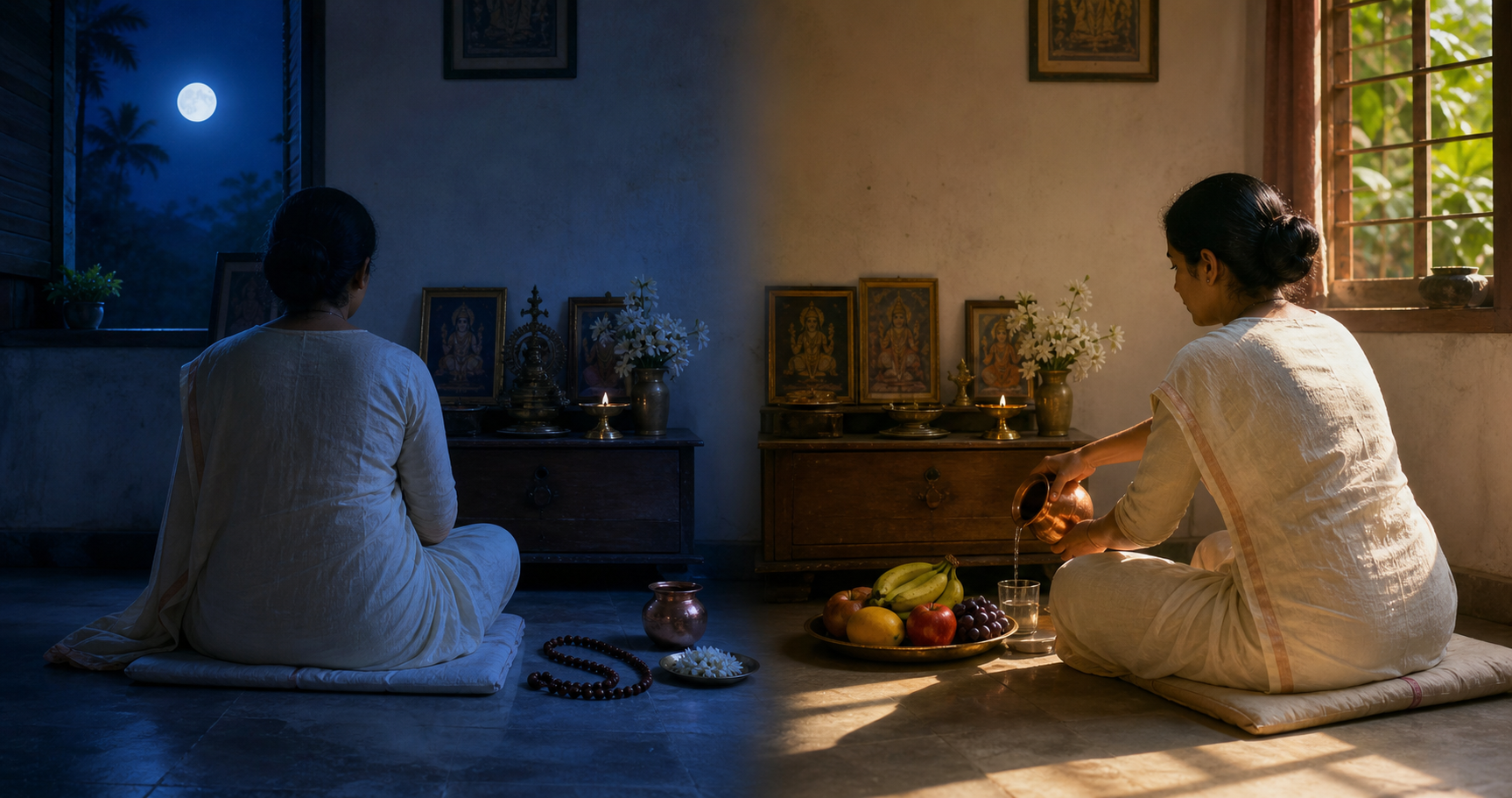
You do not need to fill the day with additional ritual merely because two tithis occur within it. Choose a few practices that belong naturally to your sampradaya, family custom, or present level of discipline. The transition should give your practice structure, not turn it into a checklist.
- Confirm the local transition time before committing to a schedule. If your regional Panchang gives a slightly different time, use the local calculation rather than forcing the general 5:18 AM timing onto your observance.
- During the confirmed Purnima interval, perform the worship already customary in your home. Japa, quiet reading of scripture, prayer, charity, and an intentional expression of gratitude all fit the spiritual character of Purnima.
- After Krishna Paksha Pratipada begins, keep the devotional continuity but change the emphasis. Use meditation or japa to notice what has become excessive, neglected, or distracting in your daily life.
- Translate that reflection into one visible action. Clear one part of your surroundings, restore one neglected routine, or reduce one recurring distraction. This gives the inward movement of Krishna Paksha a practical form.
- Let charity and ethical conduct continue beyond the transition. The change of tithi can shape emphasis, but it does not make compassion, study, or devotion inappropriate after 5:18 AM.
If you cannot observe the early Purnima interval, avoid manufacturing a new rule or treating the day as spiritually lost. Follow the established practice of your household or tradition, and use the later tithi for sincere japa, meditation, gratitude, and disciplined action. Precision matters most when a particular rite explicitly depends on the tithi; sincerity and steadiness still matter throughout the day.
Read the transition as a change of emphasis
Purnima carries the imagery of fullness, clarity, and completion. Use that symbolism concretely. Notice what has reached maturity, acknowledge help you have received, complete an unfinished devotional commitment where possible, and offer something through charity or community fellowship.
Krishna Paksha begins as the lunar fullness starts to recede. Its inward-facing character is well suited to examining habits, reducing clutter, and strengthening a routine that does not depend on mood. The useful question changes from what has become full to what can now be refined, released, or made simpler.
This is not a switch from a good tithi to a bad one. Nor is the tithi transition enough to label every activity after 5:18 AM auspicious or inauspicious. Treat it as a rhythm for practice: Purnima supports recognition and offering; Krishna Paksha Pratipada supports withdrawal from excess and a deliberate return to essentials.
Honor shared values without erasing differences
Purnima has a particularly visible place in Hindu worship, study, charity, and community life. Full-moon observances also carry importance within Buddhist and Jain practice, often through meditation, ethical reflection, and disciplined conduct. These resonances reveal a shared Dharmic attentiveness to natural cycles, but they do not make the traditions or their observances interchangeable.
A family or community containing Hindu, Buddhist, Jain, or Sikh members can meet around shared ethical actions such as charity, gratitude, quiet reflection, and fellowship while allowing each person to retain the prayers, teachings, and calendar disciplines of their own tradition. That approach builds Dharmic kinship without claiming that every community observes the same tithi in the same way.
Key takeaways for December 5
- Friday, December 5, 2025 begins under Purnima Tithi, which lasts until 5:18 AM under the commonly cited timing.
- Krishna Paksha Pratipada begins at 5:18 AM and continues until 3:01 AM on the following civil date.
- Use the Purnima interval for customary worship, japa, scriptural study, charity, and gratitude.
- Use the Pratipada period for meditation, simplifying your surroundings, refining routines, and reducing unnecessary distractions.
- Confirm all timings through a trusted regional Panchang when a formal rite or muhurta depends on local calculation.
- Do not derive Nakshatra, Rashi, or a complete Shubh Muhurat from the tithi transition alone.
Before you arrange the observance, check the December 5 entry in the Panchang used by your own region or temple. Then choose one Purnima practice for the applicable early interval and one simplifying action for Krishna Paksha Pratipada. That is enough to meet the change of tithi with attention rather than merely noticing it on a calendar.
References
