
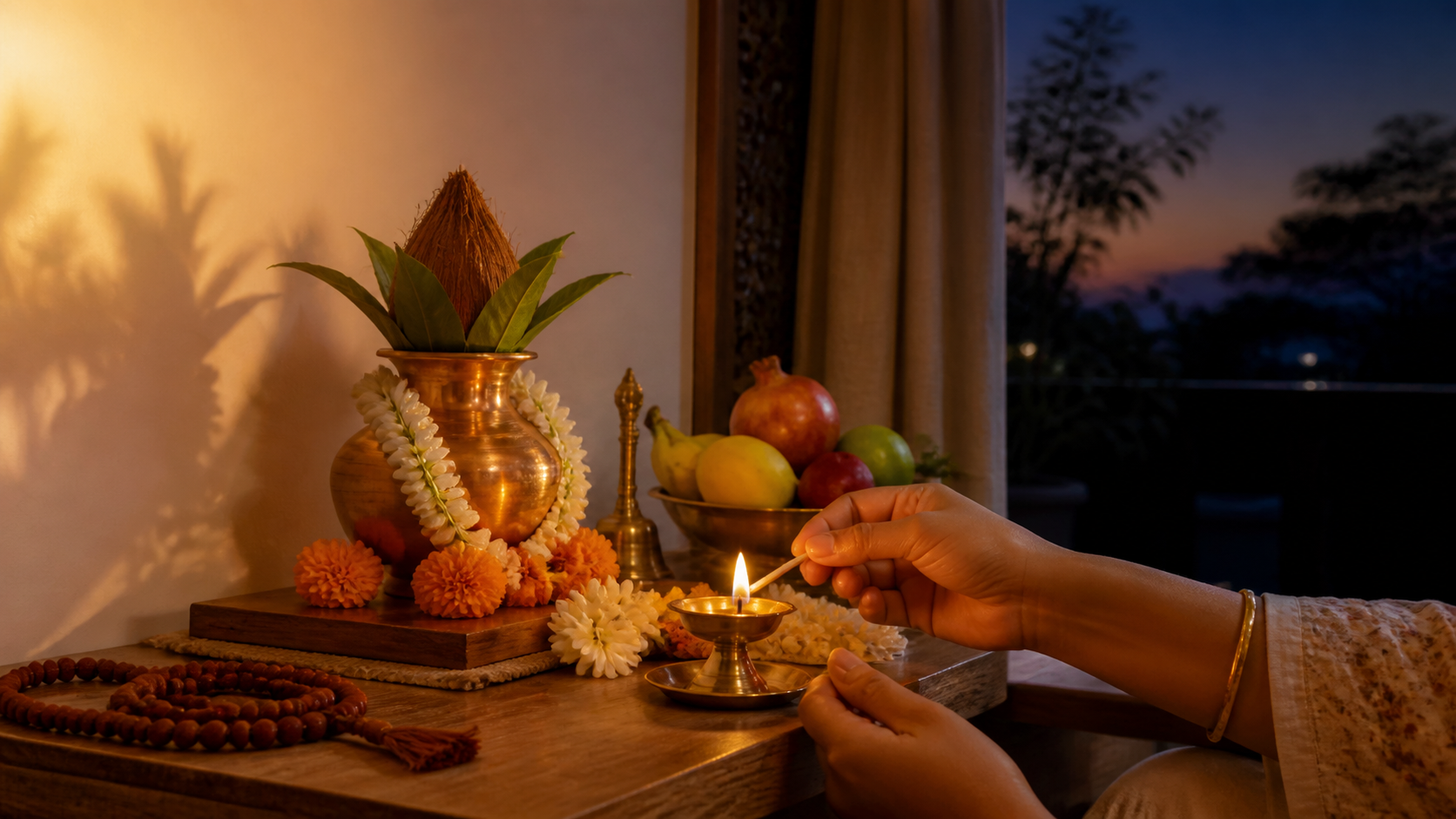
If you are using the December 10 Panchang to arrange a puja, sankalpa, vrata, study period, or act of seva, the decisive detail is the evening change of tithi. The day begins under Krishna Paksha Sashti and later moves into Krishna Paksha Saptami, so your morning and evening need not carry the same emphasis.
For most regions, Krishna Paksha Sashti continues until about 7:10 PM local time, after which Krishna Paksha Saptami begins. Treat 7:10 PM as a general planning reference, not as a universal ritual instruction: your city, sunrise, time zone, regional calendar, and lineage may produce a different local listing.
Key takeaways for December 10, 2025
- December 10, 2025 falls on a Wednesday and belongs to Krishna Paksha, the waning half of the lunar month.
- Sashti is the operative tithi for most of the day, with Saptami beginning at approximately 7:10 PM in the general reference.
- Use Sashti for steadiness: maintain an existing discipline, simplify your attention, and avoid scattering your effort across too many intentions.
- Once your local Panchang confirms Saptami, use the evening for purposeful study, japa, reflection, or a clearly defined resolve.
- The tithi-change time is not automatically a Shubh Muhurat. Verify any time-sensitive ceremony against a city-specific Panchang or a trusted temple advisory.
Read the day as two distinct practice windows
Krishna Paksha is traditionally suited to drawing inward, releasing excess, and seeing your habits more clearly. This does not require withdrawing from ordinary responsibilities. It means doing necessary work with less noise and giving spiritual discipline a definite place in the day.
Sashti provides the first frame. Instead of beginning several new practices, return to one you already recognize: your customary japa, dhyana, scriptural reading, or daily worship. The practical test is continuity. If you have been irregular, complete the familiar practice before searching for something more elaborate.
Saptami supplies the second frame. After the locally verified transition, turn reflection into a specific next step. You might begin a structured reading cycle, renew a neglected vow, define a regular time for japa, or decide how you will carry an act of seva forward. The shift is subtle: Sashti steadies the mind; Saptami can help direct the steadied mind toward purposeful action.
This is a devotional way to organize a flexible day, not a claim that every undertaking becomes auspicious merely because Saptami has started. If your sampradaya, family tradition, vrata procedure, or temple gives a particular rule, follow that instruction.
Build a simple observance around the transition
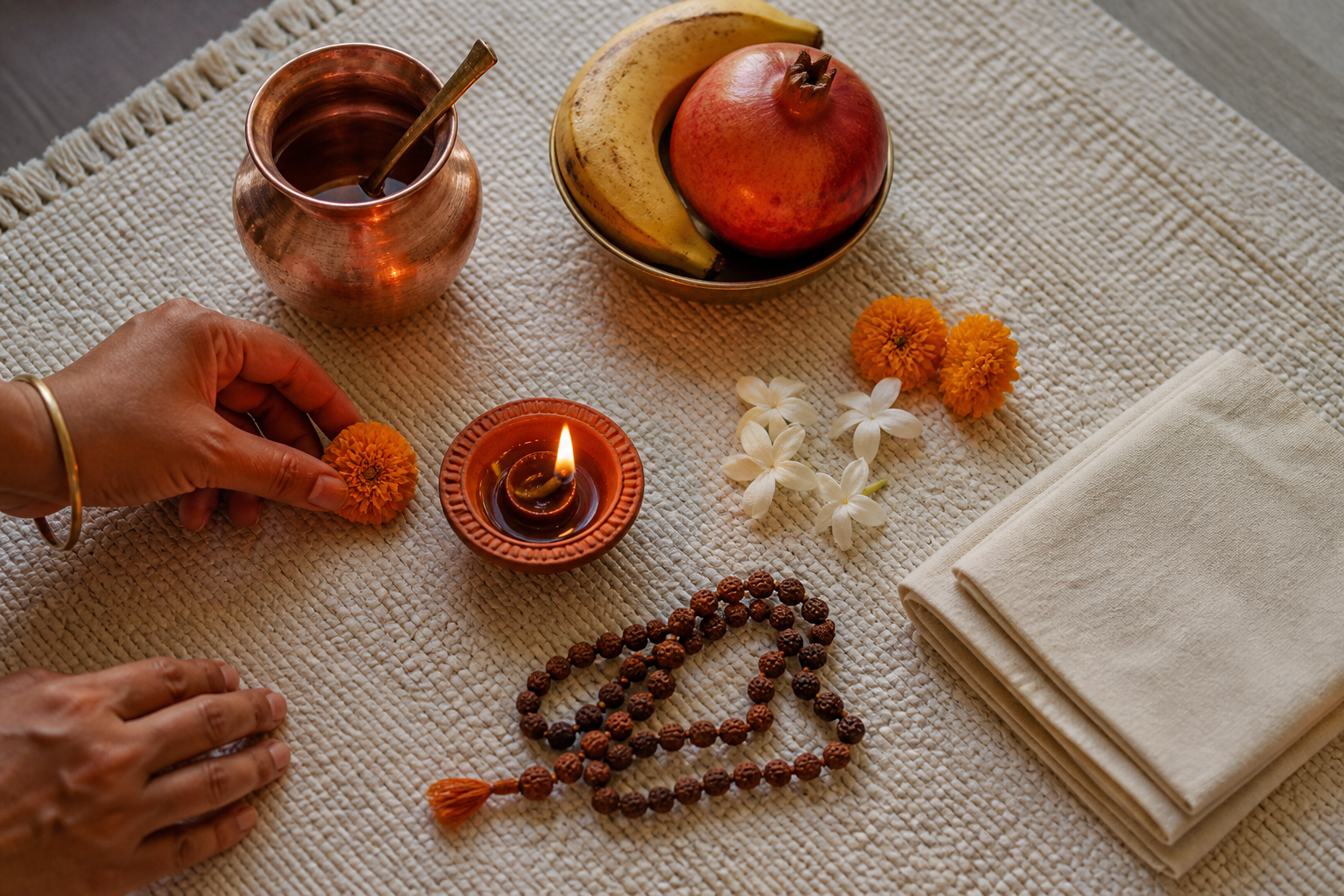
You do not need an elaborate ceremony to make the Panchang useful. A modest plan, completed attentively, is more meaningful than a long list abandoned halfway through the day.
- Before beginning, set your city in a trusted regional Panchang and confirm the local Sashti-ending time. If it differs from 7:10 PM, use the local calculation.
- During Sashti, complete your customary japa or dhyana without increasing the count merely for display. Let steadiness, rather than quantity, be the discipline.
- Choose one restraint for the day. Mindful speech is especially practical: pause before criticism, refuse unnecessary harshness, and do not pass along a claim you have not verified.
- Connect inward practice with an outward act. Offer anna-dana where appropriate, assist a community need, or give useful help without turning generosity into self-advertisement.
- After your local listing shows Saptami, sit with one meaningful reading or reflection. End by naming the single resolve you intend to carry into the following day.
If your schedule prevents a full observance, preserve the sequence rather than abandoning the day: a brief act of recollection during Sashti, one concrete act of generosity, and a clear evening resolve after Saptami. The value lies in joining attention, conduct, and follow-through.
Use Shubh Muhurat without false precision
A common mistake is to treat the tithi-ending time as though it were itself an auspicious muhurta. It is not. The 7:10 PM reference identifies the approximate change from Sashti to Saptami; it does not, by itself, certify that moment for a wedding, major purchase, griha-related ceremony, formal initiation, or another consequential beginning.
Muhurta depends on more than the name of the lunar day. Sunrise, latitude, local time, nakshatra, the Moon’s rashi, regional observance, and the kind of undertaking all matter. The nakshatra and Moon-rashi details should therefore be taken from a locally calibrated Panchang, especially when a ritual sankalpa or established vrata requires precision.
Use this verification sequence before committing to a time:
- Confirm that the Panchang is set to the actual city of observance, not merely the country or the city where a relative lives.
- Check the displayed sunrise and time zone so you know the calendar is using the intended locality.
- Verify the tithi and its ending time for December 10.
- Check the nakshatra and Moon’s rashi in that same local listing rather than importing them from another location.
- Look for the muhurta appropriate to the undertaking. Do not substitute the tithi transition for a named auspicious window.
- For a formal family or temple rite, reconcile the digital listing with the regional almanac, temple advisory, or lineage instruction your household follows.
If two calendars disagree, do not average their times. First check whether they are set to different cities or time zones. Then use the locally calibrated authority followed by the temple or household conducting the observance.
For activities that are spiritually meaningful but not bound to a formal ritual rule, a practical division is available. Use a verified daytime window for a beginning that benefits from visibility and accountability, such as organizing a community effort. Reserve the evening after the confirmed Saptami transition for contemplative commitments, including study, japa, or a personal vow. This keeps the day’s symbolism useful without pretending that a general timetable replaces muhurta calculation.
Make shared Dharmic values visible at home
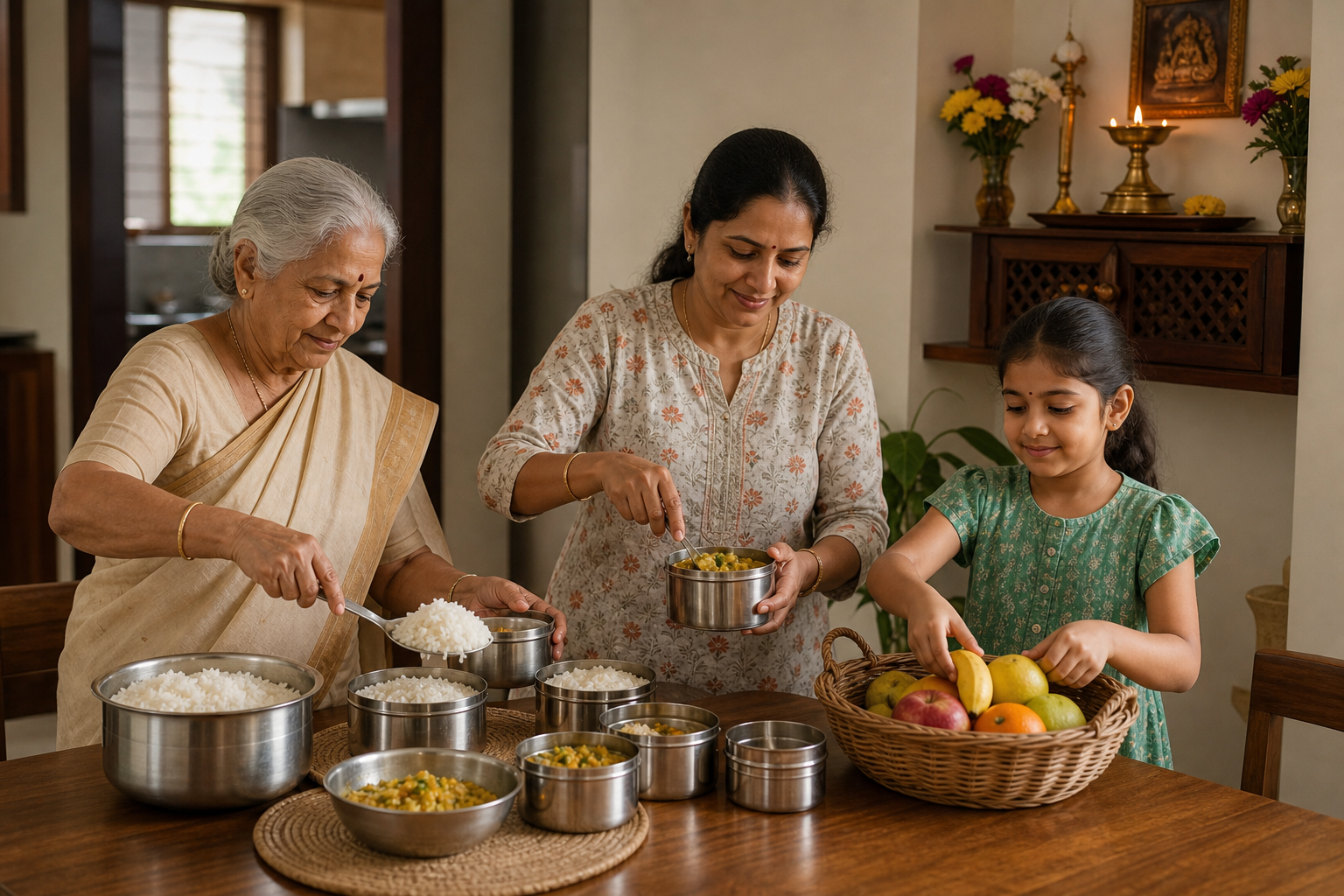
The Panchang belongs specifically to Hindu calendrical practice, and its integrity should be preserved. At the same time, the ethical work encouraged by this waning-moon day can be shared across a family or community without erasing the distinctions among Hindu, Buddhist, Jain, and Sikh paths.
Compassion, disciplined attention, mindful speech, generosity, and seva become common ground when they are practiced rather than reduced to slogans. One person may undertake japa, another silent reflection, and another community service. They need not perform an identical rite to support one another’s commitment to restraint and purposeful action.
If you are observing as a household, agree on one visible act: share food, support a local need, read together, or repair a strained conversation through careful speech. In the evening, let each person state one intention for the days ahead. That small intergenerational exchange gives the calendar a lived place in family life.
Before you set the day’s schedule, enter your actual location in the Panchang and write down two lines: the discipline you will complete during Sashti and the action you will begin after Saptami is locally confirmed. That is enough to turn December 10 from a date on an almanac into a day of coherent practice.
References
