

If you are arranging a vrata, puja, journey, registration, samskara, or important beginning on Tuesday, April 7, 2026, asking whether the whole day is auspicious will not give you a reliable answer. You need to identify the rule governing your activity, the tithi present when it begins, and the locally calculated periods that should be excluded.
Krishna Paksha Panchami continues until approximately 2:05 PM, after which Krishna Paksha Sashti begins, in the commonly used calculation for most regions. The stated time is generally aligned to Indian Standard Time and may vary slightly by place and almanac. Treat 2:05 PM as a boundary to verify, not as a universal shubh muhurta.
First decide what the 2:05 PM tithi change means for you
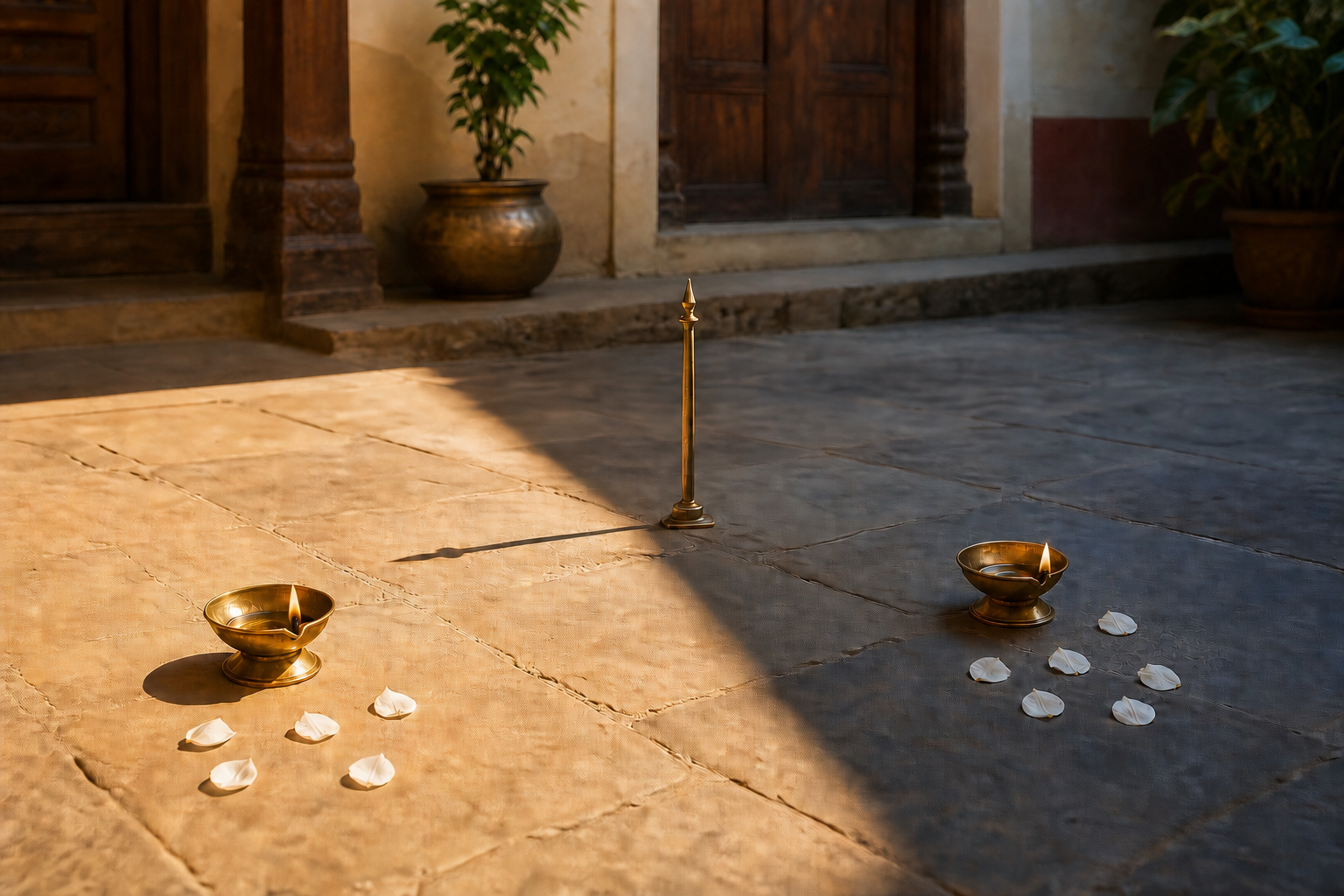
The tithi prevailing at the start of an activity and the tithi used to determine a religious observance are related, but they are not always the same question. Confusing them is the most common way to misuse a daily Panchang.
- Identify whether the activity is tied to a named tithi. A Panchami vrata, Sashti observance, or temple ritual may have rules that are more specific than ordinary muhurta selection.
- Determine which observance rule your tradition follows. Many traditions use udaya tithi, the lunar day present at local sunrise, to assign the civil date of an observance. Some vratas and festivals instead depend on whether the tithi touches a prescribed period such as pradosha, nishita, or the time for parana.
- Only then choose a clock time. If the act itself must begin while Panchami is present, finish your muhurta screening within the locally verified Panchami interval. If it must begin in Sashti, search after the local transition.
| Period on April 7 | Prevailing tithi | Practical use | Essential check |
|---|---|---|---|
| Before the locally verified transition, approximately 2:05 PM in the stated IST baseline | Krishna Paksha Panchami | Contemplation, study, quiet recitation, consolidation of an existing discipline, and Panchami-specific acts whose rules require the active tithi | Confirm the local end time and the vrata or temple rule before treating the clock boundary as decisive |
| After the locally verified transition | Krishna Paksha Sashti | Disciplined execution, skill practice, constructive effort, and Sashti-specific acts that require the active tithi | Exclude the local caution periods and check any activity-specific Panchang factors |
The change at 2:05 PM does not make everything before it auspicious and everything after it inauspicious, or the reverse. It tells you which lunar-day condition is present. Muhurta selection still requires other filters.
If your family, sampradaya, or temple has already announced an observance time, follow that authoritative local practice. Regional differences between Amanta and Purnimanta reckoning, as well as differences among Smarta, Vaishnava, Shaiva, Shakta, and local temple traditions, should not be settled by a generic clock listing.
Build the local clock instead of copying fixed-hour tables
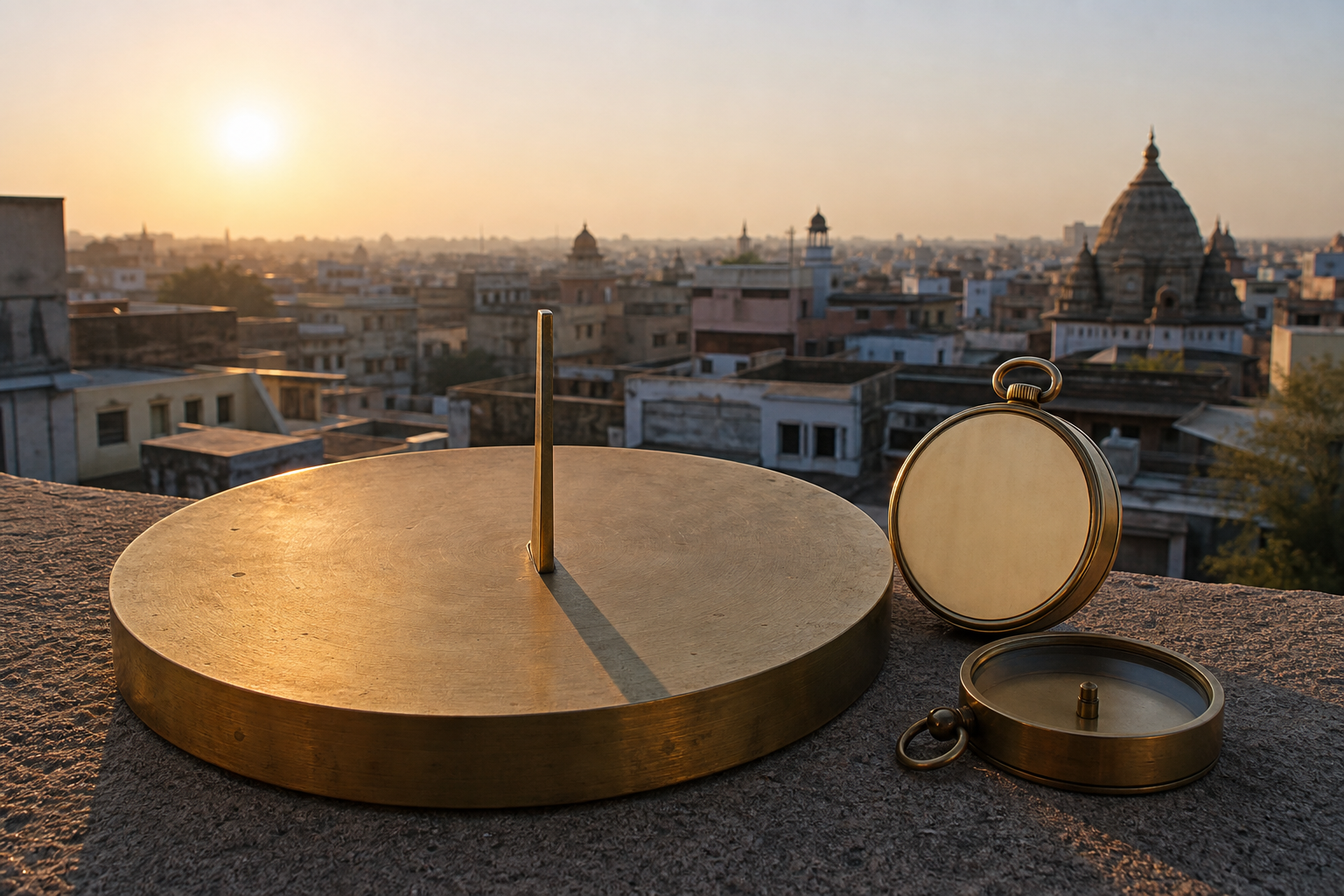
A usable Panchang plan begins with your location. Obtain the local sunrise, sunset, solar noon, and Panchami-ending time for the city where the activity will occur. If you are outside India, do not copy 2:05 PM onto your local clock. Use a Panchang configured for your city and time zone.
Calculate Tuesday’s three caution periods
Rahu Kalam, Yamaganda, and Gulika are obtained by dividing the interval from local sunrise to local sunset into eight equal parts. For Tuesday, Yamaganda occupies the third part, Gulika the fifth, and Rahu Kalam the seventh.
You can calculate them without relying on a fixed-hour template. Let S be local sunrise, let D be the duration from sunrise to sunset, and let Q equal D divided by eight. Then:
- Yamaganda: S + 2Q through S + 3Q, the third daylight segment.
- Gulika Kalam: S + 4Q through S + 5Q, the fifth daylight segment.
- Rahu Kalam: S + 6Q through S + 7Q, the seventh daylight segment.
These are proportional intervals, not permanent clock hours. As daylight length changes by date and location, the start and end of every segment change with it. Fixed labels copied from another city can therefore shift your chosen beginning into the very period you meant to avoid.
The traditional caution concerns initiating an important undertaking. It does not mean that all ordinary work must stop when a caution period begins. Continue necessary duties, ongoing work, care, and worship; avoid choosing that interval as the ceremonial or contractual starting point when you have a reasonable alternative.
Use Abhijit and Choghadiya as additional filters
Abhijit Muhurta is centered on local true solar noon and extends approximately 24 minutes before and after it. It can be a strong candidate for a decisive ordinary action, but it is not an automatic override for every purpose. Marriage is commonly excluded from this general use, and a locally calculated interval should still be checked against the other conditions relevant to the event.
Choghadiya offers another practical screen. Daytime and nighttime are divided separately into eight segments, so a daytime sequence should not be extended beyond sunset. Amrit, Shubh, and Labh are generally selected for favorable beginnings. Char, also called Chal, is often acceptable for travel or movement. Udveg, Kal, and Rog are normally avoided. Because the sequence rotates by weekday and begins from local sunrise or sunset, use a location-specific calculation.
When several Panchang factors compete, use a clear order of decision:
- Honor the prescriptive rule of the vrata, samskara, or temple observance.
- Confirm that the required tithi is present at the relevant moment.
- Remove Rahu Kalam, Yamaganda, and Gulika from the candidate intervals for an important initiation.
- Within the remaining time, consider Abhijit Muhurta or a favorable Choghadiya suited to the activity.
- For a consequential or tradition-sensitive event, verify Nakshatra, Rashi, Yoga, and Karana for the exact proposed start.
Match the depth of muhurta checking to the decision
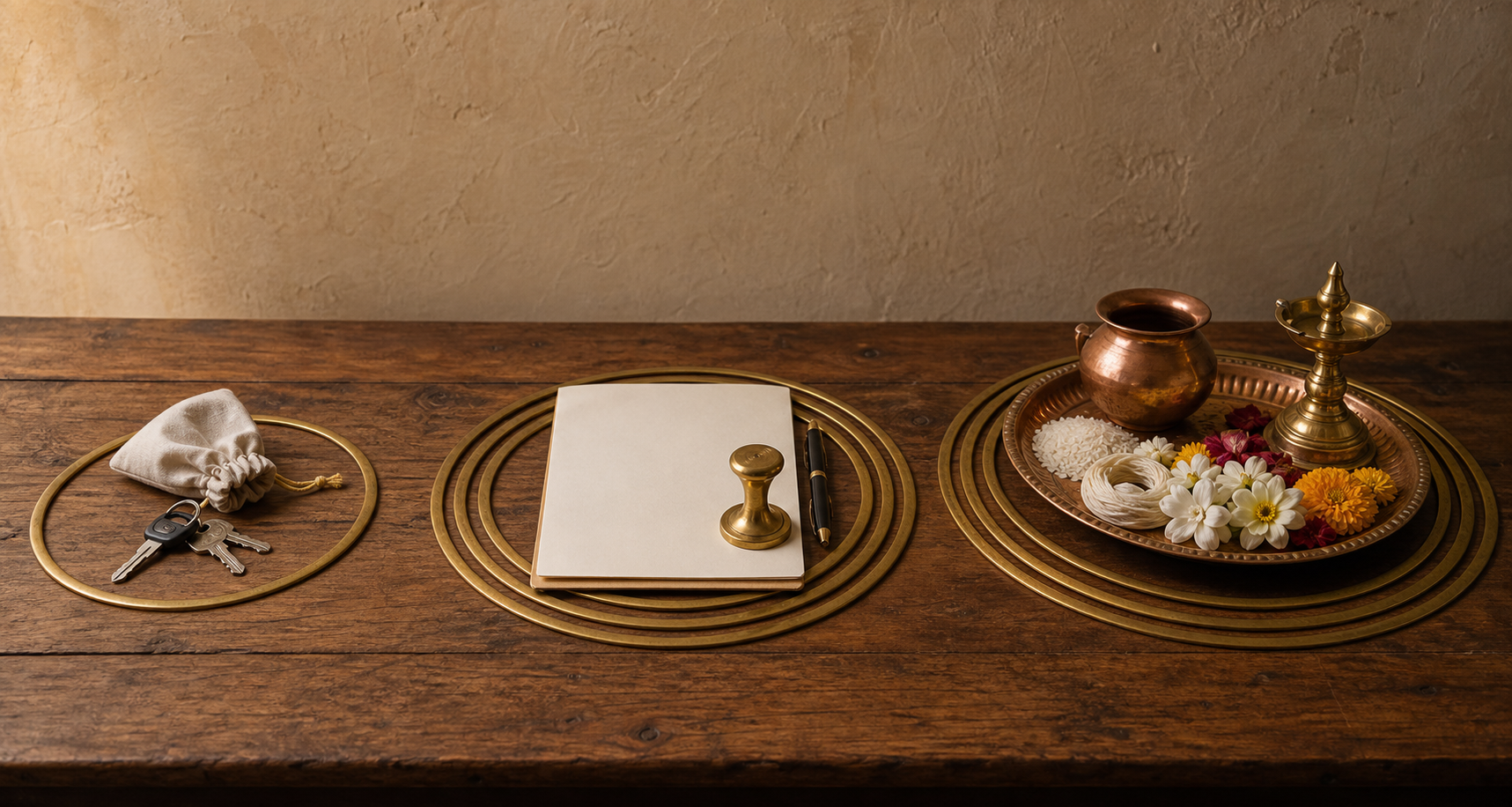
You do not need an elaborate election for every routine action. You do need more than the date and tithi for a marriage, samskara, property registration, naming ceremony, or another event whose rules depend on the Moon’s exact position.
Nakshatra is determined from the Moon’s sidereal longitude across 27 divisions of 13 degrees 20 minutes each, while Rashi uses twelve 30-degree divisions. Yoga is calculated from the combined longitudes of the Sun and Moon, and Karana is a half-tithi subdivision. A Nakshatra or Rashi boundary can occur within the day, so a label recorded only at sunrise may not describe the moment when your event begins.
| What you are planning | Primary rule | Useful secondary check | Do not rely on |
|---|---|---|---|
| Daily meditation, study, exercise, craft, or service | Choose a sustainable time and dharmic intention | Use Panchami for reflective work or Sashti for disciplined execution; avoid a caution period if marking a formal new beginning | Endless searching for a flawless minute that prevents you from doing the practice |
| A vrata or puja named for Panchami or Sashti | Follow the observance rule of your sampradaya or temple | Verify the local tithi boundary and any prescribed part of the day | Assuming that sunrise tithi or the 2:05 PM transition alone settles every vrata |
| Travel or a move | Select a practical and safe departure | Use a locally computed favorable Choghadiya; Char is commonly acceptable for movement | A Choghadiya table calculated for a different sunrise or city |
| Property registration, naming, or a formal samskara | Check the rules specific to the act | Calculate Nakshatra, Rashi, Yoga, and Karana for the intended start, in addition to tithi and caution periods | Calling the entire date auspicious because one favorable factor is present |
| Marriage | Use the complete marriage-muhurta method recognized by the families’ tradition | Confirm the local Panchang and any personal considerations required by that tradition | Choosing Abhijit Muhurta alone |
If Nakshatra, Rashi, Yoga, or Karana matters to your decision, request the values for the exact start time rather than accepting a single all-day label. The right question is not merely which Nakshatra appears on April 7, but which Nakshatra is active in your location at the moment the sankalpa, signature, departure, or ceremony begins.
A practical way to organize April 7

Prepare the day on paper before trying to interpret it spiritually. Write your location and the activity at the top. Add local sunrise, sunset, the end of Panchami, true solar noon, and the three Tuesday caution periods. If the event is sensitive to the full Panchang, add the relevant Nakshatra, Rashi, Yoga, and Karana changes. This prevents an attractive time from being chosen before its basic conditions are checked.
- Before the Panchami-Sashti transition: give priority to meditation, japa, reflective reading, review, and the consolidation of a discipline already begun. A Panchami-specific act should be placed here only when its governing rule requires Panchami at that moment.
- Near the transition: avoid setting the start exactly on the published boundary. Choose a time clearly within the locally verified tithi so that small differences between almanacs do not create doubt afterward.
- After Sashti begins: place focused execution, skill practice, constructive problem-solving, physical training, or another task that benefits from resolve, provided the selected start is outside the relevant caution periods.
- Before any major beginning: pause for a short sankalpa, japa, silence, or charitable intention. This does not erase an unsuitable muhurta; it aligns your conduct with the purpose for which the time is being selected.
- At the end of the day: review whether the chosen action upheld ahimsa, truthfulness, restraint, responsibility, and service. Panchang planning has little value if an auspicious minute is used for an adharmic purpose.
Tuesday, or Mangalavara, carries a traditional emphasis on constructive assertion, courage, fitness, and problem-solving. The useful discipline is to direct that force rather than merely intensify it. Let ahimsa govern speech and action, especially when determination could otherwise become aggression.
A household drawing from different Dharmic paths can keep the practice simple without flattening their distinctions. Family members may read from the Bhagavad Gita, Dhammapada, a Jain teaching on ahimsa and satya, or Sikh nitnem according to their own commitments, then unite around an act of service. If a Buddhist, Jain, or Sikh household tracks the lunar cycle, the waning phase can serve as a prompt for self-audit and mindful conduct without turning a Hindu ritual rule into an obligation for another tradition.
Key takeaways
- April 7, 2026 moves from Krishna Paksha Panchami to Krishna Paksha Sashti at approximately 2:05 PM in the stated IST-oriented calculation; verify the transition for your location.
- The active tithi and the rule used to assign a vrata or festival to a date are not always identical. Follow the rule of your sampradaya, temple, or authoritative local Panchang.
- On Tuesday, Yamaganda is the third daylight segment, Gulika the fifth, and Rahu Kalam the seventh. Calculate all three from local sunrise and sunset.
- Abhijit Muhurta is approximately 24 minutes on either side of local true solar noon, but it is not a blanket override and is commonly avoided as a stand-alone marriage muhurta.
- A consequential, Nakshatra-sensitive, or samskara-related choice requires the exact start-time values for Nakshatra, Rashi, Yoga, and Karana, not merely the date’s tithi.
Put your location, intended action, and governing tradition before the clock time. Once those are clear, select a window that satisfies the tithi rule, excludes the local caution periods, and contains the finer qualities your activity actually requires. If those conditions conflict, take the exact proposed interval to your local temple, family acharya, or trusted Panchang authority rather than forcing a generic online time to fit.