
If you are deciding how to observe Amavasya on November 19, the first thing to know is that the civil date does not carry one tithi from beginning to end. On Wednesday, Krishna Paksha Chaturdashi continues until 8:54 AM, after which Amavasya begins. That transition should shape the order of your practices.
A simple plan is enough: use the earlier Chaturdashi period for completion, restraint, prayer, or study, and give the Amavasya period to meditation, remembrance, charity, and a quieter household rhythm. If your observance requires an exact muhurta, confirm the timing in a trusted Panchang calculated for your location before fixing the ritual schedule.
The tithi change divides the day into two distinct periods
A tithi is a lunar day, so it does not necessarily begin or end at midnight. This is why writing “Amavasya” across the whole square for November 19 can lead to a poorly timed observance. Krishna Paksha Chaturdashi is the fourteenth tithi of the waning fortnight; Amavasya is the no-moon tithi that follows it.
| Period on November 19 | Panchang phase | Practical emphasis |
|---|---|---|
| Before 8:54 AM | Krishna Paksha Chaturdashi | Complete a monthly vow or pending spiritual duty, pray, study, and practise restraint in speech and diet. |
| After 8:54 AM | Amavasya | Turn toward meditation, remembrance, charity, seva, a simple meal, and a calm routine. |
Treat 8:54 AM as the published planning marker, not as a universal clock time for every city. Tithi boundaries, sunrise and sunset, Nakshatra, Rashi, and auspicious time windows can differ by location and calculation method. A regional Panchang or temple noticeboard is therefore the right place to confirm a time-bound sankalpa or formal ceremony.
If your local calendar gives a different boundary, do not average the two times or choose whichever is more convenient. Follow one reliable, locally appropriate calculation consistently. The broad spiritual rhythm remains useful, but a precise muhurta needs precise local data.
A two-part Amavasya observance you can actually follow
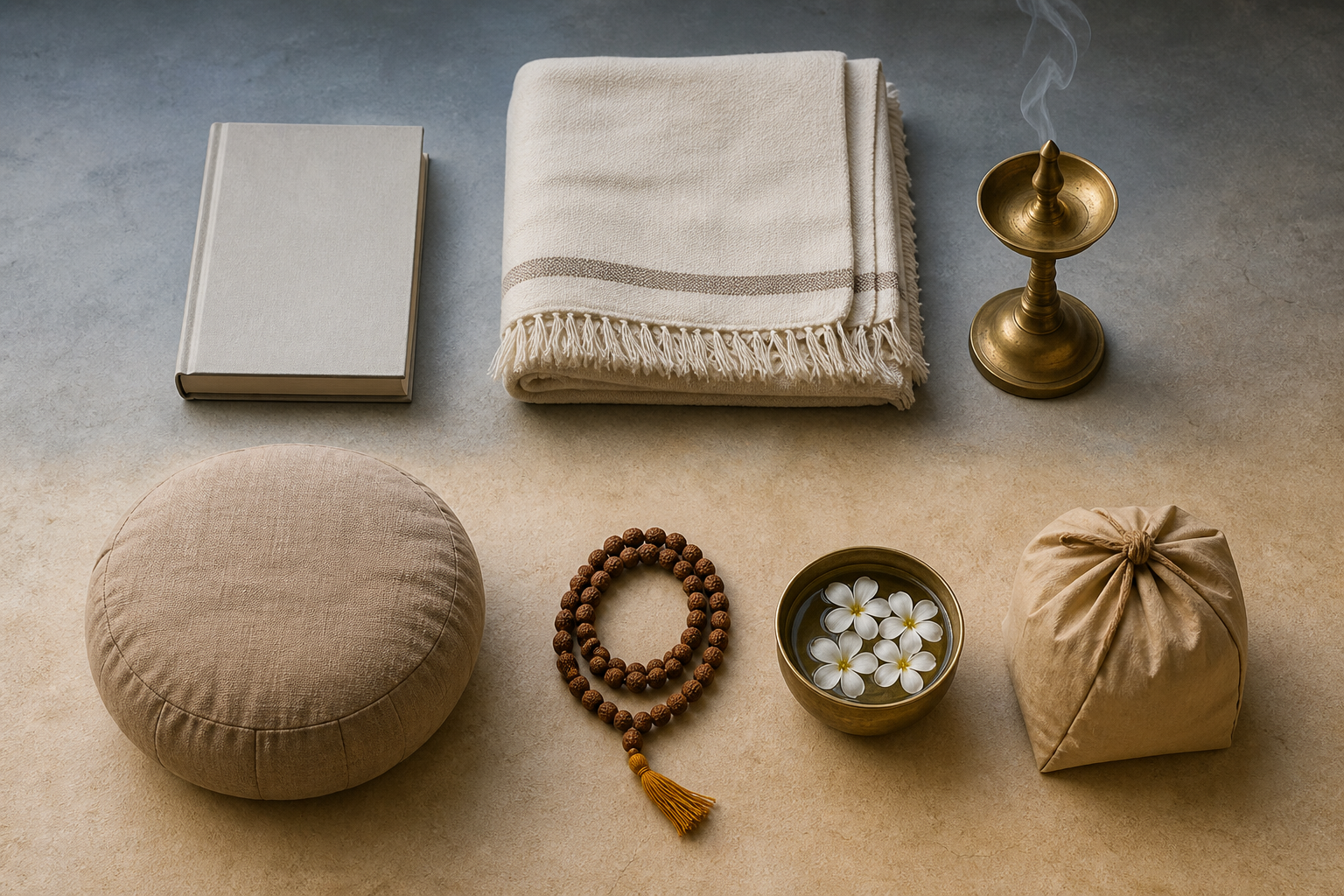
You do not need to fill the day with unrelated rituals. Give each part of the day a clear purpose and choose practices that belong naturally to your family, temple, guru-parampara, or sampradaya.
- Confirm the local timing. Check the November 19 entry for your city. Note the Chaturdashi ending time, the beginning of Amavasya, and any locally prescribed window connected with your particular observance.
- Use Chaturdashi for completion. Before the transition, finish a monthly vow or spiritual responsibility that is already underway. Morning prayer, quiet scriptural study, measured speech, and restraint in food fit the preparatory character of this period.
- Mark the transition with attention. When your schedule permits after the tithi changes, stop unnecessary conversation and distraction for a brief pause. You do not have to manufacture an elaborate ceremony; the purpose is to notice that the day has moved from preparation into deeper inwardness.
- Give Amavasya a contemplative centre. Meditate, pray, or sit in silence according to your established practice. Make space for grateful remembrance of those who came before you, following the form accepted in your household rather than borrowing a rite you have not been taught.
- Complete one concrete act of seva. Offer food or another useful item through a responsible charitable channel, assist someone with a genuine need, or give time to a community duty. The act should be practical, respectful, and within your means.
- Keep the rest of the day uncluttered. Choose a simple meal and reduce avoidable social noise. Before closing the day, name one quality or habit you intend to carry into the next lunar cycle.
If November 19 is a normal workday for you
A working day does not prevent a coherent observance. Pray or study before beginning your duties, keep speech deliberate during the Chaturdashi period, and take the first quiet opportunity after the transition for meditation or remembrance. Arrange your charitable act in advance, keep the evening meal uncomplicated, and close with a written intention. This preserves the shape of the day without pretending that everyone can follow a temple-length schedule.
A modest practice completed attentively is more valuable than a crowded list performed in haste. If your family tradition prescribes a formal rite, follow its instructions. If it does not, prayer, mindful conduct, remembrance, and seva provide a grounded way to honour the day without inventing obligations.
Choose each practice for its purpose, not from fear
The movement from waning Chaturdashi into Amavasya can be approached as a movement from completion into stillness. The practices become clearer when you understand what each one is meant to cultivate.
- Prayer or study before the transition gives you a disciplined way to finish the waning fortnight instead of drifting through the morning.
- Restraint in speech means avoiding needless argument, gossip, and reactive words. It is not a demand to neglect necessary communication or ordinary responsibilities.
- Dietary restraint can mean simplicity rather than severity. The date and tithi timing alone do not establish a universal fasting rule, so do not impose an unfamiliar fast merely because it sounds more austere.
- Meditation after the transition turns the reduced outer activity of Amavasya into deliberate inner attention.
- Remembrance places your life within a lineage of family, teachers, and inherited responsibilities. Follow the forms you know; seek guidance before undertaking a specialised rite.
- Charity and seva prevent introspection from becoming self-absorption. They translate humility and compassion into something another person can actually receive.
- A renewed intention should name a conduct change you can recognise in daily life, such as speaking with greater care or keeping a neglected duty, rather than making a vague promise to “be more spiritual.”
Hinduism, Buddhism, Jainism, and Sikhism remain distinct paths with their own teachings and forms of observance. Their shared emphasis on contemplation, humility, compassion, mindful conduct, and service can help a diverse family find an ethical centre without claiming that every tradition prescribes the same Amavasya ritual.
Avoid these common Panchang mistakes
- Treating the whole civil date as Amavasya. November 19 begins in Krishna Paksha Chaturdashi and moves into Amavasya at the stated transition. Plan the morning and the later day accordingly.
- Copying 8:54 AM without checking your location. A general date entry can orient you, but it cannot replace a city-specific Panchang when the exact minute governs a formal observance.
- Confusing the tithi transition with a complete muhurta. The tithi is only part of a full Panchang assessment. Do not declare a precise auspicious window when you have not confirmed the applicable local details.
- Filling in missing Nakshatra or Rashi details from memory. These values can vary with place and calculation. Look them up in the same trusted local Panchang you use for the tithi boundary.
- Turning simplicity into competitive austerity. A simple meal, restrained speech, and an orderly day already support the contemplative tenor. Add a formal vrata or fast only when it belongs to your tradition and circumstances.
- Assuming every household must perform identical rites. Shared Dharmic values do not erase differences among regions, sampradayas, families, and religions. Preserve the common ethical purpose while respecting the form you have actually inherited or been taught.
The most important distinction is between a broad daily observance and a precisely timed ritual. You can organise prayer, meditation, remembrance, charity, and a simple routine from the broad tithi sequence. For a specialised ceremony or muhurta, use the locally verified calendar and the guidance of the tradition under which the rite is performed.
Key takeaways for November 19
- Wednesday, November 19, 2025 changes from Krishna Paksha Chaturdashi to Amavasya at 8:54 AM in the stated Panchang sequence.
- Use the earlier period for completion, prayer, study, and restraint; use the later period for meditation, remembrance, charity, and renewed intention.
- Confirm the transition in a reliable regional Panchang before performing anything that depends on an exact time.
- Do not infer a universal fast, Nakshatra, Rashi, or auspicious muhurta from the date and tithi boundary alone.
- Keep the observance faithful to your own family or sampradaya while expressing the wider Dharmic values of humility, compassion, and seva.
The evening before, place your local Panchang beside your ordinary schedule. Mark the verified transition, choose your morning prayer or study, decide on one real act of seva, and leave the later day quieter than usual. That small amount of preparation turns November 19 from a calendar label into a disciplined observance.
References
