

You may know that you need the protection of the Divine Mother, yet still be unsure how to approach her. Is your real difficulty fear, a compromised intention, a failure of speech, or confusion about the next dharmic action? The distinction matters because protection is not expressed in the same way through every form of Devi.
A sound beginning is to name what needs protecting and what kind of wisdom the situation demands. Tara, Anagha, and Matangi offer three distinct doorways: courage at a dangerous crossing, purity within ordinary responsibility, and disciplined intelligence in speech, study, and creative work. You do not need to merge these traditions to benefit from the principle they share: power becomes dharmic when wisdom directs it and compassion governs its use.
Divine protection is more than escape from difficulty

It is tempting to approach protection as a request for an unwanted event to disappear. Sometimes circumstances do change. But a mature understanding of divine protection also includes the capacity to see danger accurately, control a frightened reaction, choose the right words, and carry out the next duty without surrendering to panic or hostility.
Wisdom and protection therefore belong together. Fear narrows perception and makes every option look like either flight or attack. Wisdom restores distinctions: immediate danger is different from imagined catastrophe; prudent caution is different from paralysis; moral courage is different from recklessness. Protective grace creates enough inner room for those distinctions to become visible.
Compassion completes the relationship. Power without compassion can become domination. Knowledge without compassion can become cold superiority. Even courage can become aggression when it is used to humiliate rather than protect. The Divine Mother traditions considered here repeatedly bind strength to karuna, ahimsa, truthful conduct, and seva. That bond is not decorative. It is what keeps spiritual power aligned with dharma.
Before choosing a devotional focus, identify the actual threshold in front of you:
- If fear or uncertainty has made movement difficult, Tara offers the clearest doorway.
- If you know your duty but distrust your motives, Anagha directs attention toward purity of intention and conduct.
- If the difficulty concerns learning, articulation, music, creativity, or a tense conversation, Matangi brings wisdom to the field of expression.
- If the danger is physical, medical, legal, psychological, or financial, take the competent worldly action the situation requires. Devotion can steady your judgment, but it should not replace emergency assistance or qualified professional help.
Choose the form that meets your present threshold
There is no need to rank these manifestations of the Divine Mother. A better question is which relationship brings the missing virtue into your present decision. Use the following distinctions as a starting point, not as rigid boundaries around living traditions.
| Divine form | Threshold she helps you examine | Quality to cultivate | Accessible devotional direction |
|---|---|---|---|
| Tara | Fear, obstacles, uncertainty, and difficult crossings | Fearlessness guided by liberating wisdom and compassion | Devotional remembrance, dhyana, and mantra or disciplined sadhana within the appropriate tradition |
| Anagha | Conflicting motives, ordinary duties, and the need for inner balance | Stainless intention integrating knowledge, action, and devotion | Nama japa, simple lamp-lighting, reflective meditation, sankirtan, and seva |
| Matangi | Study, speech, art, communication, and confusion under pressure | Discernment, refined expression, courage, and ethical use of knowledge | Devotional remembrance, mindful study, meditation, music, and responsible speech |
Tara: wisdom at the crossing
Tara becomes especially meaningful when you cannot see how to cross from one condition to another. The obstacle might be external, but it can also be an inward contraction produced by fear. In Shakta tradition, she is one of the Dasamahavidyas and is understood as a potent manifestation of Durga. Her power unites fear-dispelling protection, transcendent speech, insight, and oceanic compassion. The Adbhuta Ramayana places her within the cosmic activity of the Goddess, where salvific wisdom safeguards the movement toward liberation.
Tara is also honored in Buddhist Vajrayana, including Green Tara and White Tara. This cross-traditional presence reveals a deep Indic conversation, but it does not make every Tara practice interchangeable. A Hindu Shakta sadhana and a Buddhist Vajrayana practice can reverence Tara through distinct teachings, liturgies, symbols, and teacher-disciple relationships. Honor the shared civilizational ground without erasing those differences.
When invoking Tara, do not stop at the wish to feel less afraid. Ask what the fear is preventing you from seeing. Name the crossing in a complete sentence: the decision you are postponing, the responsibility you are avoiding, or the truth you are afraid to speak. Then identify the smallest ethical action that belongs on the other side of that fear. This turns abhaya from a mood into a dharmic capacity.
Tara worship is associated with mantra, dhyana, and disciplined sadhana, including observances during Navaratri and auspicious tithis connected with the wisdom goddesses. Where a mantra or ritual belongs to a transmitted lineage, receive and practise it under suitable guidance. More complexity is not automatically more devotion. A sincere, tradition-consistent remembrance is better than an improvised mixture of esoteric practices.
Anagha: purity within responsibility
Anagha Devi is the Shakti of Lord Dattatreya. Her name carries the meaning of stainlessness or freedom from fault, while her relationship with Dattatreya brings knowledge, action, and devotion into a single field. Her radiant presence and vessel of divine nectar symbolize nourishment, healing, spiritual renewal, and maternal guidance.
Stainlessness should not be confused with anxious perfectionism. Perfectionism protects an image of oneself; purity examines the motive behind an action. Anagha’s doorway is useful when the outward choice appears respectable but the inner reason is mixed. You may be technically right while acting from resentment, or outwardly generous while seeking control. Her ideal invites you to clean the intention without abandoning the duty.
Before a consequential action, place it under three questions. What do you know to be true? What duty must you actually perform? Can you perform it without withdrawing goodwill from the people affected? These questions correspond to the harmony of jnana, karma, and bhakti. If one is missing, pause long enough to correct the imbalance: learn before acting, act instead of merely discussing, or restore devotion when duty has become hard and mechanical.
Anagha devotion can remain simple. Quiet nama japa, a safely tended lamp, and reflective meditation on stainless conduct are accessible forms of remembrance. Collective prayer and sankirtan can extend that remembrance into community, while charity and seva prevent purity from becoming private self-absorption. If you light a lamp, never leave the flame unattended; if a flame is unsuitable, sincere remembrance does not depend on having one.
Matangi: protection through disciplined expression
Not every threat arrives as visible danger. Confused thinking, careless language, manipulative rhetoric, and knowledge used without conscience can damage a family or community. Matangi brings the protective dimension of Devi into this subtler territory. She is revered among the Mahavidyas as an embodiment of Parvati’s benevolent power with a strong resonance to Saraswati’s wisdom. Her field includes education, music, knowledge, courage, discernment, and refined speech.
This makes Matangi especially relevant to students, teachers, musicians, writers, scholars, and anyone responsible for speaking when a room is tense. Her protection is not permission to win every argument. It is the composure to hear accurately, distinguish what is true, and answer without surrendering either clarity or dignity.
You can align study or creative work with Matangi through a simple cycle. Begin by remembering that knowledge is received in order to be used responsibly. During the work, give full attention to listening, study, or practice instead of chasing the appearance of brilliance. At the end, identify how what you learned can serve another person. A plain-language sankalpa such as may this knowledge become truthful service can support the intention, but it should not be presented as a substitute for a lineage mantra.
Matangi also provides a practical test for speech. Before sending a message or entering a difficult conversation, remove what is merely humiliating, exaggerated, or designed to provoke. Keep the truth, the necessary boundary, and the action you are asking for. Refined speech does not mean timid speech. It means that force is carried by precision rather than cruelty.
Build a practice without blending away the traditions
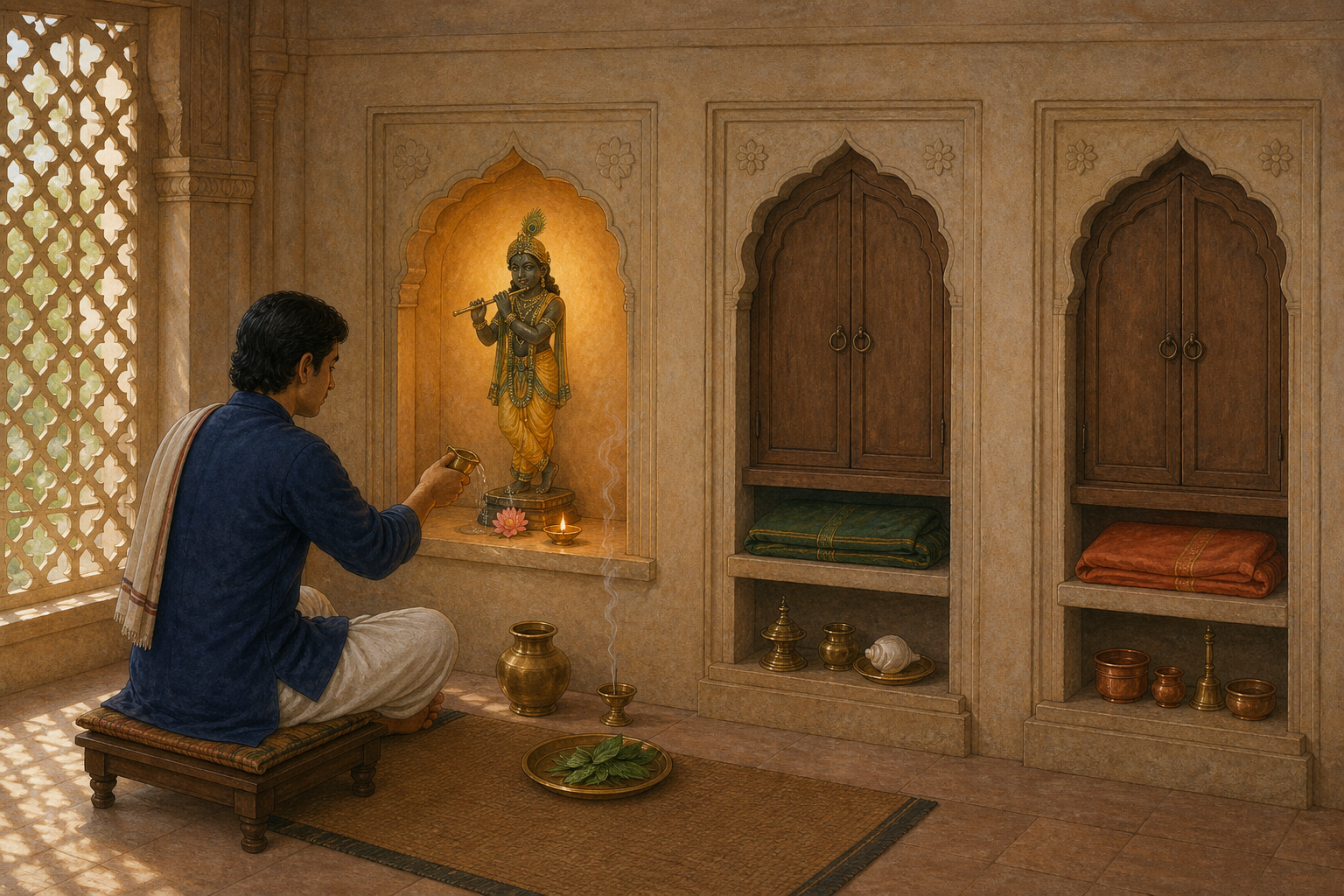
A shared reverence for wisdom, compassion, truthful conduct, non-harm, and service creates real kinship among dharmic paths. It does not require us to claim that Hinduism, Buddhism, Jainism, and Sikhism have identical theologies or ritual systems. Unity becomes stronger when it can recognize relationship without demanding sameness.
This distinction is particularly important with Tara. Her Hindu and Buddhist forms can illuminate a common Indic inheritance while remaining rooted in their respective lineages. Anagha belongs to the Datta tradition, while Matangi’s identity is formed within the Mahavidya stream and her relationship to Parvati and Saraswati. Treat those locations as sources of depth, not obstacles to a convenient universal mixture.
For a simple personal discipline, use this sequence:
- Name the need. Write one sentence describing the fear, conflict of motive, problem of speech, or responsibility you are bringing to Devi. Avoid a vague request for everything to improve.
- Choose one doorway. Turn to Tara for courage at a crossing, Anagha for purification of intention, or Matangi for learning and expression. Choosing one focus gives the mind somewhere definite to stand.
- Use a practice native to that relationship. Tara may be approached through remembrance and dhyana, with mantra or specialized sadhana guided appropriately. Anagha may be remembered through nama japa, lamp-lighting, reflection, or sankirtan. Matangi may be honored through remembrance, study, meditation, and music.
- Join devotion to conduct. Pair the inward practice with one visible act: take the delayed responsible step, correct a mixed motive, revise harmful words, study carefully, or offer useful seva.
- Release the demand for a particular emotional result. A prayer is not invalid because you do not immediately feel calm. Return to the chosen quality and assess what you are now able to do more truthfully.
Keep the practice proportionate to your knowledge and commitments. Do not collect mantras merely because they sound powerful, and do not detach specialized rituals from the communities that preserve their meaning. If you already belong to a lineage, its discipline should govern the details. If you do not, simple devotional remembrance, ethical reflection, study, and service offer a sound beginning.
Judge the fruit by what changes in your conduct

Devotional traditions associate these forms of the Divine Mother with courage, clarity, peace, creative focus, and compassionate resolve. Those associations should orient practice, not turn worship into a transaction. A spiritual discipline matures when its qualities appear in conduct outside the place of worship.
Fearlessness should improve your response to risk
Abhaya is not the denial of danger. If devotion makes you dismiss evidence, ignore necessary precautions, or expose another person to preventable harm, courage has been confused with recklessness. Tara’s fear-dispelling presence should help you recognize the crossing and move with clearer judgment.
Fear can also require more than devotional support. If anxiety is overwhelming, disrupts ordinary functioning, or includes thoughts of self-harm, seek qualified mental-health or emergency assistance. Spiritual practice can accompany that care, but it is not a replacement for it.
Purity should make accountability easier
Anagha’s stainless ideal is visible when you can admit a mistake, repair avoidable harm, and continue your duty without constructing excuses. If a practice makes you more invested in appearing pure than in correcting your conduct, it has become an identity display. Bring the decision back to intention, action, and devotion.
Wisdom should refine speech without weakening truth
Matangi’s influence can be examined wherever knowledge becomes communication. Can you explain the opposing view fairly before answering it? Can you state a boundary without contempt? Can you distinguish a fact from an assumption? Can your learning produce service rather than vanity? These are more reliable signs of refined speech than verbal ornament or victory in argument.
Protection should extend beyond the self
Maternal protection becomes socially meaningful through compassion, ahimsa, and seva. Ask who becomes safer, wiser, or less burdened because of your practice. If the answer never reaches beyond your own comfort, add an act of service. The movement from inward steadiness to outward responsibility is where devotion begins to strengthen community life.
Key takeaways for your next act of worship
- Begin with the threshold you actually face, not with the form that seems most dramatic.
- Turn to Tara when fear obstructs a necessary crossing, and connect remembrance with the next ethical action.
- Turn to Anagha when the duty is visible but the motive needs purification or balance.
- Turn to Matangi when the challenge concerns study, music, creativity, discernment, or responsible speech.
- Respect the distinction between shared dharmic values and interchangeable rituals; cross-traditional kinship does not erase lineage.
- Measure practice by courage, accountability, truthful expression, compassion, and service rather than by intensity of emotion alone.
At your next prayer, resist the urge to gather more names or demand a dramatic sign. Write down the decision in front of you. Choose the form whose wisdom addresses that decision, undertake one appropriate practice, and attach it to one concrete act of dharma.
Then carry that act into the part of life where protection is truly needed: the conversation, duty, crossing, or service you were tempted to avoid. That is where reverence for the Divine Mother becomes a living source of wisdom and strength.
References
- HinduPad — Tara Devi Mahatmyam: Fear-Dispelling Power and Cross-Traditional Significance of Tara Mahavidya
- HinduPad — Anagha Devi, Shakti of Lord Dattatreya: Radiant Grace of the Divine Mother
- HinduPad — Matangi Mahatmyam: Unlocking Matangi Mahavidya’s Blessings for Wisdom, Music, and Protection
