

You may have been asked to lead a temple committee, prasadam programme, youth group, study circle, or relief effort. The difficult part is rarely finding a noble principle. It is deciding who gets heard, what gets funded, when to say no, and how to keep seva from becoming a stage for the person in charge.
Vaishnava leadership becomes compassionate when bhakti changes those everyday decisions. The leader treats authority as a duty to Krishna, resources as entrusted for service, and every person as someone whose dignity matters. That gives you a practical standard: service should become more truthful, orderly, inclusive, and dependable because you are leading it.
Authority begins with the identity of a servant

In Gaudiya Vaishnava practice, the identity of dasa, a servant of Krishna, changes the meaning of leadership. You are not the owner of the mission, the people, the donations, or the praise. You have been given a field of responsibility. Your task is to cultivate it without quietly converting its resources into personal status.
This follows from achintya-bheda-abheda, the teaching that the individual self is simultaneously one with and different from the Divine in an inconceivable way. Service does not erase your individuality or duty. It places both within a relationship to Krishna. Your abilities remain real, but they are used as offerings rather than proofs of superiority.
Srila Prabhupada made that orientation visible. Facilities provided by his disciples were treated as instruments for Krishna’s service, while his personal habits remained simple. His days were ordered around translation, japa, kirtan, teaching, correspondence, and institution-building. People who did not share his theology could still recognize the consistency between his words and conduct.
You can examine the same consistency through three practical audits:
- The comfort audit: When conditions are inconvenient, do you reserve the easiest arrangement for yourself, or do you apply the same standard to everyone? A leader may need privacy, transport, or suitable accommodation to perform a duty. The question is whether the facility serves the duty or merely marks rank.
- The time audit: Does your calendar protect direct service, preparation, and listening, or has it filled with ceremonial visibility? If every public appearance survives while quiet responsibilities are postponed, prestige has displaced seva.
- The credit audit: Can you name the volunteers who carried the work, especially those without titles? Give credit precisely. Accept responsibility just as precisely when the system fails.
Renunciation should not be confused with exhaustion. Prabhupada’s extraordinary schedule expressed his own level of dedication; it is not permission to romanticize sleep deprivation in yourself or demand it from volunteers. Adequate rest, a simple diet, sustainable duties, and periods away from digital noise help protect judgment and reduce burnout. The principle to imitate is the ordering of life around seva, not the copying of another person’s physical austerity.
Turn devotion into a repeatable seva discipline

Good intentions are unstable under pressure. A late delivery, an offended donor, an exhausted volunteer, or a disagreement over priorities can quickly reveal whether your leadership rests on sadhana or mood. Daily practice is therefore part of the operating system of service, not a private ornament added after the work is done.
The Bhagavad-gita gives three especially useful anchors. Equanimity in 2.48 asks you to act without being thrown off course by immediate success or failure. The call to loka-sangraha in 3.20–3.21 directs action toward social welfare and the maintenance of a healthy order. Equal vision in 5.18 reminds you that dignity cannot depend on social position, education, wealth, or usefulness to your organisation. Together, these teachings make leadership calm without becoming passive and active without becoming agitated.
Use the following cycle for a programme, meeting, or difficult decision:
- Anchor your attention. Begin with japa, kirtan, prayer, or contemplation on a relevant Gita passage before entering messages and disputes. The purpose is not to manufacture a spiritual feeling. It is to notice fear, irritation, ambition, or attachment before those states choose for you.
- Name the service in one sentence. Identify who needs what and why it matters. “Run a successful festival” is too vague. “Welcome families into clean, safe worship and provide prasadam without excluding those who cannot donate” gives the team something it can actually evaluate.
- Separate need from preference. Safety, basic dignity, truthful communication, and the core devotional purpose come first. Décor, personal recognition, and conveniences come later. This prevents the loudest preference from masquerading as the highest duty.
- Assign an owner and a boundary. Every material task needs a responsible person, a clear limit, and a way to report difficulty. “The volunteers will handle it” usually means nobody knows who may decide, spend, or stop an unsafe process.
- Ask the people being served. Do not measure compassion only by what the team intended. Invite practical feedback from recipients, quieter volunteers, and partners. If people felt humiliated, confused, unsafe, or ignored, the seva needs correction even when its headline result looks impressive.
- Review without blame-shifting. Record what worked, what failed, what was spent, and what should change next time. A review should improve the system, not identify a junior person who can absorb the leader’s responsibility.
A simple meeting discipline helps. Open with “Whose need are we responsible for here?” End with “Who owns the next action, what is the limit, and how will we know it was completed?” Those questions pull discussion away from personalities and back toward duty.
Compassionate leadership also knows how to refuse. Say no when a request is unsafe, dishonest, outside the team’s competence, or likely to consume resources promised elsewhere. Explain the reason without humiliating the person, and offer a safe alternative or referral when one genuinely exists. Agreeing to everything is not mercy if it produces broken promises.
Let compassion determine the order of action

Compassion is more than feeling another person’s pain. In leadership, it establishes sequence. When harm is immediate, preserve life and safety first. Then protect dignity and emotional stability. Only after that should you turn to continuity, rebuilding, education, livelihoods, or institutional reputation.
In an emergency, this order prevents a familiar spiritual mistake: offering an elevated explanation when a person first needs water, food, shelter, medical support, or protection. Prayer and kirtan may steady volunteers and comfort willing participants, but they do not replace qualified medical care, public-safety instructions, or competent relief work. Bhakti should make practical help more attentive, not less necessary.
A crisis-ready Vaishnava team can work through five priorities:
- Preserve life: identify urgent risks, contact the appropriate civic or medical services, and provide only the assistance your team can deliver safely.
- Stabilize essentials: organize clean water, shelter, nutritious vegetarian food, basic hygiene, and orderly distribution according to the actual situation.
- Protect dignity: create a process that does not force people to perform gratitude, display religious conformity, or reveal private hardship to receive help.
- Communicate carefully: verify information before forwarding it, consider the likely harm of publication, and share only what people need in order to act.
- Plan recovery: once immediate danger has eased, identify what will help households resume schooling, housing, livelihoods, community life, and spiritual support.
The same sequence applies on a smaller scale. If a young volunteer reports mistreatment, your first duty is not to protect the institution’s reputation or demand harmony. Establish safety, listen without retaliation, preserve relevant information, and involve the appropriate responsible authorities. Reconciliation is meaningful only after protection and truthfulness have been taken seriously.
Speech is part of seva. Before forwarding a dramatic message, ask three questions: Is it verified? Could sharing it expose or inflame someone? Does the recipient need it in order to make a sound decision? Truthfulness does not require broadcasting every claim that reaches your phone. Beneficial restraint is often the more dharmic choice.
Apply the same care to photographs and testimonials. Obtain meaningful consent before showing a person’s face, name, home, medical condition, or family hardship. Someone’s suffering is not promotional material. If you can report the service through totals, processes, or non-identifying images, choose the less intrusive option.
Compassion also expands your circle of cooperation. Sikh langar offers a disciplined model of dignified food service. Buddhist metta can support attentive presence. Jain commitments to ahimsa sharpen concern for nonviolence in procurement and logistics. Vaishnava kirtan can sustain shared purpose and morale. These contributions need not be blended into a single theology. They can cooperate as distinct dharmic strengths, alongside civic agencies and qualified professionals.
Where conflict is escalating, compassionate leadership combines a preference for de-escalation with a duty to protect the vulnerable. Sri Krishna’s role as a peace envoy in the Mahabharata’s Udyoga Parva shows the seriousness of patient diplomacy before force. It does not justify endless discussion while people remain exposed to harm. Use lawful protective channels, seek competent help, reject revenge, and do not confuse passivity with ahimsa.
Make humility and accountability visible
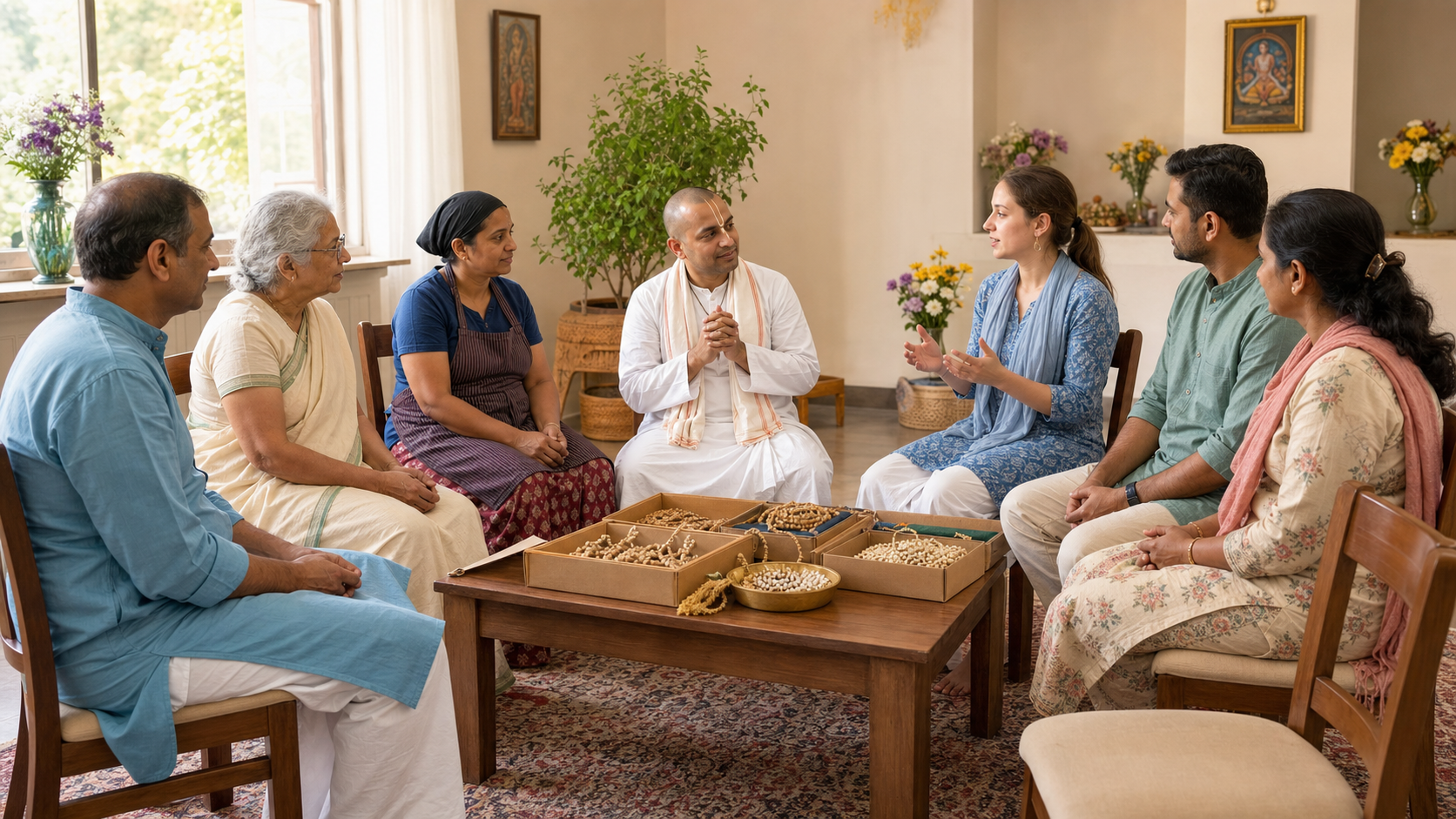
A leader cannot certify personal humility. Other people infer it from patterns: how money is handled, whether inconvenient facts are admitted, who receives credit, how questions are treated, and whether rules change around rank. This is why transparent systems are spiritual safeguards. They reduce the room in which self-deception can hide.
For every programme that receives money or material donations, keep a basic service record. State the purpose of the collection. Record what came in and what went out. Keep receipts where they exist. Note who approved significant changes. Reconcile the totals after the activity, and give donors and the community an understandable summary. Financial detail should be sufficient to establish stewardship without exposing recipients’ private information.
Measure outputs that help the next decision. Relief work may track meals delivered, households reached, volunteer hours, remaining supplies, and feedback from the community. A temple education programme may track attendance, retention, accessibility needs, volunteer capacity, and whether participants can identify what they learned. Numbers do not prove spiritual depth, but basic indicators reveal gaps, duplication, and unmet need.
Accountability must also travel upward. If only junior volunteers receive correction, the structure is protecting rank rather than dharma. Provide a known route for raising concerns, and do not require a complainant to confront a powerful person alone. Distinguish honest disagreement from misconduct. A question about spending, safety, or treatment is not automatically disloyalty.
You can test the health of your leadership with four questions:
- Can a volunteer question a decision or expense without losing access, friendship, or future opportunities?
- Do leaders accept the same inconvenience they assign to others, unless a genuine duty requires different treatment?
- Can recipients decline a photograph, ritual, conversation, or request for testimony and still receive respectful service?
- Would the programme continue if the most visible leader were absent, or has every decision been made dependent on one personality?
A “no” to any of these questions is not a reason for despair. It identifies the next reform. Create a confidential reporting route. Explain exceptions. Separate assistance from publicity. Train a second person to carry each essential responsibility.
Modern servant-leadership language can help describe authority earned through service, but it does not exhaust the Vaishnava role of the acharya. In the guru–shishya tradition, teaching is transmitted through realised instruction and lived example, not merely through a management technique. Prabhupada’s cross-cultural credibility grew because observers could verify the alignment of discipline, renunciation, and purpose. The lesson for an ordinary community leader is not to imitate the status of an acharya. It is to stop asking others to trust virtues your conduct does not display.
Finally, build a rhythm that your people can sustain. Rotate demanding duties. Let volunteers disclose limits without shame. Maintain sadhana without using it as a test of who deserves care. Schedule honest reviews after intensive service. A team that is never allowed to rest will eventually mistake fatigue for surrender, resentment for detachment, or hurried decisions for spiritual urgency.
Key takeaways
- Begin from dasa, the identity of a servant: authority, time, money, and recognition are entrusted for Krishna’s service.
- Use daily sadhana to notice agitation and attachment before making decisions; do not use spiritual practice to avoid material duties.
- Order compassionate action clearly: life and safety, essential needs, dignity, truthful communication, and then longer-term recovery.
- Protect privacy and consent. Seva should never require public gratitude, religious conformity, or the display of suffering.
- Make stewardship verifiable through records, relevant measures, accessible feedback, and accountability that reaches leaders as well as volunteers.
- Keep service sustainable. Simplicity and sacrifice do not justify preventable exhaustion or unsafe work.
Before your next meeting, write one sentence naming the person you are serving, the need you have accepted responsibility for, and the evidence that will show whether dignity was preserved. Put that sentence at the top of the agenda. If a proposed expense, speech, or decision cannot be connected to it, pause before calling the proposal seva.
References
- DharmaRenaissance Blog — Srila Prabhupada’s Timeless Appeal: How Selfless Seva Forged Universal Respect Across Traditions
- DharmaRenaissance Blog — Vaisnava Compassion in Global Crises: Dharmic Unity, Practical Seva, and Unshakable Calm