
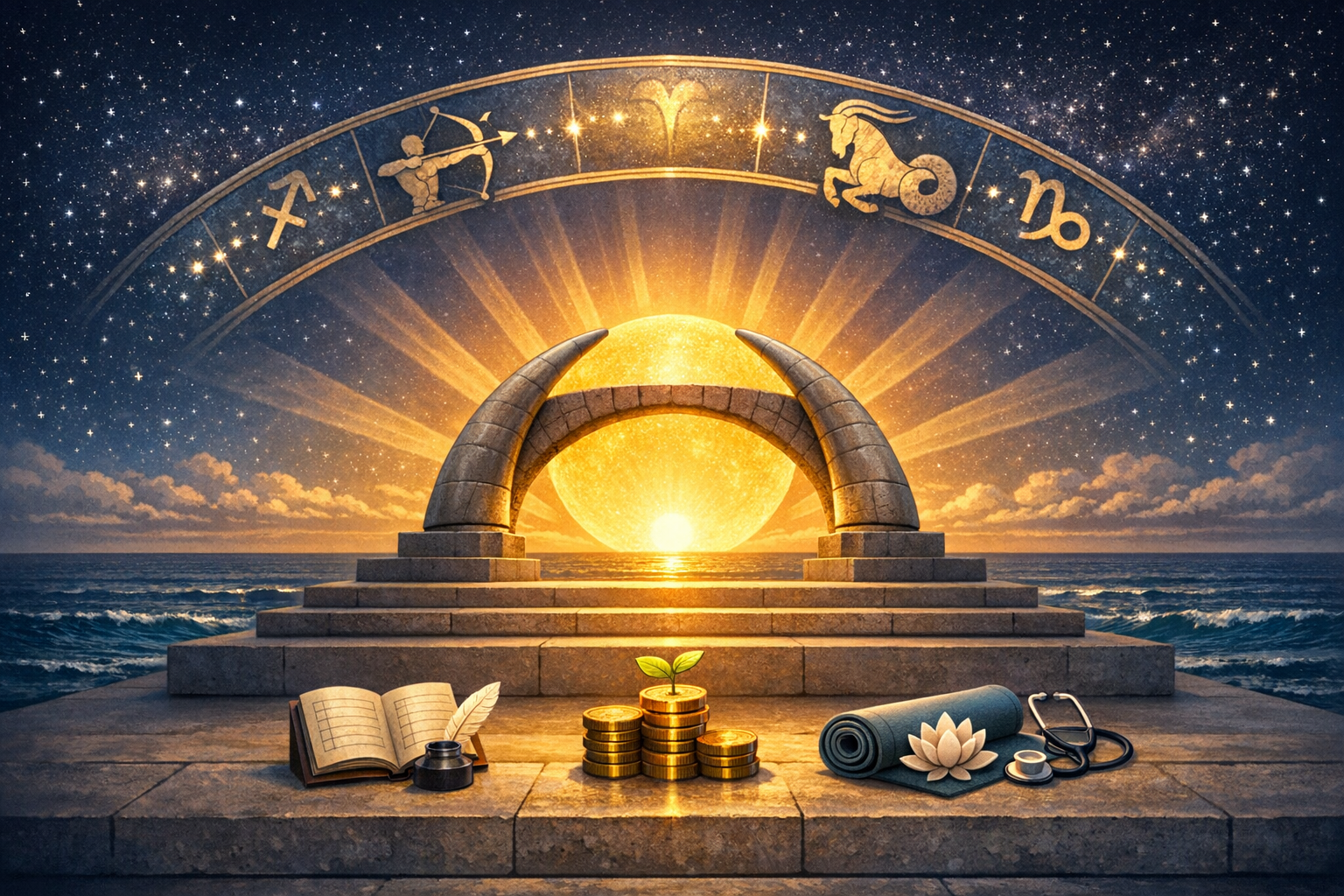
Uttarashada Nakshatra, known regionally as Uthiradam or Uthradam, is governed by Ravi (Surya) as its planetary lord and protected by the Vishwa devatalu (Vishvadevas). Classical texts describe its shakti as apratihatya shaktithe power of invincible victorysignifying steady effort, ethical resolve, and ultimate success. Spanning 26°40′ Dhanu (Sagittarius) to 10°00′ Makara (Capricorn), it bridges a shift from idealism to pragmatic responsibility. The 2026–2027 period unfolds as a year of disciplined consolidation for Uttarashada-born natives, beginning on a steady note and delivering professional gains progressively through sustained action.
This forecast applies the sidereal (Nirayana) framework commonly used in Jyotisha, considering the major transits that contour outcomes during mid-2026 to mid-2027: Shani in Meena (Pisces), Guru in Karka (Cancer), and the Rahu–Ketu axis transitioning from Kumbha–Simha (Aquarius–Leo) to Makara–Karka (Capricorn–Cancer) around late 2026. Because Uttarashada straddles Dhanu and Makara, outcomes are presented distinctly for those with the Moon in Uttarashada pada 1 (Dhanu Rashi) and for those with the Moon in Uttarashada padas 2–4 (Makara Rashi). As always, individual results depend on the full birth chart, planetary periods (dasha–bhukti), and personal karmic rhythms.
Identity and symbolism remain crucial to interpretation. Uttarashada’s symbolan elephant tusk or a planked bedevokes endurance, duty, and legacy. Its deities, the Vishvadevas, govern universal virtues such as truth, skill, and goodwill. When harmonized with Ravi’s solar clarity, natives are inclined toward principled leadership, long-horizon planning, and achievements that outlast immediate cycles. These archetypal qualities are particularly supportive in navigating the measured, sometimes sobering, transits of 2026–2027.
Macro-transit frame, 2026–2027 (sidereal): Shani continues through Meena (supporting realism, patience, and service); Guru transits Karka (amplifying family, partnerships, and nourishment themes); Rahu–Ketu completes its Kumbha–Simha run by late 2026 and then shifts to Makara–Karka (testing identity and relationship balance for some). These dynamics especially emphasize home, security, and shared responsibilities, asking Uttarashada natives to combine solar courage with steady, water-sign wisdom.
For Uttarashada pada 1 (Dhanu Rashi): The overarching tone is constructive sobriety. With Shani in the 4th (ardha-ashtama influence) and Guru in the 8th (ashtama Guru), the year invites conscientious restructuring in domestic, emotional, and foundational matters before visible expansion. Career gains arrive graduallyoften after process refinements, compliance upgrades, or governance improvementsmirroring the classic Uttarashada arc: start normally, succeed decisively through sustained effort. Property, vehicles, relocation, and family logistics may demand planning and patience.
Career and enterprise (Dhanu): Authority grows by demonstrating reliability rather than by seeking rapid recognition. Roles involving policy, audit, risk, infrastructure, compliance, or institutional service are favored. Managers and entrepreneurs benefit from strengthening controls, documentation, and training flows. Promotions or new mandates can materialize in stages as stakeholders reward consistency. Government-facing work, energy and utilities, agriculture supply chains, healthcare administration, and education governance show resilience.
Wealth and Aaya–Vyaya 2026–2027 (Dhanu): Cash flows remain stable when budgets are conservative. The 8th-house Guru advises against high-leverage expansion or opaque partnerships; instead, reduce liabilities, renegotiate terms, and build emergency buffers. Insurance optimization and estate/legacy planning are prudent. Returns from long-gestation projects improve toward the end of the period, particularly where compliance and quality systems are enhanced.
Relationships and family (Dhanu): The 4th-house Shani spotlights family responsibilities, elder care, and the emotional climate at home. Prioritizing honest communication and shared decision-making prevents misunderstandings. While this transit can feel weighty, it also deepens trust and matures bonds. Time-bounded plans for caregiving, children’s education, and household infrastructure yield calm and clarity.
Health and well-being (Dhanu): Moderate workloads, regulated sleep, and heart–lung care are important. Solar vitality strengthens with morning light exposure, mindful breathing, and disciplined routines. Chest, back, and musculoskeletal support through posture work, yoga asana, and gentle strength training are helpful. Stress management should emphasize steady, rhythmic practices over intensity.
Learning and travel (Dhanu): The year favors research, systems thinking, archival work, and skills that improve reliability (data governance, financial controls, safety standards). Travel related to dutyaudits, inspections, trainingproves useful. Pleasure travel is best kept simple and nourishing, aligned with family needs.
For Uttarashada padas 2–4 (Makara Rashi): The tenor is constructive mobility. Shani in the 3rd sustains initiative, planning, and execution power; Guru in the 7th supports alliances, advisory capital, and mutually beneficial contracts. The first phase (while Rahu remains in Kumbha) may bring fluctuations in speech/finance matters, prompting refinement of pricing and communication. Around late 2026, as Rahu moves to Makara and Ketu to Karka, identity–relationship equations require composure; centering practices and clear boundaries prevent distraction and diffuse anxiety.
Career and enterprise (Makara): The 3rd-house Shani rewards consistent outreach, stakeholder education, and process mapping. It is an excellent year for writing proposals, codifying SOPs, and building predictable pipelines. The 7th-house Guru expands professional networks, partnership options, and reputationespecially for consultants, legal/financial advisors, operations leaders, and supply-chain heads. Negotiations trend favorable when expectations and deliverables are documented clearly.
Wealth and Aaya–Vyaya 2026–2027 (Makara): Early in the cycle, watch discretionary spending and communication-driven costs (marketing, representation, travel). As the nodes shift late 2026, maintain a lean, data-led financial model; avoid status-driven purchases or signal-spending. Balanced asset allocation, steady SIPs, and milestone-based capex improve stability. Transparent profit-sharing and incentive structures anchor alliances under the 7th-house Guru.
Relationships and family (Makara): The 7th-house Guru is often auspicious for engagements, marriages, and healing of long-standing misunderstandings. Relationship growth favors accountability, routine, and shared service. As Ketu moves to the 7th later in the period, cultivate mindful presence to avoid autopilot detachment; periodic check-ins and planned quality time maintain warmth and trust.
Health and well-being (Makara): The 3rd-house Shani supports disciplined fitness. Short, regular sessions beat sporadic intensity. Respiratory care, shoulder–arm mobility, and gut balance deserve attention. With the node shift later in the year, grounding practicescalm breathwork, nature walks, digital hygienestabilize attention and support restful sleep.
Learning and travel (Makara): Certifications, policy literacy, and operations analytics repay effort. Short professional trips and regional expansions succeed when schedules are realistic and buffers are built in. International opportunities may arise via 7th-house Guru partnerships; vet compliance and risk-sharing clauses carefully.
Pada-specific nuance: Pada 1 (Dhanu) tends to be more values-driven and visionary; in 2026–2027 it benefits from converting ideals into robust systemsturning dharma into daily practice. Padas 2–4 (Makara) are inherently pragmatic; this year emphasizes codifying wins, teaching teams, and designing scalable processes. Across all padas, Uttarashada’s hallmark is ethical perseverance; measured effort outperforms speed.
Sector outlook, aligned with Ravi and Vishvadeva themes: governance, public administration, infrastructure, energy and utilities, agriculture inputs and logistics, healthcare systems, compliance and risk, education policy, and archival/records management. Roles that steward resources, uphold standards, and transmit knowledge find structural support. Leadership rooted in fairness and service expands influence steadily through the year.
Temporal highlights within 2026–2027: The first half emphasizes foundation workbudgeting, process discipline, and domestic stability. The late-2026 node shift tests identity–relationship clarity (especially for Makara Moons); composure, documentation, and healthy routines mitigate turbulence. Early-to-mid 2027 rewards those who kept steady through the formative months; visibility and results compound for teams that learned and adapted.
Ethical and contemplative supports across dharmic traditions: This platform affirms unity among Hinduism, Buddhism, Jainism, and Sikhism, recognizing shared commitments to truth, compassion, and self-discipline. Aligned practices include Surya-oriented observances (Surya namaskara at sunrise, Aditya Hṛidayam recitation, or reflective gratitude at dawn), mindfulness and mettā (loving-kindness) cultivation, pratikraman-style self-audit and atonement, and nām-simran or steady mantra remembrance. Small, daily acts of sevasupporting elders, teachers, and those in needreflect Shani’s call to responsibility and Guru’s call to wisdom.
Classical remedial perspectives (optional and non-prescriptive): Honor Surya with light, truthfulness, and punctuality; strengthen Shani through humility, service, and duty to the vulnerable; align with Guru by supporting education, mentorship, and food charity; balance Rahu–Ketu with restraint in novelty-seeking and cultivation of steady presence. These are intended as ethical disciplines more than ritual obligations, preserving the inclusive spirit of dharma.
Summary for Uttarashada, Uthiradam, Uthradam Nakshatra Phalam 2026–2027: The year commences on a normal, steady footing and then builds toward professional success methodically. For Dhanu padas, patience in domestic and foundational matters unlocks credible career gains; for Makara padas, initiative and partnership maturity produce compounding benefits. Financial prudence, respectful communication, and family-centered planning are decisive advantages. True to Uttarashada’s essence, victory is less a sudden event and more the natural result of ethical persistence and well-laid structures.
Inspired by this post on Hindu Pad.
