

When you reach for a protective prayer, you may be asking two questions at once: Can I be held through this uncertainty, and what must I do next? Protective bhakti is most useful when it answers both. It gives fear somewhere sacred to rest, then returns you to your duty with a steadier mind.
This matters because protection can be misunderstood as escape. A kavacham is approached as spiritual armour associated with resilience, clarity, and inner strength. Armour does not remove the field of action. It equips you to enter it without surrendering your judgement, compassion, or courage.
Key takeaways
- Use protective prayer to steady attention and clarify duty, not to avoid a necessary decision.
- Keep the practice simple: one chosen recitation, attentive breathing, a clear intention, and one action that follows from it.
- Measure courage by discernment and service. Impulsive aggression, domination, and self-display are not signs of spiritual strength.
- Complete the movement of bhakti through seva. Ask not only how you may be protected, but also who can be safer, calmer, or less burdened because you acted.
Protection should make you more capable, not more passive
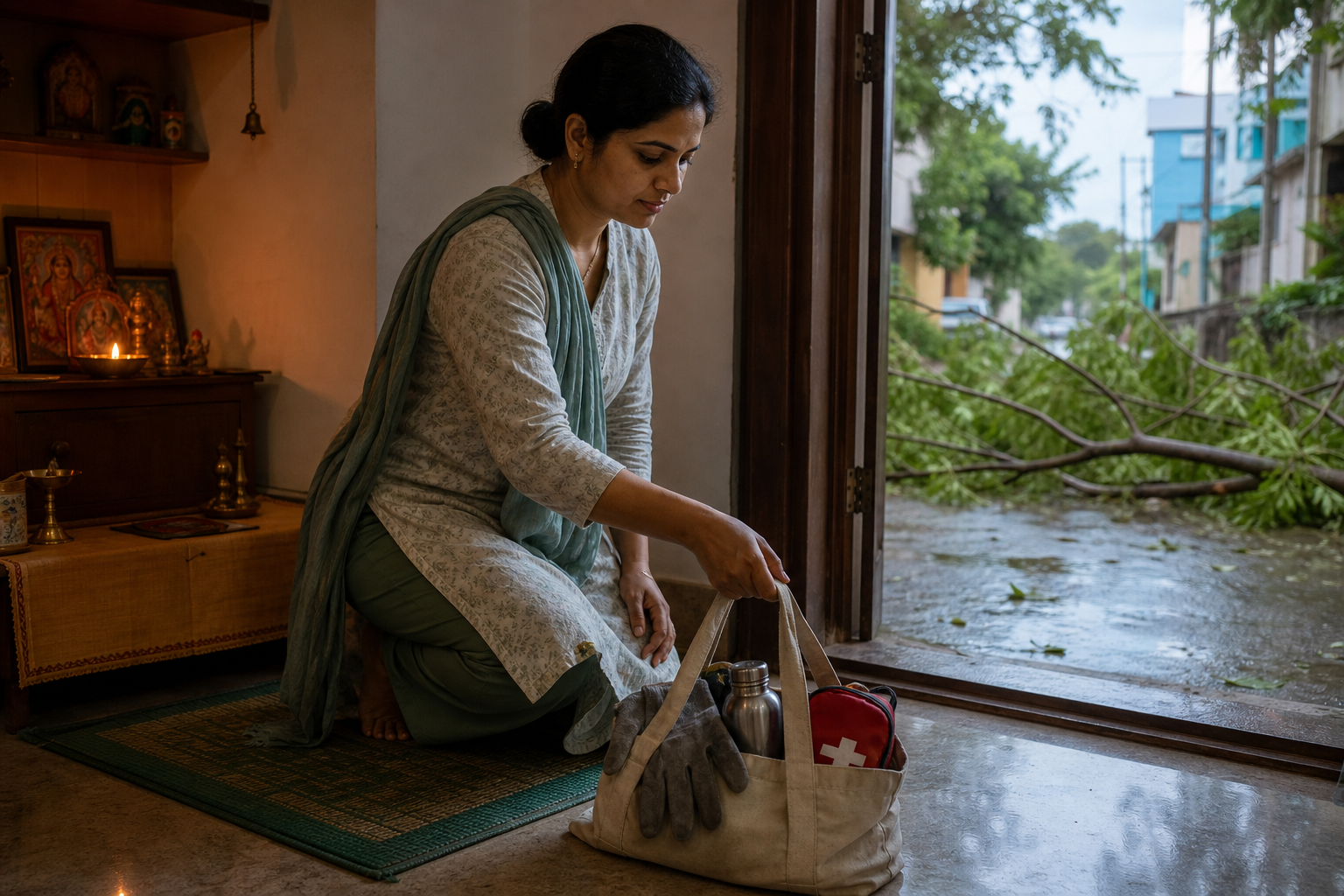
Protective bhakti does not guarantee that every external event will unfold as you prefer. Its dependable discipline is inward and ethical: you gather a scattered mind, remember the presence and qualities of the deity, and recover enough composure to distinguish fear from fact. Many devotees describe a sense of grounding after mindful recitation, but that experience should be received as support for wise action, not treated as proof that no danger remains.
First identify what kind of protection you need
Before beginning, name the problem plainly. Do not place every form of distress into one spiritual category.
- Immediate danger: Move to safety, alert an appropriate authority, or contact someone capable of helping. Pray while taking those steps if prayer steadies you, but do not let ritual delay practical protection.
- A difficult duty: You may already know what must be done but fear the conversation, boundary, apology, report, or decision involved. Use prayer to prepare for that specific act.
- Uncertainty without an immediate threat: When the outcome is unknown and no urgent intervention is required, recitation can contain restless speculation and bring your attention back to the next available responsibility.
This distinction prevents two opposite errors. The first is expecting a hymn to perform work that belongs to practical judgement. The second is dismissing prayer because it does not control events. Bhakti has its own work: forming the person who must meet those events.
Judge the practice by its fruit
After recitation, notice what has changed in your conduct. A useful protective practice should gradually make it easier to answer yes to questions such as these:
- Can you describe the situation without magnifying or denying it?
- Can you act without making fear, anger, or pride your commander?
- Can you protect a boundary without abandoning compassion?
- Can you accept help instead of turning devotion into solitary endurance?
If prayer repeatedly becomes a reason to postpone an obvious duty, change the way you conclude it. End by naming one action you will take. The bridge between refuge and responsibility should be explicit.
Build a practice that ends in a decision

A protective practice does not need many texts, elaborate objects, or a dramatic emotional state. A clean place, a safely lit lamp if that belongs in your worship, an attentive posture, and one familiar recitation are enough to support concentration. The essential movement is from invocation to steadiness, from steadiness to discernment, and from discernment to action.
- State the intention. Name the person, duty, fear, or uncertainty you are bringing before the deity. Use a plain sentence rather than a vague request for everything to improve.
- Choose one devotional form. A devotee of Angalamman may recite the Angalamman Kavacham. A devotee drawn to Hanuman may use the Hanuman Chalisa, a stotra, japa, or a reading from Sundara Kanda. Continuity matters more than collecting practices.
- Recite without rushing. Let pronunciation be steady, breathing rhythmic, and attention connected to the meaning as far as you understand it. If the mind wanders, return to the next line rather than turning distraction into another struggle.
- Sit briefly with the qualities invoked. Ask what protection, courage, restraint, compassion, or devotion requires from you in this situation.
- Name the next dharmic action. Make it concrete enough to perform: call the person, prepare the document, ask for help, correct the mistake, keep the boundary, or accompany someone who should not face a difficulty alone.
- Carry out the action. Do not keep extending the ritual once the responsibility has become clear. The practice has reached its outward phase.
Morning or evening sandhya can provide a natural place for regular recitation. Fridays and Navaratri carry particular devotional significance for many worshippers of Devi, and the shared atmosphere of lamps, mantras, puja, and community worship can deepen attention. These occasions support practice; they do not make sincerity unavailable on an ordinary day.
Choose continuity over spiritual accumulation
Anxiety often creates the urge to add another mantra, another vow, or another protective form. That can scatter the very attention the practice is meant to gather. Stay with one recitation long enough to notice its ethical effect. Are you becoming more truthful about the problem? More patient with people who are not responsible for it? More willing to perform the unglamorous work that resolution requires?
The contemplative tradition associated with Panchamukhi Hanuman near Mantralayam offers a useful corrective to hurried spirituality. The shrine remembers Guru Ragavendra’s sustained meditation and divine vision, while the five-faced Hanuman embodies comprehensive protection joined to steadfast devotion and service. The pattern is patient formation, not a frantic search for instant control.
Courage begins when strength accepts discipline
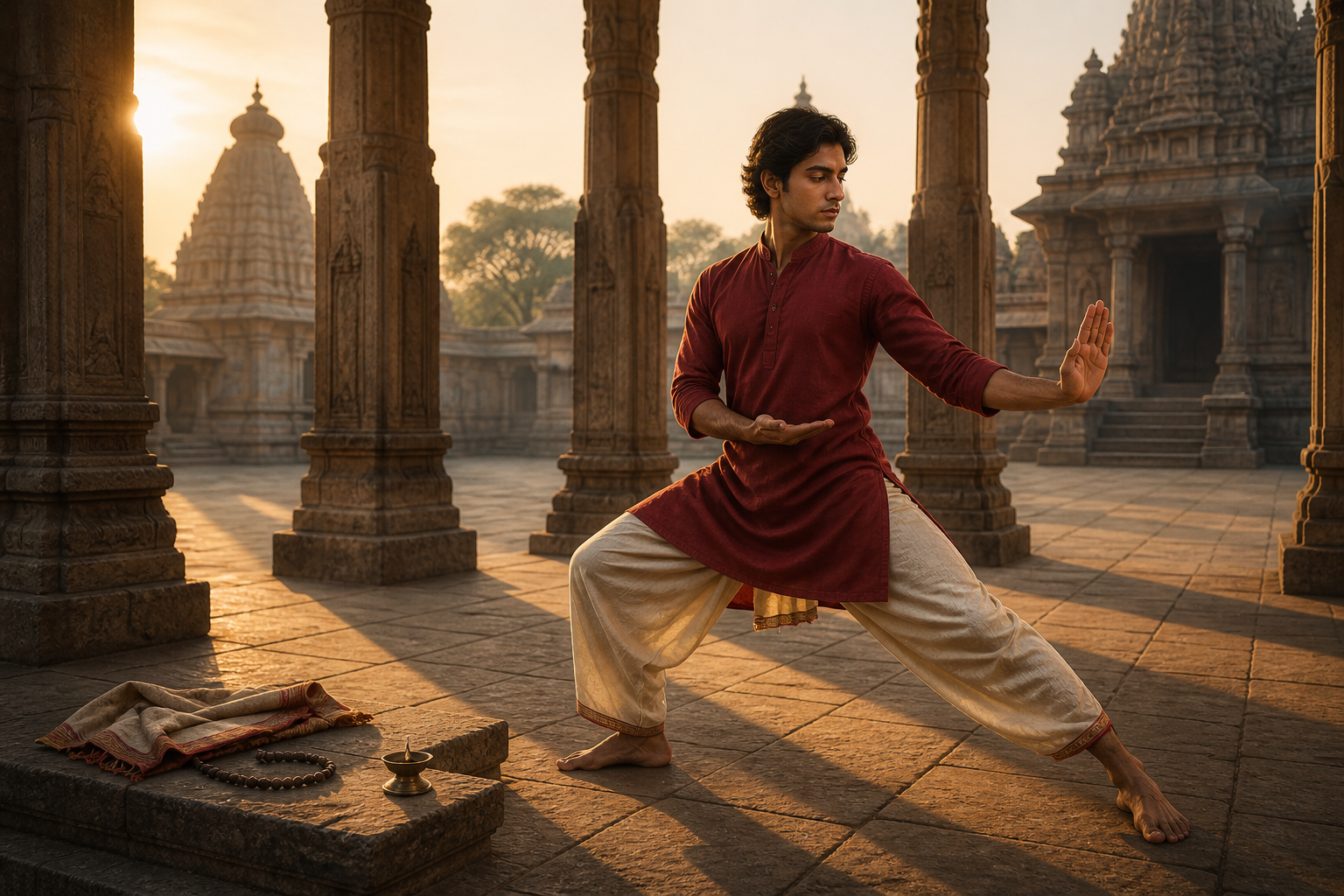
Fearlessness is not the absence of fear, and courage is not whatever feels forceful. Hanuman Bhakti gives a sharper standard: great capacity governed by humility, loyalty, and discernment. Hanuman’s strength is placed in the service of duty and compassion rather than pride. This is why devotion to him can train courage without glorifying aggression.
Test an intended action before calling it courageous
- Duty: Is this action actually yours to take, or are you entering the situation mainly to feel powerful, indispensable, or morally superior?
- Proportion: Does the response match the problem, or has anger made punishment feel like protection?
- Service: Will the action reduce harm, defend a legitimate boundary, or help someone meet a real need? If it serves only your image, it has drifted away from seva.
These checks turn courage into something you can practise in ordinary life. You may need to make a call you have postponed, admit that you were wrong, object to mistreatment, ask a capable person for assistance, or remain calm while another person is agitated. None of these actions requires a heroic performance. Each requires enough steadiness to place dharma ahead of comfort.
Notice the counterfeits of courage
- Noise without responsibility: Speaking fiercely while leaving the difficult work to others.
- Control disguised as care: Overriding another person’s agency and calling it protection.
- Recklessness disguised as faith: Ignoring an evident risk on the assumption that devotion removes the need for caution.
- Pride disguised as strength: Needing your service to be witnessed, praised, or repaid.
Hanuman’s example corrects each distortion. Capability is not denied; it is disciplined. Humility does not mean weakness; it keeps strength answerable to its purpose. Service does not erase the self; it frees action from the demand that the self be celebrated.
Complete protective bhakti through seva
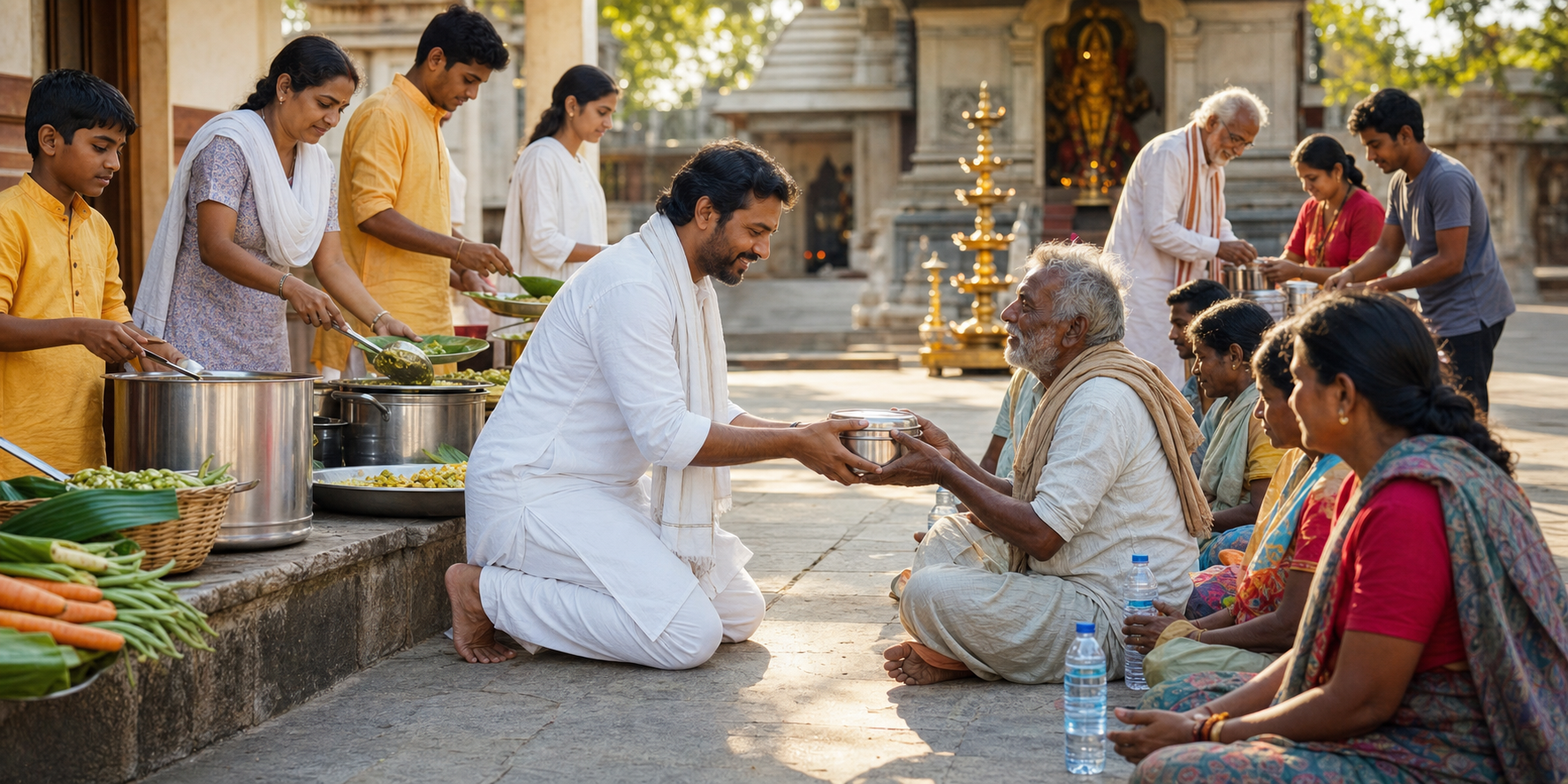
If protection ends with your own reassurance, the practice remains incomplete. The steadiness you receive should enlarge your capacity to protect, assist, or encourage someone else. This does not require a grand project. It requires noticing where fear, isolation, confusion, or practical burden has placed another person at a disadvantage.
Move from inward refuge to outward responsibility
- Begin near you. Check on the person whose difficulty you already know. Listen before deciding what help should look like.
- Offer a definite form of assistance. Replace a general promise with a concrete act you can honour: accompany someone, share a necessary task, provide a meal, make an introduction, or help them find appropriate support.
- Protect dignity as well as safety. Do not spread another person’s hardship as gossip, use service to create obligation, or humiliate someone while helping them.
- Build dependable capacity. If the same need keeps appearing in your family or community, learn the practical skill, join the responsible institution, or establish the routine that allows help to continue after the emotion of the moment passes.
A useful seva commitment has a clear recipient, a realistic action, and a boundary you can keep. Service that depends on resentment, exhaustion, or promises beyond your capacity will become unreliable. Humility includes admitting what you cannot do and connecting the person with someone better equipped.
Recognise shared ethics without erasing distinct paths
Protective devotion takes different forms across the dharmic family. Hindu kavachams, Buddhist paritta recitations, Sikh shabads, and Jain stavans arise within distinct theologies and disciplines; they should not be collapsed into interchangeable techniques. Yet their devotional worlds can converge in the cultivation of fearlessness, compassion, ethical clarity, and harmony. The same ethical kinship appears in Buddhist karuna, Jain ahimsa and aparigraha, Sikh seva, and the disciplined strength of Hanuman Bhakti.
This shared ground gives you a practical way to honour unity without pretending there are no differences. Learn the practice within its own tradition. Respect its language, discipline, and object of devotion. Then recognise the neighbour formed by another dharmic path when their prayer also makes them more compassionate, restrained, and ready to serve.
At your next recitation, do not ask only to be spared from fear. Ask to become steady enough for the duty in front of you and useful enough to lighten another person’s burden. When the prayer ends, perform the action you named. That is where protective bhakti becomes courage, and courage becomes seva.
References
- DharmaRenaissance Blog – Angalamman Kavacham: Powerful Protective Prayer for Strength, Inner Courage, and Navaratri
- DharmaRenaissance Blog – Unshakeable Hanuman Bhakti: Humility, Strength, and Service Across Dharmic Traditions
- DharmaRenaissance Blog – Panchamukhi Hanuman near Mantralayam: Five-Faced Grace and Guru Ragavendra’s Legacy
