

You may be praying, meditating, serving, or reading scripture and still finding yourself anxious, hurt, exhausted, or trapped in the same conflict. That can produce a painful doubt: if spiritual practice is real, why has it not removed the suffering?
The doubt usually begins with the wrong measure. Spiritual practice does not guarantee a life without illness, loss, difficult people, or sudden reversals. Its first work is subtler and more immediate: it keeps a painful experience from automatically becoming fear, resentment, harmful speech, or despair. You begin to recover the space in which a dharmic response is possible.
First, identify which kind of suffering is present
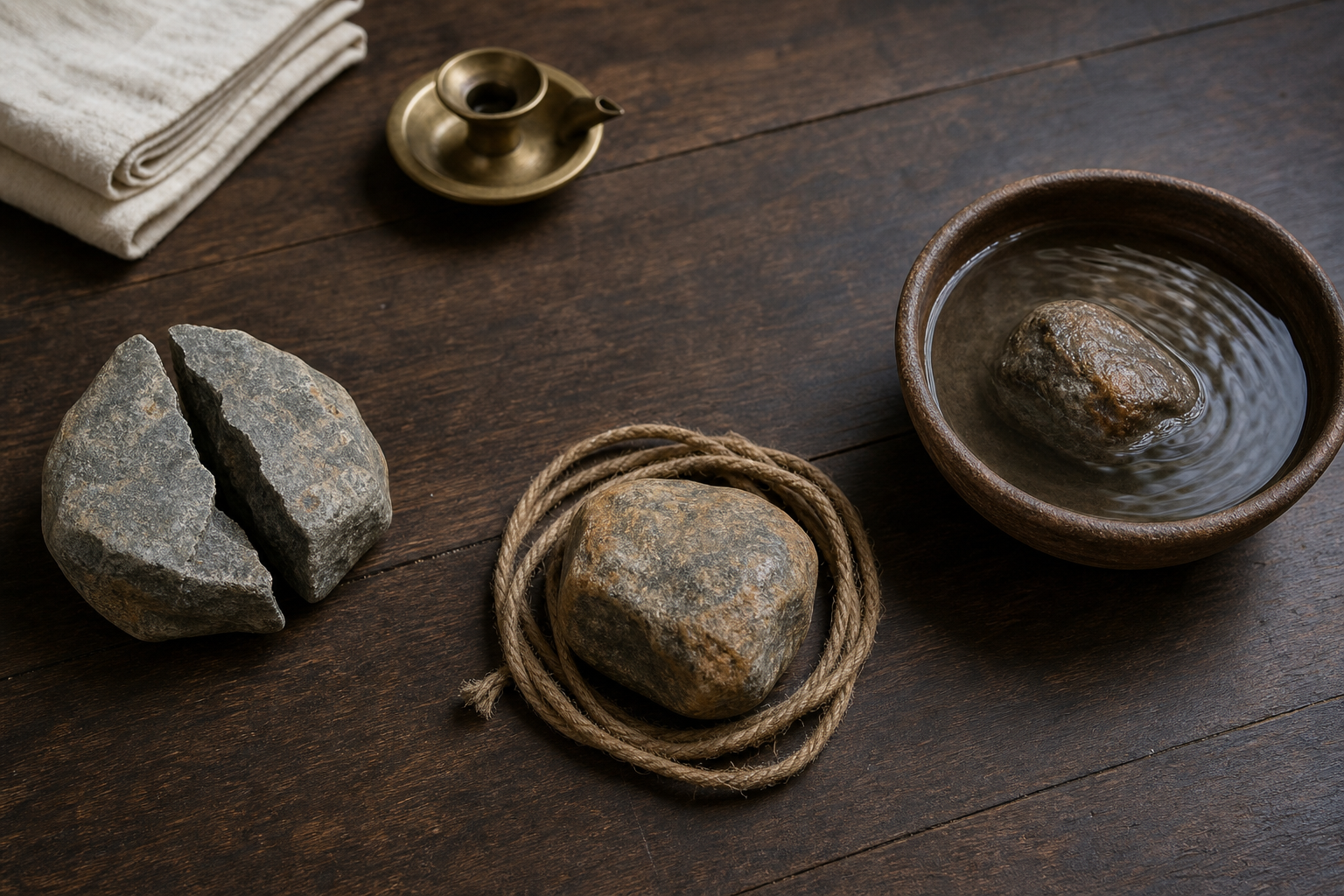
When everything hurts at once, the mind treats distress as one solid, permanent reality. The tapa-traya map associated with Śrīmad Bhāgavatam 4.29.32 makes the experience more workable by distinguishing three converging forms of misery:
- Internal distress: bodily fatigue, illness, restless thought, anxiety, regret, craving, or emotional agitation.
- Distress involving other beings: conflict, betrayal, obligation, social pressure, economic strain, or the consequences of another person’s choices.
- Distress arising beyond direct human control: natural calamity, an outbreak of illness, an unexpected disruption, or another reversal that cannot be negotiated away.
These forms often overlap. A difficult deadline can produce bodily exhaustion, quarrels at home, and fear about conditions you cannot control. The point is not to force the experience into a perfect category. The point is to stop responding to three different problems as though they were one.
When distress rises, write down three questions: What is happening within my body and mind? Which relationship or external pressure is intensifying it? What part of this situation is genuinely outside my control? Then circle the area in which one responsible action is possible.
If the disturbance is mainly internal, your next duty may be to pause, rest, seek appropriate care, or steady attention before speaking. If another person is involved, the task may be truthful conversation, non-harming speech, an apology, or a firm boundary. If the event is beyond your control, attention shifts from trying to command the outcome to preparation, acceptance, prayer, and useful service.
This classification prevents two common errors. You stop calling avoidable harm fate, and you stop treating an uncontrollable event as a personal spiritual failure.
Freedom means less compulsion, not a painless life
Time carries every situation forward. Karma connects conduct with consequences and helps explain why repeated actions create repeated patterns. Forgetfulness of the Divine center makes the cycle tighter because the mind reacts as though immediate fear, pleasure, status, or self-protection were the whole of reality.
Karma should never become a weapon for blaming yourself or somebody else. You usually do not know the complete chain of causes behind another person’s illness, loss, or hardship. Your useful question is not, “What hidden deed made this happen?” It is, “What action will avoid adding more greed, cruelty, deceit, or confusion now?”
Spiritual freedom begins whenever remembrance interrupts compulsion. Anger may still appear, but it does not have to choose your words. Fear may remain in the body, but it does not have to define your duty. Grief may accompany you, but it need not become your permanent identity.
Hindu thought preserves the greater horizon of moksha, release from bondage to saṁsāra. Daily practice gives you smaller but meaningful evidence of movement toward freedom: you notice reactivity sooner, recover discernment more quickly, make a less harmful choice, and repair damage without spending days defending your ego.
Key takeaways
- Classify distress before trying to solve it: internal, relational, or beyond direct control.
- Do not measure practice by whether difficulty appears; measure it by what difficulty makes you do.
- Use karma to strengthen responsibility, never to claim certainty about why someone suffers.
- Look for growing freedom in attention, speech, conduct, repair, and willingness to serve.
Build a daily practice that survives difficult days

A routine that exists only when you feel peaceful will disappear precisely when you need it. A modest five-to-fifteen-minute daily discipline is more useful than occasional intensity because it gives remembrance a reliable place in ordinary life.
Attach the practice to a stable cue: waking, bathing, the first cup of tea, returning from school or work, or preparing for sleep. If your phone routinely captures your attention first, place it beyond reach until the practice is complete. The purpose is not to prove willpower. It is to protect the moment in which you choose the direction of your mind.
- Arrive. Sit or stand in a posture you can maintain without strain. Let the breath settle. Notice the body’s condition instead of demanding instant calm.
- Remember. Repeat your chosen Divine Name or mantra, offer a simple prayer, contemplate a sacred teaching, or rest attention according to the discipline you have received.
- See clearly. Name the disturbance currently occupying the mind. Place it within the internal, relational, or uncontrollable field without turning it into a story about your worth.
- Align. Ask which response accords with dharma. Choose one concrete act, such as speaking truthfully, withholding a cruel reply, completing a neglected duty, making amends, requesting help, or serving someone affected by the same difficulty.
- Offer. Dedicate the chosen action to the Divine or to the welfare of beings. Then leave the seat and carry it out.
If you have received a mantra or rule of practice from a trusted guru or teacher, follow that guidance rather than constantly replacing it with a new routine. The sequence above is a framework for connecting practice with conduct, not a substitute for an established lineage.
Support the daily anchor with regular sacred study, satsang or a study circle, and seva. Study refines the standard by which you judge an impulse. Good company makes disciplined living less lonely. Service prevents spirituality from shrinking into private mood management.
Ethical restraint belongs inside the practice, not beside it. Abhyasa develops steadiness; vairagya loosens the demand that every circumstance satisfy you; brahmacharya directs energy with care; ahimsa tests whether your inner work is changing the way you affect living beings. A calm meditation followed by dishonest, indulgent, or needlessly harsh conduct has not yet completed its work.
If you are young, begin before academic, professional, and family obligations crowd every part of the day. Use the energy and receptivity available to you, but do not turn spiritual discipline into another contest for achievement. If you are beginning later, do not convert the value of an early start into the belief that you have missed your chance. The only usable beginning is the one available now.
Choose one Dharmic doorway and enter it faithfully

Hinduism, Buddhism, Jainism, and Sikhism share a civilizational seriousness about bondage, ethical conduct, disciplined attention, and liberation. They do not offer identical metaphysics or interchangeable techniques. Their kinship becomes most useful when it deepens respect and practice rather than flattening meaningful differences.
- In a Hindu path, smaraṇa, mantra, bhakti, scriptural reflection, yoga, and seva restore remembrance of the Divine and align action with dharma. When agitation fragments the mind, return to the Name, the teaching, and the duty directly before you.
- In a Buddhist path, attention to dukkha, mindfulness, compassion, and ethical discipline help reveal how grasping and reactive habits intensify distress. Notice the arising impulse without immediately obeying it, then choose the compassionate action.
- In a Jain path, karmic bondage, ahimsa, disciplined self-mastery, austerity, and the anuvratas direct attention to the harm created by careless appetite and conduct. Before acting, examine whether the choice increases injury, possession, or attachment.
- In a Sikh path, nām-simran, seva, attunement to hukam, and the overcoming of haumai turn the seeker away from ego-centered control. Remember the Name, accept that reality is not arranged around personal preference, and make yourself useful.
If you already belong to one of these traditions, go deeper before borrowing widely. Repetition within a coherent discipline allows the practice to challenge you; constant switching allows the ego to keep only what feels comfortable. If you are still exploring, seek a trustworthy community or teacher and observe whether the path joins contemplation to truthfulness, restraint, compassion, and service.
Your temperament can help identify a starting point. If the mind is scattered, begin with a repeatable focus such as mantra, nām-simran, or attentive breathing. If self-absorption dominates, add seva. If conduct repeatedly produces regret, emphasize vows, ethical precepts, and accountability. If intellectual uncertainty keeps you circling, pair scriptural study with actual practice so that thought and life can test each other.
Know when practice is working and when you need more help

The most common false verdict is, “I still feel upset, so the practice failed.” Calm can be welcome, but it is not the only measure. A practice may be working when you catch an unkind sentence before speaking it, refuse to feed a grievance, tell the truth sooner, keep a necessary boundary without hatred, or return to duty after an emotional disruption.
Repeated difficulty does not always mean a lack of devotion. Some circumstances require an external response: medical treatment, mental-health care, protection from abuse, financial advice, community assistance, or a change in practical conditions. Spiritual discipline can steady you while you seek appropriate help; it should not be used to avoid that help.
If distress is persistent, severe, or creates a risk of harm to you or another person, contact an appropriate licensed professional or emergency service. Mantra, meditation, prayer, and satsang can accompany care, but they are not substitutes for medical or psychological treatment.
Also watch for spiritual avoidance. If prayer becomes a way to postpone an apology, “acceptance” becomes permission for mistreatment, or karma becomes an excuse for indifference, the language of dharma is being used against dharma. Return to the practical test: Has this practice made your next action more truthful, less harmful, less ego-driven, and more responsible?
Do not wait for the next crisis to design your response. Choose a stable cue tonight and protect five to fifteen minutes for practice tomorrow. When suffering next rises, classify it, remember your center, and take one dharmic action. That small interruption of compulsion is already a movement toward freedom.
References
- Dandavats – Transcending Tapa-traya: Śrīmad Bhāgavatam 4.29.32 on Time, Karma, and Lasting Relief
- DharmaRenaissance Blog – Begin Early: The Transformative Power of Youthful Spiritual Practice in Hindu Wisdom
