
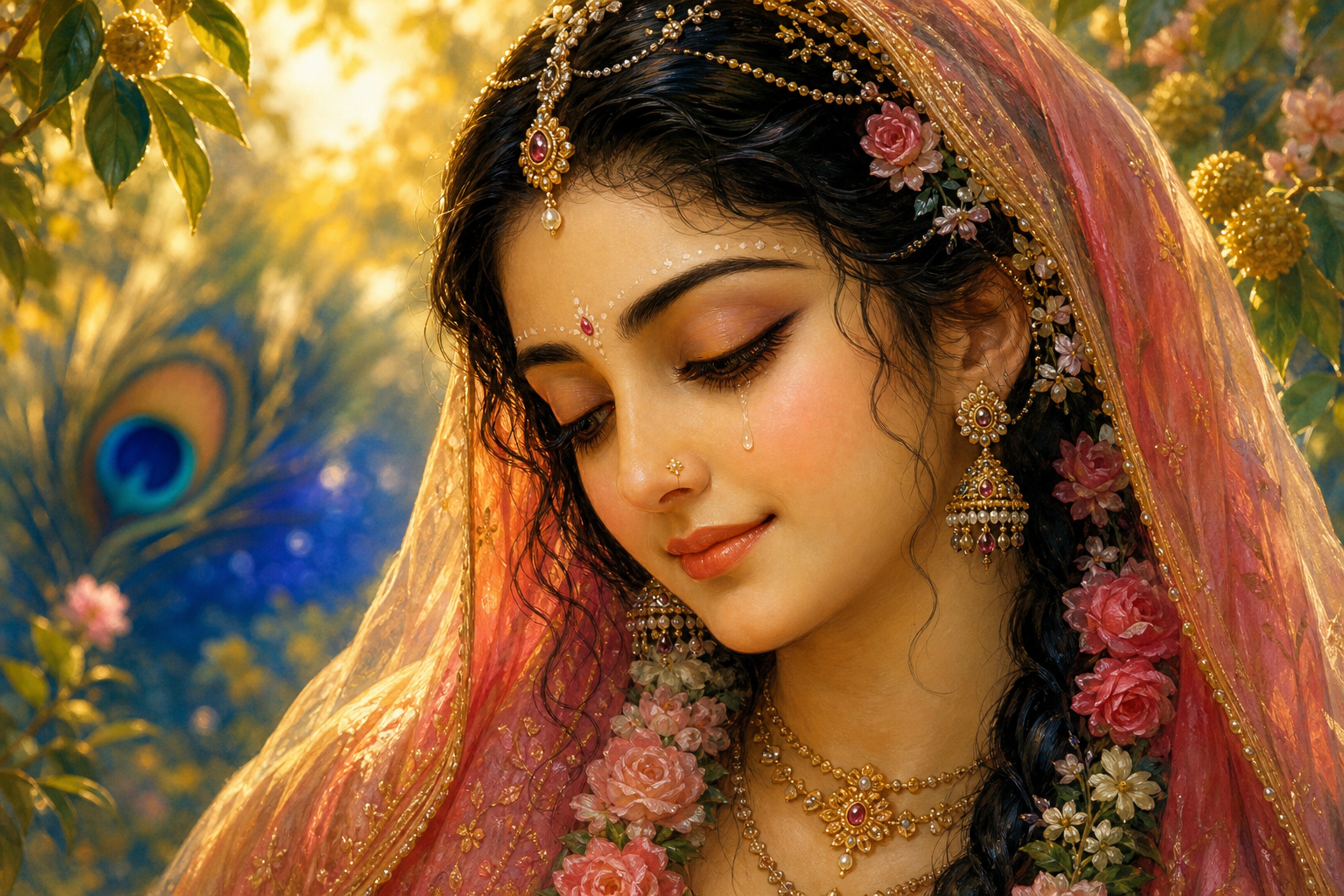
When you sit before an image of Sri Radha, it is easy either to hurry past Her face or to study its beauty while waiting for an extraordinary feeling. Neither response necessarily deepens devotion. The practical question is simpler: how can seeing Her face turn your attention toward Sri Krishna and make your own service more sincere?
You do not need to manufacture a vision or imitate someone else’s ecstasy. You need a devotional way of seeing: receptive, relational, guided by your tradition, and willing to let contemplation change your conduct.
The face is a doorway into relationship
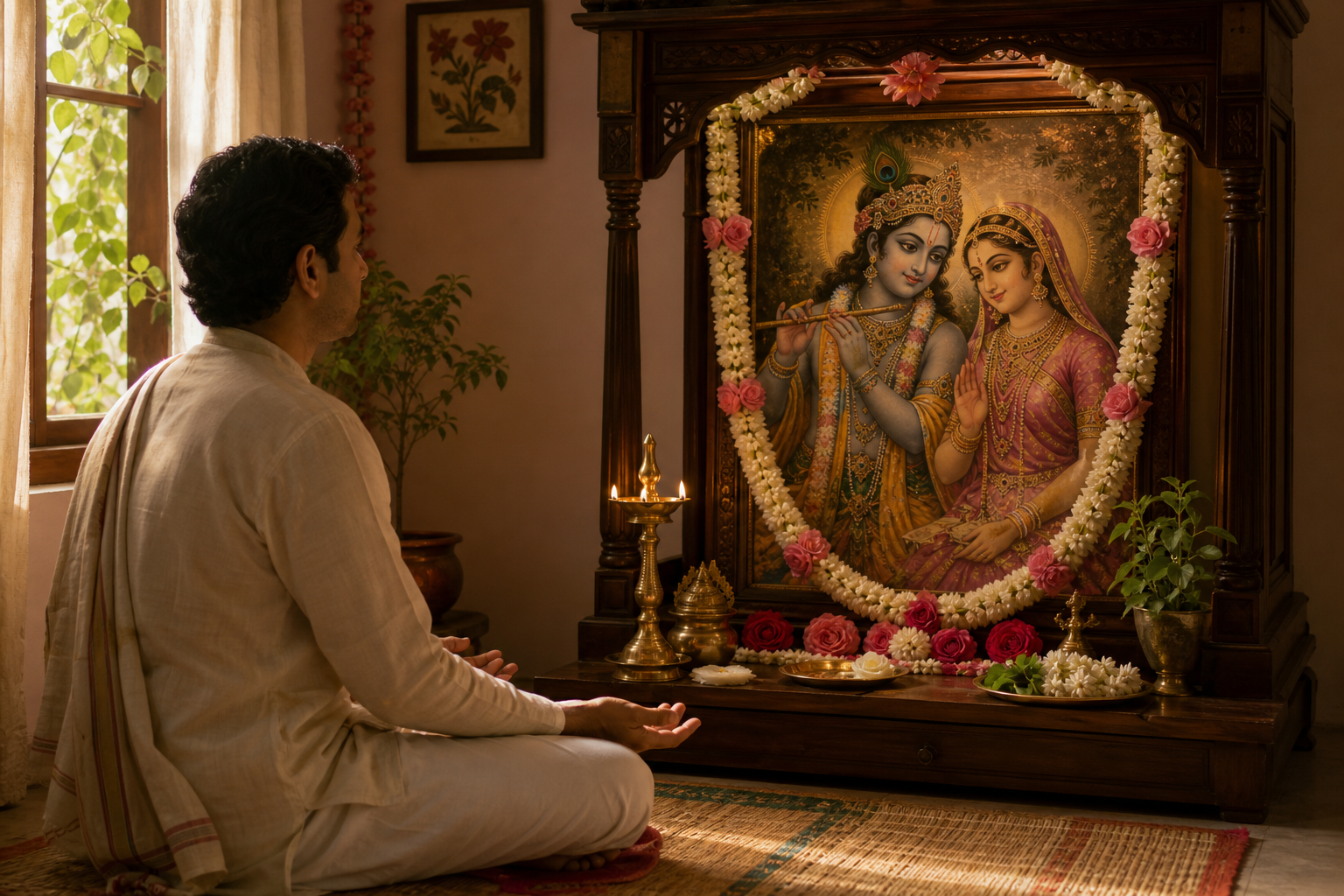
A face is not merely a collection of features. It reveals attention, affection, concern, reserve, welcome, and longing through relationship. Within Radha-Krishna bhakti, Sri Radha’s face is therefore not approached as an isolated object of beauty. Devotees contemplate it in relation to Her love for Sri Krishna.
This is the devotional meaning carried by the theme of Sri Radha’s face as a stimulation for ecstatic love. Stimulation here should not be confused with excitement for its own sake. A sacred form, name, sound, place, or remembrance can turn a heart already seeking devotion toward its divine relationship. It does not mechanically produce love, and it does not make emotional intensity the goal.
That distinction gives you an immediate test. After looking upon Sri Radha’s face, where did your attention go? Did you become preoccupied with visual details? Did you begin measuring your spiritual sensitivity? Or did you remember Sri Krishna, the holy name, and some form of service you could offer? Devotional contemplation should gradually favor that last movement.
This understanding belongs especially to Radha-Krishna bhakti traditions. Hindu sampradayas do not all describe Sri Radha, divine form, or devotional rasa in identical terms. Respect the theological language and method of the tradition in which you are practicing rather than turning one devotional approach into a claim about every Hindu path.
Distinctions that keep contemplation devotional
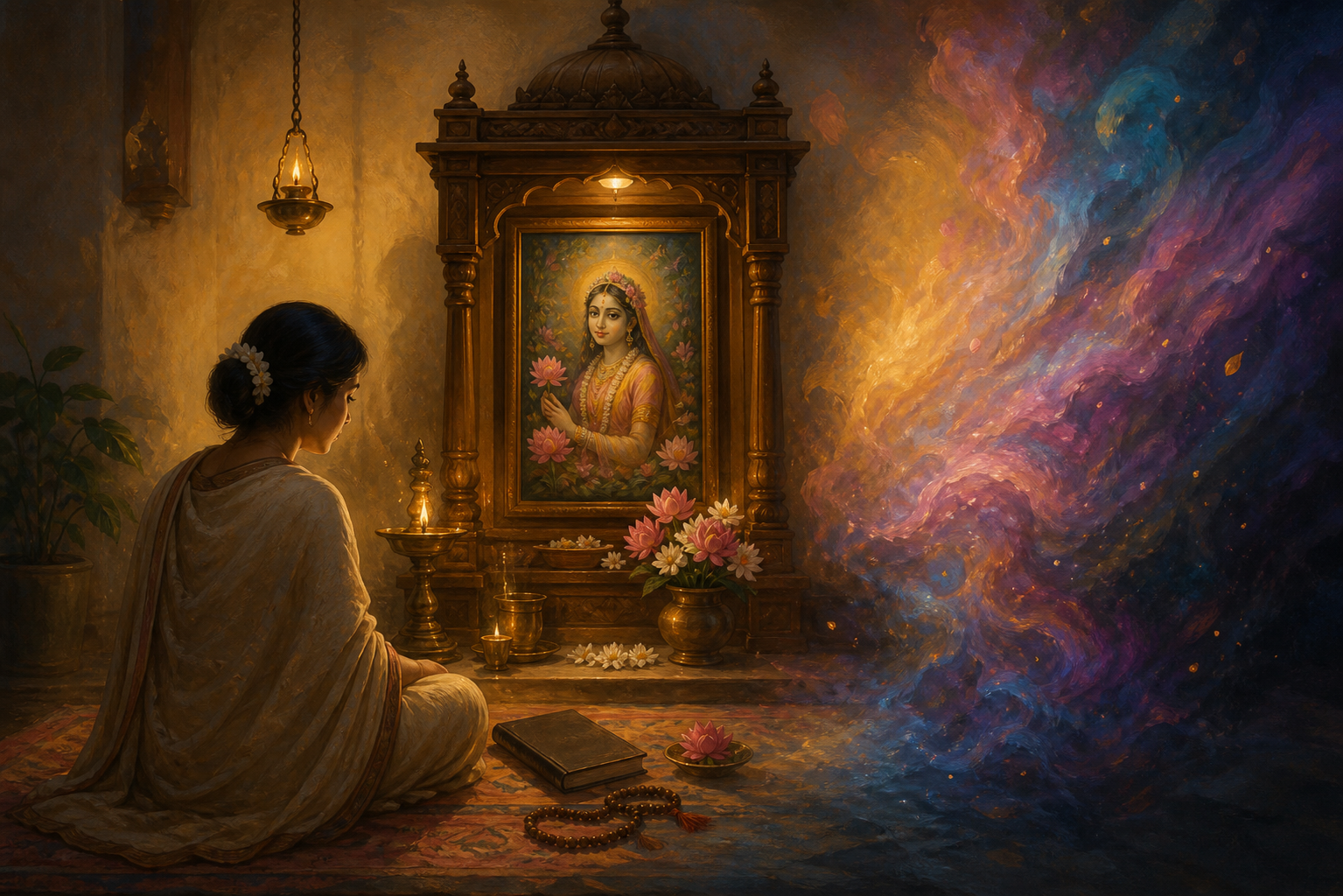
Sacred beauty is not visual consumption
Visual consumption asks, consciously or not, what pleasure an appearance can give you. Devotional contemplation asks how the encounter can make you more receptive to divine love and service. The first keeps the self at the center. The second allows the sacred relationship to reorder your attention.
If you notice yourself mentally cataloguing individual features, do not respond with guilt. Simply widen your attention. Receive the countenance as a whole and remember that its devotional significance lies in Sri Radha’s relationship with Sri Krishna. The correction is not to reject beauty, but to stop separating beauty from bhava, relationship, and seva.
Genuine feeling is not manufactured intensity
The language of ecstatic devotion can tempt a practitioner to chase visible signs of spiritual emotion. Tears, stillness, trembling, or absorption may appear in devotional narratives, but copying an outward sign does not create the inner reality it signifies. Nor does the absence of an intense feeling prove that your remembrance was worthless.
Let emotion come and go without making it your certificate of advancement. If tenderness arises, offer it. If distraction arises, return to the divine name or image. If nothing dramatic happens, continue with humility. The desire to appear spiritually moved can become another way of placing yourself, rather than Sri Radha and Sri Krishna, at the center of the practice.
Guided remembrance is not self-authorizing fantasy
Devotional imagination can help attention remain with a sacred form, but imagination needs boundaries. An image honored in your worship, teachings received within your tradition, and guidance from a trustworthy guru or teacher provide those boundaries. A striking mental picture should not automatically be treated as revelation, instruction, or proof of a special spiritual status.
If you have not been taught a lineage-specific meditation, keep your practice modest. Look upon the sacred image, remember Sri Radha’s devotion to Sri Krishna, repeat a divine name or mantra already proper to your practice, and offer the result in service. Simplicity is spiritually safer than inventing intimate details and then mistaking invention for realization.
A grounded practice for contemplating Sri Radha’s face
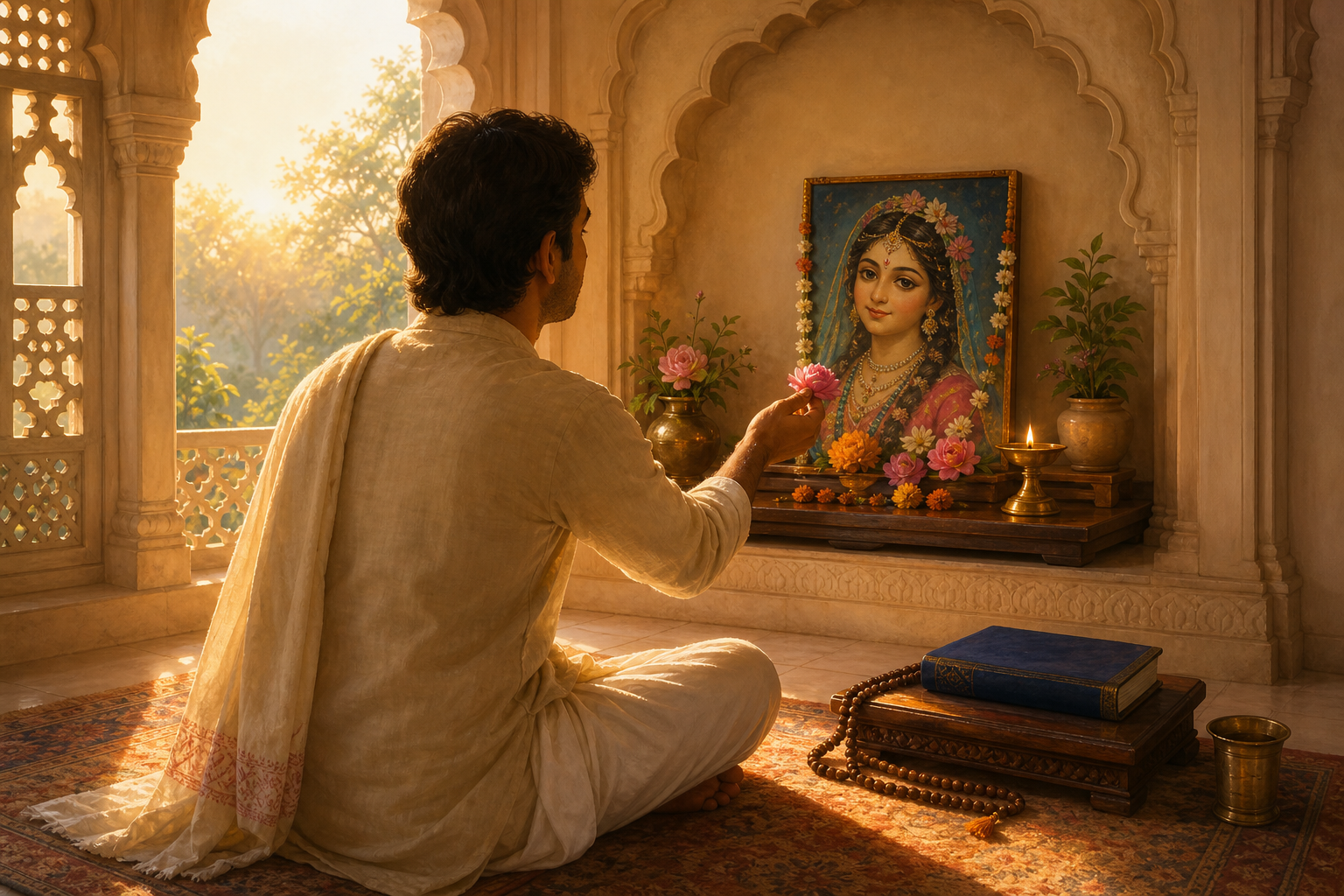
Choose an image already connected with your worship, such as the form on your home altar, the deity you regularly visit, or iconography accepted in your tradition. Familiarity helps you move from novelty and aesthetic evaluation toward remembrance. Then proceed without trying to force a result.
- Set the intention before you look. A plain inward prayer is enough: may this remembrance make my service less self-centered. This prevents the practice from becoming a search for an unusual experience.
- Receive the face as a whole. Let your gaze rest naturally rather than scanning for a feature that will produce a feeling. If your attention narrows into analysis, return to the whole countenance.
- Keep Sri Krishna within the horizon of the contemplation. Ask what Sri Radha’s countenance teaches you about loving attention directed toward Him. This question moves the practice from appearance to relationship.
- Remember a quality your tradition explicitly associates with Sri Radha. Stay with what you have actually been taught rather than assembling devotional moods from fragments gathered without context.
- Join seeing to hearing. Repeat the divine name, a familiar prayer, or a mantra you have properly received. When the mind wanders, let the sound bring your attention back without self-reproach.
- Translate remembrance into seva. Complete a neglected duty, speak without unnecessary harshness, give undivided attention during prayer, or help someone without seeking recognition. The action should be concrete enough that contemplation does not remain an admired idea.
- Close without scoring the session. Offer gratitude and move into your next duty. Do not grade the practice by visual vividness, emotional force, or comparison with another devotee.
If sustained gazing makes you restless or self-conscious, shorten the visual element and remain with the name. If an elaborate inner scene distracts you from prayer, return to the actual image before you. The sacred form is not a test of imaginative ability. It is a support for remembrance and relationship.
Look for the fruit in remembrance and conduct
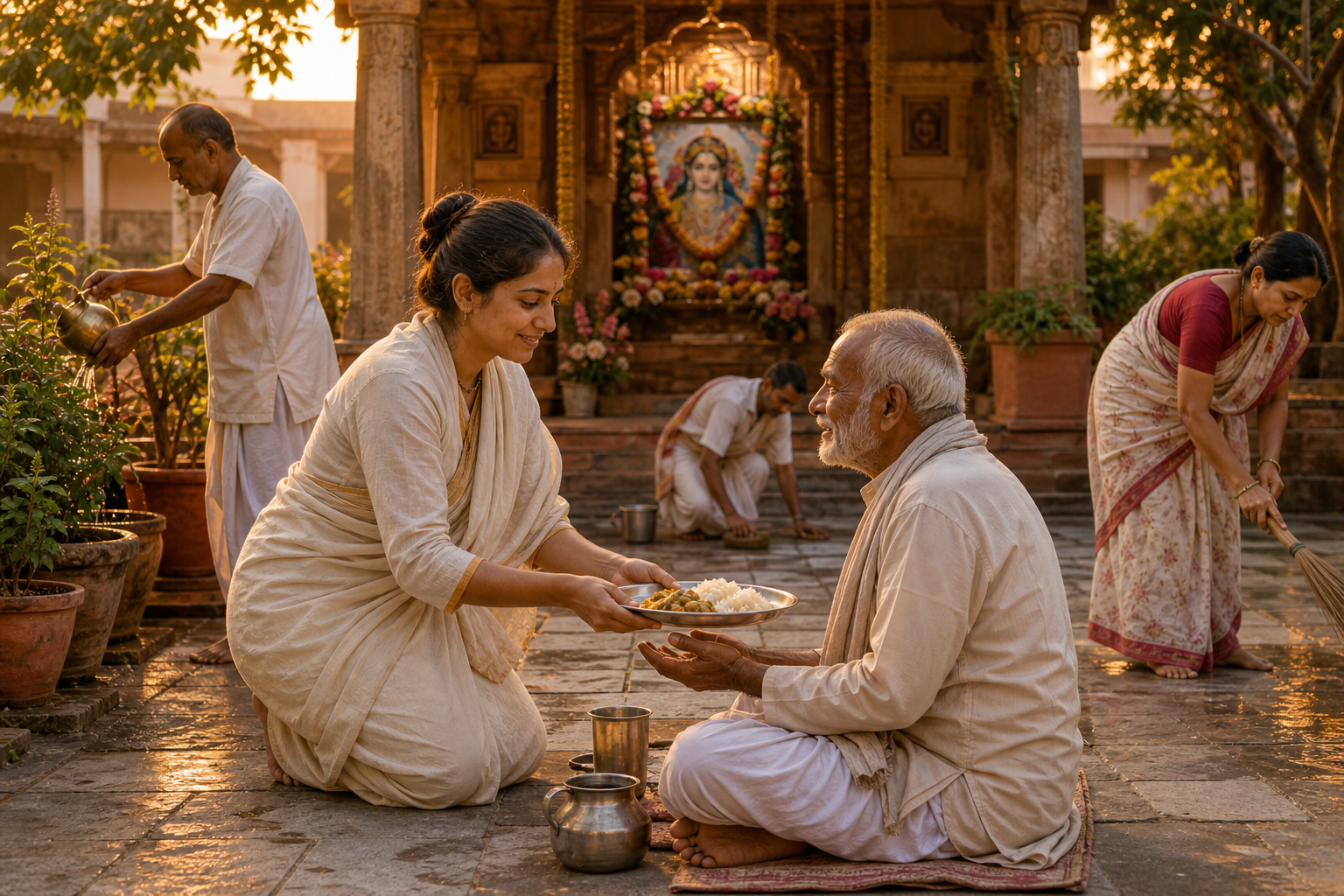
The most useful signs appear in what the contemplation carries into the rest of your life. You may find that your attention returns to the divine name more readily, that you are less eager to display your devotion, or that ordinary service feels less like an interruption. Your speech about other devotees may become gentler. You may notice envy sooner and refuse to nourish it.
None of these changes proves that you have entered an exalted devotional state. They are practical indicators that the contemplation is becoming relational and ethical rather than merely aesthetic. Ecstatic devotion is not a label you award yourself after a powerful sitting.
- If nothing vivid happened, remember that visual clarity is not the measure of bhakti.
- If strong emotion appeared, receive it quietly and return to the divine name or service rather than building an identity around it.
- If you became preoccupied with physical detail, restore the relationship between Sri Radha and Sri Krishna to the center.
- If you began comparing your experience with another devotee’s experience, turn comparison into respect and resume your own practice.
- If contemplation made you feel spiritually superior, treat that reaction as a call to humility rather than as evidence of attainment.
- If you want to enter more detailed meditation, seek guidance within your sampradaya instead of combining incompatible methods on your own.
A brief written reflection can help you notice the carryover. Record what your attention did, which teaching helped it return, and what act of service followed. Avoid recording claims about spiritual rank or supernatural meaning. The purpose is to become more honest about your practice, not to create a private mythology.
Key takeaways
- Contemplate Sri Radha’s face in relation to Her devotion to Sri Krishna, not as an isolated object of visual beauty.
- Treat sacred beauty as an invitation to remembrance and seva, not as something to consume or analyze.
- Do not force emotion or imitate the outward signs associated with ecstatic devotion.
- Keep imagination accountable to sacred image, received teaching, mantra, guru, and sampradaya.
- Judge the immediate usefulness of the practice by where your attention goes and what service follows, not by how extraordinary it feels.
- Let humility, careful speech, steadier remembrance, and less self-conscious service become the practical fruit.
At your next darshan, pause before studying the details of Sri Radha’s face. Receive the countenance as an expression of devotion directed toward Sri Krishna. Let a quality you have genuinely been taught enter your remembrance, join that remembrance to the holy name, and carry it into the next duty before you. That movement from seeing to remembering to serving is where contemplation begins to shape a life.
References
- Dandavats – Today’s Featured Video: Stimulation for Ecstatic Love Part 191 – Sri Radha’s Face Part 4
