
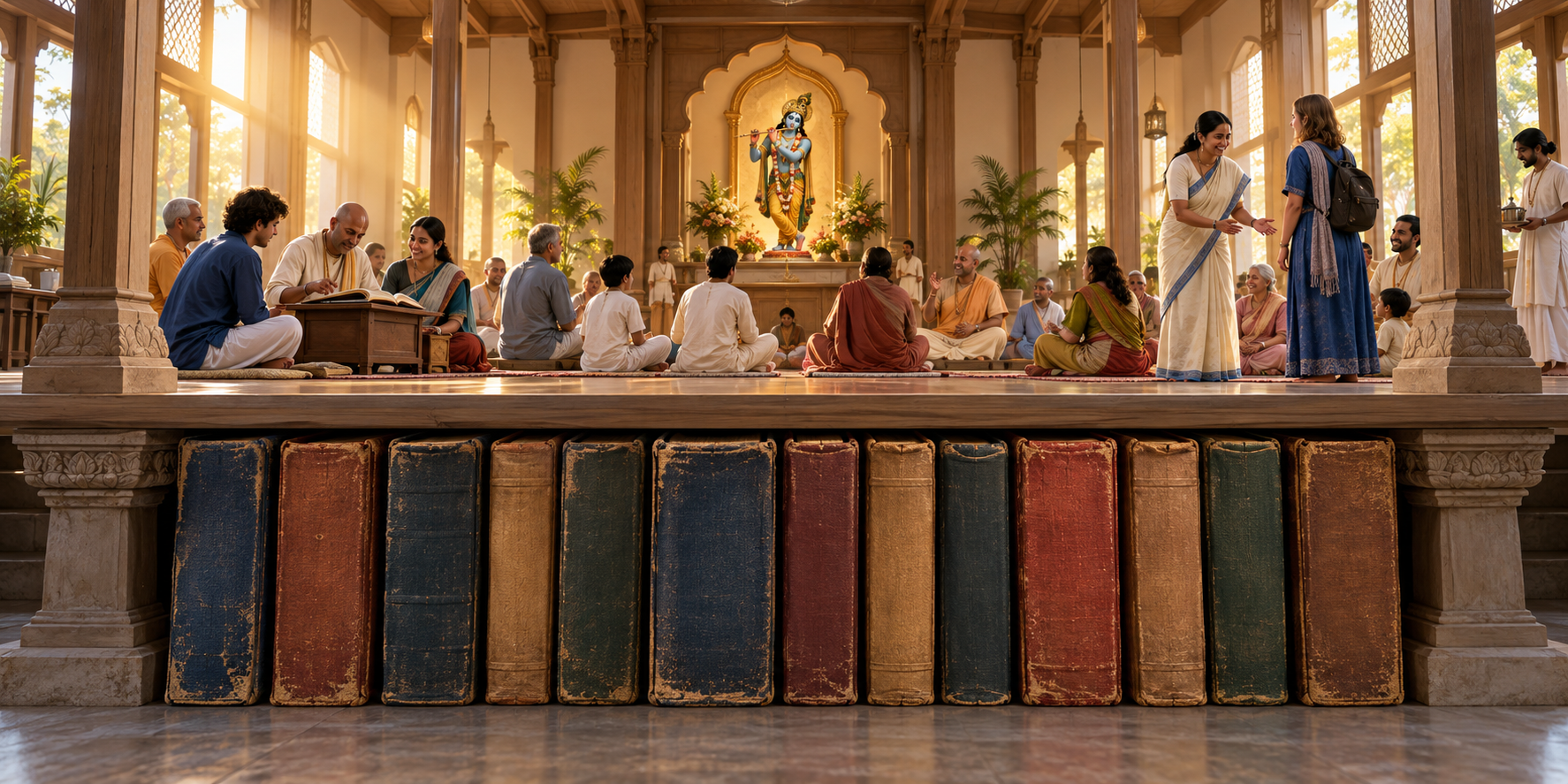
If you serve in an ISKCON temple or congregation, you may already sense the danger: a community can become so dependent on familiar leaders, inherited routines, and local loyalties that nobody knows what will hold it together when those supports change.
Srila Prabhupada’s books answer that problem only when they are treated as more than respected objects. A foundation bears weight. His books must therefore shape how you understand Krishna consciousness, examine yourself, teach others, make decisions, handle disagreement, and welcome the next reader.
The foundation test: what survives a change of leadership?
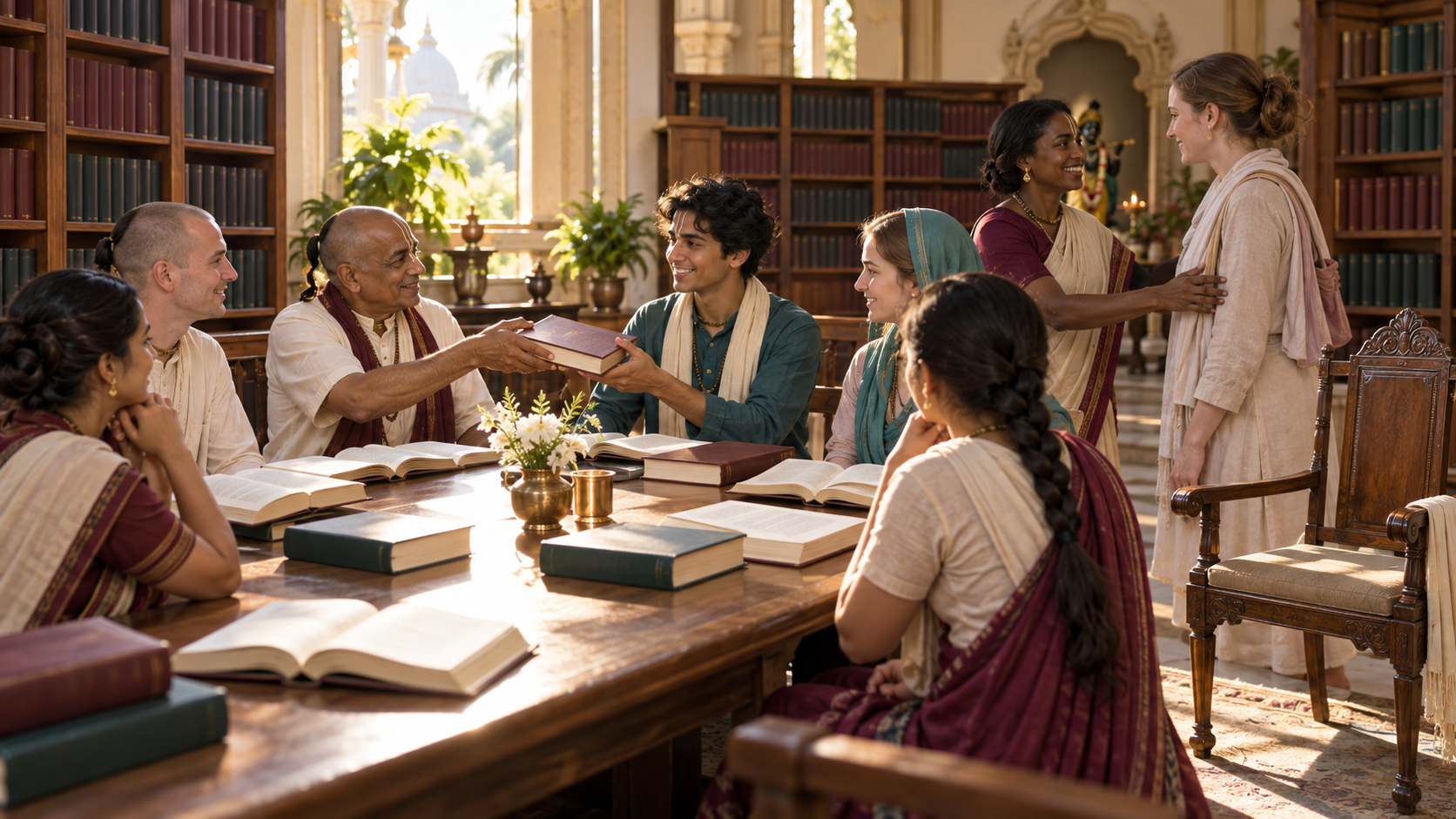
Devamrita Swami presents a severe but clarifying thought experiment: what would happen if ISKCON suddenly lost its temple presidents, its GBC, and its other leaders? In that situation, Srila Prabhupada’s books would remain the movement’s essential insurance policy.
The point is not to predict institutional collapse. It is to expose institutional dependence. If the meaning of Krishna consciousness lives mainly in a particular leader’s personality, devotees become vulnerable when that person leaves, fails, changes direction, or cannot be consulted. If the teaching remains accessible in books that people know how to read, leadership can change without forcing the community to invent its identity again.
You can test whether the books are functioning as your community’s foundation by asking:
- Can devotees explain a central teaching by returning to the relevant text, or only by repeating what a respected person once said?
- Can a newcomer discover what ISKCON stands for without first learning its internal relationships and personalities?
- When leaders disagree, does the discussion move back toward Srila Prabhupada’s teaching, or toward rank, popularity, and institutional leverage?
- Could a congregation continue meaningful study if its usual speaker were unavailable?
- Do local customs serve the teaching, or have they quietly become substitutes for it?
A weak answer does not mean that leaders are unnecessary. Books do not organize festivals, care for people, settle schedules, or chair meetings. It means leadership must remain accountable to a source beyond itself. The books supply continuity and direction; responsible devotees still have to apply that direction with honesty and judgment.
Books become foundational when they read you back
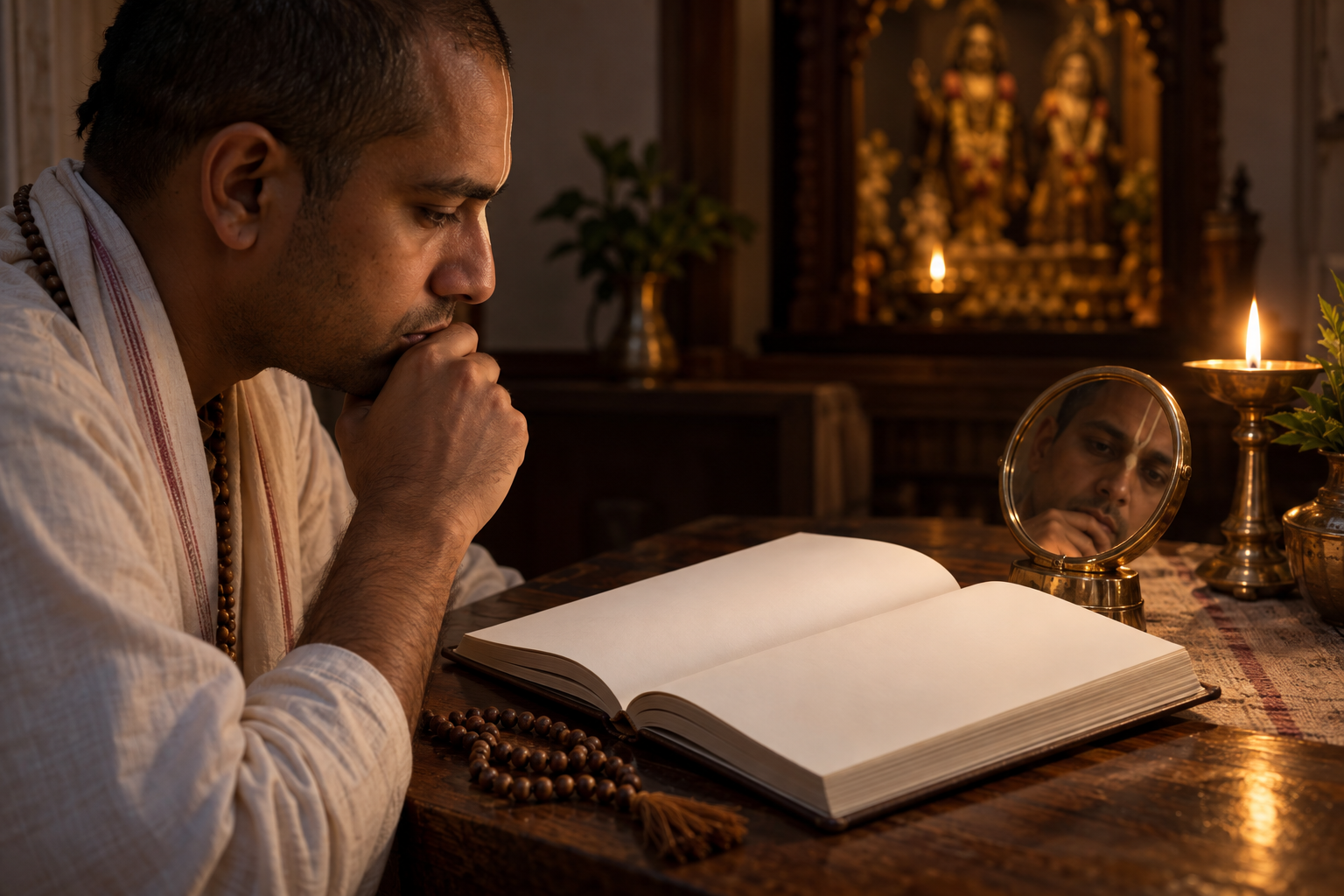
Reading can easily become ceremonial. You finish a prescribed portion, hear a familiar conclusion, and move on unchanged. That protects a routine, but it does not necessarily protect the movement.
Devamrita Swami describes Prabhupada’s books as a kind of high-magnification mirror for the mind. That image gives you a practical standard. A serious reading should reveal not only what the text teaches, but also how your mind avoids, edits, sentimentalizes, or weaponizes that teaching.
Try this reading discipline with the passage in front of you:
<!– wp:list {
Leave a Reply
You must be logged in to post a comment.