
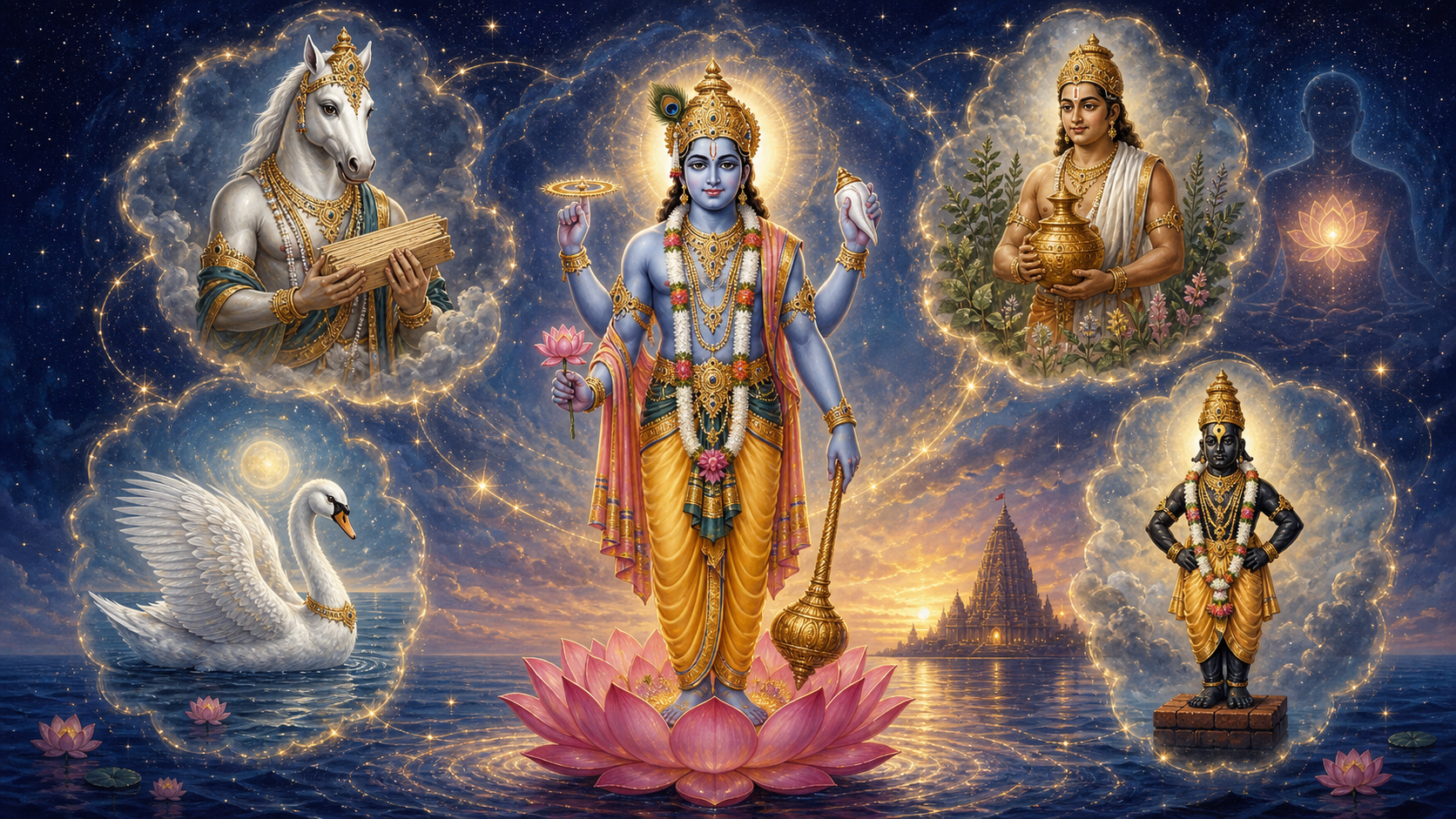
If you learned Vishnu through the Dashavatar, meeting names such as Hayagriva, Dhanvantari, Hamsa or Vithoba can create an immediate puzzle: are these additional avatars, local names for the same deity, or entirely different kinds of divine presence?
The answer is not a single longer list. Hindu traditions preserve several overlapping ways of understanding Vishnu: divine descents within sacred narratives, theological emanations, consecrated temple forms, the indwelling presence and beings empowered to perform divine work. Once you separate those categories, the landscape becomes wider without becoming confused.
The Dashavatar is a doorway, not a complete census
The ten celebrated avatars provide a memorable account of Vishnu’s intervention when dharma, life or cosmic order requires protection. They are not a numerical limit on divine action. Within the theological horizon of the Bhagavata Purana, manifestations of Vishnu are innumerable, appearing in forms suited to different ages, needs and kinds of spiritual instruction.
That larger horizon includes Hamsa, Yajna, Kapila, Dattatreya, Rishabha, Prithu, Hayagriva, Mohini and Vyasadeva, among others. Dhanvantari also occupies a vital place in this wider field. These names do not compete for an imagined eleventh position. Each discloses a particular dimension of preservation: discernment, sacrifice, philosophical clarity, rightful rule, healing, recovery of knowledge or the skilful restoration of balance.
This changes the question you should ask. Instead of asking only, “Is this figure on the standard list?” ask, “What disorder is being answered, what aspect of dharma is being sustained, and how does this tradition understand the form?” Those three questions reveal more than an argument over enumeration ever will.
First distinguish avatars from other modes of presence
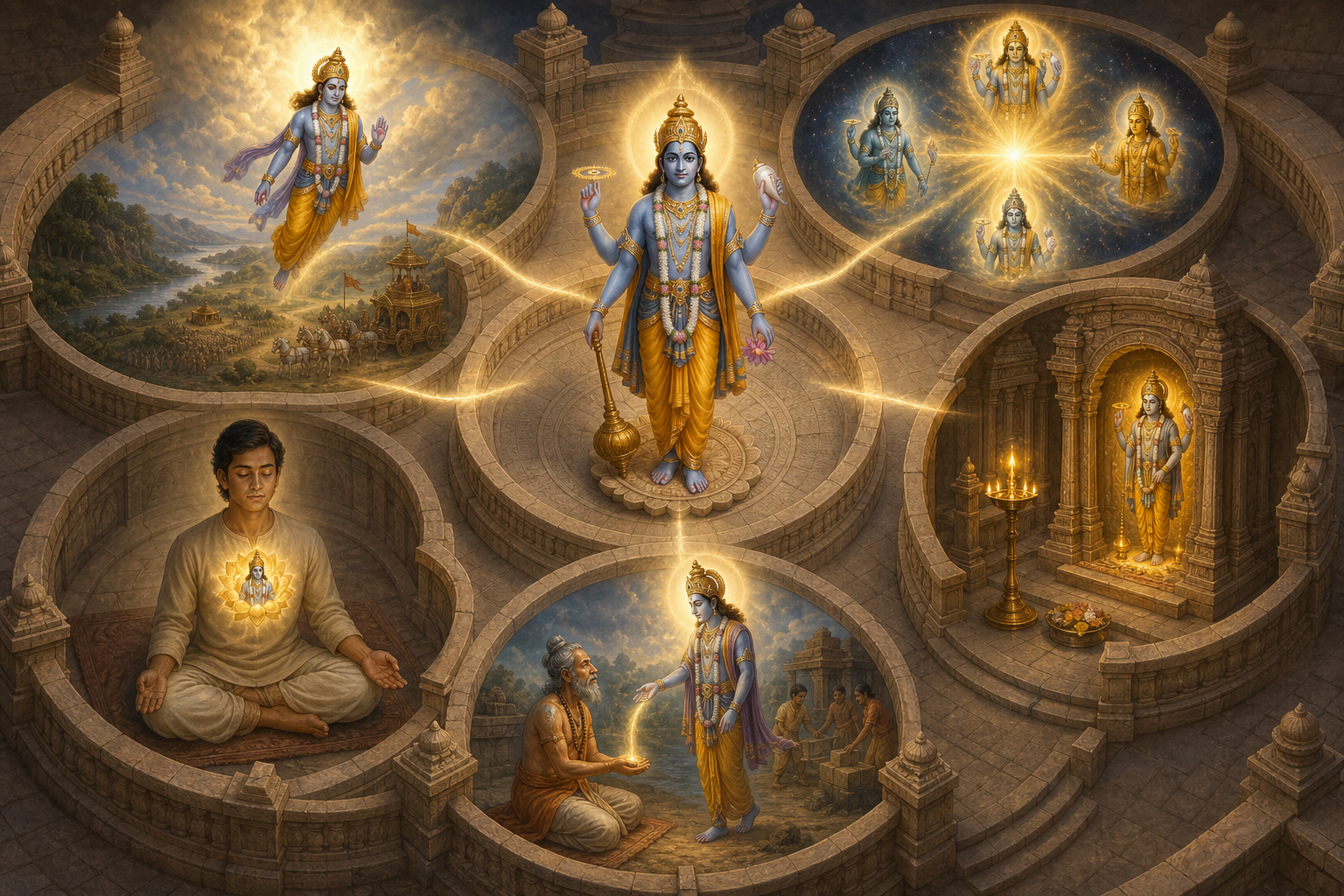
Many apparent contradictions disappear when you notice that Vaishnava theology does not use one undifferentiated category for every encounter with Vishnu. A narrative descent, a temple murti and the divine presence within the heart can all be real modes of relationship without being identical modes.
| Mode | What it identifies | How to recognize it |
|---|---|---|
| Avatara or divine manifestation | A descent or appearance associated with a particular sacred task | The narrative usually centers on protection, teaching, restoration or another response to disorder |
| Vyuha | A theological emanation of the divine | Vasudeva, Sankarshana, Pradyumna and Aniruddha belong to this framework |
| Archa | Vishnu’s presence in a consecrated form of worship | The form is encountered through temple or household puja, ritual service and darshan |
| Antaryami | The indwelling divine presence | Attention turns inward to the Self present within beings rather than to a separate historical appearance |
| Shaktyavesha | A being specially empowered by divine potency | Narada is an example: divine work moves through a sage, teacher, counsellor or musician |
These distinct modes of Vishnu’s presence are related, but they are not interchangeable labels. Calling Narada empowered by Vishnu does not mean that his identity must be explained in exactly the same way as Rama’s. Likewise, archa does not mean “merely a statue.” It names the consecrated form through which worshippers approach and serve the divine.
When a temple, family or sampradaya uses one of these categories, retain its own vocabulary before trying to fit the form into a numbered chart. That small discipline prevents a common error: translating a living tradition into terms that the tradition itself does not use.
Read the lesser-known manifestations through their work
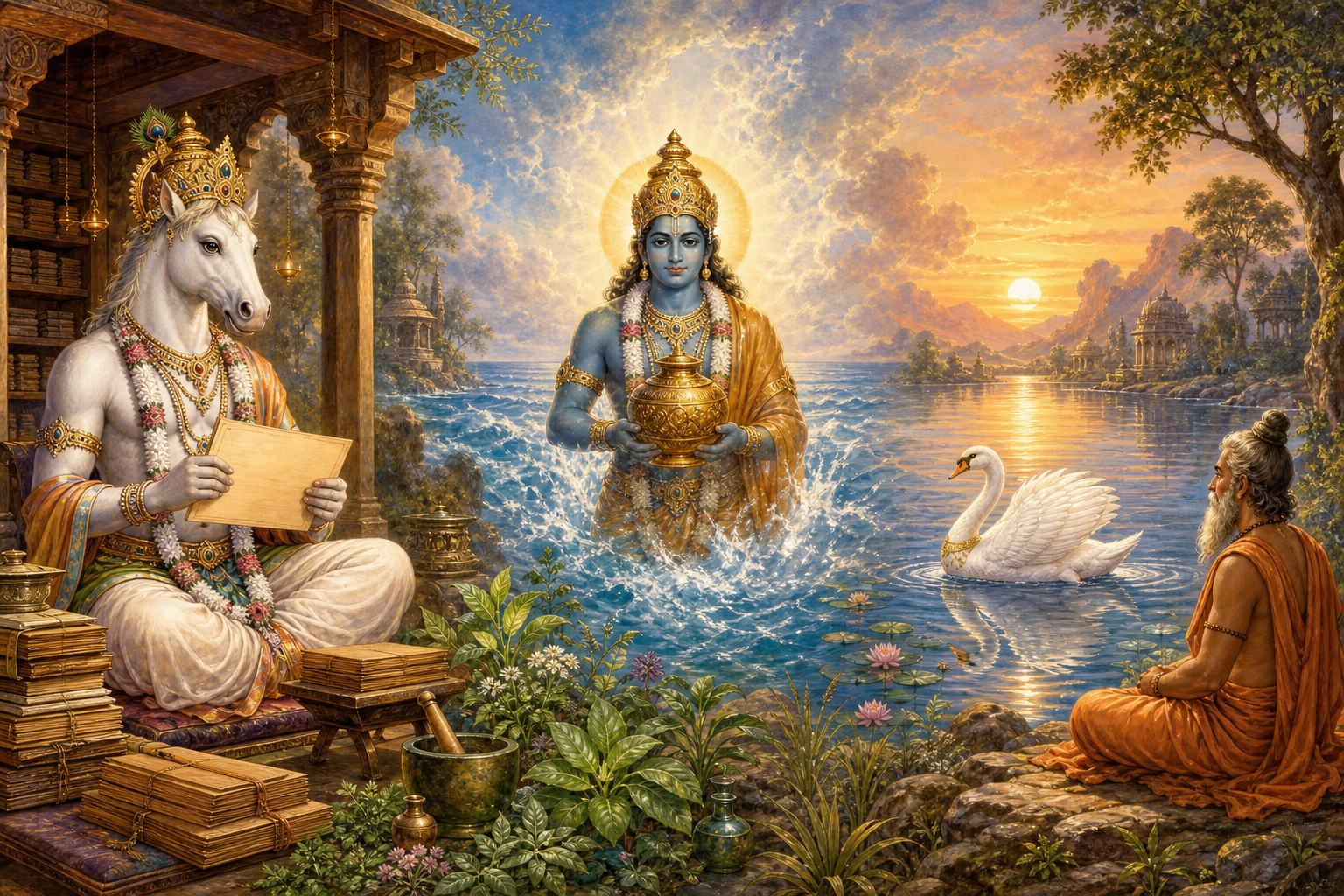
A list of unfamiliar names is difficult to remember because it strips away purpose. A more useful approach is to connect each manifestation with the dharmic work it illuminates. You can then study the form that speaks most directly to the responsibility in front of you.
| Your question | Manifestation to study | What to notice |
|---|---|---|
| How should knowledge be recovered and protected? | Hayagriva | Wisdom is not treated as private possession; its recovery serves the restoration of order |
| How do I distinguish the essential from the distracting? | Hamsa | Discriminative intelligence is itself a spiritual discipline |
| How should sacred learning be preserved and transmitted? | Vyasadeva | Compilation, teaching and continuity are forms of service to future generations |
| How does rigorous inquiry belong within spiritual life? | Kapila | Philosophical analysis, associated here with Samkhya, can clarify rather than oppose the search for liberation |
| What makes healing a dharmic responsibility? | Dhanvantari | Healing is approached as knowledge held in trust, not simply as a commodity or personal power |
| What does legitimate leadership owe the world? | Prithu | Kingship is judged by justice, stewardship and the sustaining of collective life |
| Can restoring order require strategy rather than force? | Mohini | Discernment, timing and skilful action may protect order where direct confrontation cannot |
These associations are invitations to study, not slogans to paste onto the figures. For example, Dhanvantari can deepen a healer’s sense of duty, but devotion is not a replacement for qualified medical care. The spiritual lesson concerns the ethics and sacred purpose of healing; it does not turn ritual into a clinical prescription.
Names such as Yajna, Dattatreya and Rishabha also require their narrative and lineage context. If you encounter one of them in a simple catalogue, do not fill the gaps by guessing. Locate the relevant Puranic account, then read it with the interpretation preserved by the community that venerates the form. The story explains the manifestation’s work; the tradition shows how that work becomes practice.
Regional forms show what preservation looks like in daily life
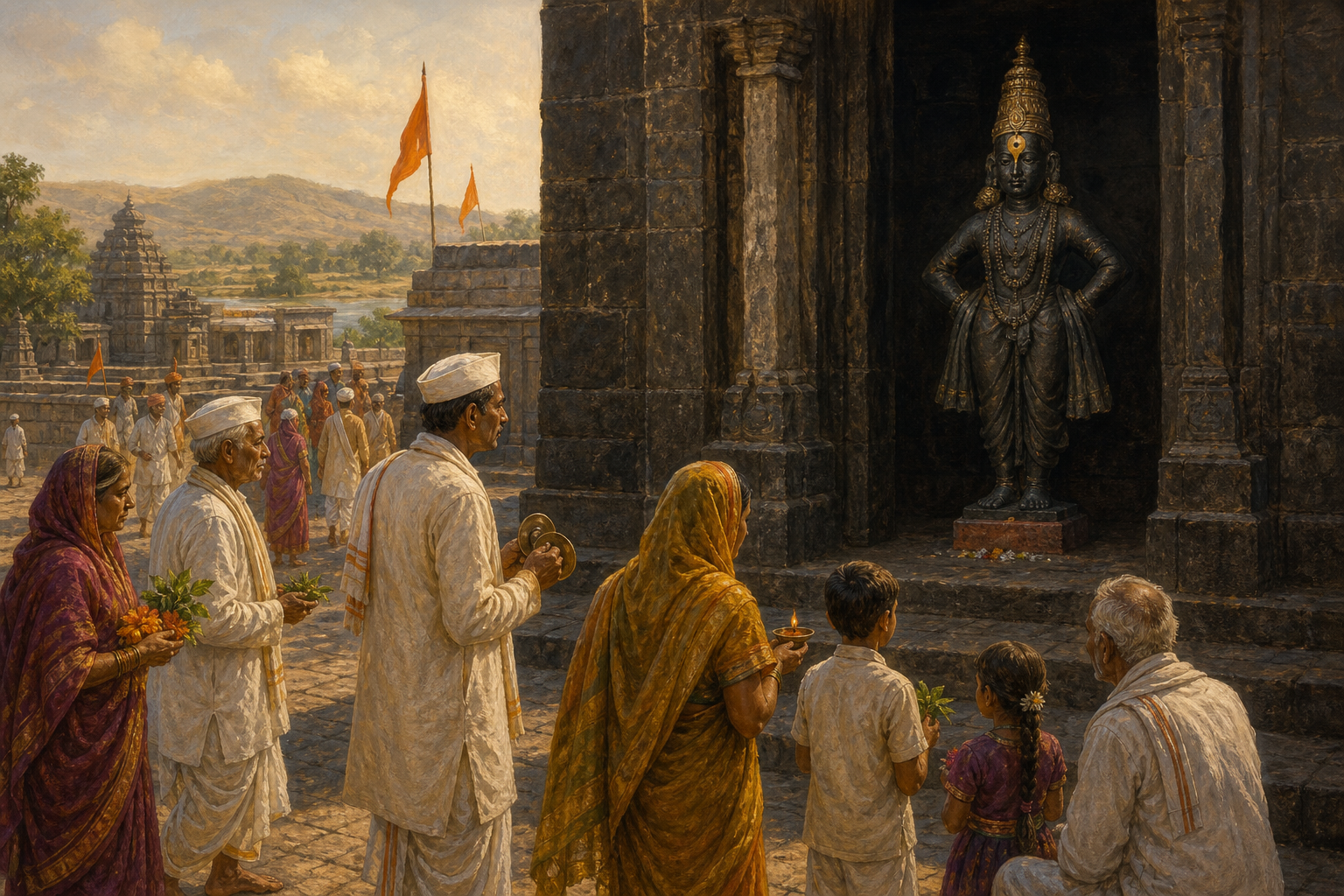
Calling these forms “forgotten” can mislead you. Many are overlooked only from the viewpoint of modern summaries. In their own sacred regions, they remain present through pilgrimage, temple ritual, family memory, poetry, music and vows. The communities that worship them are not recovering abandoned curiosities; they are maintaining living relationships.
- Jagannath of Odisha is widely understood as a form of Krishna or Vishnu. Puri’s Rath Yatra makes divine accessibility visible as the Lord comes into public space, while the surrounding ritual and poetry carry a regional tradition into pan-Indian devotional life.
- Vithoba of Pandharpur stands at the heart of Maharashtra’s Warkari current. The abhangs associated with saints such as Tukaram and Dnyaneshwar present a compassionate Lord close to ordinary devotees. To understand Vithoba, listen to the poetry as well as studying the icon.
- Venkateswara, also known as Srinivasa, at Tirumala is approached through pilgrimage, vows, service and discipline. The form makes preservation personal: grace is met by commitment rather than treated as passive entitlement.
- Ananta Padmanabha in Kerala presents Vishnu in yogic repose upon Adishesha. The image directs attention to equilibrium, inner stillness and the cosmic balance that sustains life before any visible intervention becomes necessary.
- Ayyappa is understood in many communities as Harihara putra. This is not best handled by forcing Ayyappa into a list of Vishnu avatars. The tradition instead opens a shared sacred space between Vaishnava and Shaiva streams, expressed through discipline, compassion and service.
When you visit one of these sacred centers, arrive with four questions. What name does the local tradition use? Which posture, symbols or companions define the icon? Which hymn or story does the community return to? What discipline does the form ask of a devotee? This turns pilgrimage from religious sightseeing into attentive learning.
The same method works when travel is not possible. Place the image beside its vernacular voice: Jagannath with Odia devotional song, Vithoba with Warkari abhangs, and Vishnu’s southern temple traditions with Alvar hymns. Iconography tells you how the form is seen; poetry tells you how the form is loved.
Move from collecting names to understanding a tradition
You do not need to master every manifestation before beginning. A disciplined sequence is more fruitful than accumulating names without context.
- Begin with a real question. Choose knowledge, healing, leadership, discernment, devotion or inner balance. This gives your study a dharmic center.
- Find the form’s proper home. Determine whether you are dealing primarily with a Puranic narrative, a theological category, a temple tradition, a vernacular bhakti current or an empowered teacher.
- Identify the mode of presence. Ask whether the tradition speaks of avatara, vyuha, archa, antaryami or shaktyavesha. Do not assume that every revered name answers the question in the same way.
- Read text and living practice together. Pair Puranic accounts with commentarial traditions; pair temple iconography with local liturgy; pair philosophical teaching with the discipline it is meant to cultivate. Alvar hymns, Warkari abhangs and Odia devotional songs are not decorative additions. They preserve ways of knowing unavailable in a bare list.
- Compare Dharmic traditions without collapsing them. The Puranic name Rishabha and the Jain reverence for Rishabhanatha invite careful exploration, but a shared name does not erase distinct lineages. Ahimsa, wisdom, compassion, truthfulness and seva can support conversation across Hindu, Jain, Buddhist and Sikh paths without turning their teachings into one indistinct system.
Key takeaways
- The Dashavatar is a major devotional and teaching framework, not an exhaustive boundary around Vishnu’s manifestations.
- Not every form beyond the ten belongs to the same theological category; avatara, vyuha, archa, antaryami and shaktyavesha answer different questions.
- Hayagriva, Hamsa, Kapila, Dhanvantari, Prithu, Vyasadeva and Mohini become easier to understand when you study the work each performs.
- Jagannath, Vithoba, Venkateswara and Ananta Padmanabha must be approached through their living temple, pilgrimage, musical and regional settings.
- Shared Dharmic names or virtues create room for respectful dialogue, not permission to erase differences between lineages.
Choose one form whose dharmic work meets a question already present in your life. Learn its story, its theological category, one image and one hymn. That is a small enough beginning to complete, and a deep enough one to move beyond the Dashavatar without reducing Vishnu’s many forms to another checklist.
References
