

If your scriptural reading stays in your head while your japa runs on habit, you do not need more spiritual material. You need a way to make one passage govern what you remember, how you return when attention wanders, and what you do after you rise.
A text-grounded practice joins study, meditation, and conduct in one circuit. Scripture gives the direction; mantra or sacred form gives attention an anchor; service reveals whether the teaching has entered your character. This is how action, knowledge, and devotion reinforce one another instead of becoming three disconnected interests.
Key takeaways
- Read a coherent passage, usually five to ten verses with translation and commentary, rather than collecting an isolated quotation.
- Turn the passage into one clear instruction and choose one corresponding anchor: the Divine Name, a sacred form or emblem, a divine quality, or an act offered in service.
- When attention wanders, return without anger. When practice feels sweet, receive the sweetness without making it the goal.
- Measure progress through less reactivity, greater compassion, steadier responsibility, and more spontaneous willingness to serve.
Begin with a passage, not the mood of the day

Bhakti certainly involves feeling, but feeling cannot be its sole compass. Your mood may be reverent in the morning, resentful by noon, and exhausted at night. A passage gives practice a stable reference point when those states change.
Start by reading enough surrounding material to understand who is speaking, what problem is being addressed, and how the instruction fits the larger argument. A verse removed from its setting can easily become permission for whatever you already wanted to do. Translation and lineage-based commentary help correct that tendency, while reflection makes the instruction yours rather than leaving it as borrowed vocabulary.
Use four passes through the passage:
- State the teaching plainly. Complete the sentence: This passage asks me to see that…
- Convert it into a verb. Depending on the passage, that verb may be return, offer, distinguish, remember, serve, surrender, or refrain.
- Choose the contemplative anchor. Decide whether the instruction is best held through sacred sound, the form of the Divine, remembrance of a quality, or reflective discernment.
- Name the test in ordinary life. Identify the meeting, relationship, duty, temptation, or recurring reaction in which the teaching must become visible.
Bhagavad Gita 6.26 gives a clean example. Its practical verb is return: whenever the mind strays, bring it back to the chosen focus. During japa, that means noticing that you have stopped hearing the mantra and attending to the next complete repetition. You do not need to scold the previous thought, reconstruct the lost minutes, or manufacture a spiritual emotion. The return itself is the training.
Bhagavad Gita 12.13-14 requires another kind of grounding. Non-envy, compassion, and steadiness are not decorative virtues added after meditation; they are evidence of devotional orientation. If remembrance leaves you increasingly harsh toward the people around you, the correct response is not to chase a more intense inner experience. Revisit the passage, examine the motive you carried into practice, and give the teaching a concrete relational test.
Keep action, knowledge, and devotion in one circuit
The Bhagavad Gita does not force you to choose between disciplined work, clear understanding, and loving devotion. Karma-yoga regulates how you act, jnana-yoga clarifies who is acting, and bhakti-yoga establishes the center for whom the action is offered. The three correct different weaknesses in the same practitioner.
| Lens | Scriptural focus | Question for practice | Concrete response |
|---|---|---|---|
| Karma-yoga | Bhagavad Gita 2.47 and 3.9 | Which effort is mine, and which result am I trying to possess? | Name the duty, perform it carefully, and offer the work without demanding control over praise, profit, or outcome. |
| Jnana-yoga | Bhagavad Gita 4.38 | Which passing condition am I treating as my whole identity? | Distinguish the observing self from the current mood, impulse, success, or failure before deciding how to act. |
| Bhakti-yoga | Bhagavad Gita 9.22, 12.13-14, and 18.66 | Who or what occupies the center of this decision? | Use remembrance, japa, surrender, and service to redirect the heart toward Krishna and let devotional virtues govern the response. |
Nishkama karma does not mean that results are unimportant or that careless work becomes spiritual. It changes your relationship to results. You remain answerable for preparation, effort, honesty, and foreseeable consequences, but you stop treating the outcome as personal property. This distinction matters most when uncertainty tempts you either to grasp for control or to withdraw from responsibility.
Jnana prevents that offering from becoming sentimental. A bruised ego can disguise itself as principle, and an anxious impulse can masquerade as urgency. Remembering that a mental state is present but is not the whole self creates room for discernment. Bhakti then gives that room a positive direction: attention is not merely detached from agitation but placed in relation to the Divine.
Before a difficult task, try a compact application. Identify the duty, notice the result you are clutching, remember the Divine recipient of the work, and begin. Afterward, examine the integrity of your effort before judging yourself by success or failure. That is a more demanding discipline than passivity because it preserves responsibility while removing egoic entitlement.
Turn the selected passage into a thirty-minute sitting

A thirty-minute sequence based on Kapila’s contemplative method can hold ethics, breath, concentration, devotion, and integration without turning the session into a collection of unrelated techniques. The stages do not need equal time. Preparation should support meditation, not consume it.
- Prepare the ground. Sit in a stable position with a neutral spine. Remove the phone and other predictable interruptions. Form a sankalpa from the selected passage, such as returning patiently, remembering Krishna, or carrying compassion into a specific duty.
- Settle the breath. Use gentle nasal breathing at an even 1:1 rhythm, or an easy 1:2 inhale-to-exhale rhythm if it remains comfortable. Do not force retention. If the ratio causes strain or discomfort, abandon it and breathe normally; breath is preparation here, not a test of endurance.
- Establish dharana. Give attention one defined object. With nama-japa, hear the sacred name as you repeat it. With form-centered meditation, begin with the lotus feet, a familiar sacred emblem, or another referent authorized by the passage and tradition.
- Let concentration become relational. Recall a divine quality carried by the passage. Reverence, gratitude, dependence, or affection can warm attention, but do not manufacture emotion to prove that bhakti is occurring.
- Practice the return. When a memory, plan, sound, or bodily sensation captures attention, release it without hostility and re-establish the chosen object. Every return enacts Bhagavad Gita 6.26.
- Close with assimilation. Offer gratitude, recall the main instruction, and choose a seva-sankalpa: one specific way the meditation will shape the next duty or encounter.
If you use japa, let listening lead. Articulate the mantra carefully enough to hear it, notice when its sound has disappeared behind thought, and resume with the next full repetition. Both voiced and internal japa can support attention, but switching repeatedly between methods often becomes another form of restlessness. Choose the mode appropriate to your setting and stay with it for the session.
If you use form meditation, Kapila’s sequence offers a safeguard against vague fantasy. Attention can proceed step by step from the lotus feet upward toward the countenance, allowing each feature to become stable before moving on. In the Vaishnava understanding, this is not merely an image engineered to produce calm. It is loving attention directed toward the personal Divine, Hrisikesha, the Lord of the senses. That theological orientation is what turns a concentration exercise into bhakti.
Sacred sound and sacred form need not compete. The mantra can prevent visualization from becoming diffuse, while the remembered form can keep repetition from becoming mechanical. The selected passage supplies their meaning. Without that meaning, you may still repeat or visualize, but you lose the scriptural criterion that tells you what the attention is for.
Diagnose the obstacle before changing the method

Not every difficult sitting has the same cause. The classical obstacles of distraction, dullness, and premature attachment to contemplative sweetness require different corrections. Treating all three as a lack of willpower usually makes practice harsher without making it clearer.
Vikshepa: attention keeps fragmenting
With vikshepa, the mind repeatedly leaves the object for plans, memories, noises, or digital impulses. Shorter and more frequent sessions can rebuild continuity better than one long struggle. Protect the opening of the session, use one anchor, and return at the point where you notice the distraction. Do not restart the entire practice every time the mind wanders; that turns recognition into punishment.
Laya: the mind becomes heavy or indistinct
Laya is not ordinary distraction. The object fades because clarity is sinking. Refresh the posture, make the breath cadence clearer without forcing it, or briefly re-establish the sacred form before continuing. If you are merely exhausted, acknowledge that condition honestly. Devotion is not demonstrated by confusing sleepiness with absorption.
Rasa-asvada: a pleasant state becomes the destination
Calm, warmth, or devotional sweetness may arise. The problem begins when you start checking whether the feeling is still there, trying to reproduce yesterday’s state, or judging the session by emotional intensity. Receive the sweetness with gratitude and return to stable remembrance. Bhakti is directed toward the Divine, not toward possessing a devotional sensation.
Interpretive convenience: every verse confirms you
A subtler obstacle appears before meditation begins. If every passage proves that your preferences are correct and other people must change, your reading has lost its corrective function. Read the surrounding verses again, consult a serious commentary from the lineage in which you are practising, and bring the disputed interpretation to satsanga. Scriptural fidelity includes the willingness to be instructed rather than merely affirmed.
Let character grade the meditation
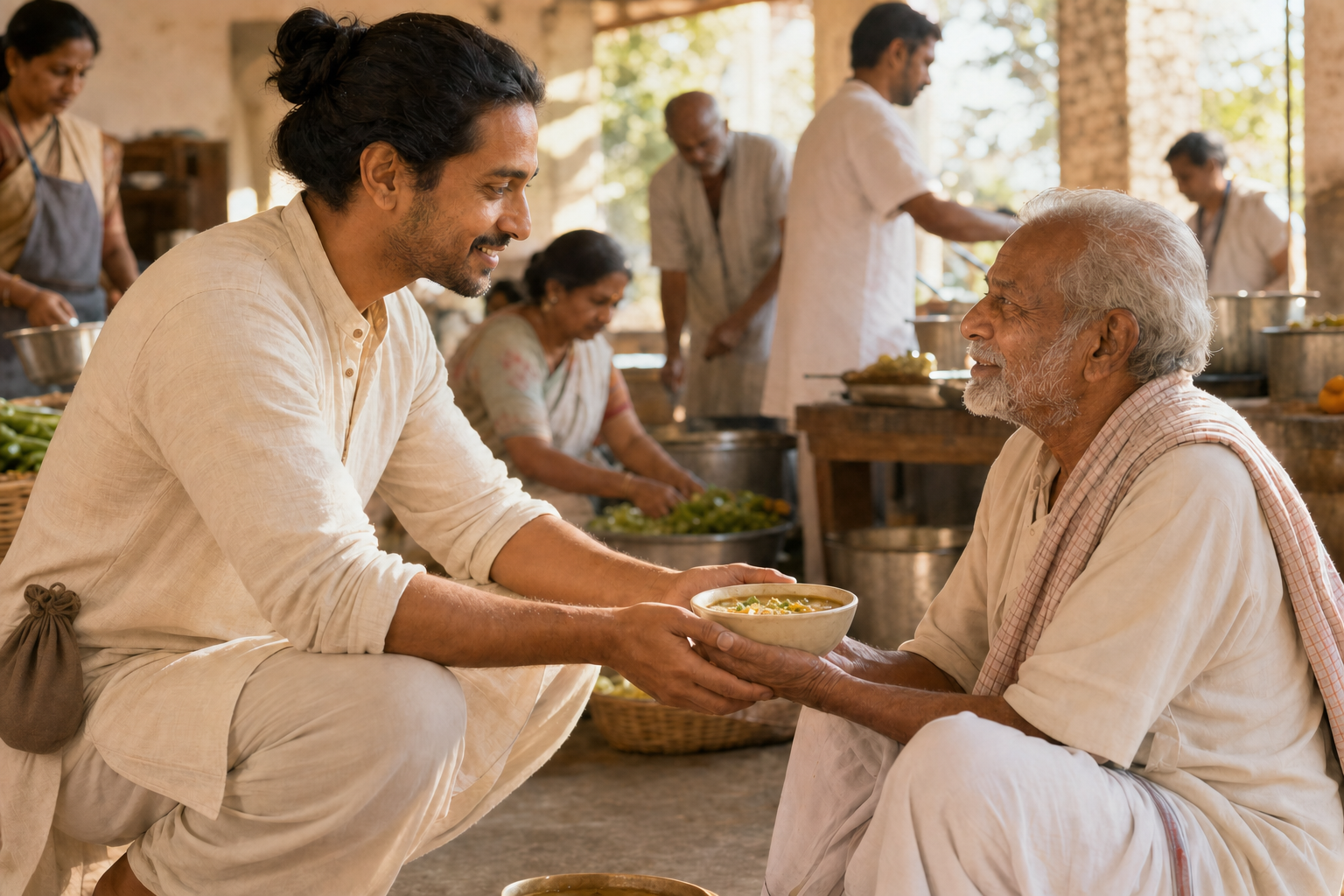
A concentrated session may end with palpable calm, but calm is an immediate state, not a complete measure of spiritual maturity. The more reliable signs appear when contemplation migrates into conduct: less reactivity under pressure, more patience, a stronger impulse to serve, and a steadier outlook. Bhagavad Gita 12.13-14 makes the same movement from devotion to relational virtues.
Take these questions into your weekly review or satsanga:
- When an outcome resisted control, did you preserve effort and integrity, or did attachment turn into anger, panic, or withdrawal?
- Did remembrance make you less envious and more compassionate in a real relationship?
- Did you recognize a passing mood before allowing it to define your identity and dictate your action?
- Did the session produce a concrete act of seva, or did devotion remain confined to private feeling?
- When you failed, did you return to practice and responsibility, or use spiritual language to avoid correction?
This examination should be honest without becoming self-absorbed. The purpose is not to maintain a spiritual scorecard. It is to discover where the circuit has broken. If you understand the verse but forget it under pressure, strengthen remembrance during daily transitions. If japa is steady but conduct remains abrasive, return to the ethical demand of the passage. If service is active but inwardly possessive, revisit offering and surrender.
A sustainable baseline is straightforward: daily japa, a reading of five to ten Bhagavad Gita verses with translation and commentary, a brief journal entry naming one actionable insight, weekly satsanga, and periodic seva suited to your abilities and community’s needs. These practices support one another. Study supplies direction, meditation stabilizes remembrance, fellowship corrects blind spots, and service carries devotion beyond the meditation seat.
Honor other Dharmic paths without flattening them
Text-grounding also helps when you learn across Dharmic traditions. Hindu, Buddhist, Jain, and Sikh practices share a serious concern with disciplined attention, ethical refinement, and freedom from reactive conduct. Their metaphysical claims and devotional objects are not therefore interchangeable.
In Gaudiya Vaishnava bhakti, nama, the auspicious form of Krishna, and loving service belong to a relationship with the personal Divine. Buddhist sati cultivates non-reactive awareness, while samatha develops tranquillity, but Buddhist lineages may frame the self and ultimate reality differently. Jain anupreksha joins sustained reflection to ahimsa and ethical purification. Sikh simran centers remembrance on the Naam and carries it into seva. Practices such as buddha-nama, nembutsu, Jain sacred recitation, and Sikh simran may resemble mantra meditation in their use of sacred sound, yet each receives its meaning from its own revelation, doctrine, and community.
The principle of ishta gives you a disciplined way to hold unity and difference together. Commit to the form and emphasis through which you genuinely worship without using that commitment to denigrate another path. Learn from a neighboring tradition’s seriousness, compassion, or constancy, but do not construct an all-purpose hybrid by removing practices from the beliefs that make them intelligible. Shared remembrance, ethical action, and concern for social welfare can support Dharmic solidarity without erasing distinctive theology.
For your next sitting, choose a coherent passage, write its instruction as a verb, give attention one sacred anchor, and close with one act of service. Carry the difficulty you encounter into satsanga rather than solving it through improvisation. Repeated patiently, that circuit turns scripture from material you admire into sadhana that governs attention and action.
References
- Dandavats — Bhagavad Gita at New Govardhana: Profound Bhakti-Yoga Insights by HG Caitanya Caran das
- Dandavats — SB 3.28.29 Unpacked: Kapila’s Powerful Dhyana Blueprint and Devamrita Swami’s Transformative Insights