

When prayer has not changed the diagnosis, repaired the relationship, or removed the hardship, being told to see divine mercy can feel like a demand to deny reality. You do not have to pretend that pain is pleasant, deserved, or spiritually harmless.
Bhagavata bhakti offers a more demanding and more compassionate path: face what is happening, protect what dharma requires you to protect, remain turned toward the Divine, and allow grace to loosen the bondage that suffering exposes. Deliverance may change your circumstances. It may begin by changing what those circumstances can make of you.
Do not confuse divine mercy with the injury
An event can be painful, preventable, and morally wrong while divine grace is present in the way you are protected, corrected, sustained, or redirected. Calling abuse, neglect, betrayal, or illness good merely because something was learned from it confuses what mercy redeems with mercy itself.
This distinction matters. If pain itself is treated as sacred, you may tolerate adharma, refuse necessary help, or tell another person that their anguish is somehow proof of spiritual progress. If mercy is understood as the Divine meeting a soul within suffering, you can oppose the harm without closing yourself to transformation.
Within the Bhagavata tradition, Srimad Bhagavatam 10.14.8 joins four movements: recognizing divine compassion, bearing the consequences of one’s own past actions, continuing to offer reverence through heart, speech, and body, and becoming an heir to liberation. The verse does not require you to say that pain is painless. It asks whether pain will interrupt your orientation toward the Divine.
Notice that this is a first-person discipline. It gives you a way to examine your own hardship. It does not authorize you to diagnose somebody else’s karma. You cannot see the full moral history of another being, and speculation about past deeds does nothing to meet a present duty of compassion.
When distress arrives, hold two sentences together: “This is painful, and whatever can be stopped should be stopped.” “This pain does not have to be spiritually wasted.” The first protects you from denial. The second protects you from despair.
If you face violence, coercion, suicidal thoughts, or a medical emergency, seek immediate professional or emergency help and move toward safety when you can. Prayer and spiritual counsel can accompany that action; they must not be used to postpone it.
Patient endurance is active, not passive
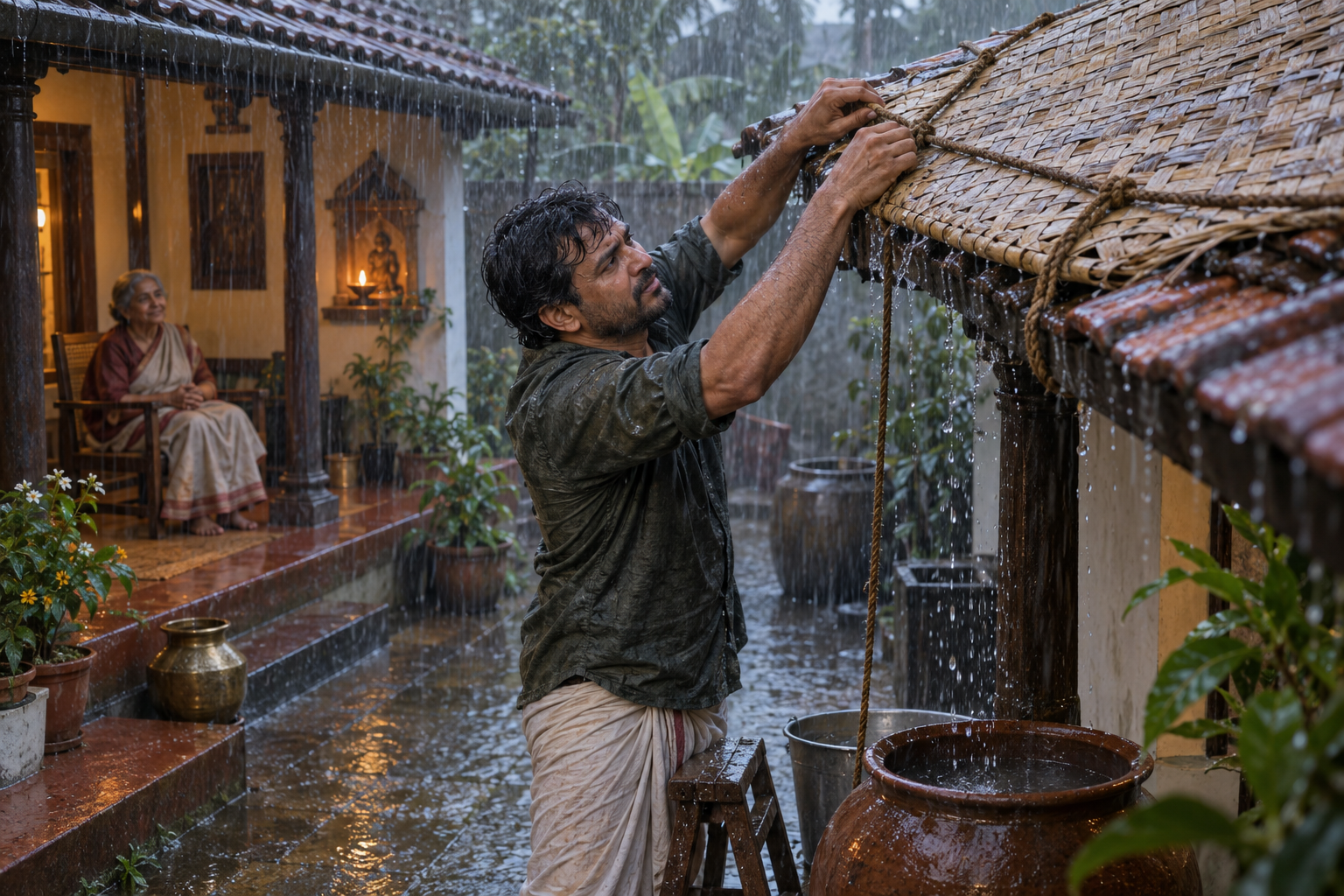
Endurance in bhakti means staying aligned with truth and dharma while pain passes through your life. It does not mean remaining where someone continues to inflict avoidable harm. Nor does it mean suppressing grief so that you appear spiritually advanced.
Acceptance is accurate contact with the present: this has happened, this is what it has cost, and this is what remains unresolved. Approval is a moral judgment: this was good or acceptable. You can accept the facts without approving the wrong. Only then can you act on the situation you actually have rather than the situation you wish had existed.
When your mind is flooded, use this sequence:
- State the facts before interpreting them. Name what happened, what is still happening, and what needs immediate attention. Leave cosmic explanations for later.
- Identify the dharma nearest to you. Ask what truth must be spoken, what boundary must be maintained, what responsibility must be fulfilled, and who depends on your clear action.
- Offer heart, speech, and body. Turn your attention toward the Divine, speak a prayer or mantra you can say honestly, and let your body perform one act of reverence, service, care, or repair.
- Receive available help. A physician, counselor, trusted elder, family member, community, or appropriate authority may be part of the answer to your prayer. Needing such help is not a failure of surrender.
- Test the next action. Ask whether it reduces harm and falsehood, protects those in your care, and can be done without revenge. Then do that action before demanding a complete explanation of your suffering.
Your prayer does not have to sound serene. It can be as plain as this: “This hurts. I do not understand it. Show me the next truthful duty. Keep me from denial, cruelty, and despair. Let what can be purified be purified, and lead me toward freedom.”
That prayer makes no bargain about when relief must arrive. It preserves relationship while asking for enough clarity to take the next step.
Deliverance can begin before the hardship ends

We often imagine deliverance as a single outward event: the danger passes, the illness lifts, the conflict ends, or the closed door opens. Such relief matters and should be sought when it is possible. Inner freedom is not a substitute for physical safety, justice, treatment, or material help.
Yet bondage is not limited to the external condition. Suffering can awaken resentment, denial, shame, compulsive retaliation, or the belief that you are entirely alone. Deliverance also occurs as these bonds lose their authority. The situation may still be difficult, but it no longer dictates your character, your every thought, or your relationship with the Divine.
In Srimad Bhagavatam 10.10.37, Krishna resolves to fulfill Narada’s intention toward two souls in bondage. Their turning point does not arise from isolated self-rescue. Divine action honors a saintly purpose and reaches beings who cannot release themselves by their own power.
This gives you a practical question. Instead of asking only, “When will this disappear?” also ask, “What help, correction, relationship, or grace am I being asked to receive?” Deliverance may arrive through a boundary you resisted, a truth you did not want to hear, a person willing to stay, an opportunity to make restitution, or the humility to admit that willpower is not enough.
You can look for movement without pretending that you have reached the end. Useful signs include:
- You can describe what happened without hiding it or enlarging it to feed resentment.
- You can accept appropriate help without treating dependence as humiliation.
- You can distinguish forgiveness from restored access. Releasing hatred does not require returning to an unsafe relationship.
- You can see a duty in front of you even when the whole future remains unclear.
- Your prayer becomes less transactional. You still ask for relief, but you no longer make devotion conditional on receiving it immediately.
- You become more compassionate toward suffering without becoming more tolerant of adharma.
None of these signs proves that the Divine desired the injury. They show that the injury is not being allowed to write the final meaning of your life.
Keep the teaching from becoming a weapon

A teaching meant to sustain a sufferer can become cruel when imposed by a spectator. The person inside the pain may choose to contemplate karma, purification, or mercy. The person standing beside them has a simpler dharma: reduce harm, tell the truth, and serve.
When someone else is suffering:
- Do not announce that their hardship is their karma. Ask what would make the next step safer or more manageable.
- Do not pressure them to find a lesson while they are still trying to survive the event. Meaning can wait when safety cannot.
- Do not equate forgiveness with reconciliation. Reconciliation requires truth, accountability, changed conduct, and conditions in which trust can be rebuilt.
- Offer concrete help rather than abstract theology: a meal, transport, a call, accompaniment to an appointment, help contacting appropriate services, or quiet presence.
- Remain after the immediate crisis. Deliverance often includes the slower work of rebuilding ordinary life.
The same discipline applies if you caused the harm. Do not recast another person’s boundary or the consequences of your conduct as a spiritual trial being inflicted on you. Name what you did, stop the behavior, make restitution where possible, accept appropriate consequences, and respect the other person’s right to distance. Repentance becomes credible through changed action.
Nor should you turn divine mercy into a transaction. Devotion is not a technique for forcing a preferred outcome on a preferred schedule. You may pray intensely for deliverance and still grieve, seek treatment, pursue justice, or acknowledge that the situation has not improved. Honest lament is a relationship with the Divine; denial is not.
Key takeaways
- Mercy can work through suffering without making the suffering itself good, sacred, or necessary.
- Use karmic reflection for your own humility and responsibility, never to explain or blame another person’s pain.
- Patient endurance means remaining aligned with truth and dharma. It does not mean remaining in avoidable danger.
- Seek outer relief and inner freedom together. Neither should be used to dismiss the other.
- Judge spiritual movement by growing truthfulness, responsibility, receptivity, and freedom from hatred, not by how quickly discomfort disappears.
- When supporting another person, begin with safety and practical service. Let them choose when and how to interpret their suffering.
Take one sheet of paper and answer four questions: What must stop? What must be accepted for now? What help must I request? What dharmic action is mine to take next? Act on the safety issue first. Then make one sincere offering through your heart, words, or body. You do not need to understand the whole path before taking the next truthful step toward deliverance.
References
- Dandavats — Today’s Featured Video: The Art of Suffering | SB 10.14.8 | Morning Bhagavatam Class with HG Vraj Vihari
- Dandavats — Morning Class SB 10.10.37 – HG Aniruddha Prabhu – 23 September 2026

Leave a Reply
You must be logged in to post a comment.