

AI can return a clean paragraph before your own thought has finished taking shape. Then you look at your draft, see the crossed-out phrases and uneven sentences, and wonder whether your voice has become the weakest part of your work.
You don’t have to choose between refusing useful technology and letting it erase you. The better standard is trustworthy human work: accurate enough to rely on, clear enough to use, and personal enough that a reader can sense an accountable person behind it. A Dharmic approach helps you hold that standard without turning every rough edge into a reason to hide.
The danger is not polish but surrendered authorship
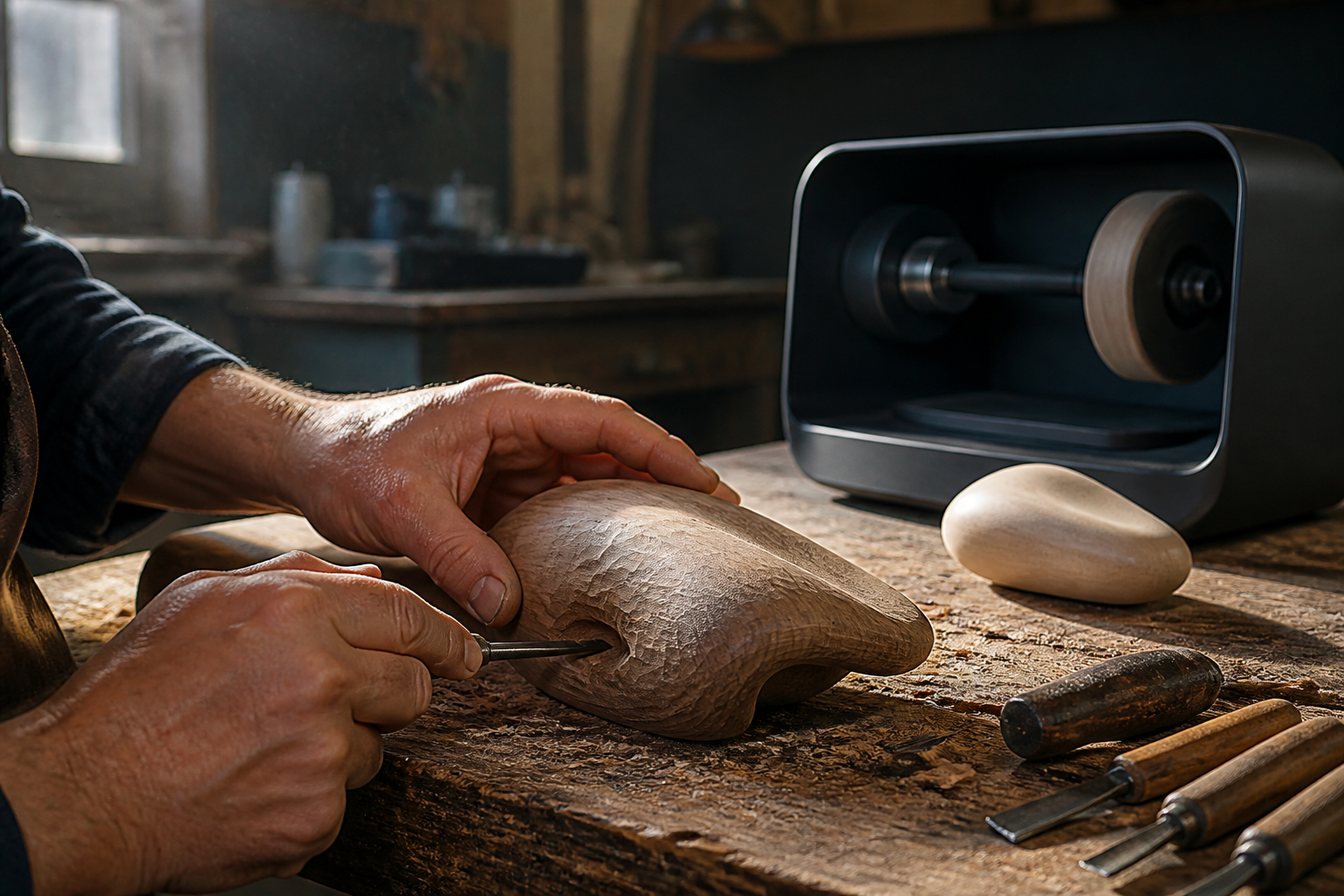
Polish is useful. Clear grammar, logical structure, and careful editing spare the reader unnecessary effort. The problem begins when smoothness becomes your measure of truth, intelligence, or worth.
AI-generated prose often arrives with its surface already settled. Your own work develops through uncertainty: you test a claim, change your mind, notice an exception, and search for the precise word. Comparing those processes at the draft stage is misleading. You are comparing a finished-looking surface with visible human thinking.
A smooth sentence can still be vague, unsupported, or morally evasive. An awkward sentence can contain an observation worth preserving. Fluency tells you how easily language moves; it does not tell you whether the speaker has lived the experience, verified the claim, understood the consequence, or accepted responsibility for publishing it.
Your human contribution is therefore not the typo, the false claim, or the careless instruction. It is accountable selection. You decide what matters, what you actually know, what remains uncertain, whom the work may affect, and which conclusion you are prepared to defend.
Before accepting a polished draft, ask:
- What judgment in this work is genuinely mine?
- Which details come from knowledge, observation, practice, or experience I can honestly claim?
- Where am I uncertain, and has the language preserved that uncertainty?
- What should the reader be able to do, decide, or notice after reading?
- Would I still stand behind these words if the machine’s contribution were visible?
If you cannot answer those questions, don’t manufacture an anecdote or add artificial quirks. Narrow the claim. Do more thinking. Use the tool to expose gaps rather than to conceal them.
Replace perfectionism with a Dharmic quality standard

Dharma does not ask you to become unblemished before you act. It asks you to examine the quality, intention, and consequence of action. Hindu, Buddhist, Jain, and Sikh traditions are distinct paths, not interchangeable versions of one system. Yet their ethical vocabularies offer several shared correctives to perfectionism: non-attachment, humility, seva, ahimsa, compassion, disciplined practice, and attentive presence.
- Non-attachment: Give full care to the work without demanding control over applause, reach, or reputation. Releasing attachment to the result is not permission to neglect the action.
- Humility: State the limits of your knowledge. Don’t let confident machine language turn a partial understanding into a declaration of certainty.
- Seva: Ask whom the work serves. If another revision will make the answer more useful, revise. If it will merely make you look invulnerable, the revision may serve your image rather than the reader.
- Ahimsa: Correct errors that could mislead or harm. Imperfection is never a defence for fabricated facts, reckless advice, breached privacy, or false attribution.
- Compassion: Treat an early draft as work in formation, not evidence of personal inadequacy. Firm editing and self-contempt are not the same practice.
- Abhyasa and presence: Improve through repeated, attentive effort. Skill grows by making, examining, correcting, and making again. Waiting to feel flawless interrupts that cycle.
This gives you a practical stopping test. Ask whether the next edit will make the work truer, safer, clearer, or more useful. If it will, continue. If it only hides the fact that a limited human being made the work, consider releasing it.
That distinction matters because non-attachment is often misread as indifference. The carpenter still checks whether the table can bear weight. The cook still makes sure the food is safe. The writer still verifies a quotation. What they release is the fantasy that worthy service requires a spotless self.
Keep living texture, repair preventable harm
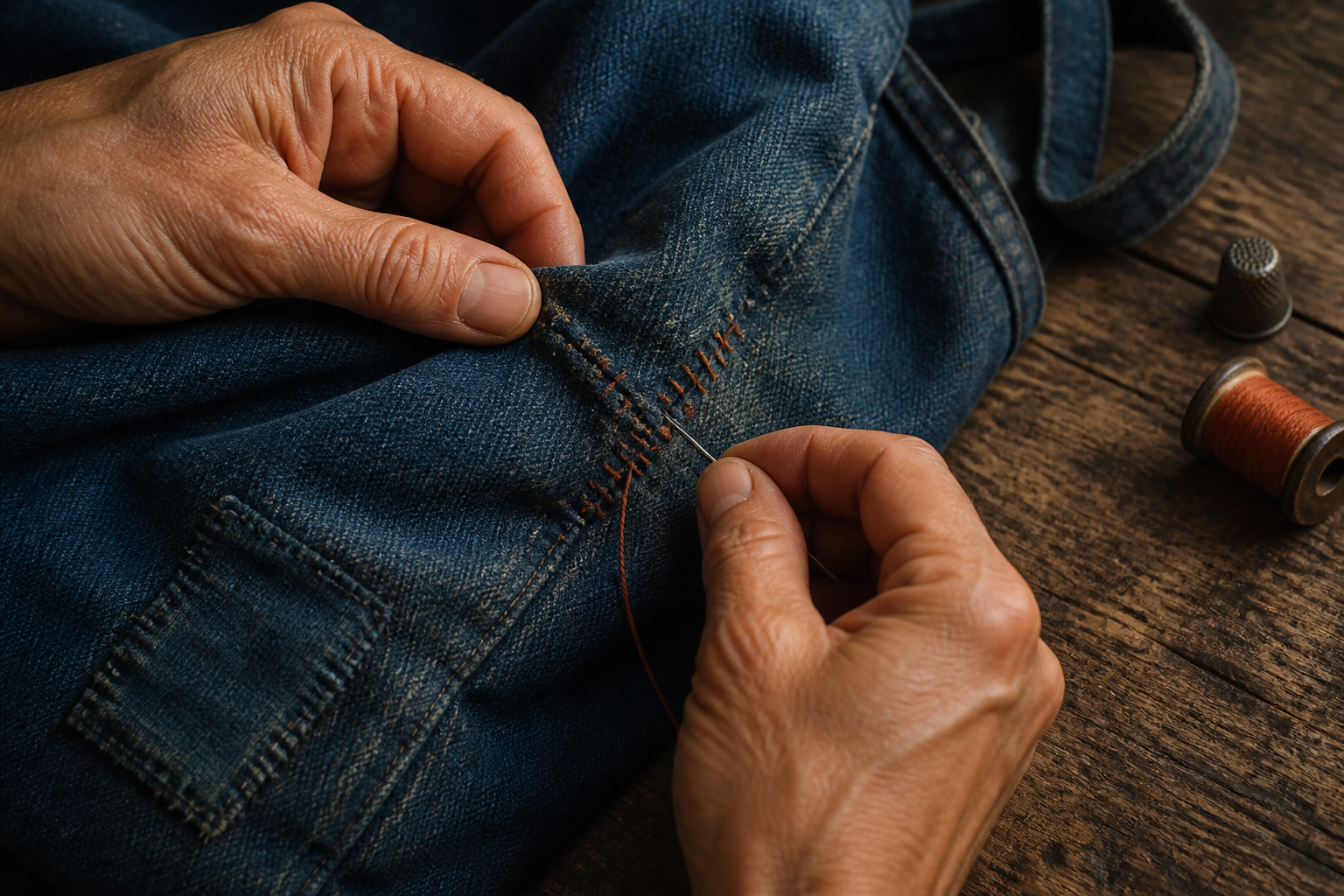
Not every flaw deserves preservation. A handmade variation can reveal attention and history; a loose joint that injures someone is not character. Apply the same distinction to anything you publish.
| What you notice | What to do | Why |
|---|---|---|
| Natural cadence, regional vocabulary, an honest aside, or a sentence with unusual but clear rhythm | Keep it when it helps the reader hear your actual voice | Recognisable language carries point of view; generic smoothness often removes it |
| A clearly stated uncertainty, qualification, or change of mind | Keep it and define the boundary precisely | Humility is more trustworthy than borrowed certainty |
| A personal memory or observation | Use it only when it is genuinely yours, relevant, and respectful of anyone else involved | Lived meaning cannot be replaced by a plausible invented scene |
| A factual claim, quotation, date, name, or attribution | Verify it and correct it before publishing | Polish cannot turn falsehood into truth |
| An instruction with serious consequences | Verify it with an appropriate authority or remove it if you cannot | Avoidable harm is not an acceptable rough edge |
| A private detail about another person | Remove it, anonymise it responsibly, or obtain meaningful permission | Authenticity does not cancel privacy |
| Repetition, clutter, or a confusing structure | Edit until the path is clear | Human warmth is not a licence to waste the reader’s attention |
| A harmless visual or verbal irregularity that records the making process | Leave it when removing it would also remove character | Care can remain visible without pretending to be mechanically uniform |
Do not deliberately insert misspellings, fake hesitations, or fabricated vulnerability to appear human. That simply turns imperfection into another performance. The aim is not to imitate spontaneity. It is to stop deleting every honest sign of perspective, limitation, and effort.
Also watch for the opposite mistake: defending confusing work as authentic. If readers cannot find the main claim, follow the instruction, or distinguish fact from interpretation, more editing is an act of service. The useful boundary is not polished versus rough. It is responsible versus evasive.
A practical workflow for using AI without losing your voice

You can preserve authorship by deciding what belongs to you before deciding what belongs to the tool. Use this sequence for an essay, talk, newsletter, professional memo, or creative project.
- Write the irreducible claim before opening the tool. Complete this sentence in your own words: After engaging with this work, the reader should understand or do this. If you cannot complete it, generating more prose will only produce a more polished version of your uncertainty.
- Collect the human material. Note the observations, phrases, tensions, examples, and unresolved questions that made the subject matter to you. Separate what you know from what you infer. Never ask a machine to invent experience on your behalf.
- Give AI a bounded function. Ask it to organise notes, identify repetition, test the order, propose counterquestions, or flag sentences that need evidence. A narrow assignment keeps the tool useful without quietly transferring the central judgment.
- Run an integrity pass. Classify important statements as fact, interpretation, personal experience, or recommendation. Verify facts and attributions. Mark interpretation as interpretation. Confirm that every personal claim is truly yours. Check whether any recommendation outruns what you know.
- Run a voice pass. Read the work aloud. Replace generic transitions with direct reasoning. Restore vocabulary you would naturally use with one attentive reader. Keep a qualified sentence when certainty would be dishonest. Remove grand claims that sound impressive but say little.
- Apply the ethical floor before the aesthetic ceiling. Accuracy, consent, privacy, clarity, and foreseeable harm belong to the floor. Rhythm, elegance, symmetry, and stylistic shine belong above it. Finish the floor. Stop treating the ceiling as infinitely expandable.
- Use a stopping rule. Being roughly 80 percent ready can be a useful check against paralysis when the unfinished portion is cosmetic. It is a rule of thumb, not a measurement and never a licence to leave consequential claims unchecked.
- Let reality complete the learning cycle. After release, note where readers were helped, confused, or moved to respond. Use that information in the next work. Endless private revision cannot teach you how another person will actually receive what you made.
Perfectionism often reveals itself near the end. You adjust an email sign-off again, request another set of alternatives, or replace one acceptable sentence with another and then change it back. At that point, name the feared judgment plainly. Then identify the concrete defect it points to. Repair the defect if one exists. If no defect exists, don’t make the work carry the impossible burden of protecting you from every opinion.
AI can support this discipline when you tell it to preserve uncertainty, flag unsupported claims, avoid invented experience, and explain why an edit improves clarity. It becomes corrosive when you use its fluency to avoid deciding what you mean. The decisive question is not whether AI touched the work. It is whether you remained answerable for the result.
Key takeaways
- Do not compete with AI on smoothness alone. Your durable contribution is judgment, lived perspective, ethical attention, and responsibility.
- Keep clear expressions of personality, uncertainty, and process. Repair falsehood, confusion, privacy violations, and anything that creates avoidable harm.
- Use non-attachment to release obsessive control over reception, not to excuse careless work.
- Let seva decide whether another revision is useful: improve what helps the reader and stop polishing what merely protects your image.
- Give AI bounded tasks, then perform your own integrity and voice passes.
- Treat the 80-percent rule as a stop signal for cosmetic refinement only. Truth and consequential guidance still require full care.
On your next draft, write the claim before opening the tool. Give AI one bounded job, complete the integrity pass, restore the language you can responsibly own, and release the work when the remaining changes are only cosmetic. That is not a retreat from excellence. It is excellence returned to dharma, practice, and service.
References
