
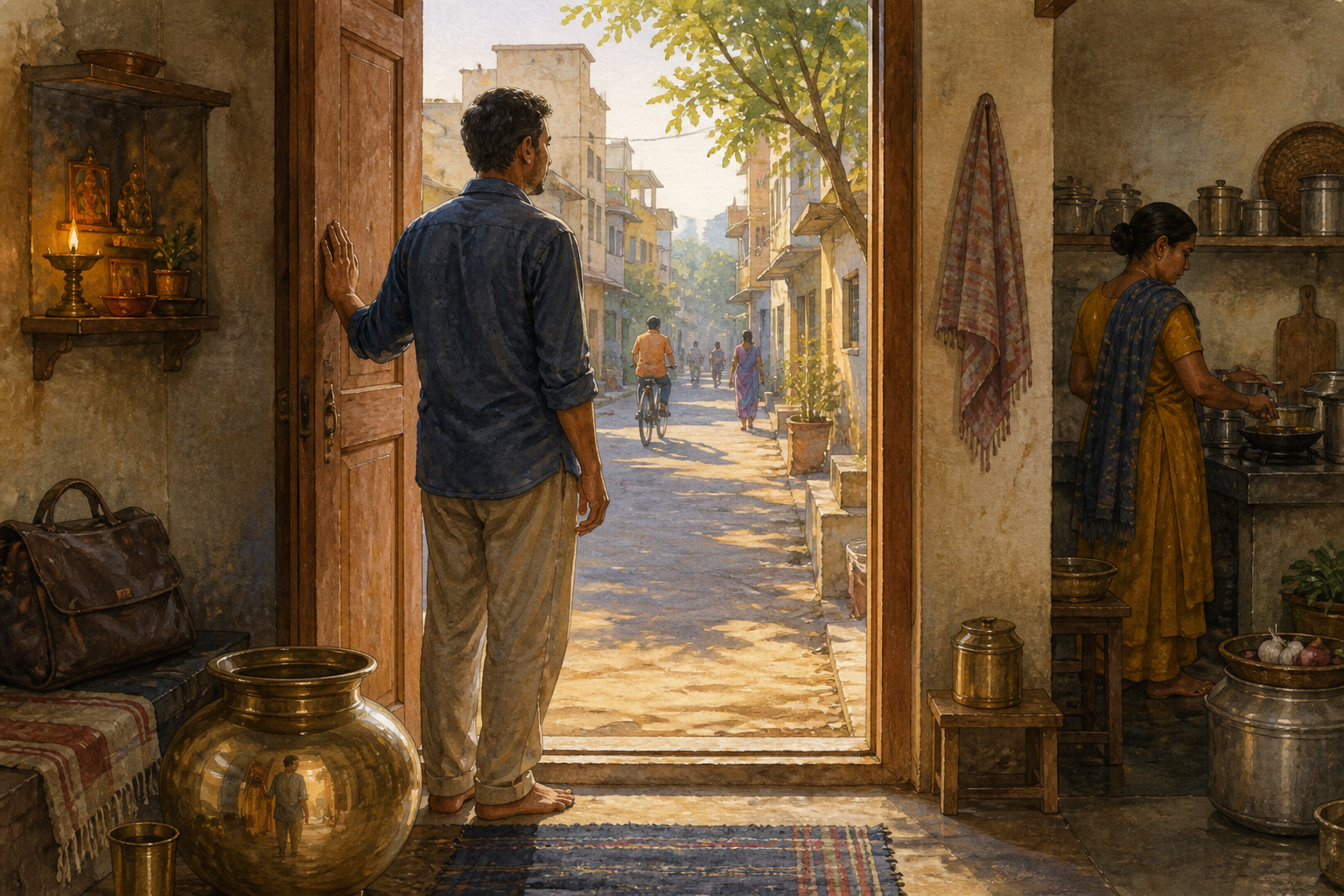
If you have heard that human birth is rare, the claim may sound grandiose, frightening, or too abstract to affect Monday morning. Its practical meaning is simpler: you possess a capacity to examine your impulses, choose how you act, and deliberately seek freedom. Hinduism asks you to use that capacity before another day hardens into habit.
This does not make work, family, pleasure, or material security irrelevant. It tells you how to order them. You can participate fully in ordinary life while asking whether your choices deepen clarity and responsibility or merely strengthen whatever already controls you.
The rarity is spiritual, not demographic
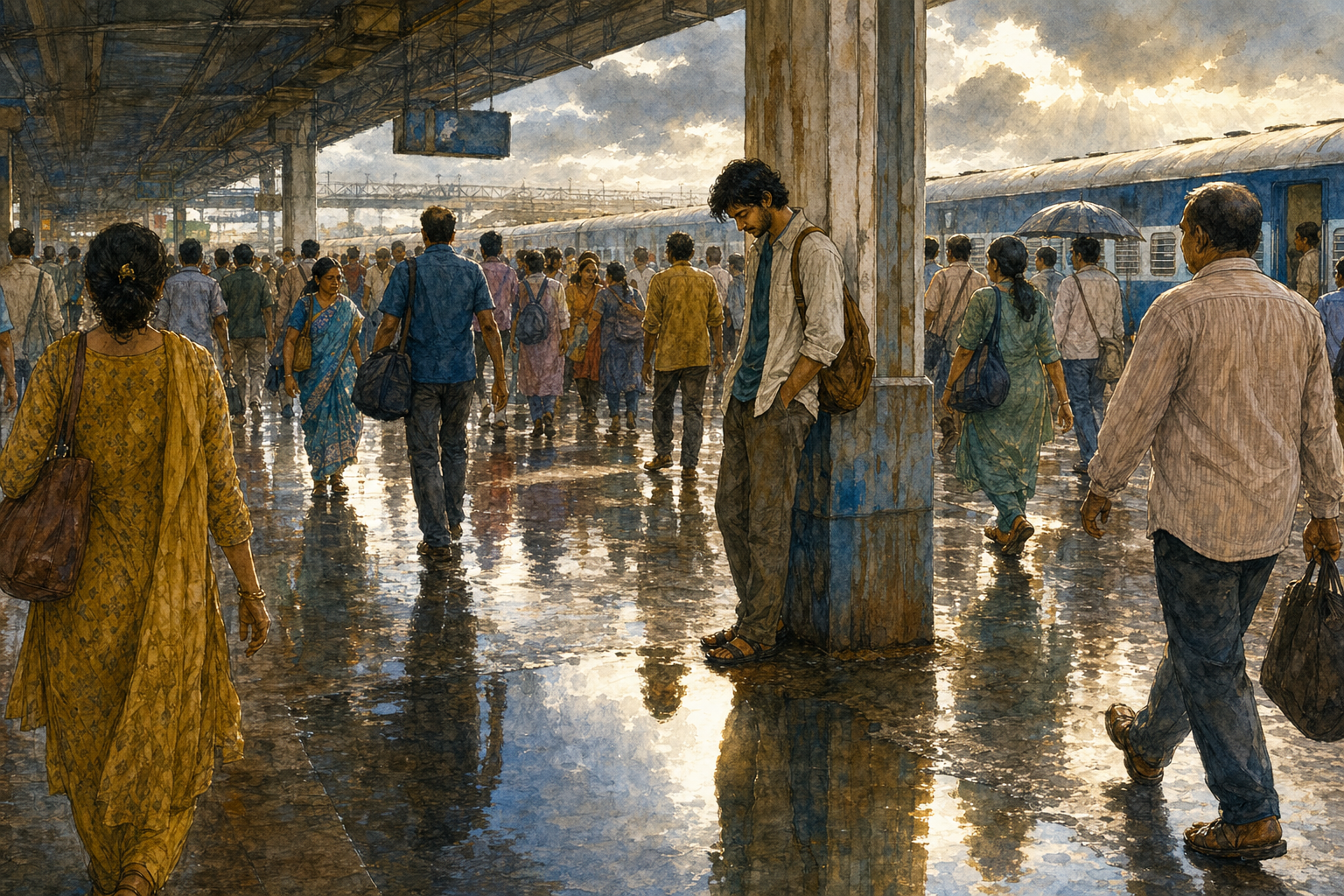
Hindu reflections on samsara place one lifetime within a much larger passage through plant, animal, bird, aquatic, human, and celestial forms of existence. Calling human birth difficult to obtain is therefore not a statement about population size. It identifies a spiritually consequential combination: embodied life, reflective awareness, moral responsibility, and the ability to undertake sadhana deliberately.
Humans still experience appetite, fear, attraction, aversion, competition, and attachment. Unlike a creature acting almost entirely through its given nature, however, you can notice an impulse and question whether to obey it. You can distinguish dharma from adharma, examine who you take yourself to be, restrain conduct that causes harm, and persist in a practice whose result is not immediate. That interval between impulse and action is where the value of human birth becomes real.
The inclusion of celestial existence matters as well. Pleasure, longevity, power, or a more agreeable condition would not by themselves settle the problem of bondage. If an experience remains conditioned and temporary, it remains within samsara. Human life is precious not because it offers the most comfort, but because discomfort and enjoyment can both become material for discernment.
Nor does the teaching permit contempt for animals, plants, or the natural world. A greater capacity to choose creates a greater obligation to practice ahimsa and restraint. If the idea of rare human birth makes a person arrogant, it has been read backwards. A rare instrument calls for careful use; it does not confer permission to mistreat the rest of life.
Human birth is for an ordered life, not an escape from life
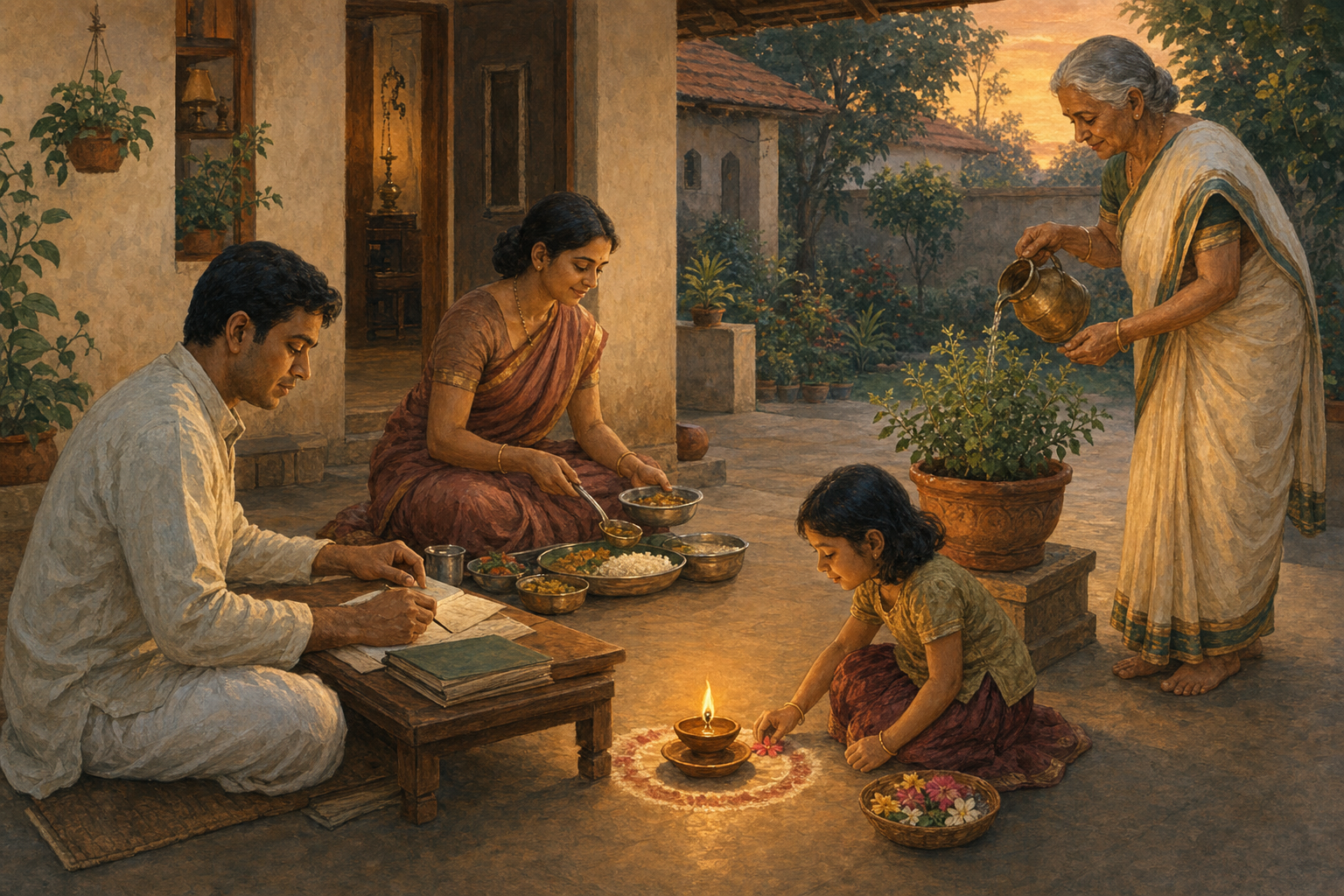
The purpose of human birth is often compressed into one word: moksha, liberation from binding ignorance and the recurring compulsions of samsara. Different Hindu schools explain liberation and the self in different ways, so the metaphysics should not be flattened into a single formula. Yet they share a practical concern: a human being need not remain wholly governed by craving, fear, ego, and mistaken identification.
Moksha does not require you to pretend that food, livelihood, affection, beauty, and social obligations do not exist. The purusharthas place dharma, artha, kama, and moksha within one field of life. Dharma concerns right order, duty, and ethical conduct. Artha concerns the means needed to sustain life and responsibility. Kama includes legitimate desire and enjoyment. Moksha gives the whole arrangement its liberating horizon.
The order matters. Artha and kama are not condemned, but neither is fit to rule alone. Dharma sets their boundaries: wealth obtained through deception is not redeemed merely because it provides comfort, and pleasure purchased through exploitation is not harmless because it feels private. Moksha asks a further question: even when a choice is permissible, does it make you more inwardly free or more dependent on possession, praise, stimulation, and control?
This is why an apparently successful life can remain spiritually neglected, while a modest life can be used well. The decisive measure is not prestige. It is whether your work, relationships, study, worship, service, and discipline are training clearer perception and less selfish action.
Routes through that work differ. Knowledge, devotion, selfless action, meditation, worship, and disciplined ethical living may receive different emphasis according to sampradaya and temperament. You do not need to manufacture an artificial mixture of every path. You need a sound path that changes how you see and act, followed with abhyasa rather than occasional enthusiasm.
Keep the urgency, but reject guilt and spiritual hierarchy
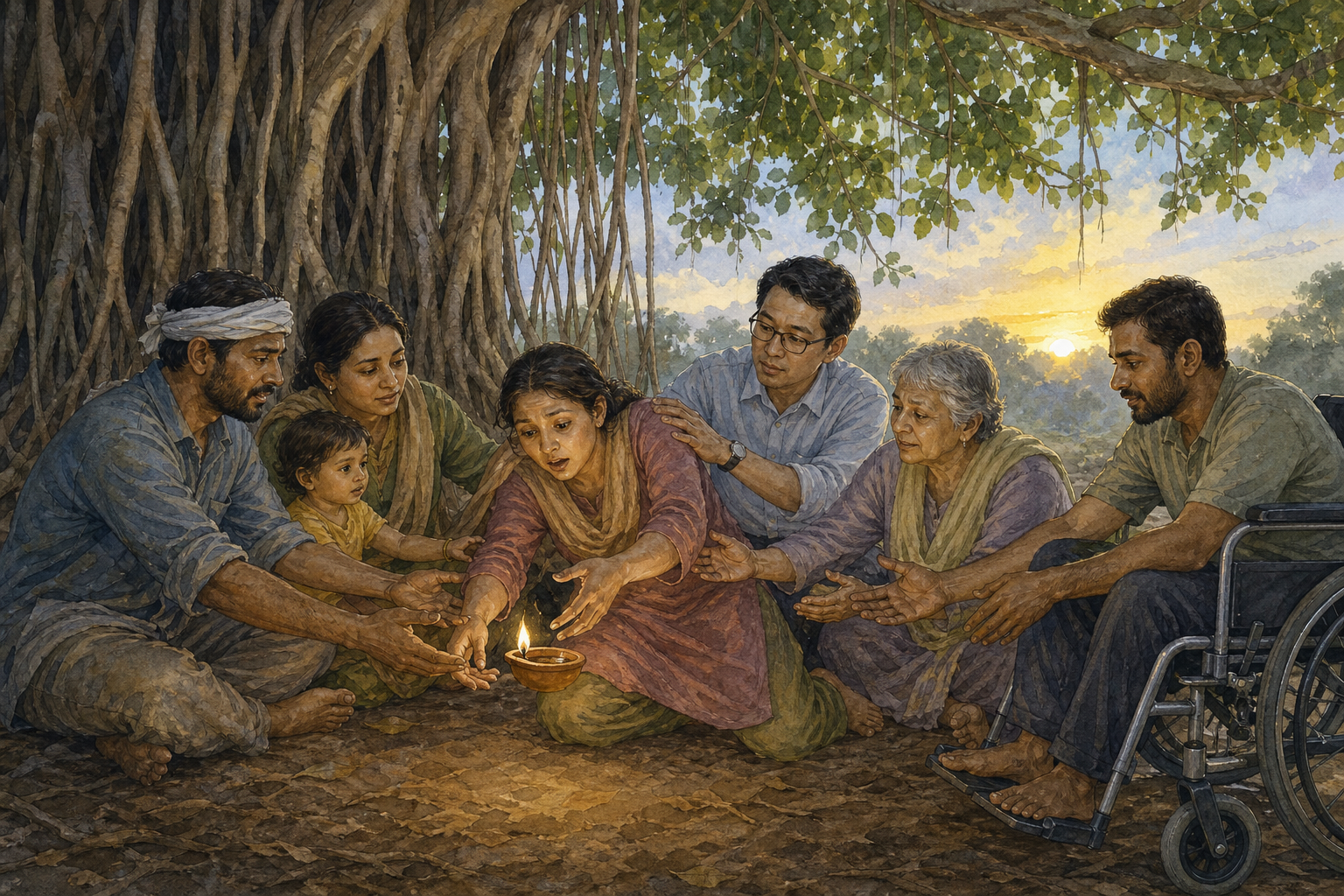
“Rare” introduces urgency because a lifetime is finite and its conditions are unstable. It should not become panic. Panic narrows attention and encourages dramatic vows that rarely survive ordinary pressure. The useful response is apramada: do not live carelessly, and do not keep postponing the work of freedom to an imaginary period when every obligation has disappeared.
Several common conclusions should be refused.
- “I have already wasted too much of my life.” The teaching concerns the agency available now, not a fantasy in which you recover the past. Regret is useful only when it clarifies the next action, prompts repair, or ends a repeated mistake.
- “Other people have lower or less valuable lives.” Spiritual opportunity is not a ranking of caste, income, education, health, or social power. Human circumstances differ radically, but dignity does not depend on visible achievement or religious vocabulary.
- “Karma means everything is fixed.” Fatalism would empty the teaching of its purpose. Karma includes action and consequence; the capacity to choose a more dharmic action is precisely why human embodiment carries responsibility.
- “A serious seeker must abandon ordinary duties immediately.” Renunciant disciplines have an honored place, but Hindu life also provides paths for householders. Walking away from a duty is not renunciation when avoidance, resentment, or fascination with a spiritual identity is doing the walking.
- “Ritual performance proves that the opportunity is being used.” Ritual can orient attention, purify intention, and establish discipline. Its fruit must also appear in conduct: less cruelty, less deceit, steadier attention, cleaner motives, and a greater willingness to serve.
These corrections protect the teaching from becoming either self-hatred or superiority. Its pressure should fall on your use of agency, not on the worth of another being. The right question is not “Am I spiritually impressive?” but “What governs me at the moment of choice?”
Use the teaching at the point where a choice is made

A philosophy becomes useful when it reaches the decision you would otherwise make automatically. For a meaningful choice about work, money, pleasure, relationships, or attention, pass it through the purusharthas:
- Dharma: What duty is actually mine here? Who could be harmed by this choice? Does it require dishonesty, exploitation, or the convenient neglect of an obligation?
- Artha: What material support is genuinely needed? Am I securing sufficiency and stability, or using “security” to conceal an appetite with no natural stopping point?
- Kama: What desire am I trying to satisfy? Can I enjoy its object without harming another person, losing proportion, or making my peace depend upon repeating the experience?
- Moksha: Will this choice strengthen clarity and freedom, or reinforce dependence on approval, possession, distraction, and control?
Suppose a new role improves income and status but requires routine deception. It may serve artha and kama while failing dharma. If it also consumes every margin for reflection, relationship, and practice, it carries a further spiritual cost. The framework does not make the decision for you; it prevents you from hiding one kind of cost behind another kind of gain.
You can then build a daily discipline around the same logic:
- Orient the day before entering its noise. Before messages, news, and demands set your mental direction, remember that the day is limited. State a simple intention such as, “Let today’s choices be governed by dharma rather than impulse.”
- Name the duty you are likely to avoid. Choose the conversation, task, promise, or act of care that genuinely belongs to you. Complete it without turning busyness into a disguise for avoidance.
- Select a field of restraint. Watch one recurring doorway through which carelessness enters: reactive speech, needless consumption, resentment, distraction, or the demand to be praised. The aim is not self-punishment. It is to recover choice where habit normally acts first.
- Insert a pause at the trigger. When the familiar impulse appears, do not begin with a grand metaphysical argument. Notice the bodily and mental movement, allow a gap, and ask which action is dharmic. Even a brief interruption exposes the difference between having an impulse and being ruled by it.
- Review conduct honestly. At the end of the day, ask where you acted from clarity, where compulsion took over, and what repair is now required. If speech caused harm, apologize. If a duty was neglected, reschedule it concretely. If a practice failed, resume without converting one lapse into an identity.
- Give the practice supporting conditions. Keep regular contact with trustworthy teaching, satsanga, seva, prayer, study, or meditation as appropriate to your path. Intention weakens when every surrounding influence trains the opposite habit.
Measure the practice by transfer. If meditation is becoming steadier but your anger remains entirely exempt from scrutiny, the practice has not yet reached an important part of life. If worship is deepening gratitude and reducing the need to dominate, it is crossing the threshold from religious activity into transformation.
Do not wait to design a flawless spiritual regime. If the most honest beginning available to you is pausing before harmful speech and repairing harm on the same day, begin there. Human birth is honored by freedom exercised at the point of action, not by the scale of the plan.
Key takeaways
- Human birth is called rare because it offers reflective and moral agency that can be directed toward liberation, not because humans may despise other forms of life.
- Moksha gives life its ultimate horizon, while dharma orders the pursuit of material support and legitimate enjoyment.
- The doctrine calls for urgency without panic, guilt, fatalism, or claims of superiority over other people.
- Your real spiritual condition becomes visible in recurring choices about speech, desire, money, duty, attention, and harm.
- Study, worship, meditation, and ritual are doing their work when they produce clearer perception, steadier conduct, and less bondage to impulse.
When you leave this page, identify the choice in your day that most often runs on habit. Apply the questions of dharma, artha, kama, and moksha to that one choice, then make the smallest honest correction you can repeat. That is enough to stop treating rare human birth as an idea and begin treating it as a responsibility.
References
