

If you are living with chronic pain, fatigue, brain fog, or a flare, the hardest task may be the one that looks easiest: stopping. You can know your body needs rest and still answer one more message, finish one more chore, or turn a quiet hour into another exercise in productivity.
That conflict is not proof that you are lazy or bad at self-care. It can mean that habits built around duty and endurance have outlived your present capacity. The practical task is to make rest concrete enough that you can choose it even when guilt, fog, and obligation are all talking at once.
Your present capacity belongs in the definition of duty

Many of us learn, directly or by watching the people around us, that rest must be earned by finishing the work. The problem is that domestic work, employment, caregiving, and community obligations do not produce a natural finish line. If stopping is permitted only when everything is done, stopping is never permitted.
For a dharmic reader, the word duty can make this especially difficult. Seva, care for family, professional responsibility, and keeping one’s word all matter. Yet dharma need not be interpreted as endless output. A wiser reading begins with truthful attention to the conditions in front of you, including the condition of the body through which every duty must be performed.
Ahimsa offers a useful lens here. It does not mean avoiding every difficult or unpleasant task. It asks you to notice when effort has become needless harm. Continuing because something is genuinely necessary is different from continuing because you are afraid that someone, including you, will judge you for stopping.
When guilt appears, do not debate whether you are a good person. Ask questions that can change the decision:
- What is actually necessary now, and what merely feels urgent because it is unfinished?
- If I force this task today, what essential capacity might I lose afterward?
- Can the task be reduced, delayed, transferred, or left incomplete?
- Am I acting from clear responsibility, or from fear of being seen as unproductive?
This is also where self-care must remain honest about medicine. Burnout is not an explanation for every symptom. New, severe, rapidly worsening, or markedly different symptoms, or a major loss of your usual ability to function, deserve assessment by a qualified health professional. Rest can reduce avoidable demands, but it cannot diagnose an illness, replace treatment, or tell you why a flare is happening.
Choose rest by the demand you need to stop

Rest is not one particular posture or activity. It is a reduction in demand. Sleep may be the right form when your body is sleepy, but wakeful rest can also include sitting quietly, listening to music, meditating, reading, watching something, journaling, or doing a simple puzzle or craft.
Before choosing an activity, name the demand that needs to stop. This prevents you from selecting something that looks restful but keeps the same overloaded system working.
- If the body needs less effort: lie down, nap if sleep comes, sit with support, or stop the chore that requires standing and lifting.
- If attention needs less effort: choose one familiar, low-demand activity and remove the second screen.
- If decisions need to stop: use a short menu of preselected options instead of asking yourself to design the perfect recovery routine.
- If social demand needs to stop: silence notifications, postpone a nonessential conversation, or tell the people around you that you are unavailable.
- If spiritual striving needs to stop: let prayer, japa, quiet listening, or simple presence be enough. Do not turn the practice into another count, achievement, or test of worthiness.
Pleasure and rest can overlap, but they are not identical. A television programme may reduce demand if you simply watch it. The same programme may become tiring if you also answer messages, browse on your phone, solve a puzzle, and criticise yourself for sitting still. The useful question is not whether an activity has been labelled relaxing. It is whether it asks less of the part of you that is already overburdened.
Single-tasking can feel surprisingly uncomfortable when productivity has become automatic. Make one activity the whole activity. Put the phone on silent and leave it in another room if its presence keeps inviting work. When the impulse to get up and accomplish something appears, notice it without obeying it immediately.
Do not use comfort as the only test. Rest may initially expose agitation, guilt, or an inner monologue full of things you should be doing. That discomfort does not automatically mean the rest is ineffective. It may mean you are encountering the habit that has prevented you from stopping. At the same time, follow any individual guidance your clinician has given you about rest, movement, sleep, and symptom management; the appropriate balance can differ from one condition and person to another.
Write a stopping plan before brain fog makes the decision
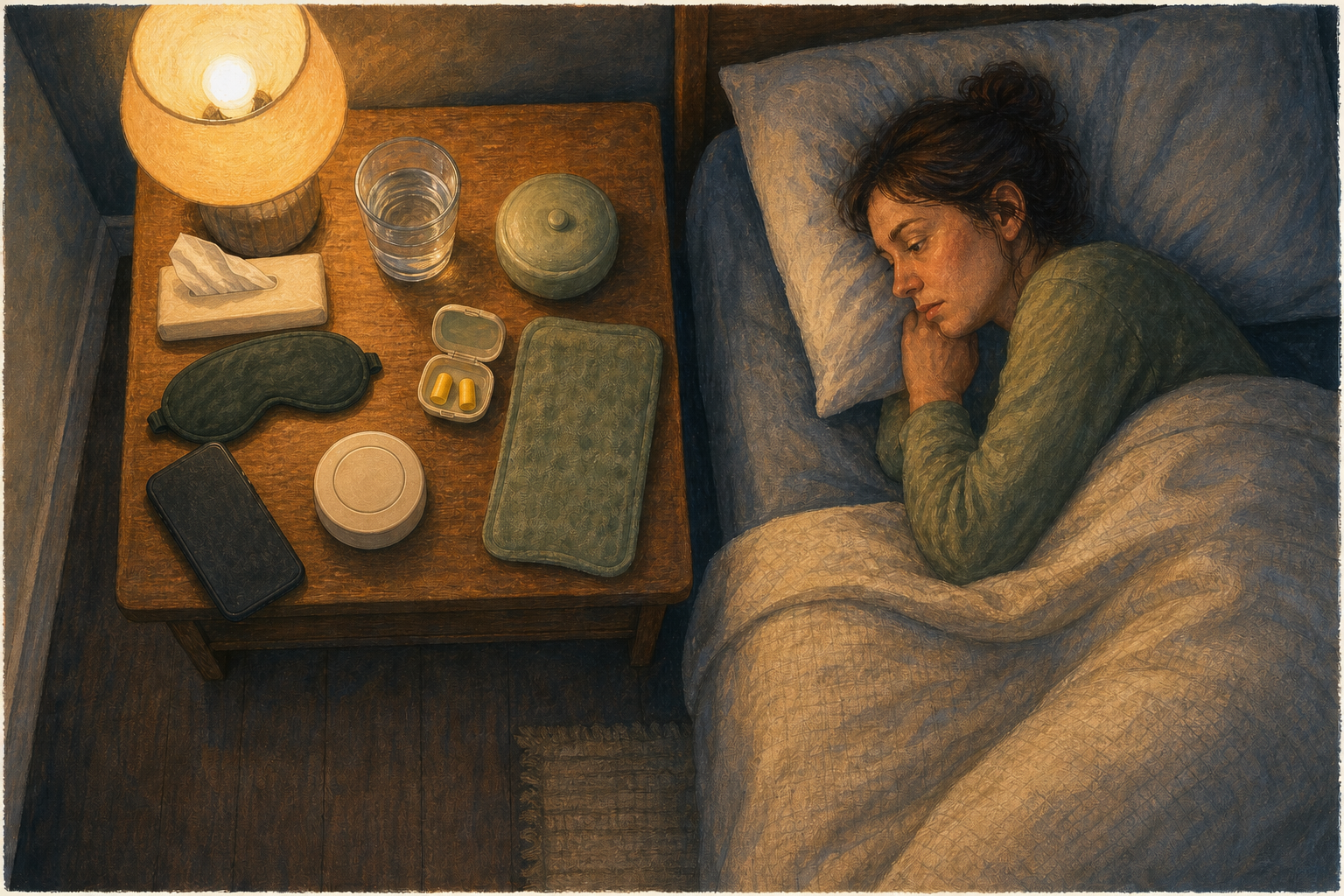
The worst time to invent a rest plan is the moment when you are already depleted. Pain, fatigue, and brain fog can make honest self-assessment harder, while the unfinished task in front of you still feels concrete and urgent. Write the plan when your thinking is relatively clear.
Your plan does not need to be elaborate. Complete these prompts in your own words and keep them somewhere visible:
- My earliest reliable signs: the changes in pain, concentration, patience, movement, or fatigue that usually tell me capacity is falling.
- The first demand I remove: an optional chore, meeting, errand, notification channel, or social obligation that can stop without creating danger.
- Rest I can begin without preparation: a bed or chair already available, a familiar recording, a book, quiet japa, or another low-demand choice.
- The people I notify: anyone who needs to know that a commitment is changing, plus a trusted person who can help if your functioning drops.
- My medical escalation plan: the symptoms or changes your own clinician has told you to report, whom to contact, and what to do if you cannot safely manage at home.
Then use the plan in a fixed order:
- Observe: state what is happening without a moral label. For example, the pain is rising, concentration is failing, or the task now takes more effort than it did earlier.
- Reduce: remove one demand immediately. Do not make rest compete with an active inbox, an avoidable errand, and an open-ended promise.
- Rest: choose one option from your prepared menu and let it remain a single task.
- Reassess: decide whether you can resume at a smaller scale, need to cancel more, or need professional help. Do not treat the original plan for the day as sacred.
A stopping point is useful even when you do not feel fully restored. It is a checkpoint at which work loses its automatic priority. You can place such checkpoints before a demanding activity, after a necessary errand, or at a natural transition in the day. The purpose is to notice capacity while you still have a choice, rather than waiting for collapse to make the choice for you.
If scheduled rest repeatedly turns into unpaid work, identify the route by which work enters. Perhaps the phone stays beside you, family members assume you are available, or you sit where unfinished chores remain visible. Change the environment, not merely the intention. Close the door if appropriate, move the device, prepare water beforehand, and say that you are resting before someone assigns that time to something else.
Make room for rest by renegotiating the work

Rest cannot be added indefinitely on top of the same workload. It must displace something. When capacity has changed, sort each commitment into one of these practical categories:
- Essential and mine today: safety, necessary care, or a genuinely time-bound responsibility that no one else can handle.
- Necessary but reducible: a simpler meal, a shorter response, a partial task, or a lower household standard.
- Transferable: work another adult, colleague, relative, or community member can take over if asked clearly.
- Postponable or droppable: tasks whose main purpose is maintaining an image of normal productivity.
This classification prevents an important mistake: treating every unfinished task as equally binding. A safety-critical responsibility is not the same as an optional social appearance. A basic meal is not the same as producing the meal you would make on a high-capacity day. Preserve what is truly essential, then lower the demands around it.
Clear communication usually works better than a long defence. Use language that identifies the limit and the available choice:
- I am dealing with a health limitation today. I can complete this task or that one, but I cannot responsibly promise both. Which is the priority?
- I cannot take this on today. Please ask someone else or move it to a later date.
- My symptoms have increased, so I need quiet and will respond when I can assess my capacity again.
- I can participate in a smaller way, but I cannot take responsibility for the whole activity.
- I do not know when my capacity will return to its usual level, so I do not want to promise a date I may not be able to keep.
You do not have to disclose your whole medical history each time you set a boundary. Give the information needed to change the plan. For ongoing work limitations, speak with your clinician and the appropriate workplace contact about what can realistically be adjusted rather than repeatedly making short-term promises that assume the symptoms will vanish.
A deeper reset may require clearing commitments instead of squeezing recovery into leftover time. If your capacity fluctuates, resist using every better day to repay the entire backlog. That simply allows yesterday’s expectations to consume today’s available energy. Choose what matters now and let some old plans remain unfinished.
Key takeaways
- Rest is a response to present capacity, not a reward granted after every task is complete.
- Dharma is better served by truthful discernment than by pretending the body has a capacity it does not currently have.
- Choose rest according to the demand you need to reduce: bodily effort, attention, decisions, social contact, or pressure to perform.
- Write your stopping signals, first cancellation, easy rest options, support contacts, and medical escalation plan before brain fog arrives.
- Real rest requires removing or renegotiating work. It cannot survive as one more obligation added to an already overloaded day.
- Rest is not a diagnosis or a substitute for care. New, severe, worsening, or substantially different symptoms need qualified medical attention.
Before this day ends, make one piece of the plan real. Remove one optional demand, place the phone beyond easy reach, choose one form of low-demand rest, or send one clear boundary message. If even that feels too large, let one quiet activity be enough.
Your next pause does not have to prove that you deserve it. It only has to answer the conditions that are actually present. That honest response is not an abandonment of dharma; it is where a sustainable practice of it begins.