

You may be drawn to kirtan yet unsure how private japa, public sankirtan, Gaudiya philosophy, and Sri Chaitanya’s joyful personality fit together. The practical question is simple: what should you actually do, and what kind of person should the practice make you?
The answer is not to collect more devotional activities. It is to build a coherent life in which sacred sound trains your attention, good association softens your ego, study clarifies your convictions, and service tests whether any of it has reached your character.
The holy name is the center, not one item on a checklist
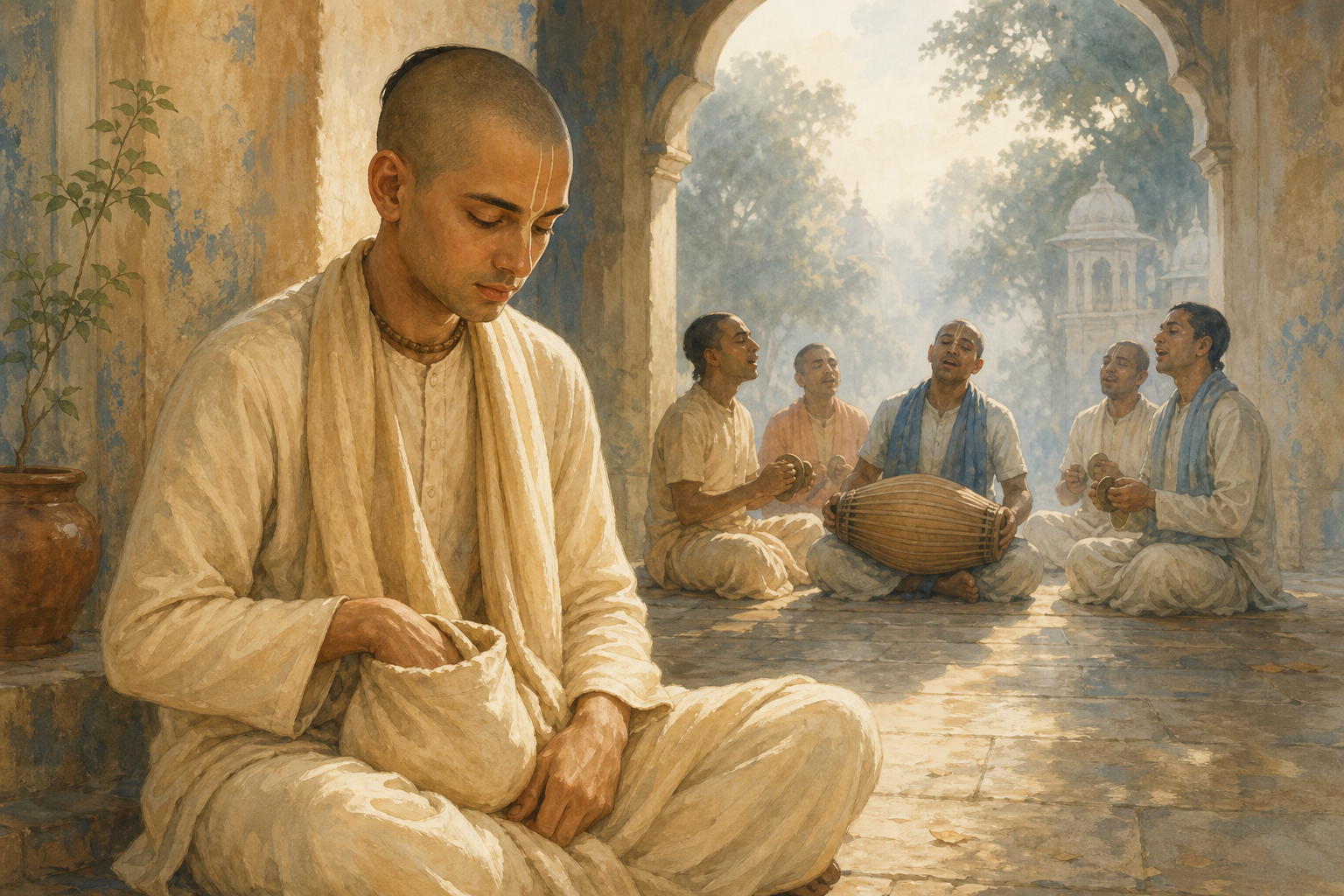
Gaudiya Vaishnava practice is devotion to Sri Krishna, not a generic method of relaxation. Sri Chaitanya Mahaprabhu is revered within the tradition as Krishna Himself, appearing in the role and disposition of a devotee. Chanting therefore has a relational purpose: you are not merely repeating a useful sound but turning your attention toward the person named.
This explains why the holy name occupies such a decisive place in Gaudiya life. In Mayapur in 1976, and again near the end of his earthly life, A.C. Bhaktivedanta Swami Prabhupada stressed the primacy of harinama and asked for Amala Harinama, amiya bilasa as medicine. The point was not that syllables work mechanically. Pure chanting calls for sincerity, regularity, and a willingness to let remembrance of Krishna reorder your conduct.
Three related forms of practice serve different needs:
- Japa is personal mantra repetition. It exposes the wandering mind and gives you repeated opportunities to return your hearing to the name.
- Kirtan is vocal and usually congregational. Melody, response, and the presence of other devotees can awaken attention when solitary practice has become dull.
- Harinama sankirtan carries collective chanting into public life. It joins personal remembrance to a visible act of service and shared witness.
These practices should support one another. If public kirtan gives you enthusiasm but your private japa remains hurried, bring that energy back to quieter chanting. If solitary japa becomes dry, a brief period of kirtan may help you hear again with affection. If your practice remains entirely private, periodic sankirtan can prevent devotion from shrinking into a self-contained wellness routine.
Count and attention are not rivals. If sixteen rounds are part of a commitment you have formally undertaken, advice about flexible practice is not permission to reduce that vow. At the same time, completing sixteen rounds at a pace that leaves almost no audible mantra turns the count into a shield against honest self-examination. Keep the commitment, then improve the way you inhabit it. If you have not taken such a vow, do not borrow someone else’s count as a badge of standing; establish a consistent practice and seek sound guidance about deepening it.
Build a daily rhythm that survives ordinary responsibilities

A workable routine distinguishes your primary practice from supplementary chanting. Your primary japa receives the clearest attention you can give it. Supplementary chanting accompanies activities that require little language, planning, or vigilance. Confusing the two is how a person can chant throughout the day while rarely listening closely.
- Define the non-negotiable commitment. If you have a vow, protect it. If you do not, choose a sustainable daily minimum that you can keep without theatrical bursts followed by long gaps.
- Give the clearest portion of japa an interruption-free setting. Put the phone beyond reach, settle the body, pronounce the mantra steadily, and listen to the sound you are making. Beginning before messages and news seize your attention is often easier than trying to recover a quiet mind later.
- Use portable japa as an extension. Soft chanting can accompany walking, routine household work, a safe commute, or a pause between meetings. It should not accompany driving, reading, writing messages, or any task in which divided attention creates danger or degrades the work.
- Use brief kirtan to restore participation. When evening japa feels like a negotiation with exhaustion, sing first and then return to the beads. The change of mode can re-engage the voice, ear, and heart.
- Join harinama sankirtan when feasible. A monthly opportunity is a practical starting rhythm for linking private discipline with collective uplift. If public chanting is not available locally, regular congregational kirtan still keeps your practice connected to a community.
What to do when the mind wanders
Wandering is not corrected by arguing with every thought. Notice that hearing has been lost, then return to the mantra currently being chanted. Do not wait for the next round or a better mood. The next name is already the place of return.
If you repeatedly lose whole stretches of japa, change one observable condition. Slow down until the words are distinguishable. Sit instead of walking. Move the phone. Chant audibly enough to hear yourself. If supplementary japa during a chore becomes background noise, stop treating that setting as suitable. Attention improves when the environment stops rewarding distraction.
Mechanical chanting should be treated as information, not as a reason for despair or complacency. It tells you that the body has preserved the habit while the mind and intention need to be gathered again. The useful response is immediate and concrete: hear this mantra, correct this pace, and return in this moment.
Joy and humor reveal whether community is spiritually safe
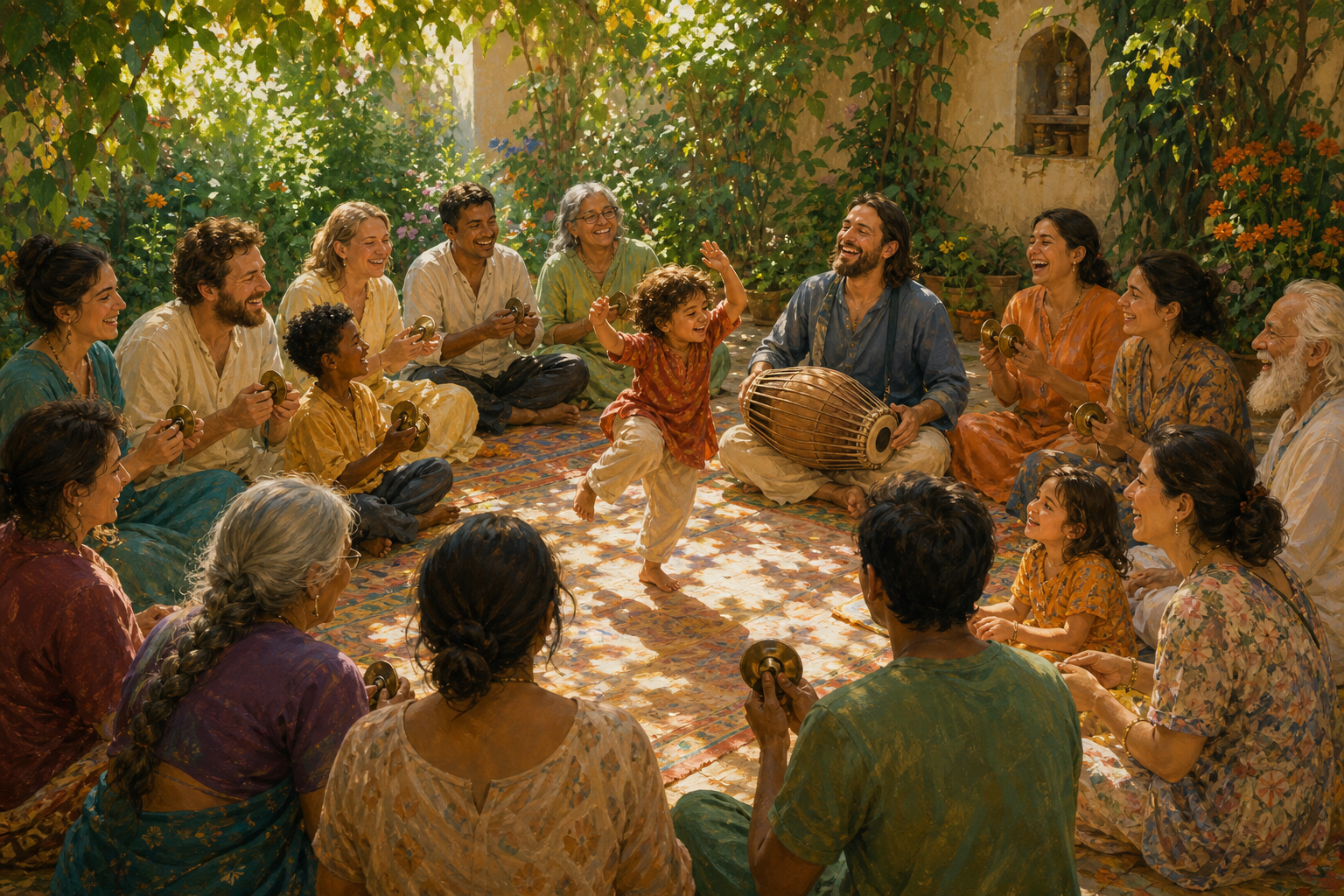
Gaudiya inheritance is not solemnity without warmth. As Nimai Pandit in Nabadwip, Sri Chaitanya was remembered for lively wit and affectionate mischief. Hasya is counted among the seven indirect devotional mellows, showing that laughter can belong within spiritual relationship rather than outside it.
That does not sanctify every joke made in religious company. Devotional humor is measured by what it does to the relationship. It can loosen pride, relieve stiffness, and help people receive correction without humiliation. It fails when a senior person’s amusement depends on a junior person’s inability to object.
Accounts of Mahaprabhu’s banter with migrants from Sri Hatta, associated with present-day Sylhet in Bangladesh, are understood in devotional retelling as part of the energetic camaraderie of Nabadwip. That reading does not give modern practitioners permission to imitate accents, recycle ethnic stereotypes, or make newcomers prove their tolerance. Historical affection cannot be reproduced by copying the external shape of a joke while discarding the trust that gave it meaning.
Before using humor in a temple, study group, or family setting, ask what the person with the least social power is expected to do. Can that person decline to laugh without consequence? Would the remark still feel affectionate if its target heard it outside the excitement of the room? Does it strengthen a shared bond, or mark someone as an outsider? Those questions distinguish hasya that softens ego from mockery that merely hides behind informality.
You can cultivate devotional joy without becoming a performer. Welcome people by name. Let kirtan include hesitant voices. Receive a harmless correction without defensiveness. Tell a story in which your own pride, rather than another person’s vulnerability, carries the humor. A community’s theological vocabulary matters, but so does whether a newcomer can relax without lowering their guard against ridicule.
Study and lineage keep devotion from becoming vague sentiment
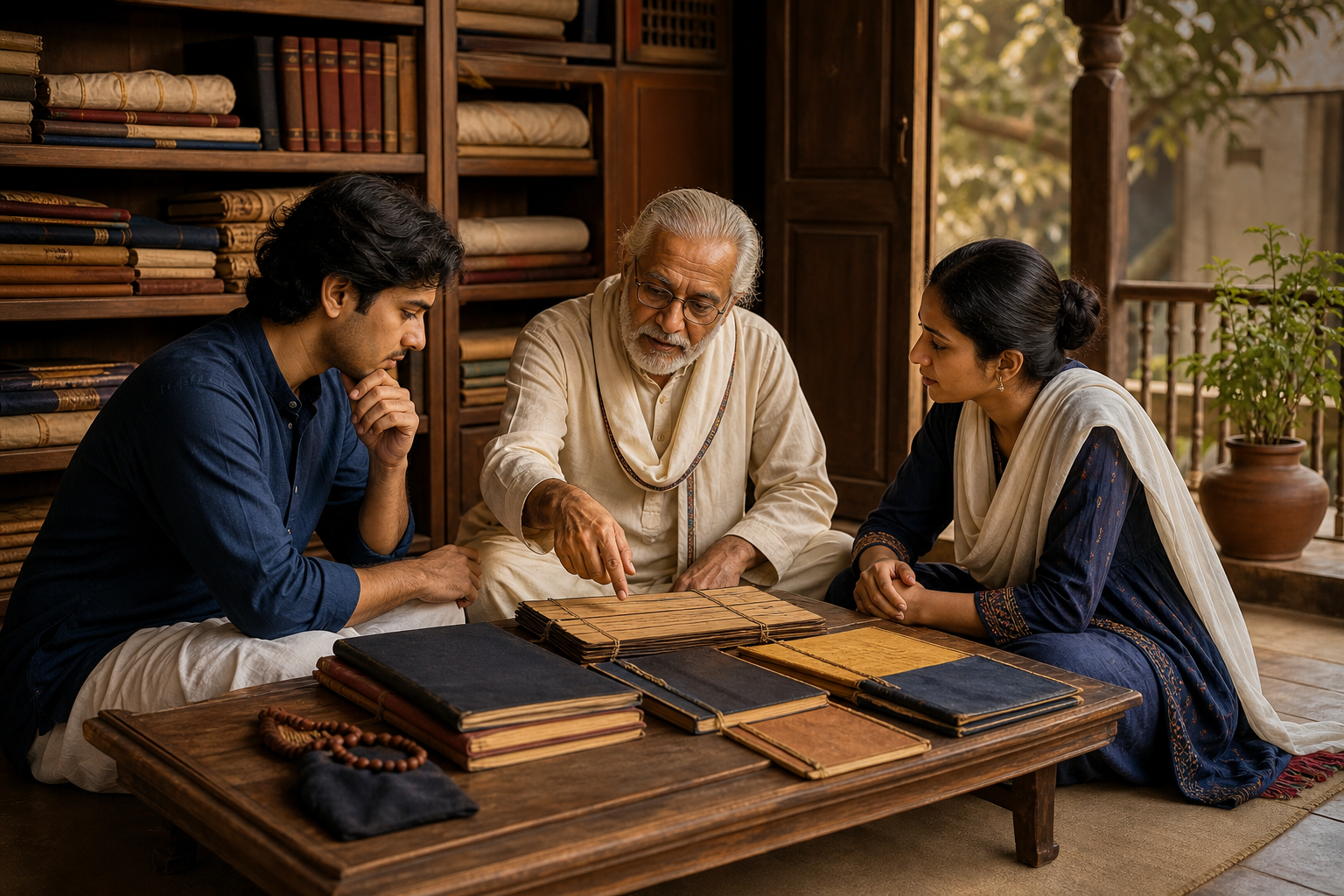
Emotional intensity is not the whole Gaudiya legacy. Baladeva Vidyabhushana, a late eighteenth-century figure associated with a village near Remuna in Odisha’s Balasore district, joined disciplined Vedanta reasoning to devotional commitment. His formation is linked with the line of Vairagi Pitambara Dasa and Radhadamodara Dasa, the author of Vedanta Syamantaka. Nanda Mishra is named among the students through whom Baladeva’s learning continued.
This matters because guru-shishya transmission is more than the preservation of names. A teacher helps the student distinguish a doctrine from a slogan, a devotional emotion from self-display, and a difficult question from an act of disloyalty. The student, in turn, must listen, study, practise, ask honestly, and allow correction to affect conduct.
Acintya-bheda-abheda, the Gaudiya teaching of inconceivable simultaneous difference and non-difference, is a good example of why study matters. Memorising the translation is only the beginning. Ask what distinction is being preserved, what unity is being affirmed, why their simultaneity is called inconceivable, and how the teaching protects devotion from collapsing either into absolute separation from Krishna or into an erasure of relationship.
A practical way to study Gaudiya philosophy
- Read a short, coherent passage rather than collecting isolated quotations.
- Write the central claim in plain language without trying to make it sound impressive.
- Identify the reasoning or scriptural interpretation that supports the claim.
- Ask what the teaching changes in japa, service, relationships, or moral choice.
- Take unresolved questions to a qualified teacher or serious study group, then return to the passage.
Look for teachers and communities in which fidelity, disciplined conduct, and patient explanation appear together. Charisma alone cannot carry a lineage, and information alone cannot form a disciple. A healthy teacher does not need contempt to defend siddhanta. A healthy student does not invoke humility as an excuse to remain intellectually passive.
Study is serving its purpose when it makes practice more precise. You should become better able to explain why you chant, more alert to careless theological claims, and less tempted to turn disagreement into personal hostility. Scholarship without sadhana can become display; sadhana without study can leave you vulnerable to confusion. The Gaudiya model asks each to discipline the other.
Carry the legacy forward by testing its fruits
Practitioners commonly associate attentive chanting with greater clarity, steadier attention, reduced anxiety, warmer social feeling, and resilience under stress. These reported effects can be meaningful, but they should not be converted into a promise that every session will improve your mood. Chanting is also not a substitute for medical or psychological care when anxiety or another condition requires professional help.
A more reliable spiritual audit examines conduct over time. Are you quicker to notice reactive speech? Do you return to a difficult duty with less resentment? Are you more dependable in service when no one is watching? Can you disagree without treating the other devotee as an enemy? If the count rises while patience, honesty, and responsibility deteriorate, the practice needs attention rather than public praise.
The same honesty should guide your relationship with the wider dharmic family. Mantra japa in Hindu traditions, Buddhist sacred recitation, the Jain Namokar or Navkar Mantra, and Sikh simran on Waheguru all demonstrate the formative place of remembered sound. Their resemblance can support mutual respect, but it does not make their theology interchangeable.
When speaking with a Buddhist, Jain, Sikh, or practitioner from another Hindu sampradaya, explain what the holy name means within your own tradition before declaring that every practice is the same. Ask how sacred recitation is understood in theirs, whether it is practised privately or communally, and what ethical transformation is expected. Unity becomes credible when it can honour a real difference without turning that difference into hostility.
Key takeaways
- Treat japa as an encounter requiring hearing and intention, not merely as a completed count.
- Keep your vowed practice intact while correcting speed, distraction, and mechanical habit.
- Use kirtan to renew personal chanting and periodic sankirtan to connect private discipline with community service.
- Judge devotional humor by whether it preserves dignity, especially for the person with less power.
- Pair sadhana with serious study and living teacher-student accountability.
- Look for the legacy in attention, humility, truthful speech, dependable service, and respectful engagement across the dharmic family.
At your next clear opportunity, do three things: chant the opening portion of your japa without the phone, place the next congregational kirtan or sankirtan on your calendar, and choose one Gaudiya teaching to study beyond its slogan. A living legacy is built at exactly that junction of name, association, and understanding.
References
- Dandavats – The Essential Breakthrough: A Proven Resolution to Transform Life with Dharmic Mantra Chanting
- Dandavats – The Essential Playful Wisdom of Sri Chaitanya: Discover the Transformative Hasya Rasa
- Hindu Blog – Baladeva Vidyabhushana: Essential Insights into a Gaudiya Vedanta Sage’s Legacy
