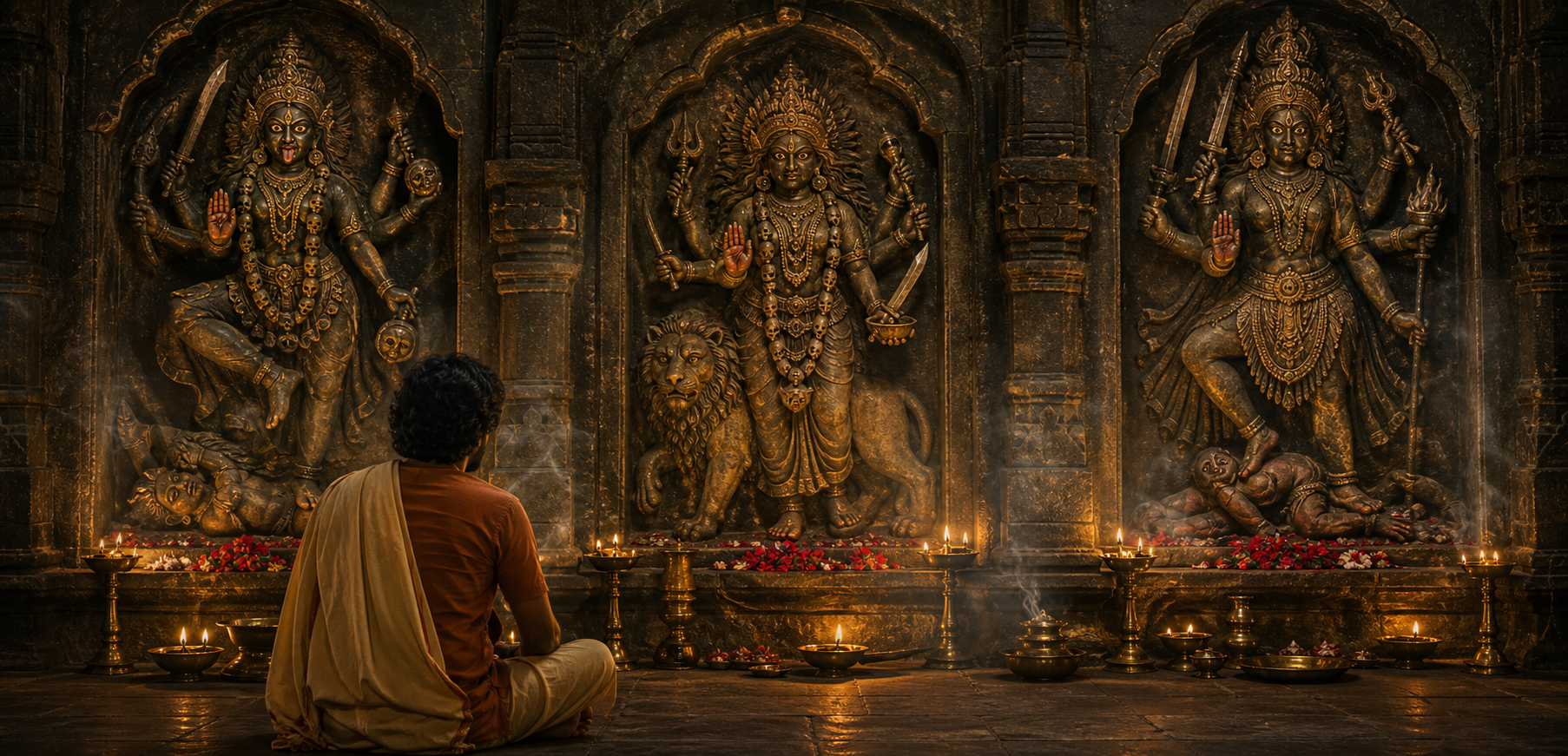
Fierce Forms of the Divine Mother: How a Devotee Reads Them
·2 min read
You may feel drawn to the Divine Mother and still recoil from a severed head, a weapon, a terrible expression, or a form associated with destruction. That tension is not a failure of devotion. It is often the beginning of a more serious question: what is the Mother destroying, and for whose sake?
The safest way to understand a fierce form is not to treat every frightening image as a general symbol of power. Identify the particular Devi, the tradition in which she appears, and the spiritual task her form performs. Ugrachandi, Chinnamasta, and Bherunda Nitya are all fierce, but they do not teach the same lesson or invite the same response.
Fierce does not mean cruel
In Shakta understanding, the gentle mother and the terrible mother are not rival powers. The same boundless Shakti can nourish life, defend it, expose its illusions, and dissolve what prevents it from reaching freedom. Her appearance changes because the condition confronting the devotee changes.
A comforting form meets grief, dependence, tenderness, or the need for refuge. A fierce form meets another set of conditions: danger, adharma, terror, bondage, pride, denial, or attachment that will not yield to polite persuasion. Fierceness describes the intensity of the remedy. It does not mean that the Divine Mother has become malicious.
This gives you three practical questions whenever an image seems disturbing:
<!– wp:list {
FAQs
Does fierce imagery mean the Divine Mother is cruel?
No. In Shakta understanding, fierceness describes the intensity of the remedy used against conditions such as danger, bondage, pride, or denial; it does not mean the Divine Mother is malicious.
Why might a devotee recoil from a fierce goddess form?
The image may include a severed head, a weapon, a terrible expression, or an association with destruction. That tension is not a failure of devotion; it can begin a deeper inquiry into what the Mother is destroying and for whose sake.
How should a devotee read a frightening image of Devi?
Identify the particular Devi, the tradition in which she appears, and the spiritual task her form performs. Do not treat every frightening image as a general symbol of power.
Do Ugrachandi, Chinnamasta, and Bherunda Nitya teach the same lesson?
No. Although all three are fierce forms, the article emphasizes that they do not teach the same lesson or invite the same response.
What conditions can a fierce form of Shakti confront?
A fierce form may meet danger, adharma, terror, bondage, pride, denial, or an attachment that will not yield to gentle persuasion. Her appearance changes according to the condition confronting the devotee.
How are gentle and fierce forms related in Shakta understanding?
They are not rival powers. The same boundless Shakti can nourish and defend life, expose illusion, and dissolve what prevents freedom, taking a different appearance as the devotee’s condition changes.