

If you are trying to decide whether Bharat’s SeaGuardian lease is prudent protection or an expensive detour from self-reliance, do not begin by choosing your preferred drone. Begin with two harder questions: what surveillance failure must the Navy prevent during the next 30 months, and what sovereign capability should Bharat possess when those 30 months end?
A decision that answers only the first question can deepen dependence. A decision that answers only the second can leave a real operational gap today. The defensible policy is a time-limited bridge with an audited purpose, protected Tapas funding, and a domestic exit path that starts before the leased aircraft arrive.
Treat the lease and Tapas as two different clocks

The immediate clock is maritime surveillance. Bharat’s agreement covers two additional MQ-9B SeaGuardian drones for 30 months at Rs 1,943 crore, or about $200 million. The high-altitude platform can remain airborne for more than 30 hours on one mission. That endurance matters in the Indian Ocean Region, where a large operating area turns persistence into a practical advantage.
The longer clock is industrial sovereignty. Investment in Tapas is not merely the purchase of another airframe. Properly structured, it builds design knowledge, testing capacity, software control, payload integration, production skill, maintenance competence and the ability to improve the system without waiting for a foreign contractor.
These clocks produce different outputs. A lease can buy usable surveillance during a defined period. Domestic development buys knowledge and future control, but it cannot be assumed to generate equivalent patrol coverage on the same date. Moving the entire lease amount to Tapas would therefore be sensible only if the Navy’s near-term requirement can already be met by other means. Leasing foreign aircraft would be sensible only if Bharat can show that the gap is real and that domestic progress will not be sacrificed to pay for the bridge.
This is why the popular either-or framing is incomplete. The relevant unit is not the drone; it is the capability delivered at a particular time. Ask what the SeaGuardians will do during the lease, what Tapas will be able to do at expiry, and whether the two plans are connected. If those answers are missing, neither the word “urgency” nor the word “self-reliance” is enough.
Judge the SeaGuardian lease by accountable output
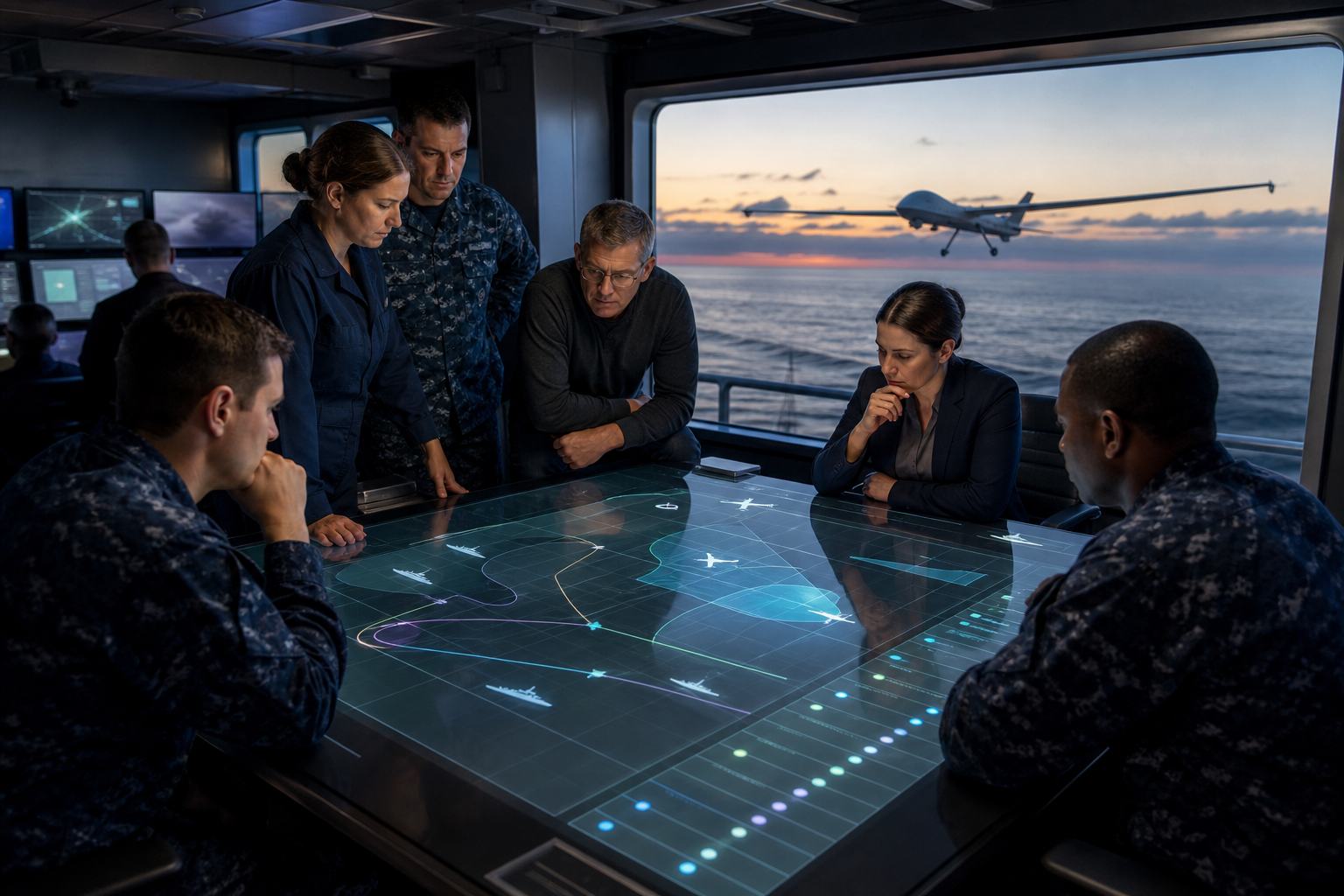
The strongest case for the lease is narrow. The Navy faces an immediate surveillance requirement across a vast maritime domain, and a contractor-operated, operationally mature platform can provide coverage without a full acquisition’s upfront cost. That is a stopgap argument, not a permanent procurement doctrine.
Because Rs 1,943 crore is being committed to a temporary service, the government should be able to answer five questions within the appropriate oversight system. Operational details may remain classified, but the decision itself still needs documented evidence.
| Decision question | What a defensible lease must establish | Warning sign |
|---|---|---|
| What is the urgent gap? | A defined shortfall in surveillance coverage, availability or persistence that existing assets cannot close in time. | Urgency is asserted without identifying the capability that is missing. |
| What output is being purchased? | Mission availability, tasking responsiveness and surveillance results tied to the Navy’s requirement. | The contract is defended mainly by the aircraft’s reputation or endurance figure. |
| Who controls the mission? | Clear Indian authority over tasking, operational priorities, sensitive data and acceptable uses. | Contractor operation creates a black box around tasking, data access or mission dependence. |
| What happens if performance falls short? | Enforceable availability standards, reporting and remedies appropriate to the service being purchased. | Bharat carries the cost while the practical consequences of poor availability remain unclear. |
| What happens at expiry? | A planned transition to Indian-owned capacity, another already-approved capability or a fresh decision based on documented need. | Renewal becomes the default because no exit capability was prepared. |
Endurance alone cannot settle the case. A platform that can fly for more than 30 hours is valuable only if the Navy receives the availability, sensor access, tasking freedom and usable intelligence it needs. A lease should therefore be judged by delivered operational effect, not by the catalogue performance of the airframe.
Nor should a lease be described as industrial acquisition unless its terms actually create industrial rights or skills. Access to a capable aircraft is not the same as ownership of its design, mission software, integration knowledge or supply chain. Keeping that distinction clear prevents a temporary service from being presented as a substitute for domestic development.
Make Tapas funding buy an ecosystem, not a slogan
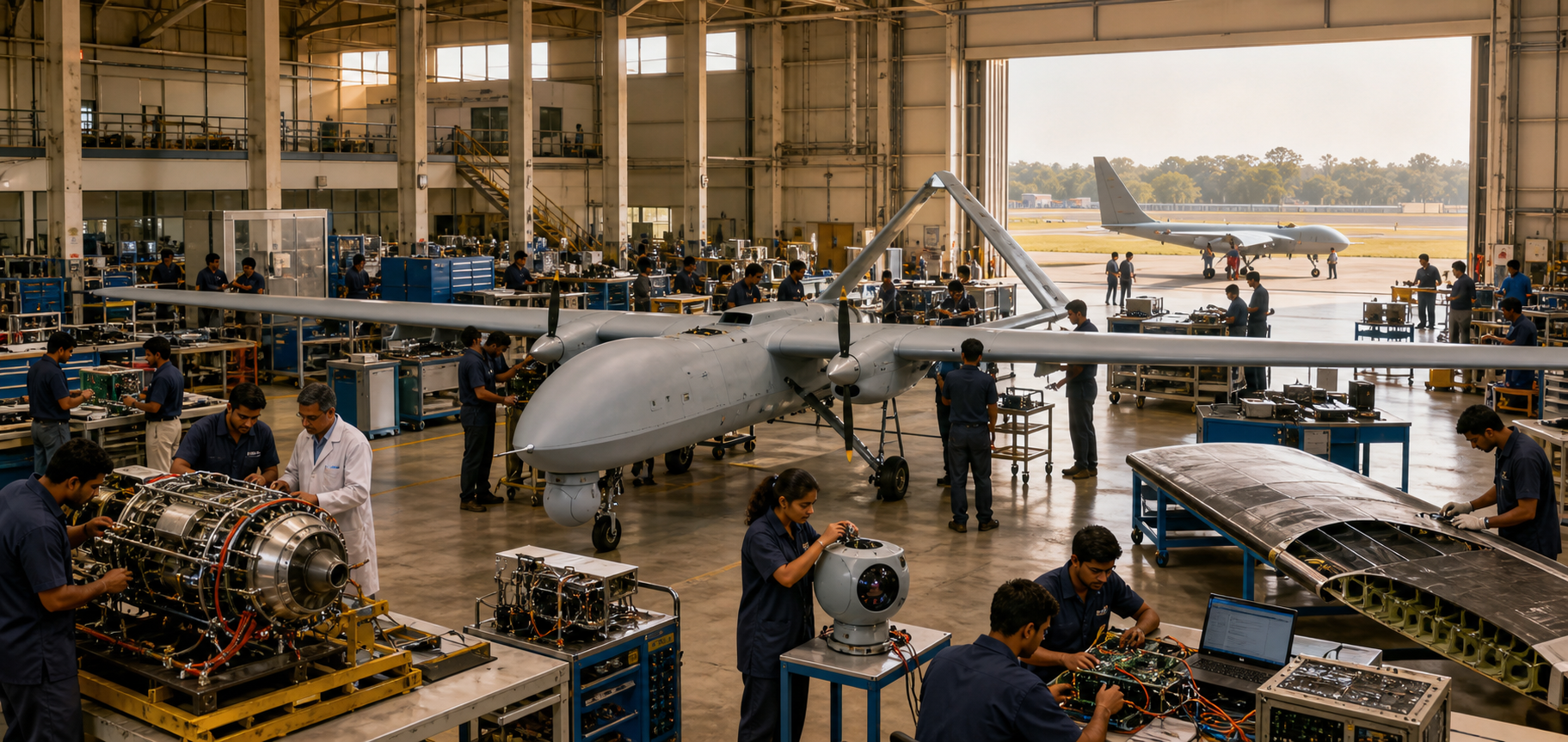
The pro-Tapas case is strongest when it defines what Bharat must learn and control. Patriotism can justify the strategic objective, but it cannot replace engineering evidence, user trials or delivery discipline. A domestic programme becomes sovereign capability only when the armed forces can operate, maintain, modify and replenish it at the required standard.
Tapas investment should therefore be organised around visible capability gates:
- Air-vehicle maturity: Demonstrate the flight performance, reliability and environmental robustness required for the intended missions.
- Mission-system integration: Treat sensors, communications, ground control and data exploitation as part of the weapon system, not as accessories to be solved after the airframe.
- Indian control: Define who owns or can modify critical software, interfaces, mission data and maintenance knowledge.
- Production readiness: Identify the supplier capacity, quality controls and order path needed to move from development units to repeatable manufacture.
- Service ownership: Bring military users into testing early enough that operational defects change the design rather than becoming permanent workarounds.
- Supportability: Budget for training, spares, repair, upgrades and configuration management over the system’s life, not merely for its initial construction.
This approach also protects Tapas from a familiar political trap: treating every test difficulty as proof that domestic development has failed, or treating every domestic milestone as proof that the system is ready for operational duty. Development exists to reveal problems before a platform is relied upon in service. The correct response to a failed gate is diagnosis, correction and retesting, with consequences when management or design repeatedly misses agreed requirements.
Domestic commitment does not require an unlimited cheque. Funding can be released against engineering and service milestones while preserving the continuity that a serious development team needs. The essential point is that the lease budget and the Tapas roadmap must not compete invisibly. If the SeaGuardian payment delays critical tests, payload work or production preparation, Bharat may purchase 30 months of coverage by extending dependence beyond those 30 months.
Connect the stopgap to a domestic exit plan
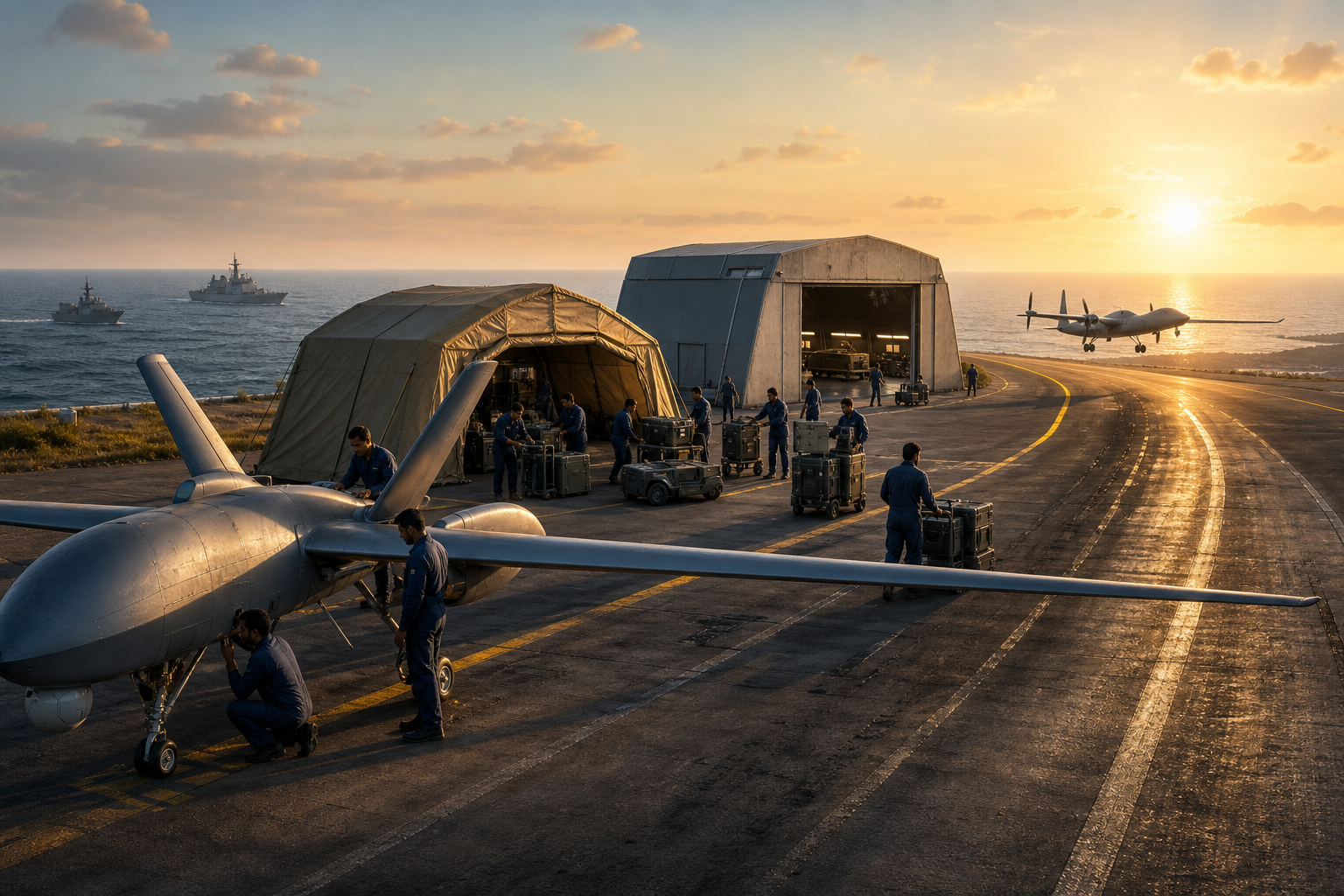
A sound policy can lease SeaGuardians and invest in Tapas, but only if the two tracks are joined by a written transition compact. Without that connection, “bridge capability” can become a recurring label for postponing the harder domestic work.
- Define the lease’s operational purpose. Record the specific surveillance gap, the output expected from two additional aircraft and the reason existing assets cannot cover it during the contract period.
- Ring-fence domestic development. Protect the testing, integration and production-preparation work that Tapas needs. If funds are being shifted, disclose the capability consequence inside the government’s oversight process rather than pretending there is no trade-off.
- Map the 30-month window to Tapas gates. Set early, midpoint and pre-expiry reviews for air-vehicle maturity, mission systems, user evaluation and production readiness. The gates should test evidence, not merely whether money was spent.
- Capture operational learning. Use SeaGuardian missions, where contractual and security conditions permit, to sharpen Indian understanding of maritime tasking, long-endurance operations, data exploitation, maintenance planning and crew requirements. Operational learning is useful only when it reaches Indian institutions.
- Make renewal exceptional. Before expiry, compare the remaining surveillance gap with domestic progress. Any extension should require a fresh justification and an updated exit plan; it should not happen automatically because the bridge was easier than the transition.
This compact gives each camp a legitimate burden of proof. Supporters of the lease must show that it closes a time-sensitive military gap at an acceptable level of control. Supporters of Tapas must show credible movement through engineering and service gates. Neither side gets to substitute emotion for delivery.
The decision rule is then straightforward. Support the lease if the gap is documented, the purchased output is enforceable, Indian tasking and data interests are protected, the expiry plan is credible, and Tapas funding remains intact. Rework or reject it if urgency cannot be demonstrated, contractor operation leaves unacceptable sovereign constraints, or the payment quietly postpones the domestic programme that is supposed to end the dependence.
Key takeaways
- The SeaGuardian lease and Tapas development buy different things: near-term surveillance service on one hand, and long-term knowledge, ownership and industrial control on the other.
- The Rs 1,943 crore lease is defensible only if two additional drones close a documented operational gap during the 30-month term.
- A 30-plus-hour endurance figure is relevant, but delivered availability, sovereign tasking, data access and usable intelligence matter more.
- Tapas funding should cover the complete capability system: testing, mission integration, software and data control, production, military evaluation and long-term support.
- The safest policy is a temporary bridge with protected domestic funding, evidence-based milestones and a decision made before the lease expires.
When you assess the next defence-procurement claim, ask what will be different on the day after the lease ends. If the only answer is another lease, the stopgap has become dependency. If Bharat has converted the interval into tested domestic capability, stronger institutions and a credible production path, the temporary import has served national sovereignty instead of replacing it.
References
