

You may be watching a mob-killing case accumulate headlines, allegations, and official assurances, yet still be unable to tell whether justice is moving. When the victim is Hindu, that uncertainty deepens the injury: a family is left without answers, a minority community is left measuring its safety, and rumors begin to outrun verified facts.
The lynching of Dipu Chandra Das and the questions raised publicly by Taslima Nasreen have brought one issue into sharp focus: can Bangladesh demonstrate impartial accountability for mob violence against Hindus? You do not have to choose between outrage and legal precision. A disciplined accountability test makes both possible.
Key takeaways: what genuine accountability requires
- An arrest is an investigative step, not proof that a case will reach a credible judgment.
- Equal justice requires the same evidentiary and procedural standards regardless of the victim’s or accused person’s religion.
- Identity-blind adjudication should not become data blindness. Authorities still need to record and examine evidence of a communal motive.
- Delay, witness intimidation, weak evidence handling, and unexplained procedural gaps can destroy a prosecution long before a verdict.
- A public case-tracking system should show procedural milestones without exposing witnesses, minors, or sensitive evidence.
- Pro-Hindu advocacy is most effective when it documents institutional performance, protects victims, and refuses collective blame.
Replace the communal yes-or-no question with a testable one
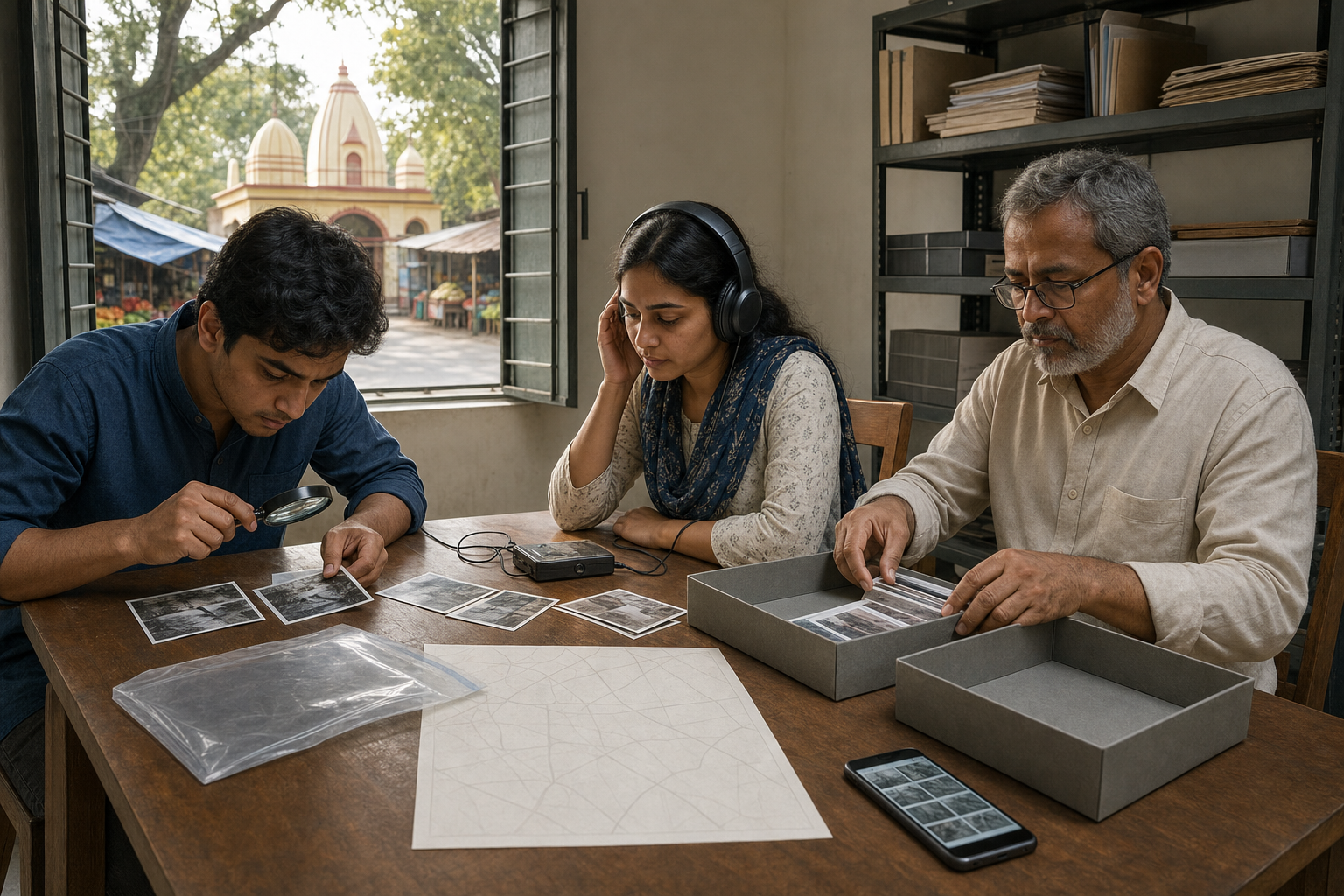
Bangladesh already has the formal foundations for equal justice. Its Constitution promises equality before the law and equal protection, while the Penal Code, Code of Criminal Procedure, and the country’s ICCPR obligations establish expectations for investigation and prosecution. The central problem is whether those guarantees survive contact with a frightened witness, a politically sensitive case, an overwhelmed investigator, and a prolonged trial.
People understandably ask whether a Muslim has ever been punished for killing a Hindu. The anger behind that question should not be dismissed. But scattered headlines cannot answer it responsibly because Bangladesh lacks a consolidated, publicly accessible record of communal-violence prosecutions and outcomes. Two opposite conclusions are therefore unsafe: the inability to find a conviction does not prove that none exists, while one visible conviction would not prove that the system works consistently.
Ask questions that can be answered from a case file and then compared across cases:
- Was the incident formally registered and investigated?
- Was a possible communal motive examined rather than assumed or ignored?
- Were suspects identified through evidence, not merely through public pressure?
- Were charges filed, amended, declined, or allowed to stall?
- Were witnesses able to participate without intimidation?
- Did the court reach a reasoned disposition, and was that outcome made public?
This approach does not erase anti-Hindu violence. It makes the allegation of unequal protection demonstrable. Case-level facts reveal where a particular prosecution failed; consistent aggregate data reveal whether Hindu victims face a broader pattern of neglect. Public reporting can show those patterns while withholding names and details that would endanger witnesses.
Follow every case through the full accountability chain
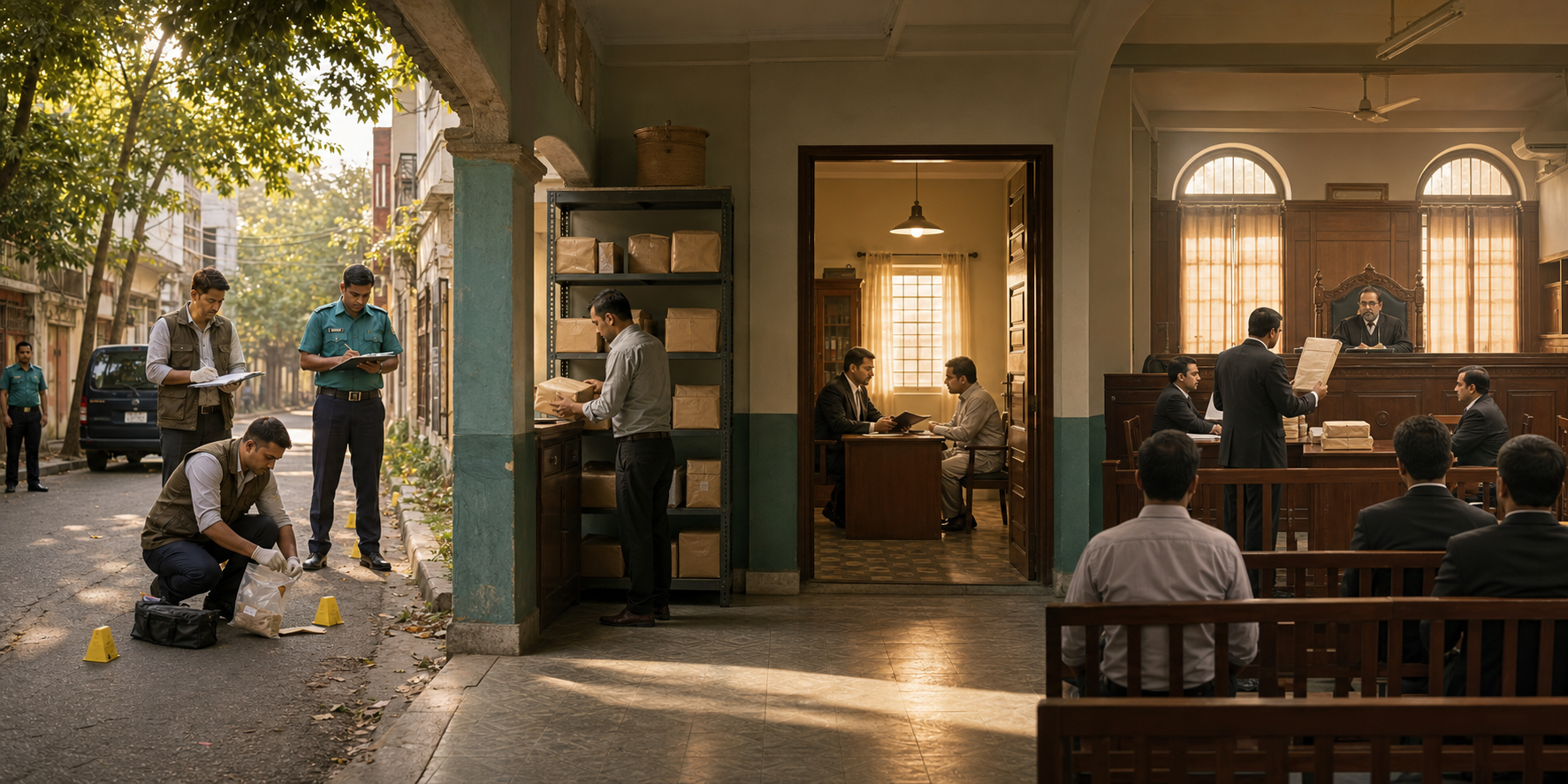
Mob violence creates a dangerous illusion of shared anonymity. Responsibility can disappear into the word mob unless investigators identify conduct, preserve evidence, and connect particular people to particular acts. To decide whether an official response is substantial, follow these stages in order.
- Immediate protection and evidence preservation. Were injured people, relatives, witnesses, and threatened community members protected? Was the scene secured? Were original recordings, physical evidence, and other time-sensitive material preserved? The public need not see sensitive evidence, but authorities should be able to confirm that preservation steps occurred.
- Impartial investigation. Did investigators try to identify individual conduct within the crowd? Did they test competing accounts and document how evidence was collected, transferred, stored, and examined? A large crowd makes attribution difficult; it does not make careful attribution optional.
- Reasoned prosecution. Were charging decisions based on admissible evidence? Was a competent prosecutor assigned? Were major changes in the case explained to the extent permitted by law? A dramatic arrest followed by an unexplained release or dormant file is not a completed accountability process.
- A safe and continuous trial. Did hearings proceed with reasonable continuity? Were repeated delays explained? Could witnesses testify without coercion or exposure? Fast handling is useful only when it protects due process and evidentiary quality.
- A visible final disposition. Was there a conviction, acquittal, dismissal, or other resolution? Were reasons recorded, and is any appeal or further proceeding still pending? An acquittal is not automatically evidence of bias; it may reflect insufficient proof. But repeated evidentiary collapse, unexplained delay, or witness withdrawal demands institutional scrutiny.
Keep the stages separate when you speak or publish. A person may be accused without being charged, charged without being convicted, or convicted while an appeal remains unresolved. Collapsing those statuses creates misinformation and makes credible advocacy easier to dismiss.
Build reform around the points where mob cases weaken
Why apparent progress can disappear
Delay does more than move a hearing date. Memories fade, digital material becomes harder to authenticate, witnesses become more vulnerable to pressure, and public attention shifts elsewhere. Each problem strengthens the next. A weakly preserved case takes longer to investigate; a long investigation gives intimidation more time to work; frightened witnesses then leave prosecutors with less evidence.
Public silence creates another failure point. When authorities announce an investigation but provide no later milestones, citizens cannot distinguish legitimate confidentiality from inactivity. Rumor fills the gap, communal mistrust grows, and each side selects the fragment that confirms what it already believes.
Premature certainty is just as damaging. Officials and advocates should not describe an allegation as a judicial finding. Nor should an arrest total be presented as proof of accountability. The meaningful measure is whether credible evidence survives investigation, charge, trial, and final disposition.
What institutional reform should produce
- A public case dashboard. Each entry should show the case identifier, district, incident date, present procedural stage, last public update, disclosed charges, hearing status, and final outcome. Protected identities and sensitive evidence should remain confidential.
- Time-bound investigation protocols. A protocol should assign responsibility for each stage, require periodic review, and record why an extension is necessary. A nominal deadline without responsibility or explanation merely conceals delay under a new label.
- Specialized prosecution and priority hearings. Prosecutors handling mob and communal violence need continuity, evidentiary competence, and insulation from partisan pressure. Fast-track treatment should mean focused scheduling and preparation, not relaxed standards of proof.
- Practical witness protection. Witnesses need confidential contact channels, risk assessment, protection against retaliation, and clear procedures for reporting threats. A courtroom cannot test evidence that fear has driven out of the case.
- Forensic discipline and police training. Officers responding to communal violence need standard procedures for securing scenes, preserving digital material, recording transfers, and maintaining chain of custody. Training should also cover de-escalation and the protection of vulnerable neighborhoods.
- Independent oversight. An oversight mechanism should examine stalled and closed cases, identify recurring procedural failures, and publish aggregate outcomes. Oversight is useful when it exposes correctable patterns, not when it merely repeats that an inquiry is underway.
These demands are concrete enough to evaluate. A government can publish a dashboard or fail to publish one. It can explain a delay or leave it unexplained. It can protect witnesses or leave intimidation unaddressed. Press for outputs that can be inspected, not adjectives such as swift, serious, or comprehensive.
Advocate for Hindu safety without weakening the case
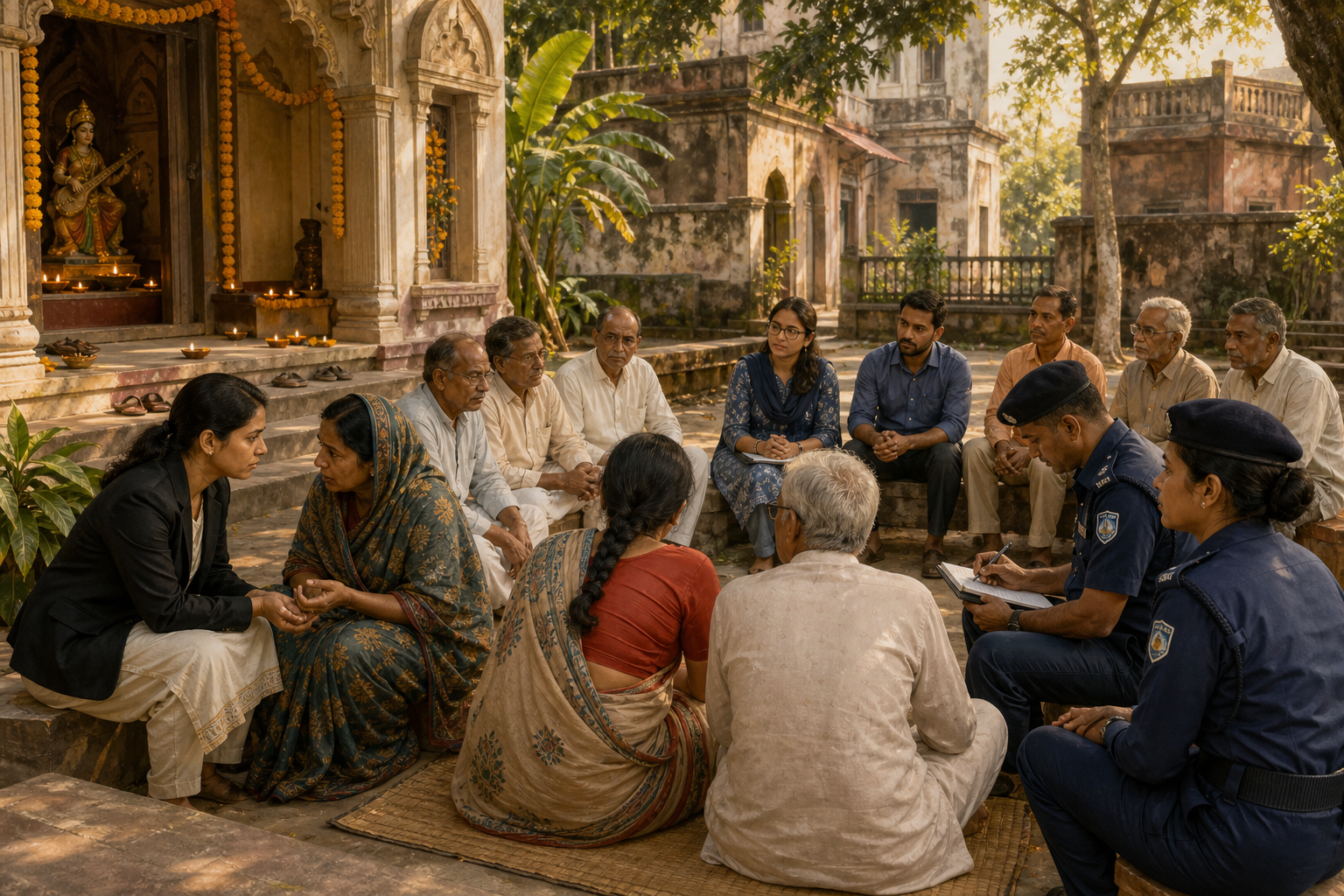
Your role as a concerned citizen, journalist, community member, or diaspora advocate is not to conduct an improvised internet prosecution. It is to preserve trustworthy information, protect people at risk, and make the official process difficult to abandon quietly.
If you possess video, photographs, or messages
- Keep the original file and device intact where safely possible. Make a separate working copy before cropping, compressing, adding captions, or changing metadata.
- Record how and when the material came into your possession. Separate what you personally observed from what another person told you.
- Do not publish a vulnerable witness’s identity, location, or contact details. Public exposure can invite intimidation and may compromise an investigation.
- Do not label a person guilty on the strength of an unclear image or an unverified social-media claim. Record the material as an allegation or identification lead until competent authorities and a court establish more.
- Transfer sensitive material through a lawful channel and keep a record of that transfer. A qualified local lawyer can advise on privacy, admissibility, and disclosure rules before public release.
If someone is in immediate danger, do not approach or confront a crowd to obtain more footage. Move to safety and contact the appropriate local emergency or law-enforcement authorities. Documentation matters, but no recording is worth another life.
Maintain a public case ledger
A simple ledger prevents the news cycle from resetting the case to zero. Give each procedural event its own entry and record:
- the victim’s correctly verified name and the location of the incident;
- the official case identifier, if publicly disclosed;
- the date and nature of each announced procedural milestone;
- the status of every claim: alleged, officially confirmed, charged, adjudicated, or unresolved;
- a link or citation for the information;
- the unanswered question and the date of the most recent request for an update.
Ask authorities for the present investigation or prosecution stage, the status of disclosed charges, the reason for material delay, the arrangements for witness safety, and the next publicly reportable milestone. Do not demand raw evidence or protected names. If an authority does not answer, record the absence of an answer instead of filling the gap with speculation.
Make ahimsa operational, not decorative
A pro-Hindu response need not assign collective guilt to Muslims. The alleged perpetrators, the officials responsible for the case, and Bangladesh’s wider Muslim population are not interchangeable categories. Confusing them weakens legal claims, fuels retaliation, and can place already vulnerable Hindus at greater risk.
Hindu, Buddhist, Jain, and Sikh organizations can put ahimsa, compassion, and lawful redress into practice while working with Muslim community leaders who affirm equal civic protection. A local early-warning network can verify threats before broadcasting them, warn vulnerable homes and religious sites through private channels, contact lawful authorities, preserve evidence, and counter dangerous rumors. It should explicitly prohibit vigilantism, weapons, confrontation, and public identification based on unverified claims.
Ahimsa does not require silence in the face of murder. It requires disciplined action that prevents another victim while keeping the demand for punishment tied to truth and law. Choose one case you are following, build its ledger, request the missing milestones, and stay with it through final disposition. That is how the demand for justice for Dipu Chandra Das can become a durable standard of equal protection rather than a moment of attention.
References
