
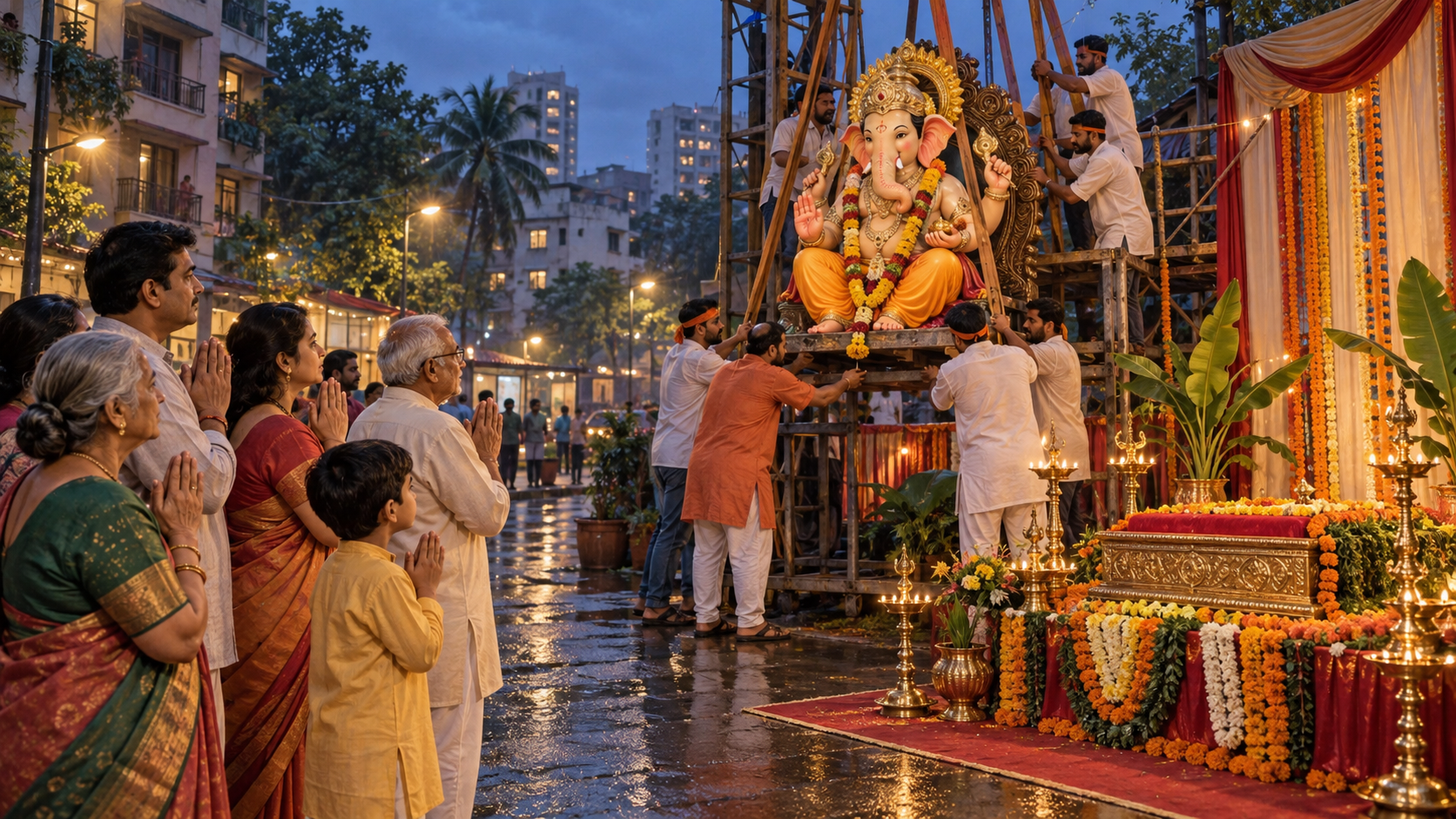
If you saw the Mulund video and wondered how a devotee should respond, the soundest course is neither silence nor a social-media pile-on. Object clearly, ask for a specific correction, and keep your conduct consistent with the dignity you are defending.
The controversy began with a viral video showing a Shri Ganesh idol mounted on a selfie stick in Mulund, Mumbai. Devotees expressed outrage, and organisers were urged to replace the presentation immediately. That establishes a serious devotional concern. It does not establish every allegation that might gather around a viral clip.
Separate the visible problem from unproven intent
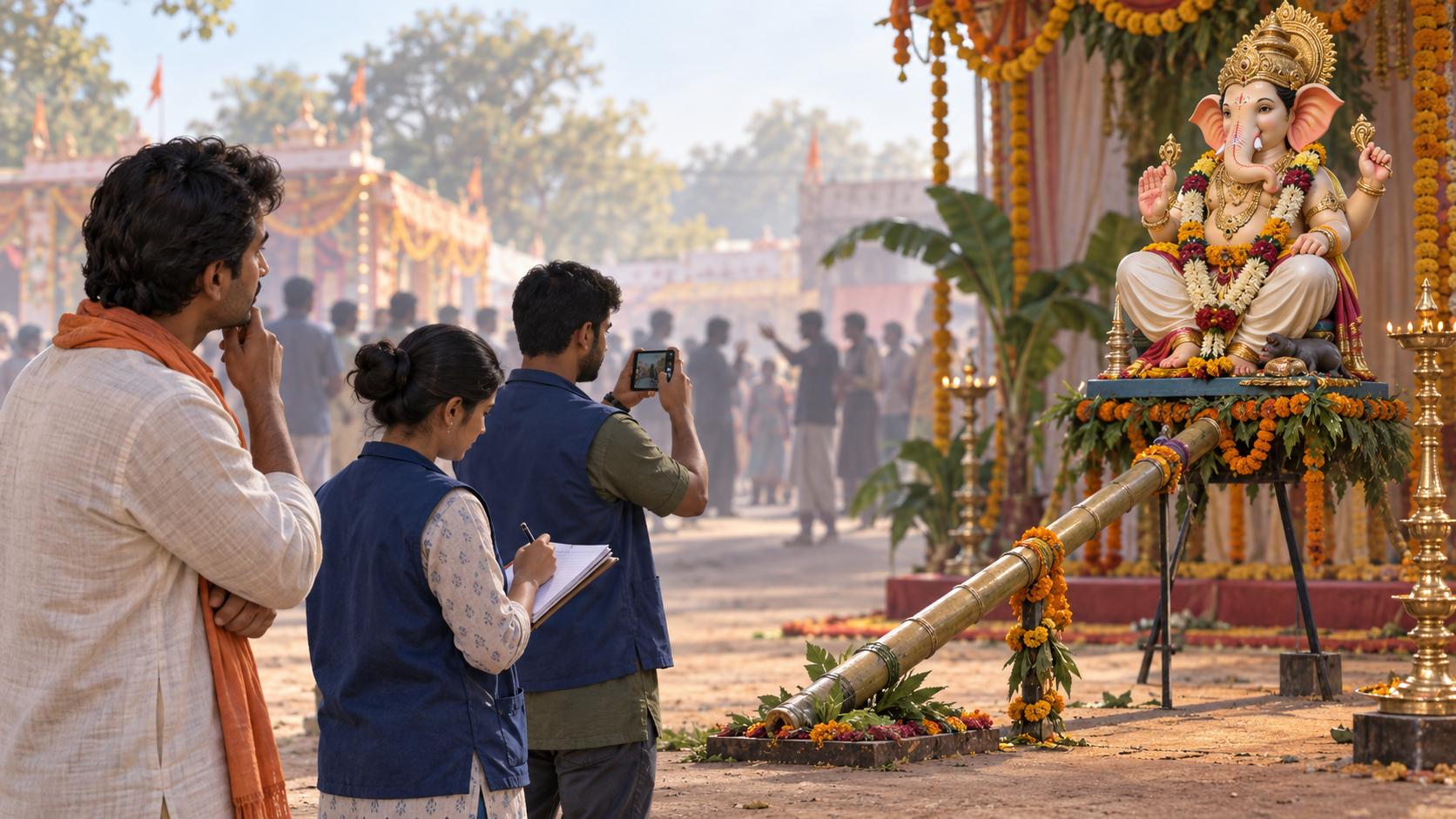
The visible issue is specific: a revered deity was presented on an object associated with casual self-photography and social-media novelty. The resulting objection is also specific: devotees experienced that combination as denigrating Shri Ganesh.
The organisers’ intention, approval chain, explanation and present response remain unestablished. You should therefore keep three judgments separate:
- What was depicted: describe only what the clearest available footage actually shows.
- What devotional effect it had: explain why the presentation was experienced as disrespectful.
- What someone intended: do not allege deliberate hatred, mockery or malice without evidence.
This distinction does not weaken the objection. A person can create an offensive presentation without setting out to offend. Conversely, sincere intent cannot by itself make every representation appropriate. The effect deserves correction even while motive remains uncertain.
Use the word denigration for the treatment or presentation you can identify. Do not automatically turn it into a claim about the character of every artist, worker, sponsor or organiser involved. Precision protects both truth and credibility.
Why this is not merely a dispute about artistic taste
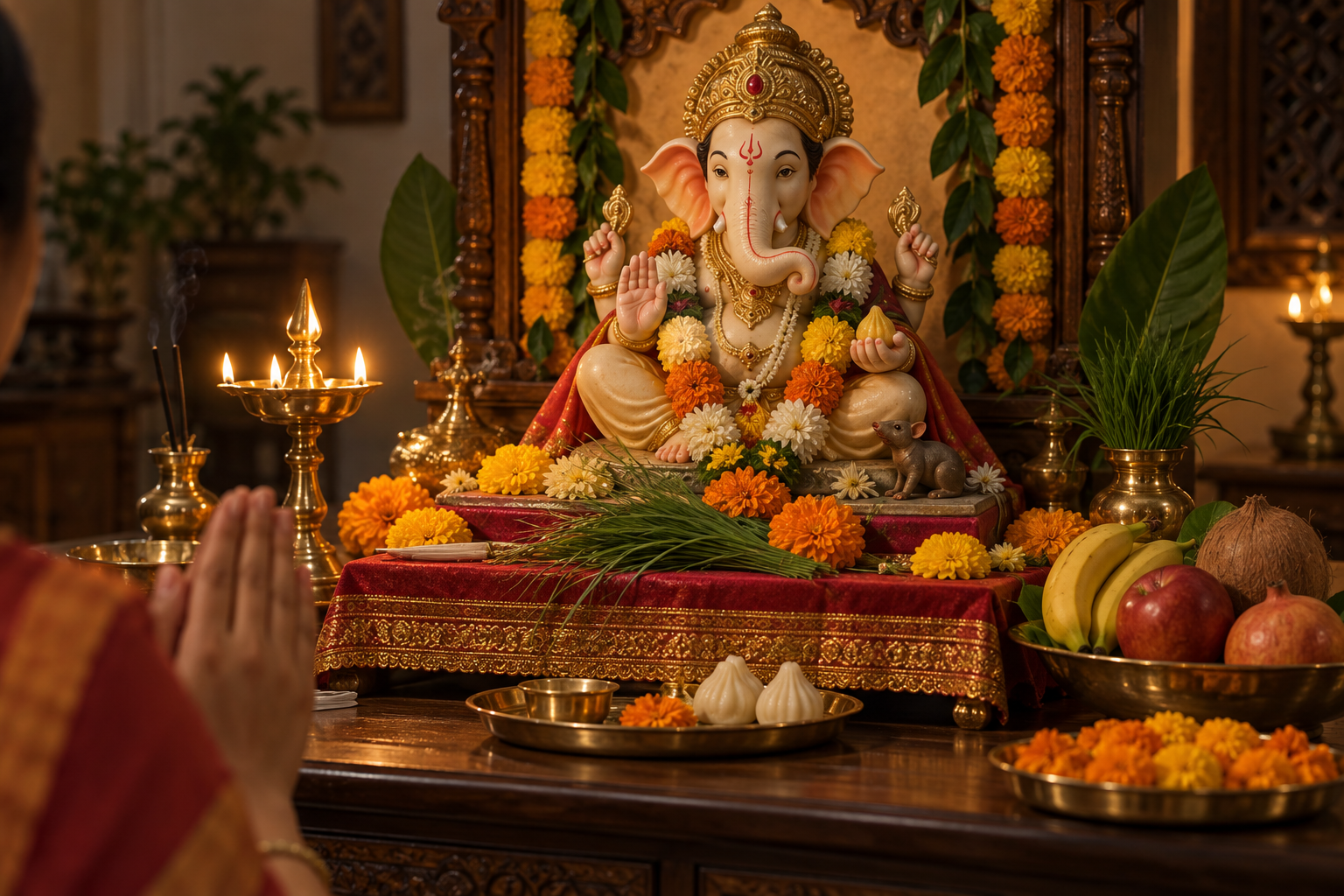
For a devotee approaching Shri Ganesh through puja, darshan or remembrance, the murti is not a neutral mascot. The sacred form carries a devotional relationship. Public representations therefore enter a living religious context whether or not their creators intended formal worship.
That does not prohibit innovation. Materials, scale, setting and visual style can change while reverence remains unmistakable. The useful test is not old versus new. It is whether the innovation serves the sacred presence or turns that presence into an accessory for an unrelated novelty.
A camera, phone or digital medium is not inherently hostile to dharma. Technology can help devotees see and share darshan. The boundary is crossed when the deity appears subordinate to the gadget, joke or visual gimmick. In this case, the selfie-stick framing is the centre of the objection because it risks converting Shri Ganesh from the revered subject of the display into a prop within a casual-media motif.
When judging a proposed display, ask:
- Is the deity visibly the revered centre of the composition, or an attachment to something else?
- Does the novelty depend on placing the sacred form in an incongruous or belittling position?
- Would a devotee understand the reverential intention without needing an elaborate explanation?
- Does the presentation invite darshan and reflection, or primarily invite amusement and content creation?
These questions give organisers a usable standard. They also let devotees explain the problem without making the empty claim that every unconventional image is automatically insulting.
How you can object firmly without losing credibility
A disciplined response makes correction more likely and prevents the controversy from becoming a vehicle for misinformation or abuse.
- Verify the display before naming people. Find the original upload or the longest available version. Confirm the location, identify the responsible organising body through a public channel, and check whether the display is still present. A venue owner, artist, contractor, sponsor and organiser may have different responsibilities.
- Preserve the relevant evidence. Save the public URL and a clear image of the disputed presentation. Preserve context as well as the offending frame. Do not circulate private phone numbers, residential addresses or personal information.
- Describe the objection precisely. Say that mounting the Shri Ganesh idol on a selfie stick makes a revered form appear like a novelty prop. Avoid unrelated political allegations or claims about motive that the footage cannot prove.
- Request a concrete remedy. Ask the organisers to remove or replace the presentation, handle the idol respectfully and publish a brief update confirming the correction. A demand that can be fulfilled is more effective than a general expression of anger.
- Use public escalation proportionately. If a verified organiser does not respond, publish the factual description, the public evidence and the requested remedy. Do not threaten, vandalise, encourage harassment or direct abuse at individual workers.
- Acknowledge a verified correction. If the display is replaced, report that development as visibly as you reported the objection. Continuing a pile-on after the requested remedy has been completed changes cultural advocacy into punishment.
A concise message you can adapt: Namaskar. The Mulund presentation showing Shri Ganesh mounted on a selfie stick is being experienced by devotees as disrespectful because it makes a sacred form appear to be a novelty prop. Please remove or replace the presentation, ensure that the idol is handled respectfully, and issue a brief public update confirming the correction. We are requesting a remedy, not a confrontation.
Send that message through a verified public contact point. If responsibility is uncertain, ask who approved or manages the display instead of selecting a target from an unverified social-media claim.
What responsible repair by the organisers should include
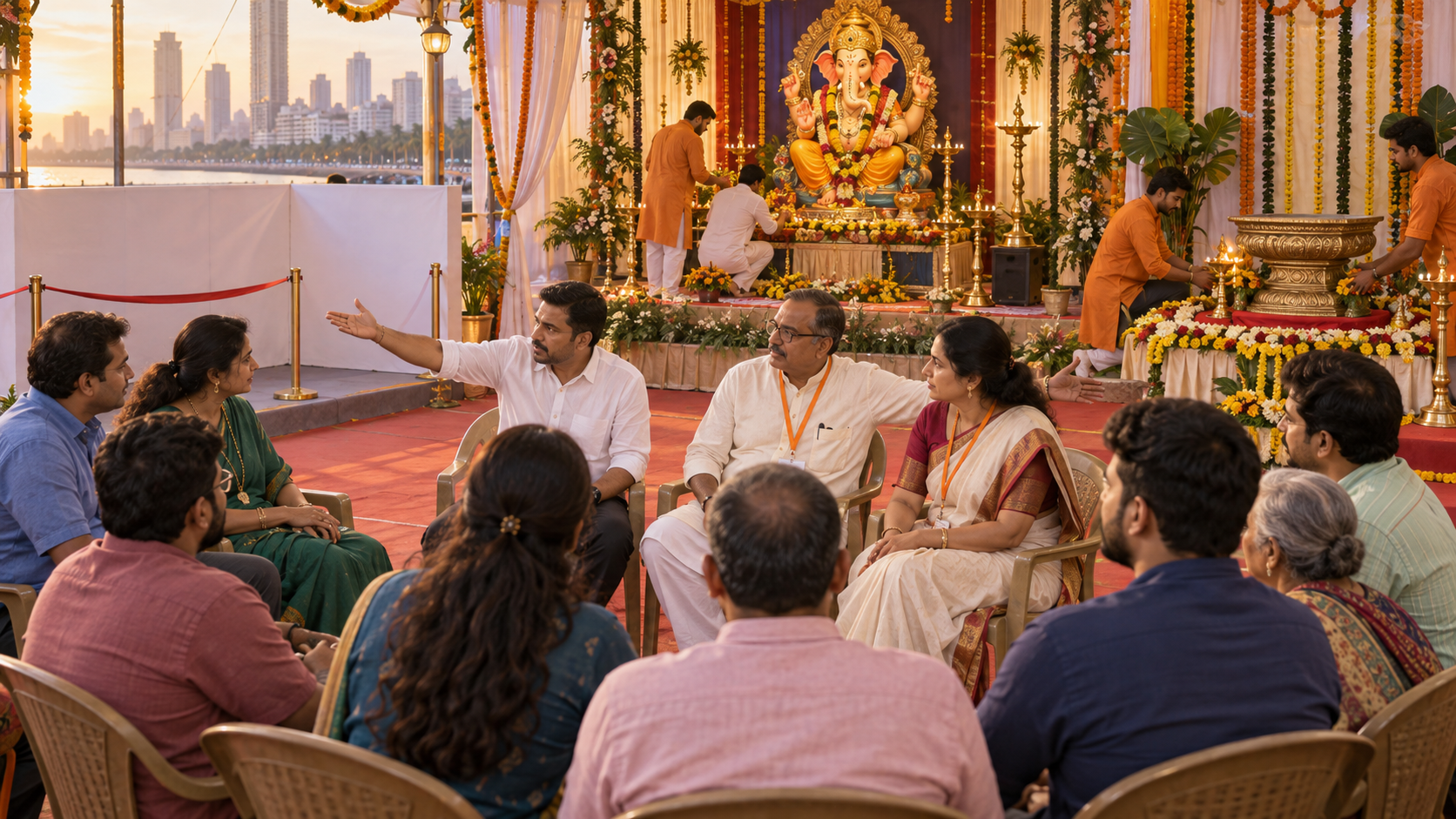
If the presentation remains in place, the first step is straightforward: replace it. Debate about whether offence was intended should not delay correction of a display that has already caused a clear devotional objection.
Removal must still respect the idol. If it was ritually installed or consecrated, organisers should consult the officiating priest and follow the applicable sampradaya or local ritual procedure before moving, altering or disposing of it. An attempt to solve a public-relations problem should not create a second act of disregard.
Responsible repair has several visible parts:
- Correct the display: remove the disputed arrangement and replace it with a presentation that keeps Shri Ganesh as the revered centre.
- Show that the correction occurred: publish an updated image or notice through the same public channel that promoted the display.
- Acknowledge the actual concern: state that devotees objected to the selfie-stick presentation and that it has been changed. Avoid the evasive phrase, if anyone was offended.
- Review future concepts before installation: give someone familiar with the relevant devotional tradition authority to stop or revise a concept before fabrication and publicity.
- Keep the response proportionate: correcting the display and improving review are more useful than staging a defensive argument or searching for someone to humiliate.
A suitable update after the work is complete would be: We understand devotees’ objection to the presentation of Shri Ganesh on a selfie stick. The display has been replaced, the idol has been handled respectfully, and future concepts will receive a cultural and devotional review before installation.
This wording does not require organisers to confess a malicious intention they may deny. It identifies the disputed act, confirms the remedy and creates accountability for the future.
The proper measure of a cultural campaign is not how many strangers it can enrage. Success means that the denigrating presentation is corrected, the sacred object is treated properly, the public record reflects the correction and a preventable mistake is less likely to recur.
Key takeaways
- The established controversy concerns a Shri Ganesh idol shown on a selfie stick in Mulund and the devotional outrage that followed.
- You can condemn the presentation without claiming unproven malicious intent.
- The immediate remedy is removal or replacement, respectful handling of the idol and public confirmation of the correction.
- Effective advocacy uses verified evidence, a precise complaint and a remedy the responsible organiser can implement.
- Threats, doxxing, vandalism and continuing harassment after a correction undermine the dharmic dignity being defended.
If you act on this controversy, begin with one precise message to the verified organiser and one clear request for correction. Defending Shri Ganesh should restore maryada, or sacred dignity, in both the display and the conduct surrounding it.
References

Leave a Reply
You must be logged in to post a comment.