
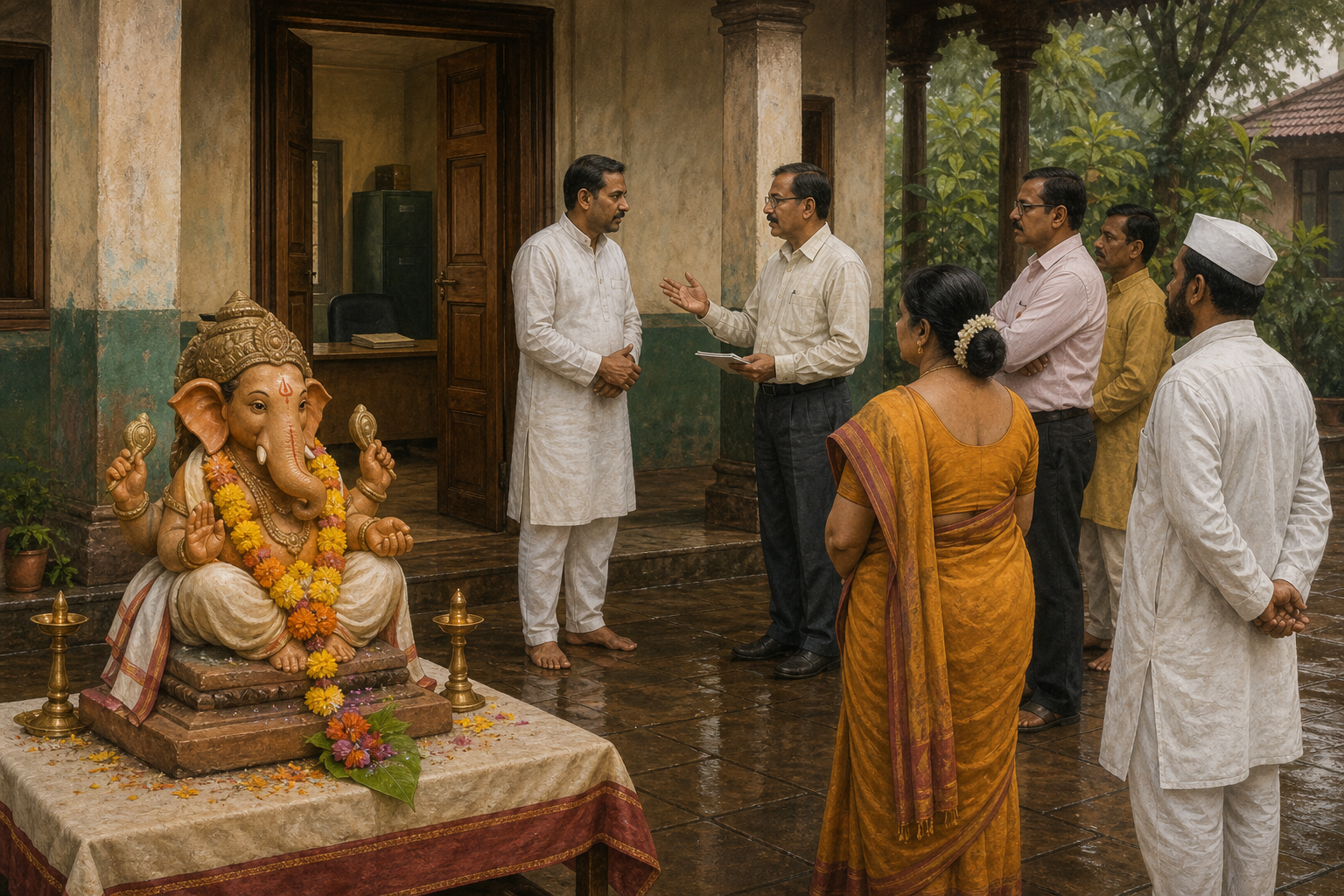
If you have seen claims that Kolhapur Zilla Parishad has banned Ganeshotsav, pause before you sign, share, or accuse an official. A Hindu organisation has raised a serious cultural grievance, but the administration’s decision, reasons, and proposed alternatives are not yet part of the information available to us.
That gap should sharpen the response, not weaken it. A Hindu observance described as a 22-year tradition inside a public institution should not be ended casually. Devotees now need a precise civic campaign: obtain the decision in writing, test it against consistent rules, and press for an arrangement that preserves the Ganeshotsav while addressing any genuine administrative concern.
What is known, and what still has to be established
Hindu Janajagruti Samiti has submitted a memorandum to the district administration seeking revocation of a decision affecting the Ganeshotsav in the Kolhapur Zilla Parishad administrative building. The organisation describes the observance as a 22-year tradition and the decision as abrupt. That establishes a real protest, a specific location, and a clear demand for reversal.
It does not settle the administration’s side of the dispute. We cannot verify from the information available here what was ordered, who issued the decision, when it took effect, which activities it covers, or what reason was recorded. There is also no administrative response before us.
The missing scope is especially important. A decision affecting installation of a murti, access to one part of the building, the timing of rituals, or the entire celebration would create different problems and require different remedies. Until the written order is available, it is more accurate to call this a reported decision to stop the observance than to present every possible meaning of a permanent ban as established fact.
- Ask for the exact order, circular, note, or recorded instruction.
- Identify the official or authority that approved it and the date on which it was approved.
- Determine whether it applies only to the forthcoming observance or creates an ongoing policy.
- Establish which ceremonies, spaces, timings, and participants are actually affected.
- Seek the administration’s written reasons rather than attributing a motive that has not been documented.
This discipline is not timidity. It prevents an avoidable argument over rumours and directs public attention to the decision that officials must defend.
Why the claimed 22-year continuity matters
Long continuity does not exempt an activity from every rule governing a shared administrative building. It does, however, create a strong expectation of explanation. If a practice has been accommodated for 22 years, officials should be able to identify what has changed, why the earlier arrangement is no longer workable, and why a narrower adjustment would not solve the problem.
The strongest pro-Dharmic case is not a demand for unexplained privilege. It is a demand that a living Hindu tradition receive fair, consistent, and proportionate treatment. Three tests help you judge the decision:
- Necessity: What concrete administrative objective requires a change? A vague reference to inconvenience is not equivalent to an identified concern.
- Consistency: Is the same written rule applied in the same manner to comparable cultural or religious activities in the institution? Do not assume unequal treatment; ask for the policy that would reveal it.
- Accommodation: If the stated concern involves access, working hours, noise, safety, expenditure, or use of space, could a limited change address it without cancelling the observance?
These tests keep cultural advocacy grounded. They recognise that a public building has operational needs while placing the burden on decision-makers to explain why an established tradition cannot continue with reasonable safeguards.
The questions Kolhapur’s administration should answer
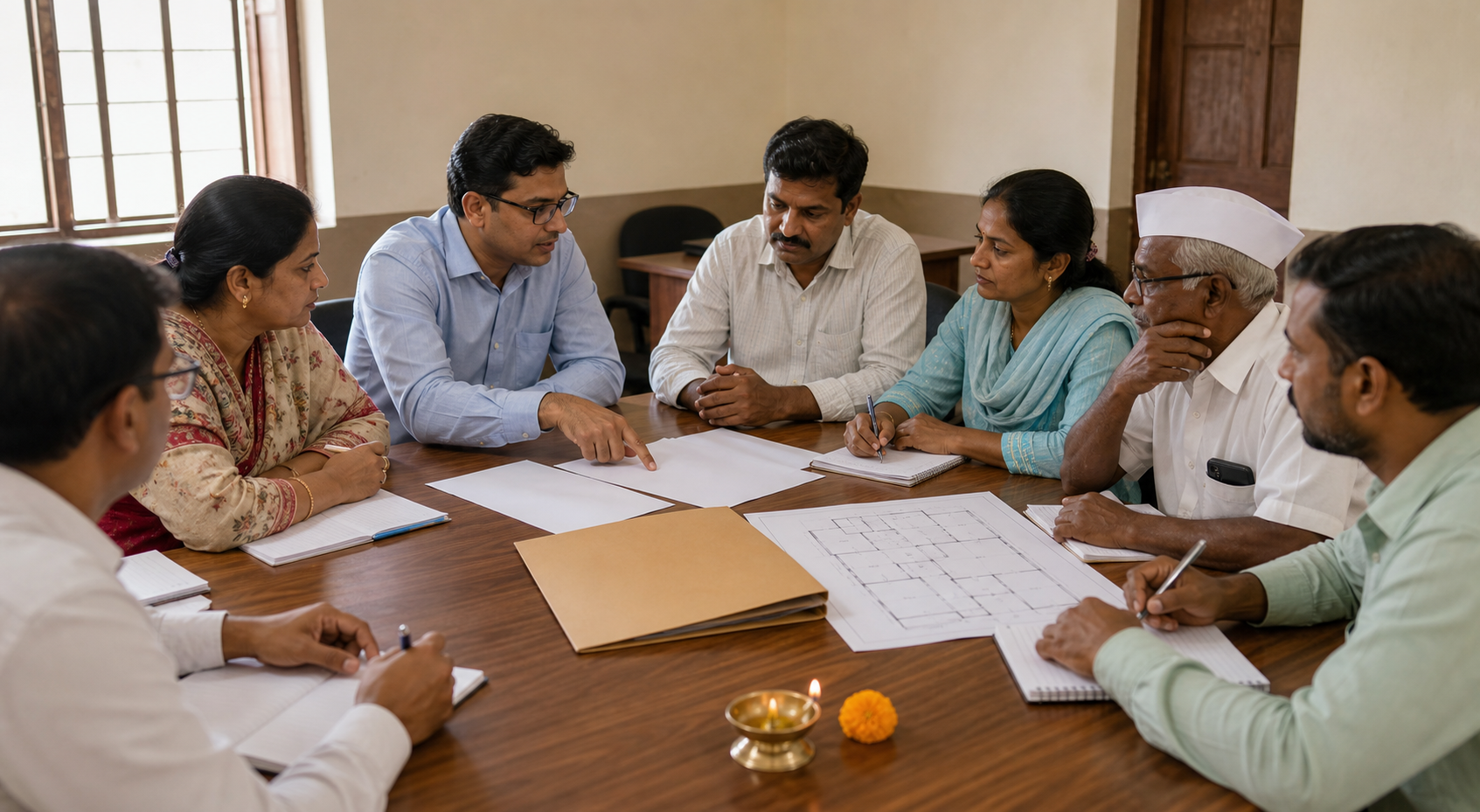
A single focused representation is more useful than many messages containing different accusations. It should request documents and answers in a form that can be checked later. Ask for:
- An authenticated copy of the decision, including its date and issuing authority.
- The precise Ganeshotsav activities and parts of the administrative building covered by it.
- The rule, circular, policy, or recorded administrative concern on which the decision rests.
- An explanation of what changed after the tradition had allegedly continued for 22 years.
- Details of any consultation with the people who organise or participate in the observance.
- The alternatives considered before stopping the tradition.
- Clarification on whether the restriction is temporary, event-specific, or indefinite.
- A dated written response to the memorandum already submitted.
Ask for copies, not second-hand summaries. If the administration has a legitimate and specific concern, a written explanation will make accommodation easier. If the rule is unclear, unsupported, or inconsistently applied, the same record will expose the weakness without the need for speculation.
Handle the resulting documents responsibly. Share the portions needed to explain the decision, but do not circulate private contact details or target individual employees. The dispute concerns an institutional act. Keeping the focus there makes the campaign harder to dismiss as personal intimidation.
How devotees can respond without weakening their case
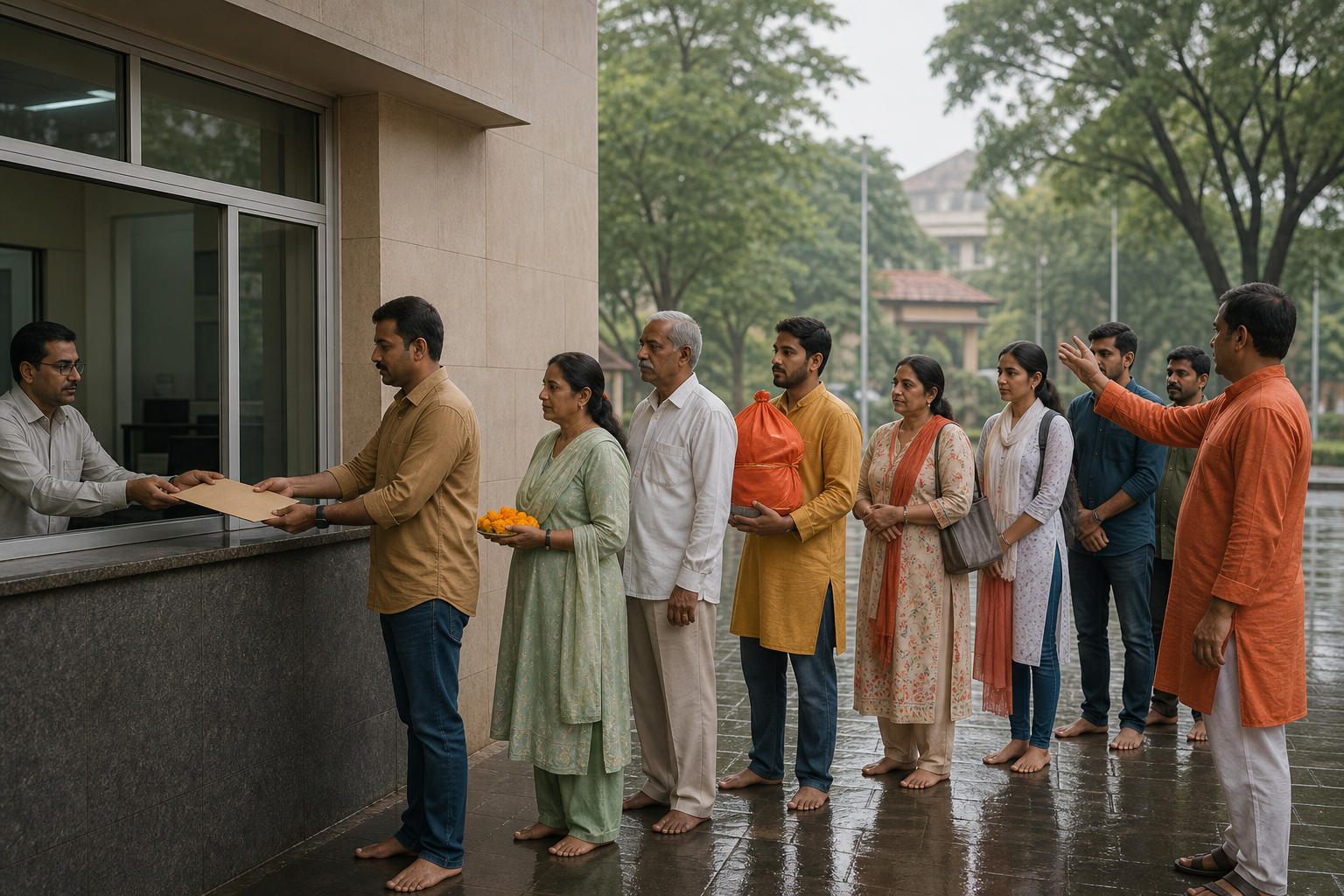
If you want the Ganeshotsav restored, the order of action matters. Public anger before document collection can lock both sides into positions. A factual record leaves room for the administration to reverse, clarify, or modify its decision without turning the resolution into a contest of prestige.
- Obtain the decision. Ask anyone circulating the claim whether they have the original order or a verified copy. A poster, forwarded message, or verbal account is not a substitute.
- Create one factual brief. State only that an organisation has objected, that it describes the observance as 22 years old, that it has sought revocation, and that the official rationale remains to be obtained.
- Submit a concise follow-up. Send it to the district administration and the office responsible for the decision. Retain the dated acknowledgement or receipt.
- Use a small, representative delegation. Include people directly connected with the observance who can explain its usual arrangements and respond to practical concerns.
- Offer conditional accommodations. Depending on the reason actually given, these might concern a designated area, limited timing, unobstructed access, safety arrangements, or separation from public expenditure. Do not concede an unidentified problem; match each proposal to a stated concern.
- Request a meeting and a written reply. Record what was proposed and which points remain unresolved. Oral reassurance should be followed by written confirmation.
- Keep public action peaceful and accurate. Do not obstruct the functioning of the Zilla Parishad, threaten staff, or claim religious hostility without evidence. If legal violations are later alleged, obtain advice from a qualified local professional before making assertions about particular officials.
Suggested wording: We request a copy of the decision affecting the Ganeshotsav in the Kolhapur Zilla Parishad administrative building, the reasons and applicable rule, and a meeting to consider continuation of the observance with reasonable safeguards. Please provide a dated written response.
This wording does three useful things at once. It preserves the demand for continuation, requires the administration to disclose its basis, and offers a path to resolution without accepting that cancellation is necessary.
Key takeaways for a fair resolution
- The established development is the submission of a memorandum seeking revocation; the administration’s order and reasoning still need to be placed on record.
- The claimed 22-year history gives the observance substantial cultural weight and makes a reasoned explanation necessary.
- Devotees should test the decision for necessity, consistency, and the availability of a narrower accommodation.
- A fair outcome should favour continuity unless the administration identifies a concrete concern that cannot be resolved through proportionate safeguards.
- Every public claim should distinguish a verified fact, the protesting organisation’s position, and a question that remains unanswered.
A fair resolution need not be reduced to a choice between an unchanged programme and a total prohibition. If no substantial concern is documented, the observance should be restored. If a genuine operational issue exists, the administration and organisers should adopt the narrowest workable safeguard. If officials still refuse permission, they should give specific written reasons and identify the consistently applied rule behind the refusal.
If you want to help now, begin with the missing document. Support reconsideration of the decision, ask for a dated administrative response, and share only what the record can sustain. That is how concern for a Hindu tradition becomes effective cultural advocacy rather than a brief cycle of outrage.
References
