
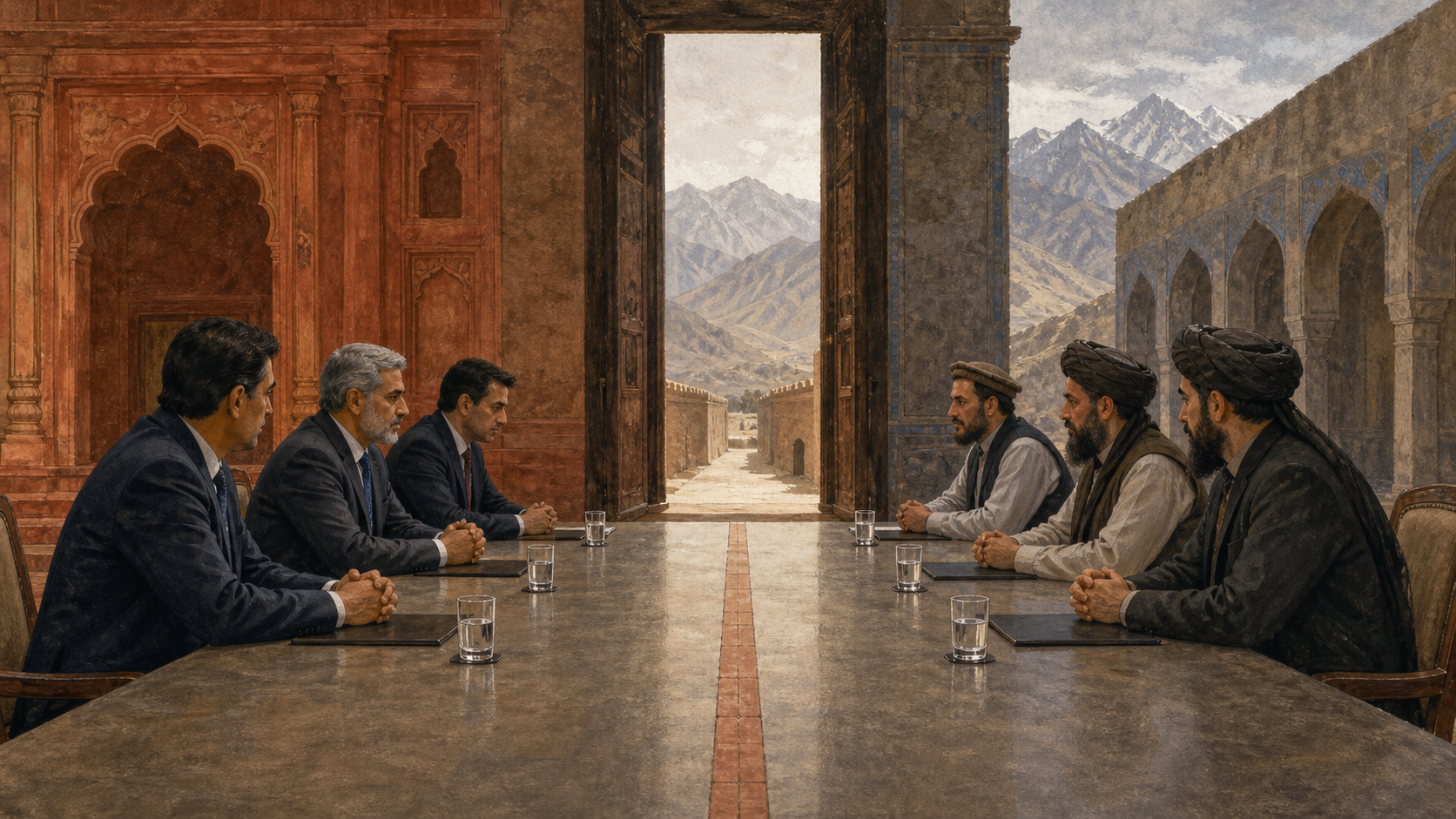
If you are trying to decide whether India’s outreach to the Taliban is strategic maturity or moral surrender, do not begin with the handshakes. Ask what India can now accomplish in Afghanistan, what the Taliban receives in return, and whether each concession is tied to a result that can be verified.
That test cuts through both easy narratives. Refusing all contact can sacrifice security visibility, humanitarian access, and Indian influence. Normalizing the Taliban without conditions can reward repression while producing little for India or vulnerable Afghans. The responsible position is engagement with memory, leverage, and enforceable limits.
The reset changes India’s access, not the Taliban’s record
In October 2025, External Affairs Minister S. Jaishankar announced that India would upgrade its technical mission in Kabul to a full embassy, rebuilding a diplomatic presence curtailed after the Taliban returned to power in 2021. Taliban Foreign Minister Amir Khan Muttaqi then visited New Delhi for senior-level meetings and indicated that Afghanistan would post diplomats in India.
This is more than a consular adjustment. An embassy gives New Delhi a more durable channel for security communication, aid delivery, political assessment, and the protection of Indian interests. Receiving a Taliban minister also grants visibility and diplomatic stature to authorities seeking international acceptance. Both effects are real.
But access is not approval. An embassy does not certify that the Taliban has become moderate, representative, or trustworthy. Nor does a high-level visit, by itself, settle every question of formal recognition. You should keep three distinctions clear when reading any announcement about the reset:
- Contact tells you that a channel exists; it does not tell you what India obtained through it.
- An assurance tells you what the Taliban wants India to believe; it does not prove implementation.
- A pilot concession in one place does not establish a durable nationwide change.
The reset should therefore be judged as an instrument. If the instrument improves Indian security, keeps humanitarian routes open, protects threatened communities, and extracts limited but measurable improvements, it has value. If it supplies legitimacy while abuses continue unchanged, the problem is not dialogue itself. The problem is dialogue without leverage.
Why New Delhi has sound reasons to maintain a channel
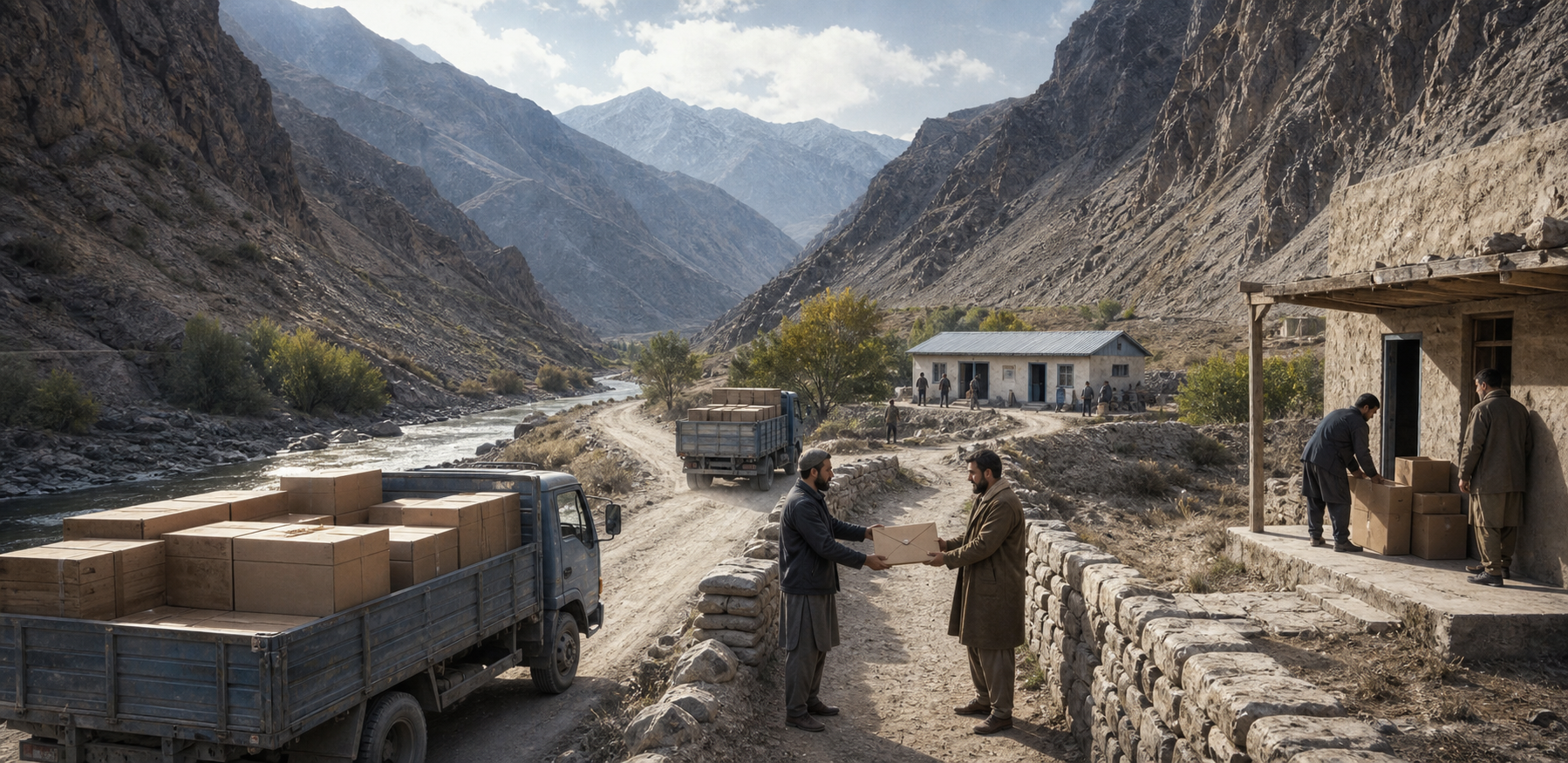
India cannot make Afghanistan disappear by refusing to speak to its rulers. The country remains part of India’s extended security environment, a field of competition with Pakistan, a potential route into Central Asia, and the home of Afghans whose relationship with Bharat predates the current regime. Diplomatic absence would not isolate the Taliban completely. It would more likely leave other powers with greater room to define the country’s external relationships.
Security is the most immediate reason for direct contact. A functioning channel lets India state red lines, seek information, test assurances, and raise concerns about extremist activity that could affect Kashmir or Central Asia. None of this requires trusting the Taliban. In fact, a channel is most necessary when trust is absent. The measure of success is not the warmth of the meeting but whether communication produces usable cooperation and earlier warning.
Strategic balance matters as well. Engagement can prevent Pakistan from enjoying uncontested influence in Kabul and preserve India’s long-standing equities in Afghanistan. That does not make the Taliban an Indian ally. It means New Delhi is declining to outsource its understanding of Afghanistan to a rival or to conduct policy entirely through third parties.
Humanitarian access supplies a separate and morally serious case. Diplomatic staff can help organize food and medical assistance, support scholarships, handle travel problems, and maintain contact with Afghans who have ties to India. Cutting the Taliban off and cutting ordinary Afghans off are not the same policy. India should design its engagement so that pressure falls on the authorities responsible for repression, not indiscriminately on people already living under it.
There is also an economic argument, but it needs discipline. Chabahar Port can support Indian access toward Afghanistan, while the possibility of cooperation involving Afghan lithium and rare-earth resources may matter to India’s supply-chain strategy. These are strategic possibilities rather than completed gains. A memorandum, exploratory discussion, or resource estimate should not be described as a functioning corridor or a secure supply chain. Commercial access is valuable only when the route, terms, security, and continuity are credible.
These interests justify engagement. They do not justify giving away every benefit at the beginning. Diplomatic visibility, commercial opportunity, official access, and movement toward normalization are bargaining assets. India has more leverage when those assets are released in stages than when they are granted first and defended later as irreversible facts.
Dharmic memory identifies the red lines

India’s policy cannot be evaluated only through maps, ports, and intelligence files. In May 2001, the Taliban ordered Afghan Hindus to wear yellow identifying marks and place markers on their homes. The decree was not fully enforced, but that does not erase its meaning. A government had proposed distinguishing a religious minority through compulsory public identification, with an unmistakable threat behind the label.
The long collapse of Afghanistan’s Hindu and Sikh presence makes present-day assurances especially difficult to accept at face value. Communities once numbering in the tens of thousands have reportedly been reduced to mere dozens after years of intimidation, attacks, desecration, and displacement. An invitation to community leaders to return is not proof of safety. Safe return requires written protection, the ability to worship and work, monitored access to the community, a remedy when officials violate guarantees, and an exit route if protection fails.
Women present an equally direct test. During an October 11, 2025 Taliban media briefing in New Delhi, women journalists were reportedly excluded. India’s Ministry of External Affairs said the briefing had been organized independently, but the practical lesson goes beyond responsibility for that single event. When a foreign delegation appears on Indian soil through a government-facilitated visit, Indian standards of equal media access must govern the venue. Kabul’s restrictions should not receive a temporary jurisdiction inside New Delhi.
The same clarity must extend to girls’ education, women’s employment, threatened Hazaras and Christians, displaced Sikhs and Hindus, and Afghanistan’s Buddhist heritage. Systematic restrictions on women and basic freedoms cannot be treated as background noise while diplomatic ceremonies are presented as progress.
A Dharmic approach does not require India to abandon statecraft. It requires statecraft to remain answerable to dignity, pluralism, restraint, and the protection of the vulnerable. Ahimsa is not passive indifference to coercion. Applied to foreign policy, it asks whether Indian power is reducing preventable harm or merely learning to speak politely around it.
This is why the choice between realism and values is misleading. Strategic engagement that ignores predictable abuse is incomplete realism: repression produces displacement, radicalization, institutional fragility, and unreliable agreements. Moral language without a working diplomatic channel is incomplete ethics: it may preserve India’s rhetorical purity while leaving vulnerable people with fewer routes to aid or escape.
A six-part scorecard for conditional engagement

A serious policy needs more than the word “conditional.” Every condition should identify a baseline, an observable benchmark, a verifier, a review date, and a consequence if the commitment is broken. Without those five elements, conditionality is a preference rather than a mechanism.
| Policy objective | Evidence India should require | Response if evidence is absent |
|---|---|---|
| Counterterrorism and security | A regular official channel, documented follow-up on Indian concerns, and parliamentary scrutiny of sensitive cooperation through an appropriate closed process with a public summary where possible. | Do not advertise assurances as security gains; pause the next symbolic or diplomatic upgrade. |
| Protection of Hindus, Sikhs, Christians, Hazaras, and other vulnerable groups | Written guarantees, monitored access to communities and places of worship, a recorded procedure for reporting violations, and workable safe passage when protection fails. | Freeze benefits directed to the authorities and expand humanitarian, visa, or evacuation support for people at risk. |
| Girls’ education and women’s employment | Access that can be checked in the affected provinces and institutions, not an announcement or an isolated exception arranged for visitors. | Withhold the next phased incentive and state publicly which benchmark was missed. |
| Humanitarian delivery | Verified delivery of food, medicine, scholarships, and other assistance to intended recipients without discriminatory exclusion or diversion. | Change the delivery channel rather than using essential relief as a blunt bargaining weapon against civilians. |
| Media access | Equal accreditation and admission for women and men at government-facilitated events, especially those held in India. | Restructure or cancel the event rather than accepting discriminatory entry rules on Indian soil. |
| Trade, transit, and resources | Publicly described terms, rights clauses, realistic transport arrangements, and reviewable obligations before a prospective project is celebrated as a strategic success. | Keep cooperation exploratory and reversible until performance is demonstrated. |
The sequence matters. India should offer an initial channel, specify the result required for the next benefit, verify performance, and only then advance. If the Taliban reverses the change, India should be able to reverse the corresponding benefit. This is more credible than issuing a sweeping list of demands with no connection to what New Delhi is actually willing to grant or withhold.
Humanitarian relief needs special treatment within this framework. Food and medicine should not become hostages to a diplomatic dispute. Conditions should instead govern how aid is distributed, whether women and minorities can receive it, whether independent monitors can reach recipients, and whether the authorities are diverting it. Where one channel fails, India should seek another rather than abandoning civilians.
Private assurances are not enough. A Taliban representative may express willingness to welcome Hindu or Sikh leaders, relax a restriction, or cooperate against a threat. Until the commitment is written, implemented, independently checked, and sustained, it remains a diplomatic signal. India can explore it, but should not pay the full price of normalization for a promise.
Quarterly reporting by the Ministry of External Affairs would make the framework visible without requiring the publication of operational secrets. A useful report would separate six headings: security dialogue, minority protection, women and girls, humanitarian access, media freedom, and trade or transit. For each heading, it should state the previous baseline, the commitment sought, the evidence obtained, and the policy response. When details must remain classified, the ministry can disclose the existence and status of a review without exposing methods or personnel.
How to judge the next India-Taliban announcement
Diplomatic language compresses very different stages into similar-sounding headlines. “Discussed,” “assured,” “agreed,” “implemented,” and “verified” are not interchangeable verbs. When the next announcement arrives, first identify which verb the evidence actually supports.
Then look for four nouns: benchmark, verifier, date, and consequence. What observable change was requested? Who can check it? When will it be reviewed? What will India delay, modify, or withdraw if the commitment is broken? If those answers are missing, the claimed breakthrough is not yet a result.
Key takeaways
- Diplomatic contact is a tool, not a certificate of trust or moral approval.
- Security, humanitarian access, strategic balance, and connectivity give India legitimate reasons to remain present in Afghanistan.
- Taliban promises should be treated as unverified until they are written, implemented, monitored, and sustained.
- Indian soil must remain governed by Indian standards, including equal access for women journalists.
- Benefits should be phased and reversible, while essential humanitarian assistance should remain protected from indiscriminate political punishment.
- Progress should be measured by conditions experienced by Afghans and security outcomes for India, not by the seniority of a visitor or the warmth of a photograph.
You do not need to choose between cheering every meeting and demanding permanent diplomatic silence. Support the channel where it gives India access and protects Afghans. Scrutinize the terms whenever the Taliban gains legitimacy, commerce, or official visibility. Insist that each new benefit purchase an observable gain rather than another assurance.
The next phase should be simple to evaluate: more access for India, more safety for vulnerable Afghans, and no imported discrimination on Indian soil. Where those gains can be shown, engagement deserves support. Where they cannot, New Delhi should retain the channel but withhold the reward.
References
- Hindu Human Rights – India-Taliban Reset: Proven Strategies to Balance Realpolitik, Human Rights, and Security
- Reuters – India to reopen its embassy in Kabul, Indian foreign minister says
- AP News – India to upgrade Kabul mission
- Times of India – Women journalists barred from Taliban presser in New Delhi
- BBC News – Taliban orders Hindus to wear badges
- Human Rights Watch – World Report 2025: Afghanistan
