

You encounter a foreign preacher naming Siliguri and Darjeeling, asking Muslims in Assam and Tripura to contact him, and speaking of entering India. The immediate question is not whether his language is provocative. It is whether online religious outreach is developing into a cross-border network around a strategically sensitive corridor.
The responsible answer is to investigate early and conclude late. Repeated declarations of intent and attempts to make local contacts justify scrutiny. They do not yet prove physical access, an organized Indian network, coercive conversion, unlawful conduct, or operational capability. If you keep those two truths together, you can support national security without turning suspicion about individuals into an accusation against an entire community.
What makes this pattern more than ordinary online provocation

A label cannot substitute for evidence. Muslim religious advocacy, including advocacy that Hindu readers strongly oppose, is not automatically an Islamist security operation. The security question begins when a foreign actor combines repeated territorial targeting, attempts to recruit or identify contacts inside India, and a plausible route towards entry or coordinated activity.
Md Abdullah of Mymensingh, Bangladesh, reportedly had more than 184,000 Facebook followers. On 9 August, he allegedly displayed a photograph with a Hindu woman, claimed to have facilitated her conversion to Islam, and identified Darjeeling and Siliguri as the location of his next religious mission. On 11 August, he reportedly said that he was waiting for an opportunity to enter India and cross the international border while reiterating his conversion plans.
The contact-seeking is the most consequential part of the reported sequence. On 13 August, he appealed to Muslims in Assam and Tripura to contact him. The appeal reportedly received dozens of invitations from people claiming to live in the two states. On 14 August, he announced another alleged conversion, this time describing the woman as Indian.
Those conversion announcements remain the preacher’s claims. They do not independently establish the women’s identities, locations, consent, or circumstances. Nor does a welcoming comment from a self-described resident prove a continuing relationship. Both kinds of content may be propaganda intended to display influence, generate engagement, or attract further contacts. Authentication and corroboration must come before conclusions.
A 10 August message asking where beef could be found in India, accompanied by a provocative song, may understandably attract attention. It is nevertheless less probative than the stated intention to enter India and the request for contacts in particular states. Provocation can reveal posture, but it does not establish access, organization, or capability. If you are assessing risk, do not let the most inflammatory detail displace the most informative one.
The Siliguri Corridor raises the consequence, not the standard of proof
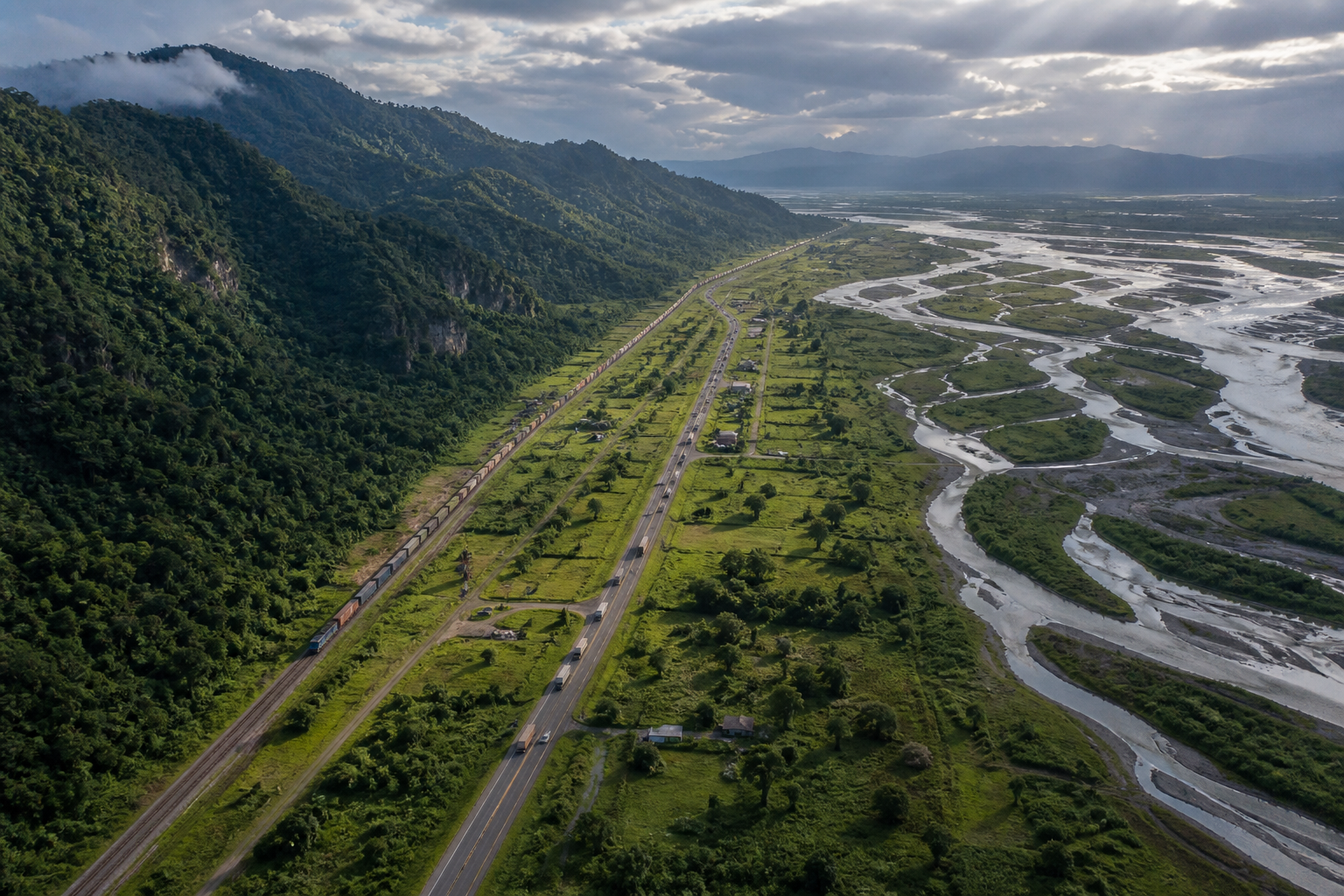
The Siliguri Corridor is the narrow land bridge connecting mainland India with the Northeast. That function makes deliberate outreach around Siliguri more consequential than an undirected appeal to an online audience. It does not make every religious message near the corridor a security threat. Strategic geography changes the possible cost of a hostile network; it must not lower the evidentiary threshold for deciding that such a network exists.
A useful assessment separates five layers that are often collapsed into one allegation:
| Risk layer | Reported signal | What still requires proof |
|---|---|---|
| Intent | Repeated declarations about preaching and conversions in Siliguri and Darjeeling | Authenticity, context, and whether the speaker intends to act rather than provoke |
| Target selection | Specific references to the Siliguri-Darjeeling region, Assam, and Tripura | Why these places were chosen and whether a plan exists beyond online rhetoric |
| Network formation | A request for local contacts followed by invitations from self-described residents | Verified identities, repeated communication, assignments, coordination, or organizational ties |
| Access | A declared wish to enter India and cross the border | Travel documents, a viable route, hosts, transport, or an actual attempt to enter |
| Operational capability | A large reported audience and claims of successful conversions | Funding, logistics, local infrastructure, coercion, incitement, or other unlawful conduct |
On this test, declared intent and geographic targeting are visible in the reported material. Possible interest from local contacts is also visible. A functioning network, credible access to Indian territory, and an operational plan are not established. This is enough to open an inquiry, not enough to announce that an organized conspiracy has been proved.
The distinction matters for both security and credibility. If officials wait for every operational element to become public, they may miss the preventive window. If public figures treat every online reply as membership in a hostile network, they create noise, damage innocent people, and make genuine warning signs harder to isolate.
India’s digital border begins before anyone reaches a checkpoint

Physical entry is no longer the first stage of foreign influence. A person outside India can build an audience, test messages, identify receptive individuals, move selected conversations into private channels, and seek help with travel or local access. None of those stages proves that the next one occurred, but each can leave evidence that a lawful investigation can examine.
Follower numbers must also be read correctly. A large following measures potential distribution, not control over followers. A viral message may produce hundreds of emotional replies without creating one dependable local relationship. Investigators therefore need to move from audience size to interaction quality: repeated exchanges, migration to private communication, verified identities, material support, instructions, and offline follow-through.
A disciplined digital inquiry should proceed in this order:
- Authenticate the account. Confirm who controls it, whether the relevant content is original, and whether impersonation or alteration is possible.
- Preserve complete context. Retain the exact URL, account identifier, date, visible replies, attached media, and surrounding statements rather than relying on a cropped screenshot.
- Check language carefully. Keep the original wording and record any translation separately so that interpretation is not mistaken for a direct quotation.
- Separate engagement from relationship. A like, invitation, or supportive comment is a lead. Repeated two-way communication and coordinated action carry more evidentiary weight.
- Corroborate offline claims. Identity, residence, travel, hosting, financing, and logistical support require verification through lawful official means.
- Assess the conduct, not merely the ideology. Authorities should look for credible entry plans, deception, coercion, incitement, organized support, or another concrete security concern.
Open-source intelligence, social-media analysis, immigration information, and cross-border network analysis can support one another. They should not be treated as interchangeable. A public comment can identify a question for investigators; it cannot by itself establish the commenter’s identity, intent, or guilt.
What readers, community organizations, and authorities should do
If you encounter similar outreach online
Your most useful role is evidence preservation, not amateur surveillance. Angry forwarding expands the speaker’s reach and often strips away the context that investigators need.
- Save the direct URL, profile identifier, date, exact wording, and a full screenshot showing context. Do not edit annotations into the only copy.
- Create three separate fields in your note: what you directly observed, what the account claimed, and what you infer. For example, an appeal for Assam contacts is an observation; the existence of an Assam cell is an inference requiring proof.
- Report the specific content and conduct through the appropriate platform and police, cybercrime, border-security, or other competent official channel. Describe the location, contact request, and entry statement rather than submitting a general complaint about a religion.
- If a message indicates imminent travel, violence, coercion, or danger to an identifiable person, contact the appropriate local authorities. Do not confront the individual, arrange a meeting, or attempt to track a suspected contact yourself.
- Do not republish the photographs or personal details of alleged converts. Their identities and circumstances are unverified, and wider distribution can expose them to harassment regardless of what actually occurred.
- Do not publish names taken from a comment thread as a list of suspects. Self-reported locations can be false, accounts can be compromised, and a comment does not prove coordinated activity.
If you lead a Hindu or other community organization
Set up one secure incident log and designate one person to forward credible material to competent authorities. This prevents ten volunteers from repeatedly circulating the same screenshots while nobody preserves the original link. Record corrections too; an organization that promptly withdraws a false identification will be trusted when it raises a substantiated concern.
Support people who report coercion or deception, but do not presume that every religious conversion involved either. A conversion claim, a freely made decision, a fabricated publicity claim, and coercive conduct are four different situations. Treating them as one category can harm the very person a community intends to protect.
What a proportionate state response looks like
Authorities have a narrower and more powerful task. They can authenticate the account, assess direct and private contacts under applicable law, examine any travel or hosting arrangements, and determine whether an immigration or security ground exists before the individual reaches Indian territory. If no operational connection is found, that result matters as much as the initial warning.
The inquiry should focus on the foreign actor and verified associates, not Muslims in Assam or Tripura as a class. Invitations attributed to individual accounts cannot represent millions of citizens. Collective suspicion wastes investigative attention, encourages communal tension, and gives the foreign provocateur a larger audience than he could build alone.
Public communication should state the evidentiary level precisely: reported, authenticated, corroborated, under investigation, or established. Those words are not cosmetic caution. They tell citizens which parts of a case are facts and which remain questions.
Key takeaways
- Repeated targeting of the Siliguri-Darjeeling region, declared interest in crossing the border, and solicitation of Assam and Tripura contacts justify an official inquiry.
- The reported conduct shows intent and contact-seeking more clearly than it shows access, organization, capability, coercion, or unlawful action.
- Siliguri’s strategic importance increases the potential consequence of a hostile network, but it does not turn an allegation into proof.
- A large following and supportive comments measure reach and possible leads. They do not establish command, membership, or coordinated action.
- The public should preserve original evidence, report specific conduct, protect alleged converts’ privacy, and avoid doxxing or confrontation.
- A firm response can protect Hindu communities and national security while refusing collective blame against Indian Muslims.
If another foreign account makes a similar appeal, begin a clean incident record before the screenshot starts circulating. Preserve the original, label every inference, and send the facts to a competent channel. The first accurate report will protect Northeast India more effectively than a thousand angry forwards.
References
