
An Afghan headline about a border clash, a jihadist bombing, or a new dam can look like an isolated crisis. If you are trying to judge whether Afghanistan is becoming more dangerous for its neighbours, and what that means for Bharat, treating each event separately will usually give you the wrong answer.
Use four lenses instead: Pakistan and Pashtun nationalism, Iran and Helmand River water, the Taliban’s struggle against ISKP, and the pressure created by repressive governance. Together, they reveal whether the country is experiencing a contained dispute, a regional escalation, or the early fragmentation of Taliban rule. The named operational examples here are historical rather than a live security bulletin, so verify present conditions separately before making a travel, investment, or personal-safety decision.
Key takeaways: five signals matter more than one headline
- Pakistan cannot simply command the Afghan Taliban. Islamabad’s unsuccessful pressure on Kabul to curb the Tehreek-e-Taliban Pakistan, or TTP, shows that their former strategic alignment has become a difficult security relationship.
- The Durand Line is not merely a border-management problem. It divides Pashtun communities and carries a long history of disputed legitimacy, so fencing and territorial disputes can activate nationalism on both sides.
- The Helmand River is a security issue as well as a development issue. A dam intended to support Afghan electricity and agriculture can simultaneously threaten Iranian water and environmental interests.
- Reduced ISKP activity does not mean that ISKP has disappeared. Taliban raids and leadership losses weakened the organisation, but a lull in attacks cannot prove that its intent, recruitment opportunities, or regional ambitions have ended.
- Taliban repression can undermine Taliban security. Restrictions on women complicate humanitarian assistance, while harsh treatment of minority communities gives anti-Taliban organisations grievances they can exploit.
Pakistan faces two Afghan problems, not one
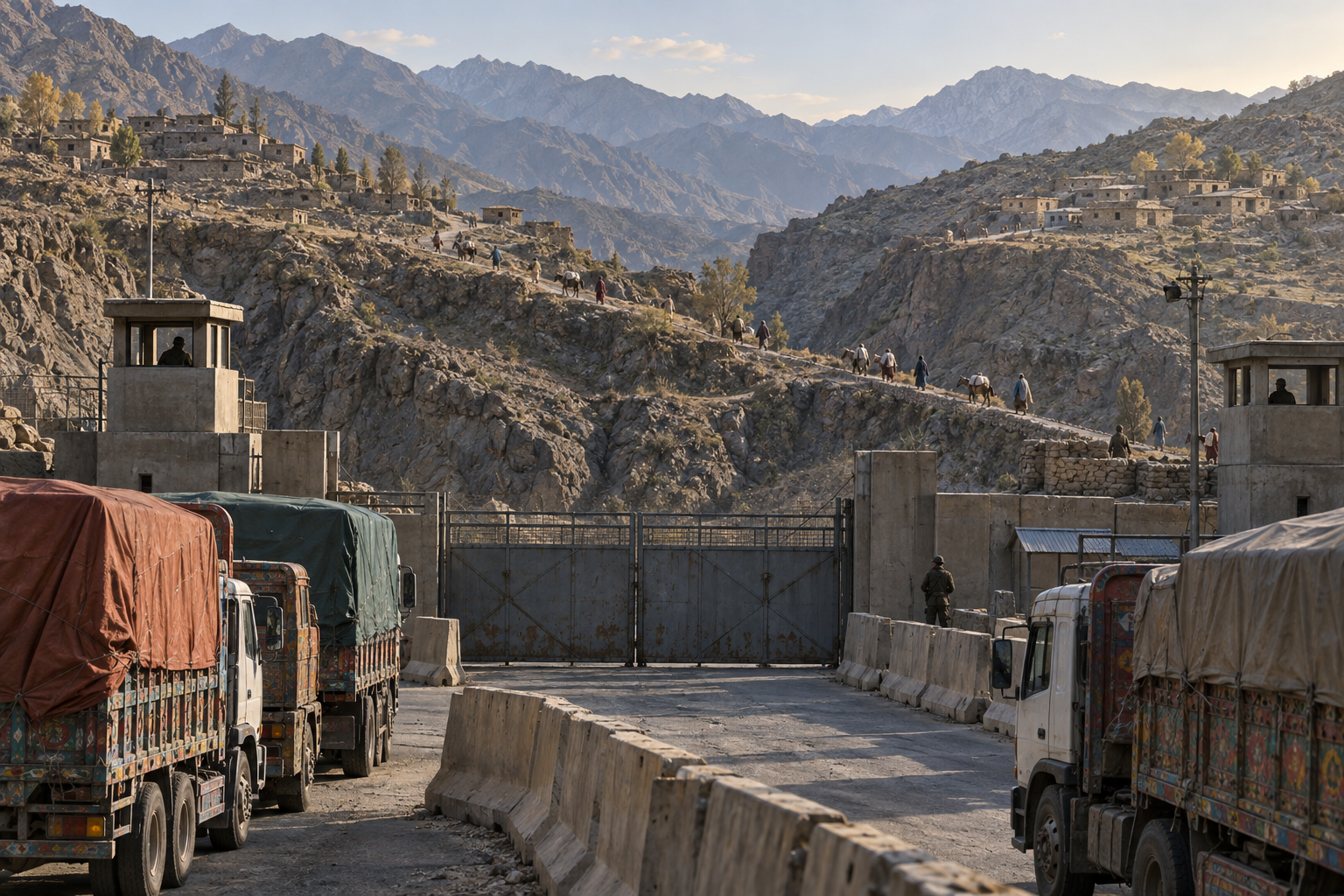
The simplest account of Taliban-Pakistan relations is also the least useful: Pakistan once treated the Taliban as part of its strategic depth, so the Taliban must remain Islamabad’s obedient partner. Events after the Taliban’s return to Kabul exposed the limits of that assumption. The Afghan Taliban resisted Pakistani pressure to restrain the TTP, even though TTP violence directly threatens Pakistan’s state and security personnel.
You should separate this conflict into two mechanisms. The first is the question of militant sanctuary. TTP members may benefit from refuge in Afghanistan, while the Taliban’s unwillingness or inability to act against them intensifies Pakistani insecurity. The second is a sovereignty and identity dispute centred on the Durand Line, the colonial-era boundary that divided Pashtun communities. No Afghan government had accepted the boundary’s legitimacy in the circumstances examined here, and Taliban rule did not remove that dispute.
These mechanisms reinforce each other. Pakistan may frame the problem as cross-border terrorism, while Afghan actors can frame Pakistani pressure or border fencing as an attack on territory and Pashtun dignity. The idea of a Greater Pashtunistan adds another layer of nationalist meaning. A security demand that looks narrow in Islamabad can therefore become a legitimacy test in Kabul.
The Tehreek-e-Jihad Pakistan, or TJP, makes attribution harder. It emerged in February 2023 and had claimed at least three attacks by the stage documented, targeting state and security personnel in Khyber Pakhtunkhwa as well as Balochistan. Some observers treated it as a possible TTP front, but that relationship was not established beyond dispute. Shared targets, Pashtun connections, or overlapping sanctuaries do not by themselves prove a single command structure.
When you assess a new Pakistan-Afghanistan incident, use this sequence:
- Name the actor. Determine whether the claim involves the Afghan Taliban, TTP, TJP, Pakistani forces, or an unidentified faction. Do not collapse them into one organisation.
- Identify the target. An attack on Pakistani security personnel signals something different from a confrontation over border fencing.
- Locate the dispute. Ask whether it concerns alleged sanctuary, control of the boundary, Pashtun nationalism, or several of these at once.
- Look for behaviour after the rhetoric. Taliban action against a militant network, continued refusal to act, new border measures, and repeated attacks carry more weight than a single accusatory statement.
This distinction prevents two common errors. A TTP or TJP attack does not automatically prove that Kabul ordered it. Yet Kabul’s continued tolerance of sanctuary, if demonstrated, would still deepen the bilateral security crisis. You do not need to choose between total Taliban control and total Taliban innocence; fragmented authority and political unwillingness can coexist.
Helmand water can become a regional security trigger
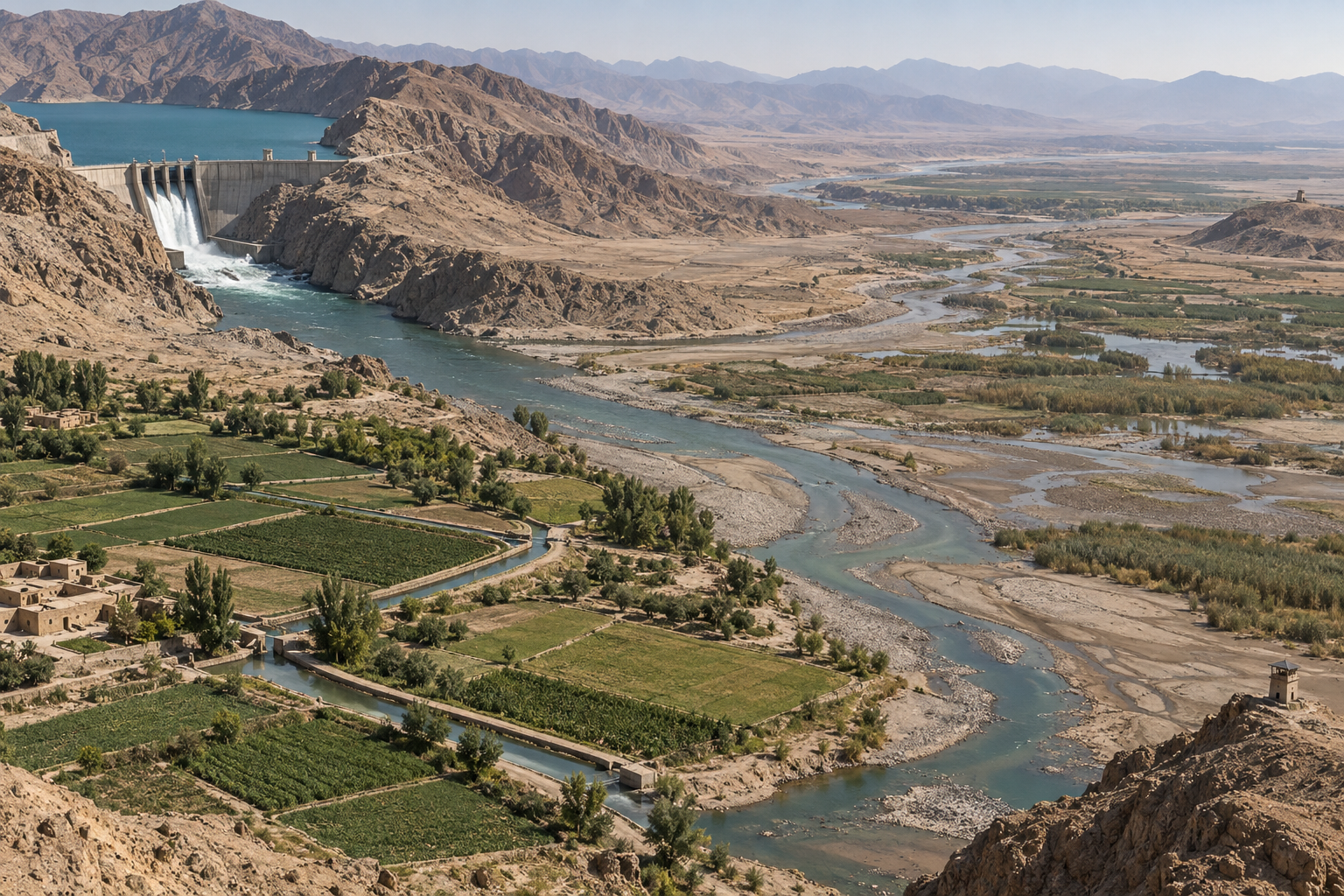
Afghanistan’s dispute with Iran follows a different logic. The two countries signed a water-sharing treaty in 1973 that guaranteed Iranian access to Helmand River water while preserving significant Afghan authority over the arrangement, including room to build a dam. The Taliban later announced plans for a Helmand dam intended to support electricity generation and agriculture. Iran feared that the project could damage water availability and environmental security in its arid southeast.
The same infrastructure can therefore carry opposite meanings. Kabul can present a dam as a sovereign development project serving Afghan farms and households. Tehran can view control of the same water as a threat to communities and ecosystems downstream. Neither side needs to abandon its stated interests for the dispute to escalate; the physical geography already puts those interests into tension.
Do not treat every hostile statement as evidence that armed conflict is imminent. Track the dispute in stages:
- Project status: Has the dam remained an announcement, or has construction materially advanced?
- Treaty status: Are the parties arguing within the 1973 framework, disputing its interpretation, or setting it aside?
- Water consequences: Is the disagreement still about anticipated harm, or are downstream effects being documented?
- Security linkage: Are water complaints being joined by troop movements, border confrontations, or other coercive measures?
For a Bharatiya reader, the practical lesson is that Afghan instability cannot be understood only through jihadist organisations and great-power rivalry. A development project can become the principal trigger when it changes control over a scarce cross-border resource. Water diplomacy, agricultural needs, and border security may be parts of the same crisis.
ISKP is degraded, but a lull is not the same as defeat
The Islamic State in Khorasan Province, or ISKP, is the Taliban’s most important jihadist rival inside Afghanistan. It rejects the Taliban’s claim to have restored nationwide security and seeks a much broader Salafi caliphate. Its strategic purpose is not merely to conduct isolated bombings. It wants to discredit and eventually overthrow the de facto government while presenting itself as the uncompromising alternative.
Its target selection has served that purpose. Attacks attributed to ISKP included the Russian Embassy in Kabul and the Kabul Longan hotel, which was frequented by Chinese visitors. A suicide bomber also struck the memorial service of Nisar Ahmad Ahmadi, the former governor of Badakhshan. Such targets let a relatively constrained organisation challenge Taliban security claims, frighten foreign stakeholders, and demonstrate access to politically sensitive spaces.
The Taliban nevertheless inflicted meaningful damage. Coordinated raids hit ISKP hideouts in Kabul, including locations in Shakardara, the home district of ISKP emir Sanaullah Ghafari, also known as Shahab al-Muhajir. The organisation also lost deputy emir Umer, known as Dr. Khalid, in May 2023. Membership losses, pressure on hideouts, fewer operations, and diminished propaganda all supported the judgement that ISKP’s regional capability had declined.
Capability, intent, and opportunity must still be assessed separately. Taliban raids can reduce capability without changing ISKP’s intent. Taliban repression can simultaneously create opportunity by generating resentment among anti-Taliban factions and communities subjected to heavy-handed rule, including Afghan Salafis. If several armed actors reopen a security vacuum, ISKP would have space to rebuild even after serious operational losses.
This gives you a better test than counting the latest attacks:
- Capability: Watch whether ISKP can protect leaders and hideouts, sustain propaganda, and conduct repeated rather than sporadic operations.
- Intent: Track whether its messaging and target choices continue to focus on overthrowing the Taliban, attacking minorities, or striking foreign interests.
- Opportunity: Look for widening anti-Taliban resentment, mistreatment of vulnerable communities, and conflict among multiple armed factions.
- Counterpressure: Ask whether Taliban raids remain coordinated and effective after prominent leadership losses, rather than assuming one successful operation settled the contest.
A single spectacular bombing proves neither nationwide ISKP resurgence nor imminent Taliban collapse. Conversely, a prolonged lull proves neither reconciliation nor eradication. The more reliable warning is movement across several dimensions at once: recovering operational tempo, renewed organisational output, successful recruitment, and weakening Taliban counterpressure.
A Bharat-centred reading needs scenarios, not slogans

The usual binary choice between a stable Taliban government and a failed Afghan state is too crude. Afghanistan can remain coercively governed while suffering persistent border, water, humanitarian, and insurgent crises. It can also contain ISKP domestically while provoking a neighbour. Use the following scenarios as diagnostic models, not predictions.
| Scenario | Signals to watch | What the pattern would mean |
|---|---|---|
| Coercive consolidation | Taliban raids keep ISKP activity reduced; disputes with Pakistan and Iran remain contained; restrictions on Afghan society continue | The regime is imposing order without becoming inclusive, internationally recognised, or institutionally secure |
| Pakistan-centred escalation | TTP or TJP attacks, sanctuary allegations, and Durand Line confrontations begin reinforcing one another | A counterterrorism dispute is becoming a broader nationalist and territorial confrontation |
| Iran water escalation | The Helmand dam advances, treaty positions harden, and water complaints become linked to coercive border behaviour | Resource control, rather than jihadist violence, is driving the immediate regional danger |
| Fragmented insurgency | ISKP restores operational tempo and recruitment while Taliban raids lose effectiveness and anti-Taliban resentment widens | The risk of a renewed multi-actor conflict and a larger security vacuum is increasing |
Three judgements follow for anyone in Bharat assessing Afghan developments.
- Engagement is not recognition. Russia and China engaged the Taliban because Afghan security and economic risks affected their interests, even while withholding diplomatic recognition. China also shares a border with Afghanistan. A meeting with Taliban officials can therefore represent risk management rather than political endorsement.
- Promises must be tested against demonstrated control. Taliban assurances that Afghan territory will not threaten other countries have to be weighed against its treatment of TTP sanctuary concerns and its sustained ability to suppress ISKP.
- Domestic repression has regional consequences. Taliban decrees limiting women’s participation in public life forced aid agencies and their state backers to reconsider humanitarian operations. When women who worked for those organisations are pushed into their homes, aid delivery becomes harder precisely when the population remains dependent on it.
One plausible interpretation of Taliban confrontations with Pakistan and Iran is that they also serve a domestic legitimacy strategy. Defending an Afghan position on the Durand Line or Helmand water can help the regime present itself as the guardian of national interests. That does not mean every dispute is manufactured. It means external defiance can strengthen an internal political narrative even when the confrontation carries genuine costs.
When the next Afghan crisis reaches your news feed, write down four things before deciding what it means: the actor, the arena, the mechanism of escalation, and the material development that would confirm the headline’s implied trend. If those elements are missing, you have an event report, not yet evidence of a regional shift. For an immediate security decision, pair this framework with current official information rather than relying on historical incidents alone.
References
- DharmaRenaissance Blog – Afghanistan’s Throes Of Instability And Conflict
