
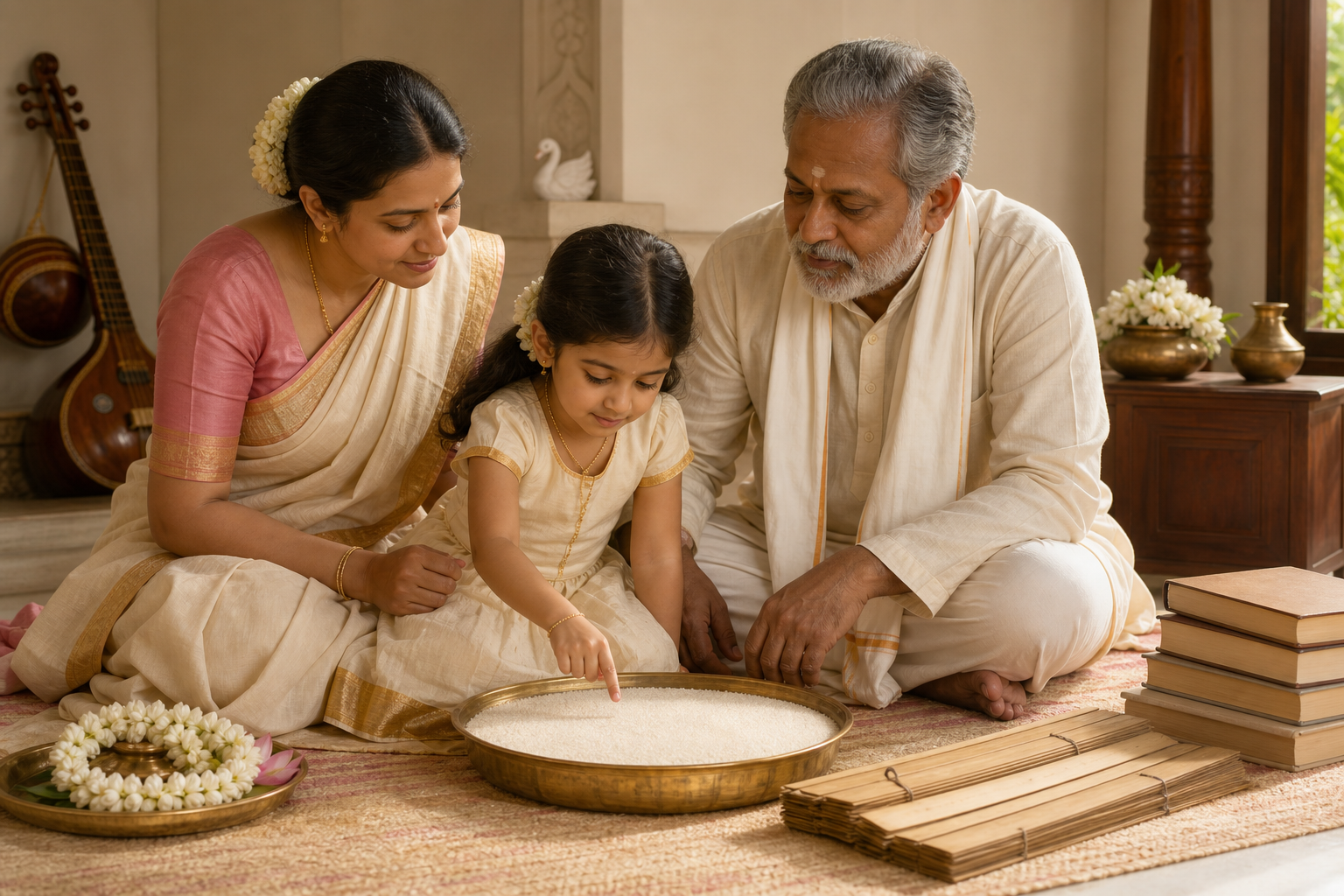
You may be choosing a temple, an auspicious day, a plate of rice, or the first letters your child will trace. The harder question comes after those arrangements: what should this beginning change when the ceremony is over?
A Saraswati-centred initiation becomes meaningful when it establishes a relationship with knowledge. The child is welcomed into study, but the adults also accept a duty: to make the home a place where questions are received patiently, speech is used responsibly, books are respected, and practice matters more than display.
The rite is a threshold, not a finish line
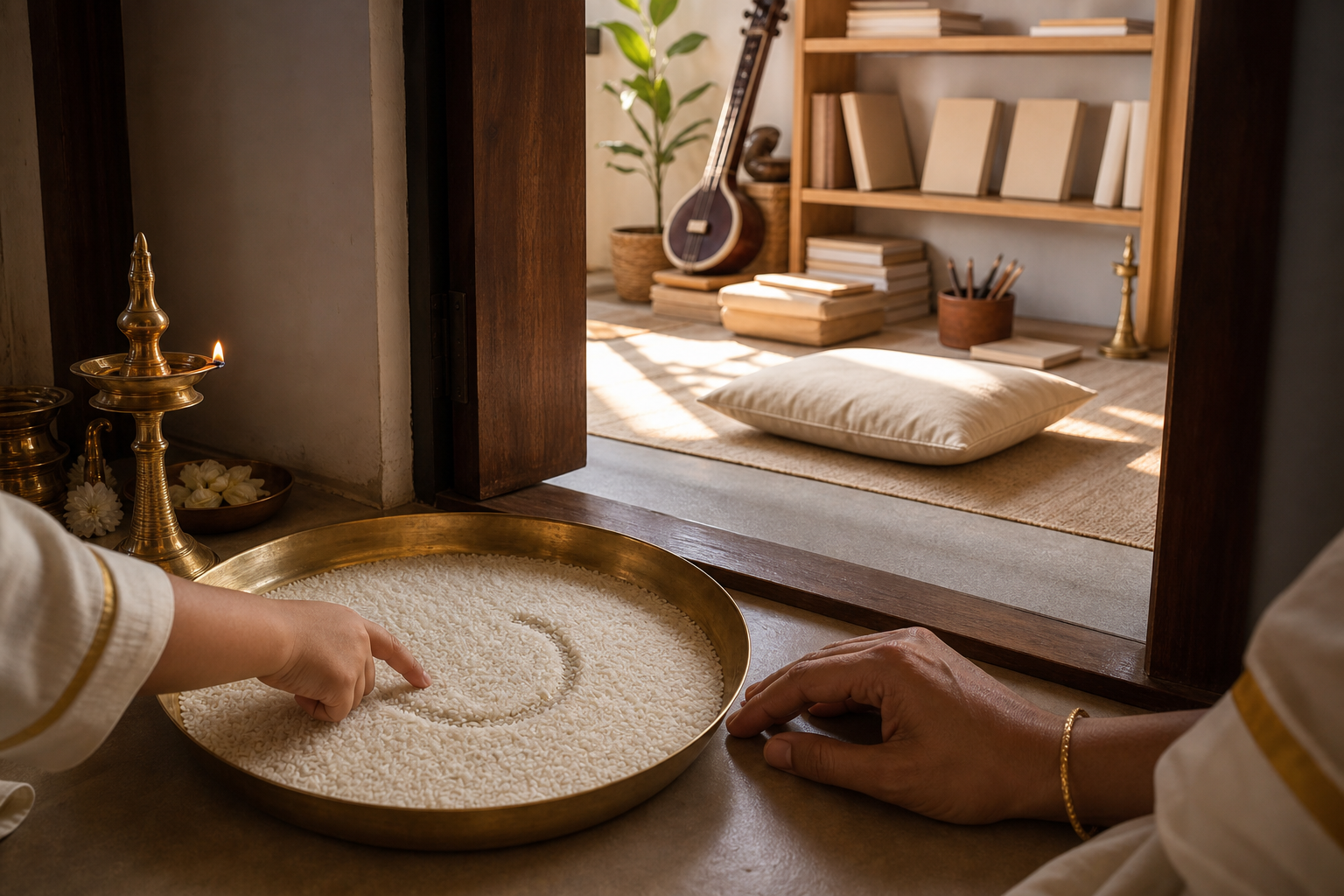
The first-writing rite is known by several names, including Aksharabhyasam, Vidyarambham, Akshara Sweekaram, Akshara Srikaram, and Ezhuthiniruthu. Customs vary by family and region, but the central movement is recognizable: the learner crosses a threshold from being surrounded by language to consciously receiving letters, study, and disciplined instruction.
That distinction protects the ceremony from two common misunderstandings. It is not a test of whether a young child can form a perfect letter, and it is not a guarantee of effortless academic success. Initiation authorizes a beginning. Learning still requires abhyasa, or sustained practice, along with correction, attention, humility, and time.
The child’s first marks may be uneven. That does not diminish the rite. A guided hand is appropriate because the ceremony expresses transmission: knowledge is received through relationship. The parent, elder, teacher, or priest helps the child begin, then gradually makes room for independent effort.
Before arranging the ritual, decide what your family is actually undertaking. A useful sankalpa is concrete enough to survive an ordinary week. You might resolve that questions will not be mocked, that study will have a dependable place in the home, that mistakes will be corrected without humiliation, and that education will be joined to good conduct. These commitments matter more than an elaborate setting that the household forgets the next day.
Saraswati’s hamsa gives learning its moral test

Saraswati does not represent the mere accumulation of information. Her hamsa brings together learning, clarity, purity of intention, refined speech, and viveka. The familiar image of the hamsa separating milk from water expresses discriminative wisdom: the learner must distinguish what is true from what merely attracts attention, what is valuable from what is trivial, and what should be said from what should remain unsaid.
This gives you a practical way to explain Saraswati to a child. Do not stop at “She is the goddess who helps you study.” Explain that her blessing asks something of the student. Learning should make the mind clearer, speech more truthful, skill more careful, and conduct more responsible. Cleverness without discernment is incomplete education.
You can turn the hamsa’s symbolism into questions that grow with the learner:
- Is this true, or does it only sound convincing?
- What part do you know, and what part are you assuming?
- Will these words clarify the matter or make it more confused?
- Does this skill help you serve, create, understand, or act more responsibly?
These are not questions for examinations alone. They apply to a story heard from a friend, a claim encountered online, a disagreement at home, a passage of scripture, or a new artistic technique. A Saraswati practice therefore joins intellectual discipline to character.
The hamsa also helps place Saraswati within a wider Dharmic civilizational conversation. Buddhist traditions honour virtue and insight, Jain traditions emphasize restraint and purity, and Sikh teachings value vivek and gyaan. Their forms and theologies should not be collapsed into one another, yet they meet in a consequential principle: knowledge is judged partly by the kind of person it helps form.
Plan the first-writing rite around the child
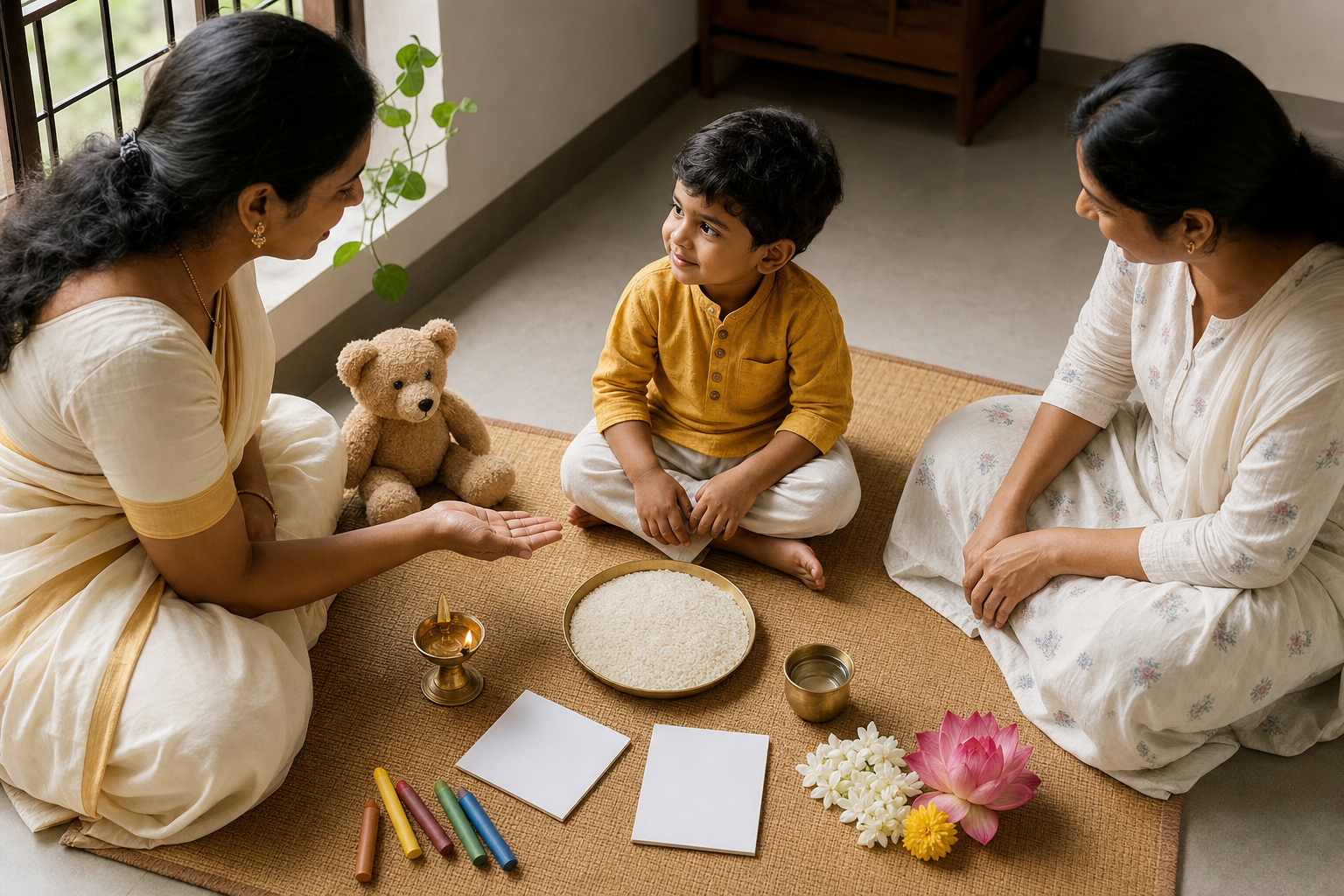
An auspicious occasion should not become an endurance test. Before choosing between a temple ceremony and a quieter observance, consider the child’s temperament. A child who is rested, prepared, and allowed to proceed gently is more likely to associate learning with attention and trust. A crowded hall may be deeply moving for one family and overwhelming for another.
If you are going to Basara
Sri Gnana Saraswati Temple at Basara is widely associated with Aksharabhyasam, but families should not build a journey around an assumed session time. Sessions are commonly arranged in the morning and forenoon, while exact schedules can change with puja arrangements, festivals, and temple administration. Check the current temple notices or counters, arrive with time for ticketing and directions, and follow the slot assigned to you.
Vasant Panchami, Navaratri, and select Poornima observances can draw heavier participation. If your priority is an unhurried experience rather than a festival atmosphere, a weekday morning will generally offer calmer queues. If you choose an auspicious festival day, accept the practical consequence of that choice and leave more time for entry, tickets, seating, and darshan.
Typical materials include a small plate of rice, a slate and chalk or another writing board, flowers, and fruit. Essentials may be available near the temple or included in local arrangements, so confirm what is required before buying duplicate items. Dress modestly, observe the queue, and check photography rules instead of assuming that the ritual may be staged for a camera.
Give the child a simple sequence to follow
The outer actions are easier for a child when each one has a plain explanation. You can prepare the learner with this sequence:
- Begin with reverence. Explain that the family is asking for obstacles to be removed and for learning to begin with a clear intention.
- Make the sankalpa understandable. Tell the child, in familiar language, that this is a promise to learn carefully and use knowledge well.
- Let the child encounter the material. Rice, sand, a slate, or a writing board makes the first mark physical and memorable. Allow a moment to touch and notice it before asking for a letter.
- Guide rather than grip. Help the child trace the invocation or first letters without demanding neatness. The purpose is entry into learning, not calligraphic performance.
- Receive the blessing and name what comes next. After the puja or darshan, tell the child when ordinary learning will continue at home. This connects the sacred beginning to practice.
At Basara, the sequence commonly includes Ganapati puja and sankalpam, followed by guided writing and blessings before or around darshan. The devotional words “Om Hari Sri Ganapathaye Namah” may be traced on rice or sand, depending on the customary arrangement. Follow the priest’s guidance rather than trying to impose a different regional procedure in the middle of the rite.
If the child becomes restless, do not interpret that as rejection of Saraswati or lack of readiness for education. Young children respond to heat, crowds, unfamiliar sounds, waiting, and adult tension. Pause when possible, reduce the demand, and protect the child’s dignity. A peaceful incomplete-looking moment is more faithful to an initiation into knowledge than a perfect photograph obtained through fear.
Make the next day part of the ceremony
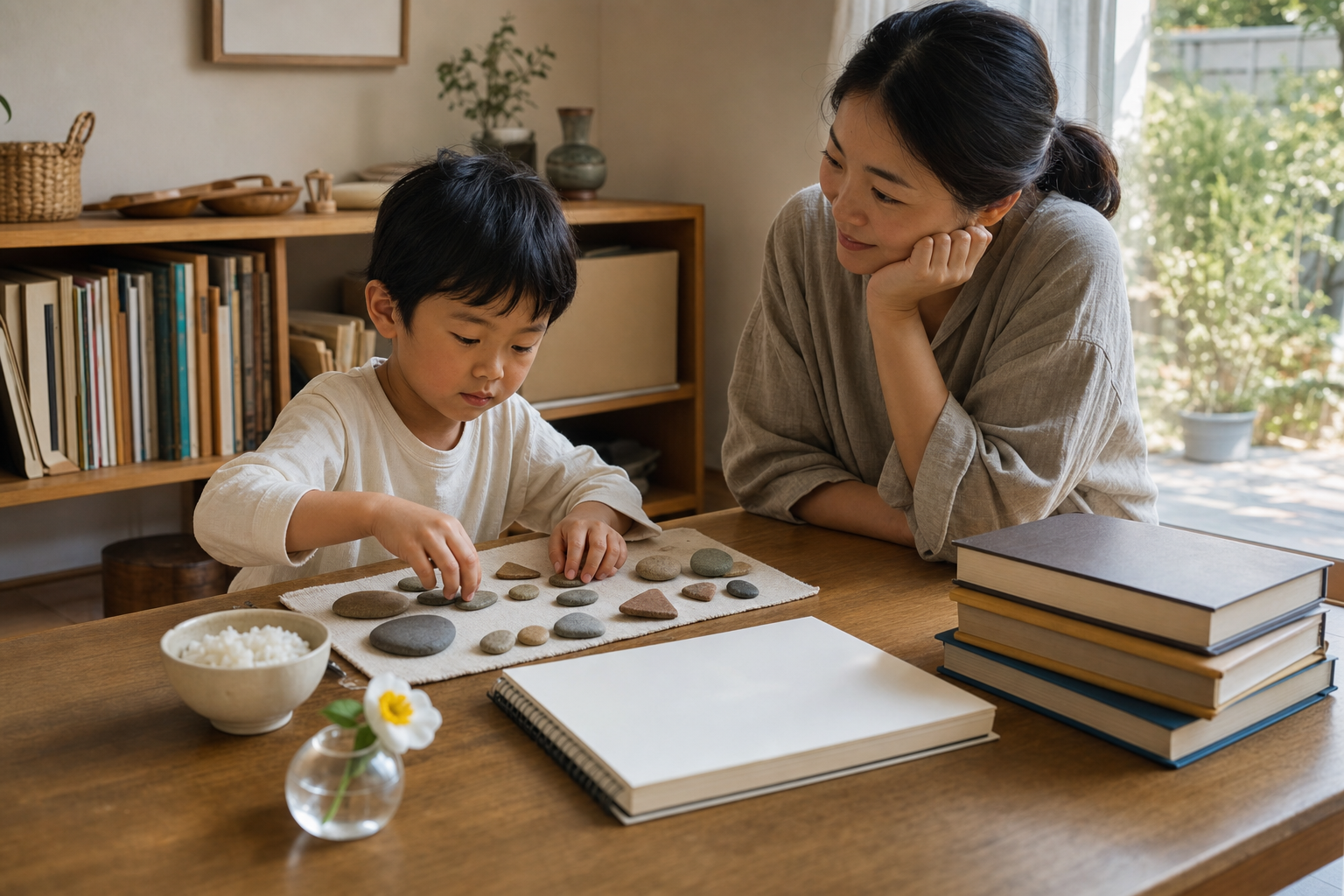
The most important follow-through is not another purchase. It is a repeatable household rhythm. Set apart a clean place for books and writing materials. Begin study with a brief recollection of Saraswati, read or practise attentively, invite the learner to explain what was understood, and put the materials away with care. The routine should be modest enough to continue on ordinary days.
Keep the relationship between devotion and effort clear. Prayer can orient the mind and purify intention; it does not excuse avoidable neglect. When the learner struggles, respond with instruction and more suitable practice rather than saying that faith was insufficient. When the learner succeeds, praise attention, honesty, perseverance, and responsible use of knowledge rather than marks alone.
Speech deserves a place in this discipline because Saraswati is associated with clarity of expression as well as study and the arts. Let the child hear adults admit when they do not know something. Correct false claims without ridiculing the speaker. Discourage impressive words used to conceal confusion. A home that values truthful speech teaches viveka before the child has a name for it.
Academic pressure can quietly overturn the meaning of Vidyarambham. If every mistake produces anxiety and every subject becomes a contest, the child learns to protect appearances instead of seeking truth. Maintain standards, but separate correction from shame. Ask what the learner misunderstood, identify the next practice needed, and allow improvement to be visible. That is disciplined education, not indulgence.
You can also renew this orientation beyond childhood. Beginning a language, scripture, musical discipline, craft, or demanding field of study can become a personal Vidyarambham in spirit. Clean the place of study, state why you are learning, seek competent instruction, and decide how the knowledge should shape your conduct. The child receives a stronger lesson when the adults nearby remain learners themselves.
Key takeaways
- Aksharabhyasam marks entry into disciplined learning; it is neither an academic test nor a promise of effortless success.
- Saraswati’s hamsa makes viveka central: teach the learner to distinguish truth from appearance and knowledge from mere cleverness.
- Choose a setting the child can enter calmly. At Basara, verify current sessions through temple notices or counters and expect larger crowds on major observances.
- Keep the ritual legible to the child: reverence, sankalpa, a guided first mark, blessing, and a clearly named next step.
- Continue the initiation at home through regular study, truthful speech, respectful correction, care for learning materials, and adult willingness to keep learning.
When you prepare the rice, slate, flowers, or journey, prepare the household commitment as carefully as the ceremony. Let the first letter lead to the next lesson, the next honest question, and the next act of discernment. That continuing movement is where an initiation into Saraswati’s knowledge begins to bear fruit.
References
- DharmaRenaissance Blog — Hamsa in Hinduism: Sacred Swan Symbolism and the Vahana of Saraswati, Brahma, Gayatri, Vishwakarma
- DharmaRenaissance Blog — Basara Aksharabhyasam Timings: Plan a Sacred Start to Learning at Sri Gnana Saraswati Temple
