
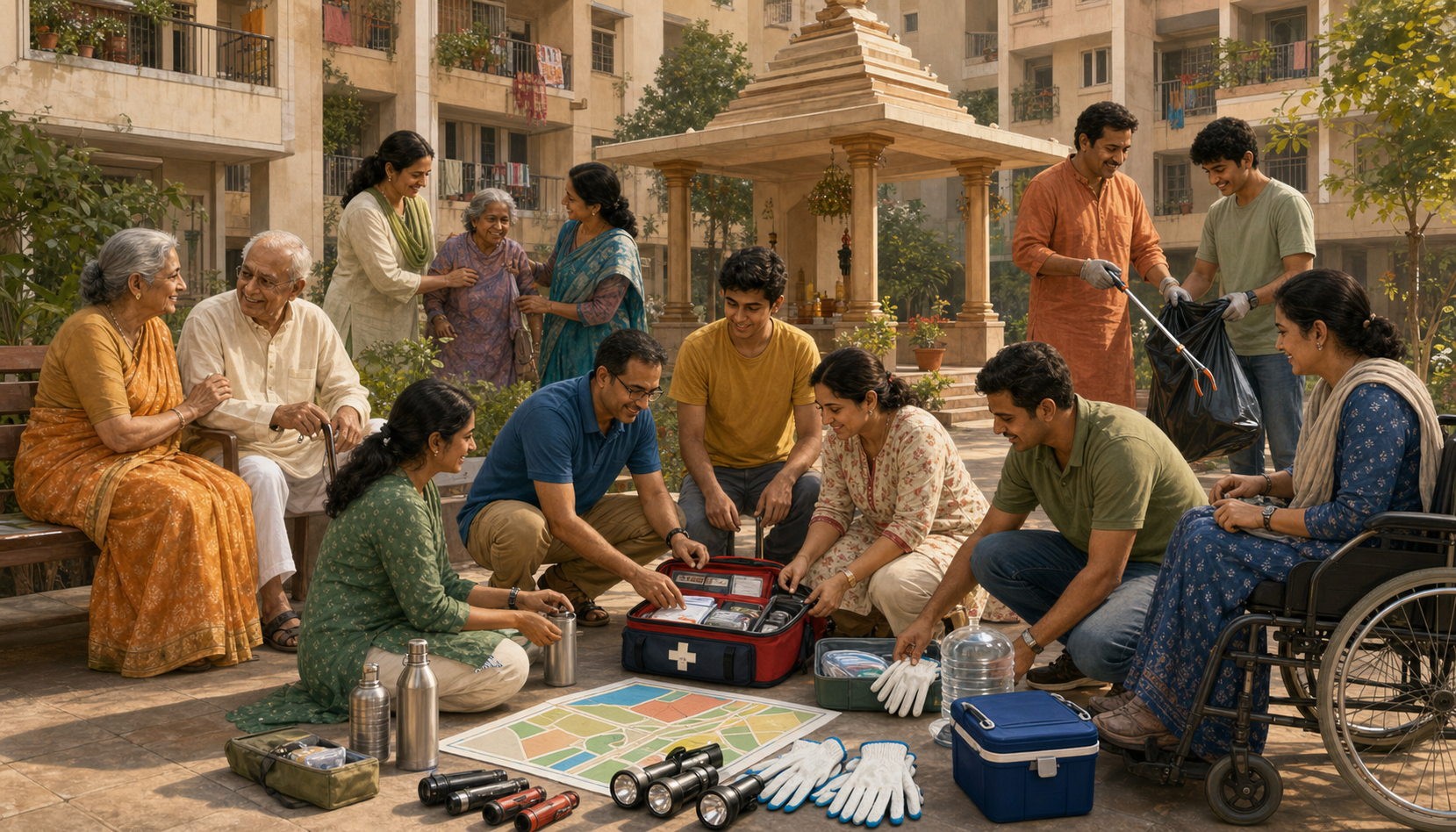
You do not need to wait for a festival, a frightening incident, or a public dispute to discover whether your neighbourhood can act together. If your housing society, temple, school, or community centre wants to turn Hindu Janajagruti Samiti (HJS) discussions into regular local work, begin with two connected tracks: civic stewardship and practical preparedness.
Civic stewardship builds the trust that lets people cooperate. Preparedness gives that trust a usable form when someone feels unsafe, an elderly resident needs help, or a public space is neglected. The aim is neither vigilance without restraint nor ceremony without follow-through. It is an organised community that can notice a problem, respond lawfully, and protect dignity.
Key takeaways
- Put civic duties on a standing community agenda, with a named owner and a visible follow-up for each agreed task.
- Plan around situations residents actually face, such as unsafe commutes, neglected common spaces, misinformation, or an elderly neighbour needing assistance.
- Use credentialed instructors, age-specific groups, regular scheduling, and explicit safeguards for any self-defence programme.
- Teach awareness, boundary-setting, de-escalation, bystander response, and routes to institutional or legal help before treating physical technique as the centre of preparedness.
- Translate seva, satya, and ahimsa into operating rules that residents can apply when facts are uncertain or emotions are high.
- Begin with a limited pilot, then judge it through attendance, confidence, situational awareness, safety, and participant feedback.
Give civic duty a place in ordinary community work
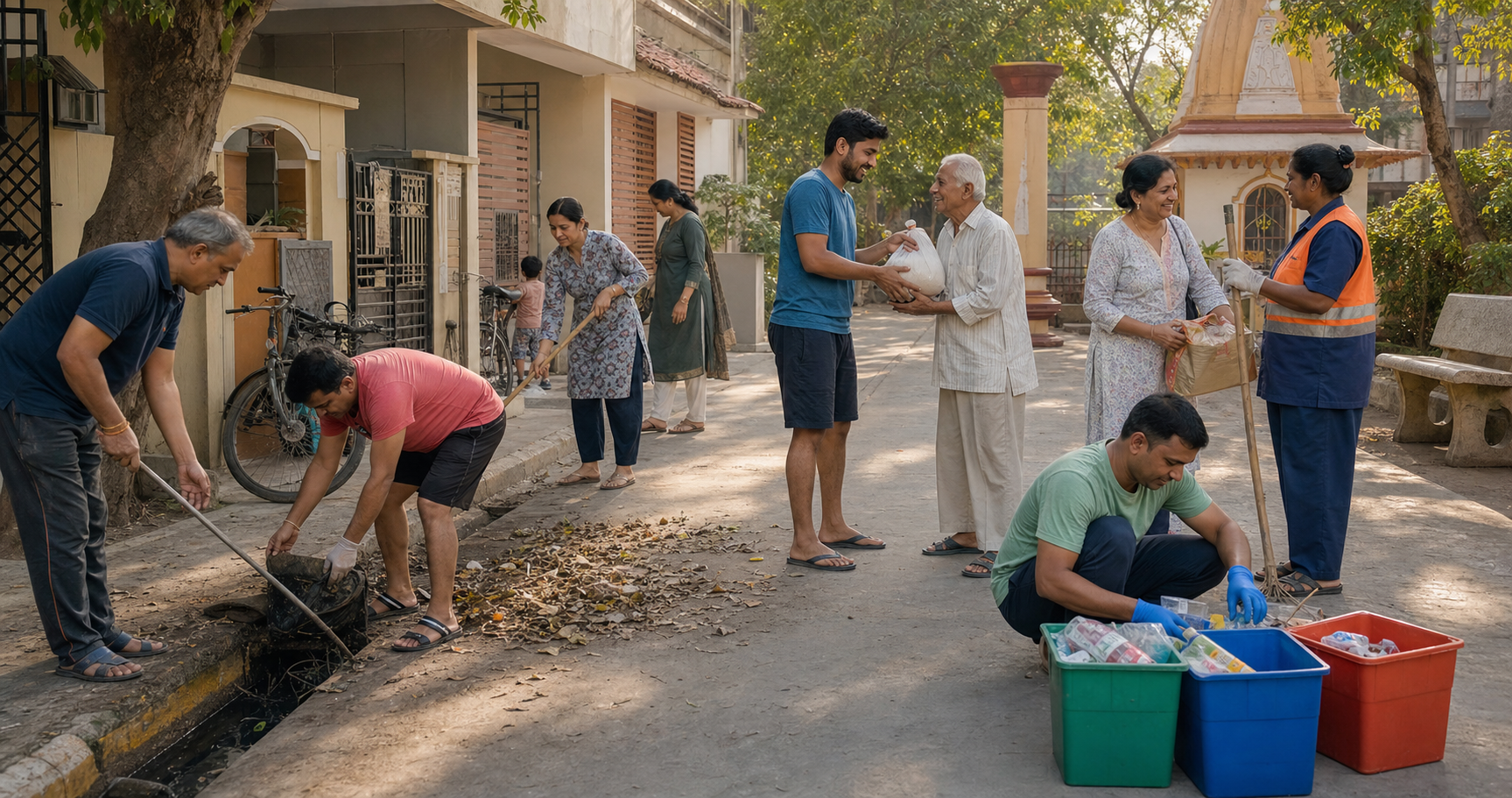
Republic Day can create attention, but attention disappears unless it enters the routine of the institution hosting it. A Virar gathering brought more than 100 residents, including families, elders, and young people, into a conversation about constitutional responsibility. The useful test comes afterward: can residents convert that shared mood into tasks that still happen when there is no stage, flag-hoisting programme, or invited speaker?
Start by reserving a recurring place for civic work in society or community meetings. Do not hide it under miscellaneous business. For every issue accepted by the group, record the task, the person responsible, the support required, and the point at which progress will be checked. A concern without an owner is usually only a conversation.
A useful local agenda can include:
- Keeping entrances, walkways, noticeboards, and shared facilities clean and usable.
- Identifying practical ways to assist senior citizens without intruding on their independence.
- Making society-level decisions through orderly participation rather than informal pressure.
- Reading and discussing the Preamble so that constitutional language is understood rather than merely displayed.
- Encouraging informed voting and respectful civic discussion without turning the community institution into a party platform.
- Connecting young residents with the sacrifices behind India’s freedom through carefully presented historical material and conversation.
These are modest tasks, but they develop habits that matter during harder moments: showing up, distinguishing responsibility from opinion, keeping commitments, and working with people outside one’s immediate circle. The Virar programme connected cleanliness, assistance to senior citizens, participation in local decisions, and knowledge of the Preamble with a wider culture of trust and resilience.
Keep rights and duties in the same conversation. Residents should be able to question a decision, request fair treatment, and expect dignity. They should also follow lawful processes, protect common resources, and hear disagreement without intimidation. If a civic programme asks for obedience but provides no room for questions, it is not teaching responsible citizenship.
Build preparedness around real situations, not vague fear
Map what residents may need to notice and do
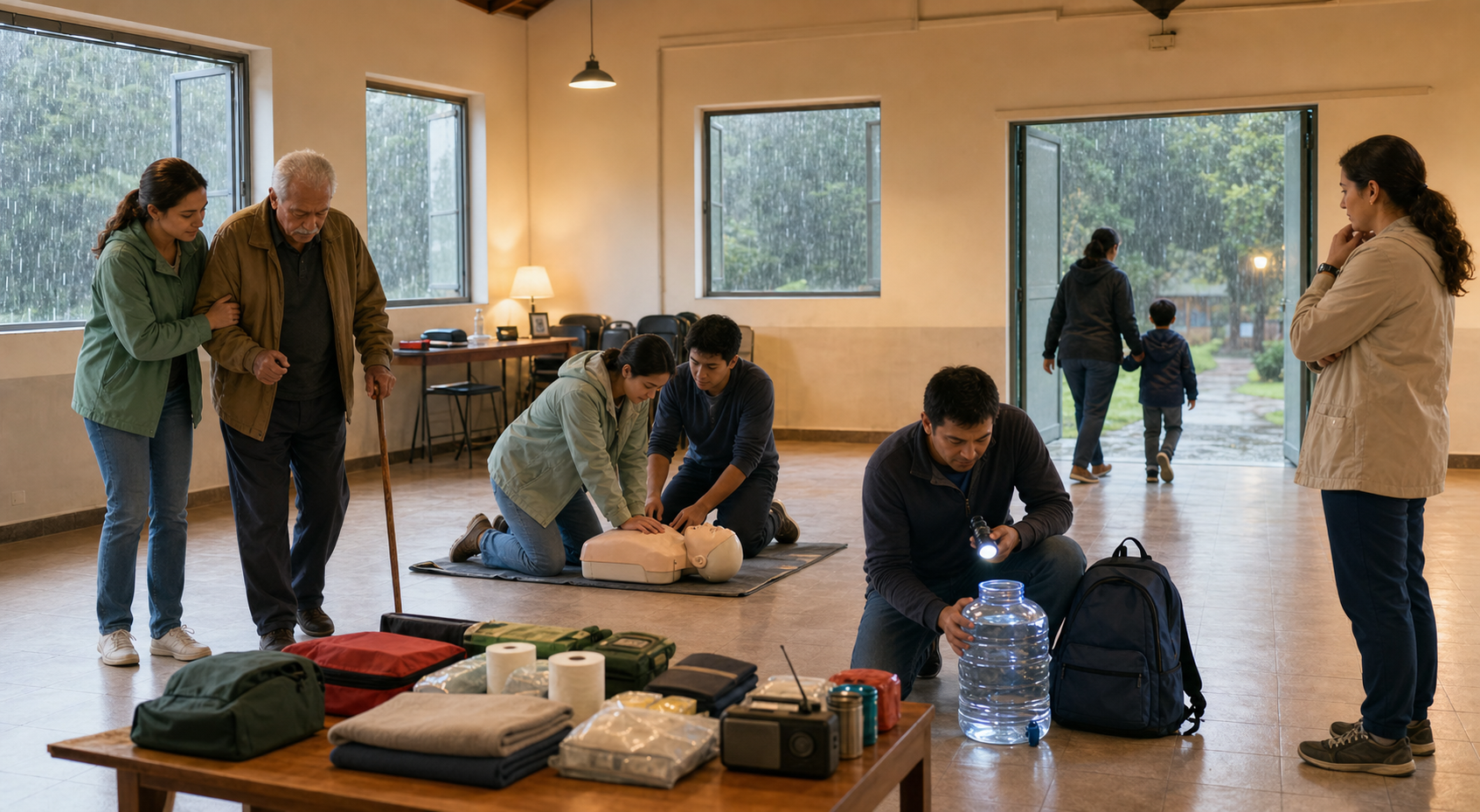
Preparedness becomes useful when a broad worry is converted into a clear first response. In Akola, families placed particular attention on safe commutes, secure campuses, and regular instruction for students. Your locality may have different priorities, so ask residents where uncertainty actually occurs: at a school route, a building entrance, an isolated parking area, a crowded event, or during an emergency involving a vulnerable neighbour.
Create a short readiness sheet for each priority situation. It should answer:
- What might an ordinary resident notice before the situation escalates?
- What is the safest immediate action for a witness, participant, or volunteer?
- Which institution or responsible person should be contacted?
- Where can a child, senior citizen, or distressed person wait safely?
- What information should be recorded, and who is authorised to receive it?
- What must residents avoid doing because it could intensify danger, spread a rumour, compromise privacy, or obstruct the appropriate authorities?
Walk through each situation as a group before calling the plan complete. For example, if a student reports harassment near an entrance, the plan should identify whom the student approaches, who secures a safe place, who contacts the relevant family or institution, and who preserves an accurate account. It should not depend on the loudest person in a messaging group deciding what happens next.
Keep private details restricted to people who need them. A preparedness group is not a licence to circulate a child’s movements, a resident’s medical information, or an unverified allegation. Record only what the response requires, and separate an urgent safety message from public speculation.
Treat self-defence as disciplined education
Self-defence should widen a participant’s choices, not train aggression or create false certainty. The demand expressed by parents and students in Akola was for regular, accessible classes for girls and boys, supported by credentialed instructors, age-appropriate modules, and consistent scheduling. That structure matters as much as any individual technique.
Before approving an instructor or programme, ask for clear answers about:
- The instructor’s credentials and experience with the age group being taught.
- How children, adolescents, and adults will be separated into suitable learning groups.
- How consent, supervision, physical contact, injuries, complaints, and participant privacy will be handled.
- Whether the curriculum begins with situational awareness, confident boundary-setting, and de-escalation.
- How bystander intervention is taught without encouraging an untrained person to enter a dangerous confrontation.
- What emergency-response basics are included.
- When participants are told to seek help from a school, community institution, emergency responder, or qualified legal professional.
- Whether girls and boys receive equal access without ignoring differences in age, comfort, or safeguarding needs.
The proposed curriculum in Akola included confidence drills, bystander intervention, boundary-setting, emergency-response basics, and legal awareness. That is a stronger foundation than a class built mainly around dramatic physical moves. A participant who notices danger early, leaves safely, calls the right support, and gives an accurate account has used preparedness successfully even without physical contact.
Physical practice belongs under verified supervision. Community volunteers should not improvise techniques or promise that a weekly class can make anyone safe in every circumstance. An active threat, suspected crime, injury, or case-specific legal question requires the appropriate professional or institutional response. Self-defence education can support that response; it cannot replace it.
Turn dharmic values into rules for difficult moments
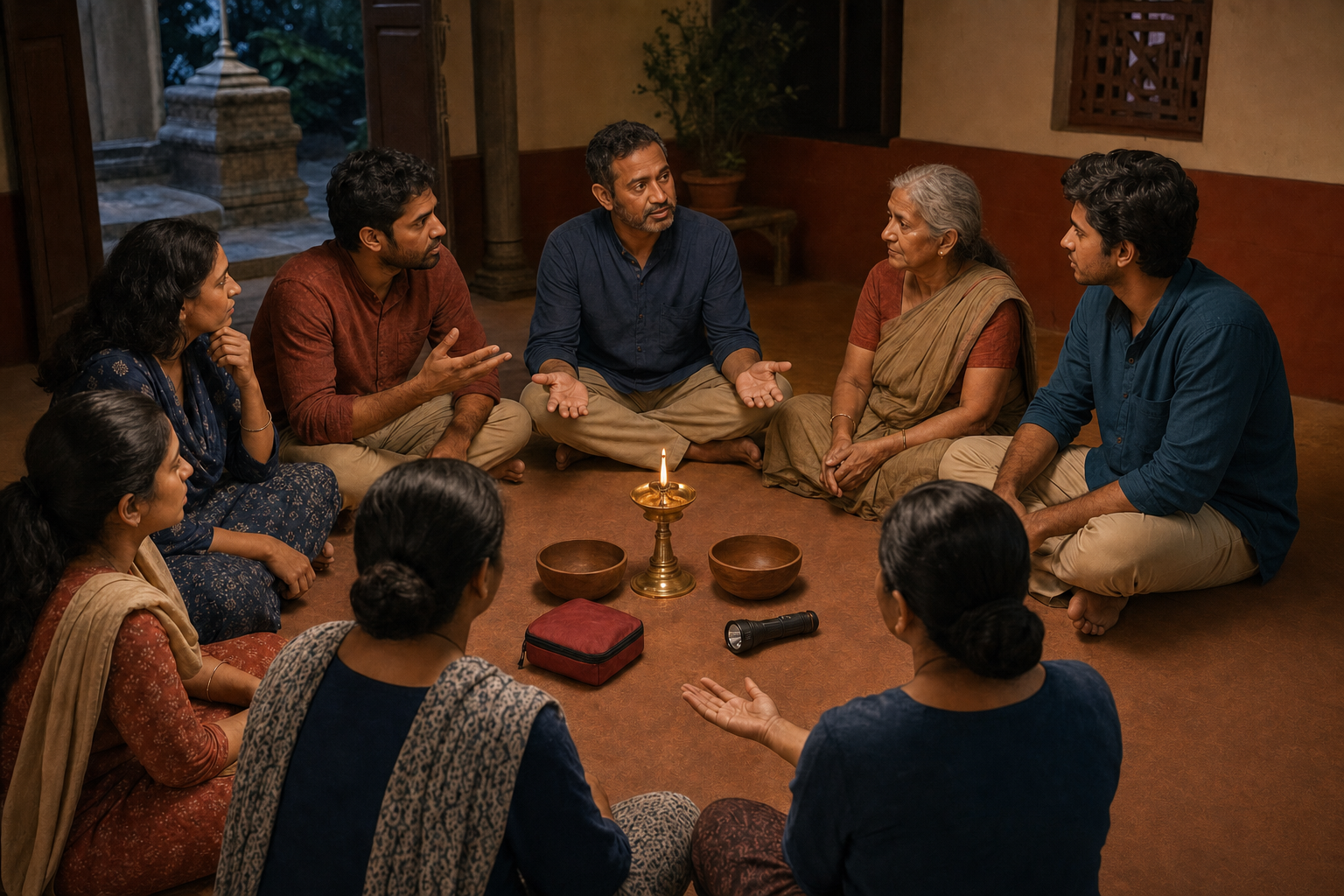
Hindu, Buddhist, Jain, and Sikh traditions are not interchangeable, and a community programme should not pretend that they are. They can still meet through a practical civic vocabulary. Seva, satya, and ahimsa were linked with constitutional responsibility because each value can guide conduct beyond a ceremonial setting.
- Seva: Give responsibility to people who are willing to serve, not merely to those who want visibility. Ask whether a proposed action actually helps the affected person.
- Satya: Separate what someone witnessed from what they inferred. Verify before forwarding. Correct an inaccurate claim with the same seriousness used to circulate it.
- Ahimsa: Prefer prevention, safe withdrawal, de-escalation, and proportionate protection. Do not confuse courage with provocation or humiliation.
- Constitutional responsibility: Use lawful channels, respect equal dignity, permit questions, and keep partisan coercion out of shared civic institutions.
These principles are most valuable when the group disagrees. Before acting, ask four practical questions: What do we know? Who may be harmed? What is the least escalatory safe response? Which legitimate authority or institution needs to be involved? This short pause turns ethical language into a decision process.
It also gives young participants a coherent message. Learning about freedom fighters need not end in admiration alone. Historical memory acquires civic meaning when a student learns to care for a shared space, assist another person, speak truthfully, and act with restraint under pressure. A portrait exhibition in Virar was used to connect the sacrifices of revolutionaries with present-day responsibility, especially for students.
Launch a limited pilot and measure conduct, not excitement
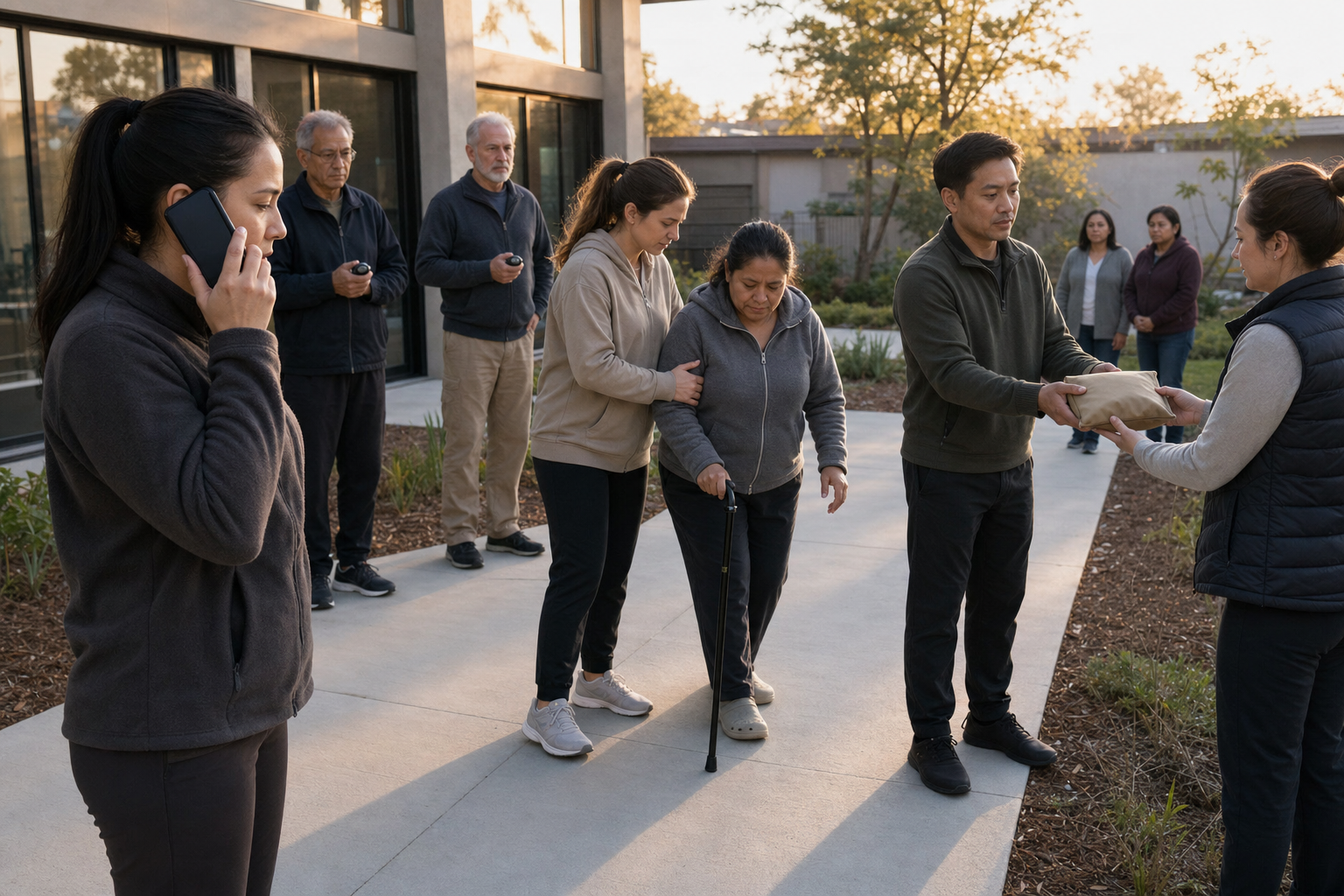
A pilot gives a community permission to learn before it expands. The Akola discussion proposed pilot batches assessed through attendance, confidence, and situational awareness. Use that approach for the wider civic programme as well: define what will happen, who is responsible, what safety standards apply, and what evidence will justify continuation.
Put the pilot on a single-page charter:
- State the problem: Name the local situation being addressed rather than promising general empowerment or total safety.
- Set the scope: Identify the participant group, venue, regular schedule, and activities included. Keep civic-service work separate from physical training where different supervision is required.
- Assign responsibility: Name the host institution, programme coordinator, verified instructor, and safeguarding contact.
- Define response boundaries: Explain what participants may do, what they must not do, and when the matter moves to an institution, emergency responder, or qualified professional.
- Choose measures: Track attendance, anonymous participant confidence, scenario-based situational awareness, completion of agreed civic tasks, and feedback from students, parents, elders, and hosts.
- Schedule a review: Decide in advance who will examine the results and approve continuation, revision, or closure.
Do not use confidence by itself as proof of readiness. Pair it with observable understanding: Can a participant identify a safer exit, state a boundary clearly, name the appropriate person to contact, and explain when not to intervene? For civic work, ask whether the agreed task was completed and whether affected residents found it useful.
Redesign or stop a pilot if supervision is unclear, participants are humiliated, complaints have no channel, physical practice exceeds the instructor’s verified competence, or civic activity becomes partisan pressure. Growth is not the first measure of success. Trustworthy conduct is.
At your next community meeting, bring one concrete proposal: a standing civic-duty agenda item, a local readiness sheet, or a properly supervised self-defence pilot. Give it an owner, safeguards, and a review point. That is how commemoration becomes capacity and dharmic concern becomes dependable public service.
References
- Hindu Janajagruti Samiti – Republic Day Reflections in Virar: Embracing Civic Duty, Shared Heritage, and Unity
- Hindu Janajagruti Samiti – Akola Families Call for Regular Self-Defence Training as HJS Highlights Urgent Safety Needs
