
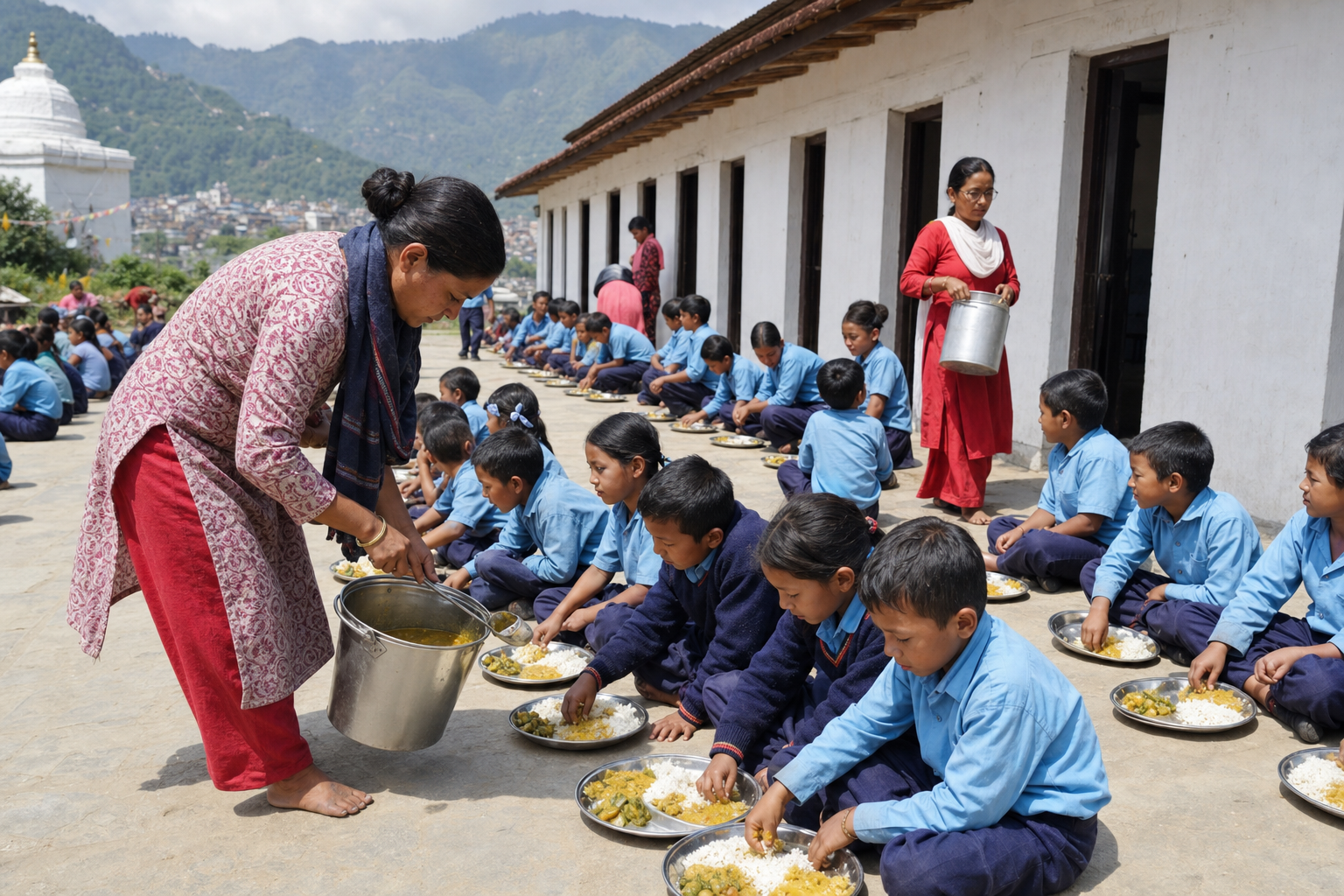
Food For Life Nepal reportedly began serving daily midday Prasadam to more than 20,000 community-school students across Kathmandu, Bhaktapur, and Dhangadhi on 15 May 2026. The scale is significant, but the initiative is better understood as a connected system of nutrition, school participation, food safety, logistics, and service.
The supplied report is the sole source for the program-specific claims examined here, so its descriptions should not be mistaken for independently verified results. Read analytically, however, it shows why the value of a school meal depends on much more than the number of plates served.
Key takeaways
- The report places the program’s reach above 20,000 students in three Nepali cities, making dependable daily execution as important as initial scale.
- Its educational case rests on a plausible sequence: a reliable meal addresses classroom hunger, which may support attendance, concentration, and time spent learning.
- Nutrition, hygiene, temperature control, route planning, and acceptable menus operate as one chain; weakness at any point can reduce the meal’s value.
- Prasadam gives the initiative a devotional identity, while vegetarian preparation and an emphasis on service provide a basis for participation across diverse school communities.
- The report identifies useful operational indicators, but stronger public evidence would be needed to distinguish delivery success from lasting educational outcomes.
A meal becomes educational infrastructure through regularity
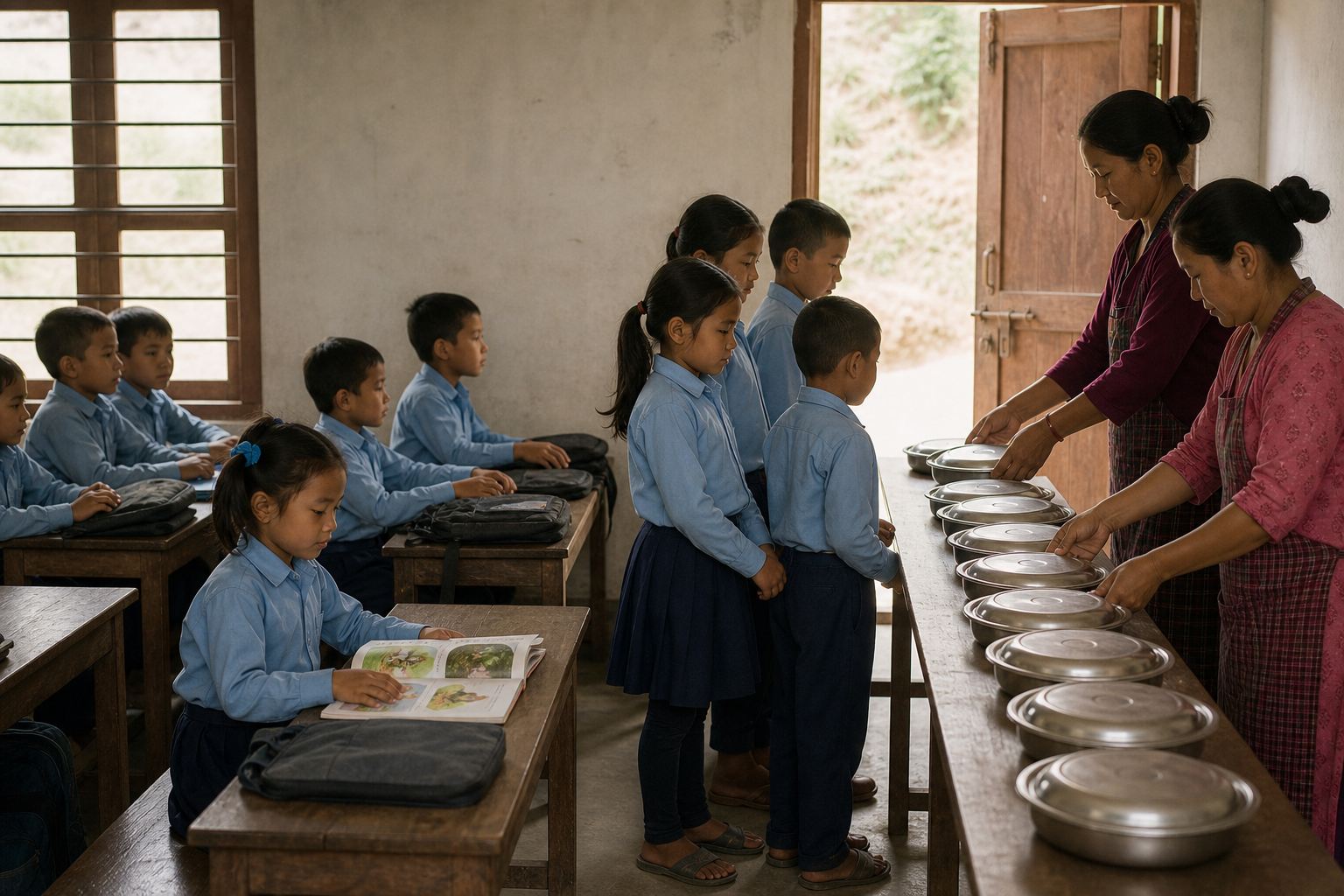
A midday meal can support learning without being an educational lesson in the conventional sense. Its contribution begins by removing a practical obstacle: a hungry student may struggle to concentrate, arrive late, or leave school early. The source presents Food For Life Nepal’s expansion as an attempt to reduce those pressures through a predictable meal during the school day.
The report says teachers and administrators commonly observe calmer classrooms, better focus after lunch, less tardiness, and fewer early departures. It also argues that a dependable meal can ease pressure on food-insecure households and encourage regular attendance, particularly among girls. These are reported observations and proposed benefits, not quantified findings in the supplied article; no before-and-after attendance or learning figures are provided.
This distinction matters. The number of meals served is an immediate output, while improved attendance, retention, or learning would be outcomes developing through several intervening conditions. A large program therefore earns educational value through consistency: the meal must arrive on school days, in an acceptable form, at a useful time, and without creating avoidable safety risks.
Nutrition, safety and logistics form a single delivery chain
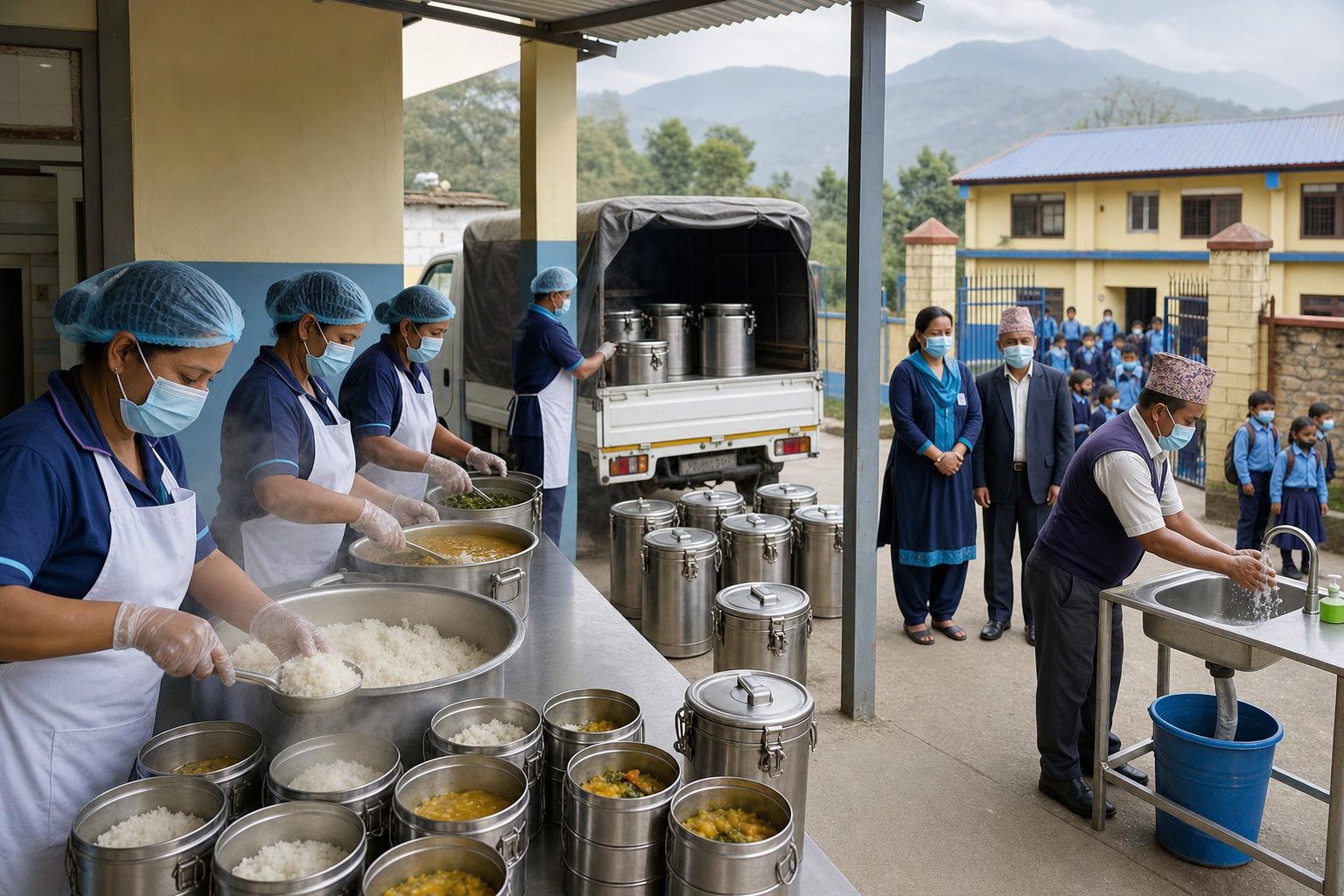
The source describes four operational priorities: adequate calories, micronutrient variety, rigorous hygiene, and punctual service. That combination avoids a common analytical mistake in discussions of school feeding: treating nutritional composition as separate from the system that prepares and delivers the food. A balanced meal arriving too late, cooling outside safe conditions, or being rejected by students cannot provide its intended benefit.
According to the report, menus are adjusted to local preferences and seasonal availability. Typical combinations include cereals for energy, pulses for protein, vegetables for fibre and micronutrients, dairy or plant-based fats for satiety, and fortified staples when locally available. The article characterizes the meals as vegetarian and sattvic, while also noting age-appropriate portions, allergen awareness, and avoidance of ingredients restricted in participating schools.
The distribution model is likewise presented as part of meal quality. Community kitchens prepare the food for dispatch along time-bound routes, with insulated reusable vessels intended to retain heat and limit waste. The report differentiates between route planning in the dense urban settings of Kathmandu and Bhaktapur and coordinated last-mile delivery in Dhangadhi. It also says local purchasing shortens supply chains while supporting regional farmers and vendors.
Food safety is described as extending from kitchen to classroom through clean water, sanitation, hand hygiene, disinfected surfaces, temperature control, batch tracking, and documented procedures. These safeguards are mutually dependent: records make corrective action possible, but only if staff follow the procedures and the delivery chain preserves the conditions established in the kitchen.
The report also associates seasonal menus, transport efficiency, reusable serviceware, waste segregation, and composting where feasible with environmental stewardship. Their practical importance is not merely symbolic. Measures that reduce avoidable waste and transport inefficiency may help a high-volume meal system preserve resources as it expands, although the source provides no numerical environmental or cost assessment.
Prasadam connects nourishment with an ethic of service
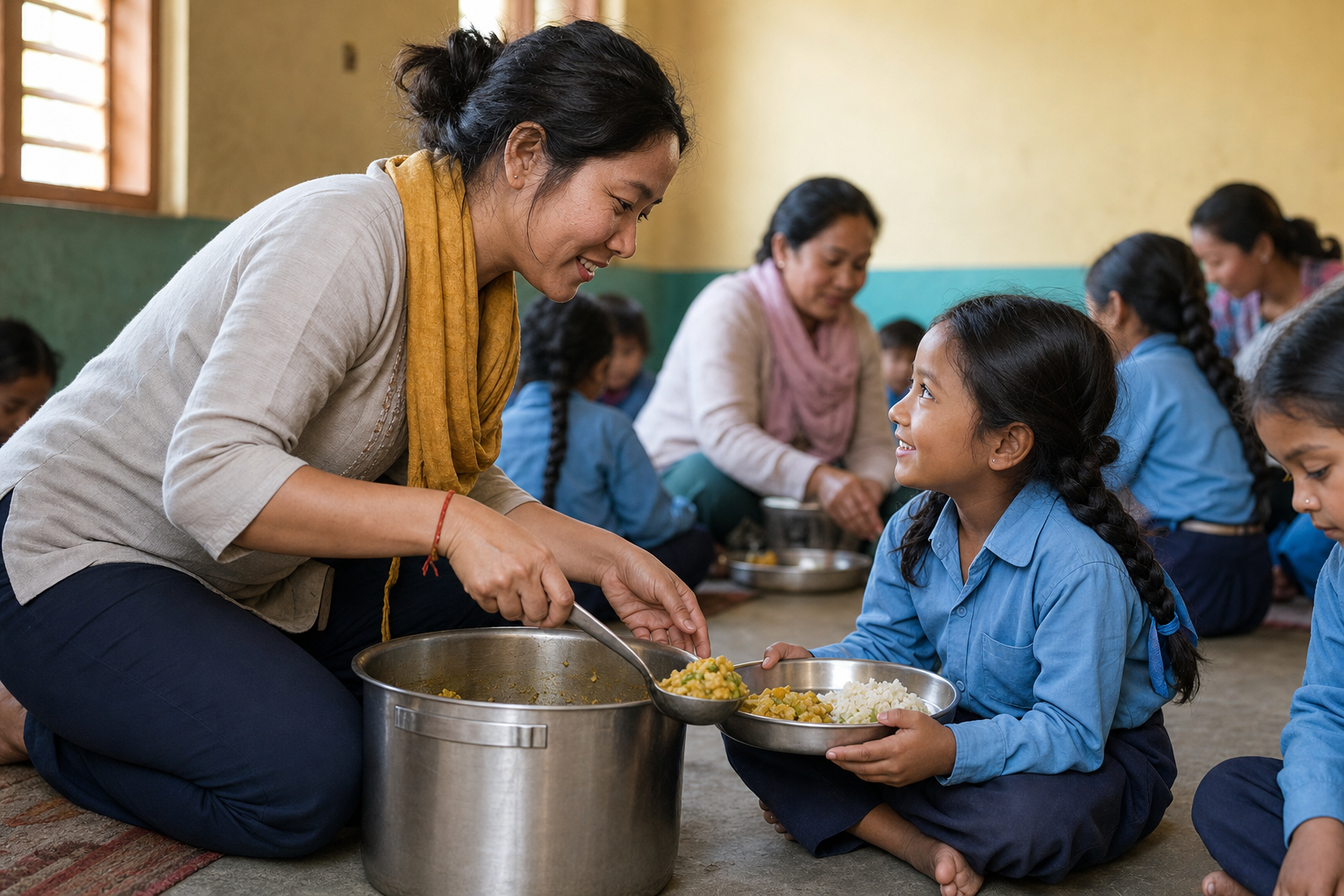
Food For Life Nepal’s meals are presented not only as vegetarian lunches but as Prasadam: food prepared and offered with devotion before it is shared. The report locates this practice within the Hare Krishna tradition and emphasizes gratitude, service, and respect as part of the meal’s meaning.
The article then places that devotional identity in a wider dharmic context, drawing parallels with seva and inclusion in Sikh langar, generosity in Buddhist dana, and dietary non-violence in Jain ahimsa. These comparisons do not make the traditions interchangeable. Rather, they identify a shared social principle: food can express care and human dignity while bringing people together across differences.
That cultural dimension can complement the program’s nutritional purpose when participation remains welcoming. The reported use of strictly vegetarian menus, attention to commonly restricted ingredients, and adaptation to local tastes supports broad accessibility. Inclusion ultimately depends not only on ingredients but also on how the meal is explained and served, so that its devotional origin is conveyed through hospitality rather than assumed uniformity among students.
Accountability must connect daily outputs to lasting outcomes
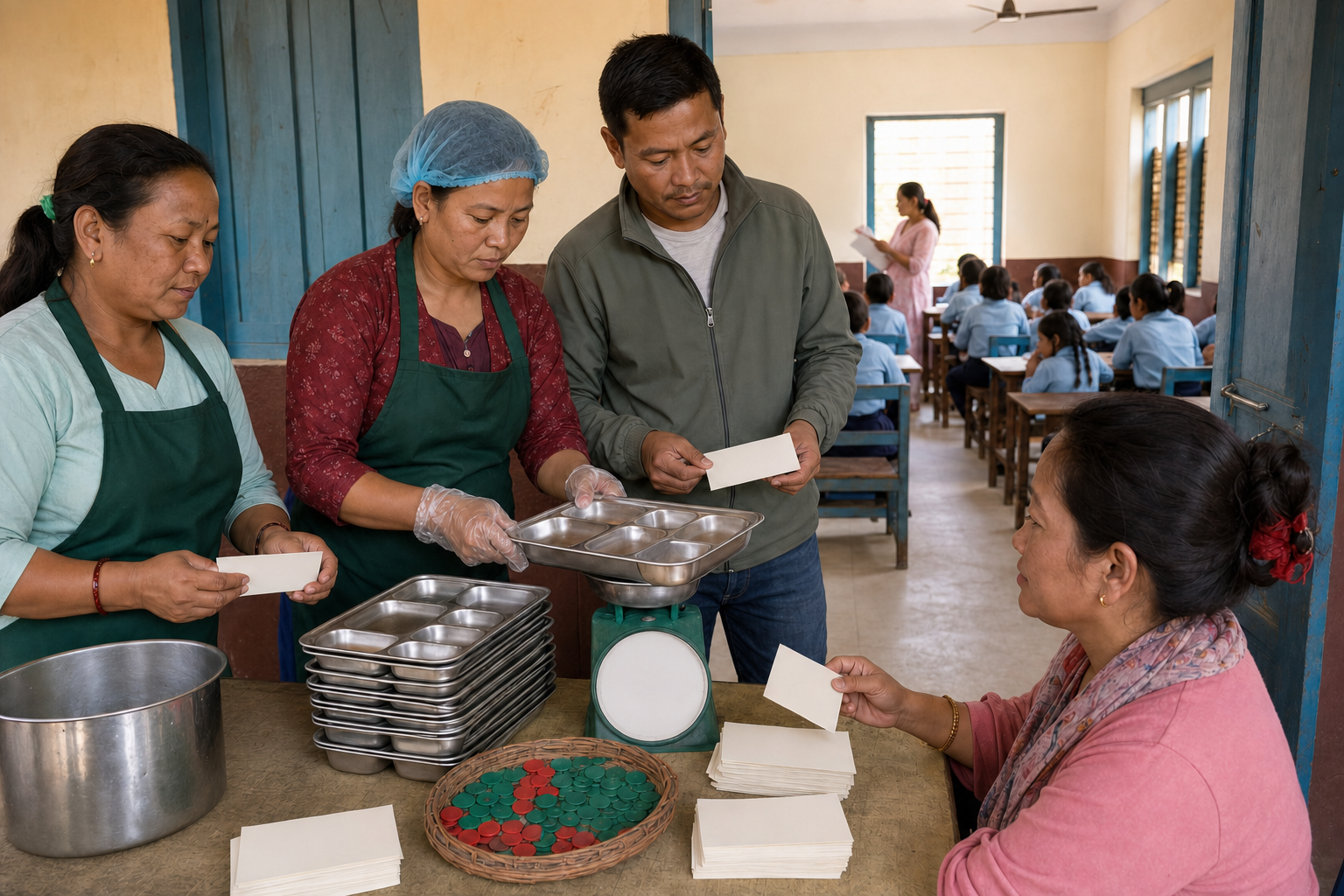
The source says the program monitors meals served against enrollment, delivery punctuality, plate waste, and feedback from school management committees. It also reports periodic kitchen audits, refresher training for staff, and community consultations. Together, these measures can reveal whether food reaches the intended schools, arrives on time, is consumed, and meets local expectations.
Those are appropriate indicators for managing daily operations, but they do not by themselves demonstrate improved learning or equity. The supplied article does not publish location-level meal totals, attendance trends, retention data, audit findings, cost per meal, or measured changes in academic performance. Transparent reporting in such areas would allow future assessments to separate the effects of the meal program from other influences on students and schools.
The report says modular kitchen design, route-scheduling tools, and partnerships with local governments and school bodies could support expansion into additional municipalities. Whether that model remains effective will depend on preserving quality while adding routes, kitchens, suppliers, and oversight relationships. Scale should therefore be evaluated as reliable service over time, not solely as a larger enrollment figure.
As the initiative develops, its strongest path is to keep its devotional ethic and inclusive meal service aligned with increasingly transparent evidence. Consistent delivery can nourish students now; credible outcome measurement can show how far that daily act of seva also strengthens Nepal’s educational future.