
If you need to know which tithi applies to a prayer, sankalpa, vrata, or family observance on Sunday, August 16, the civil date alone is not enough. The answer changes during the evening, so the time and your local Panchang both matter.
On August 16, 2026, Shukla Paksha Chaturthi continues until 6:47 PM, after which Shukla Paksha Panchami begins. Use that transition as the organizing fact for the day, not as a stand-alone muhurta.
August 16 Panchang in one view
| Calendar detail | August 16, 2026 |
|---|---|
| Weekday | Sunday |
| Paksha | Shukla Paksha, the waxing or light half of the lunar month |
| Before 6:47 PM | Chaturthi, the fourth lunar day |
| From 6:47 PM onward | Panchami, the fifth lunar day |
The crucial distinction is between a civil date and a tithi. August 16 runs from midnight to midnight on an ordinary calendar, but a tithi follows the lunar cycle and can change at any time of day. It does not wait for midnight, sunset, or the next morning.
Read 6:47 PM as a boundary. It is not a declaration that 6:47 PM itself is auspicious. Before the boundary, the listed tithi is Chaturthi. From the boundary onward, it is Panchami.
Why you should verify the time for your city
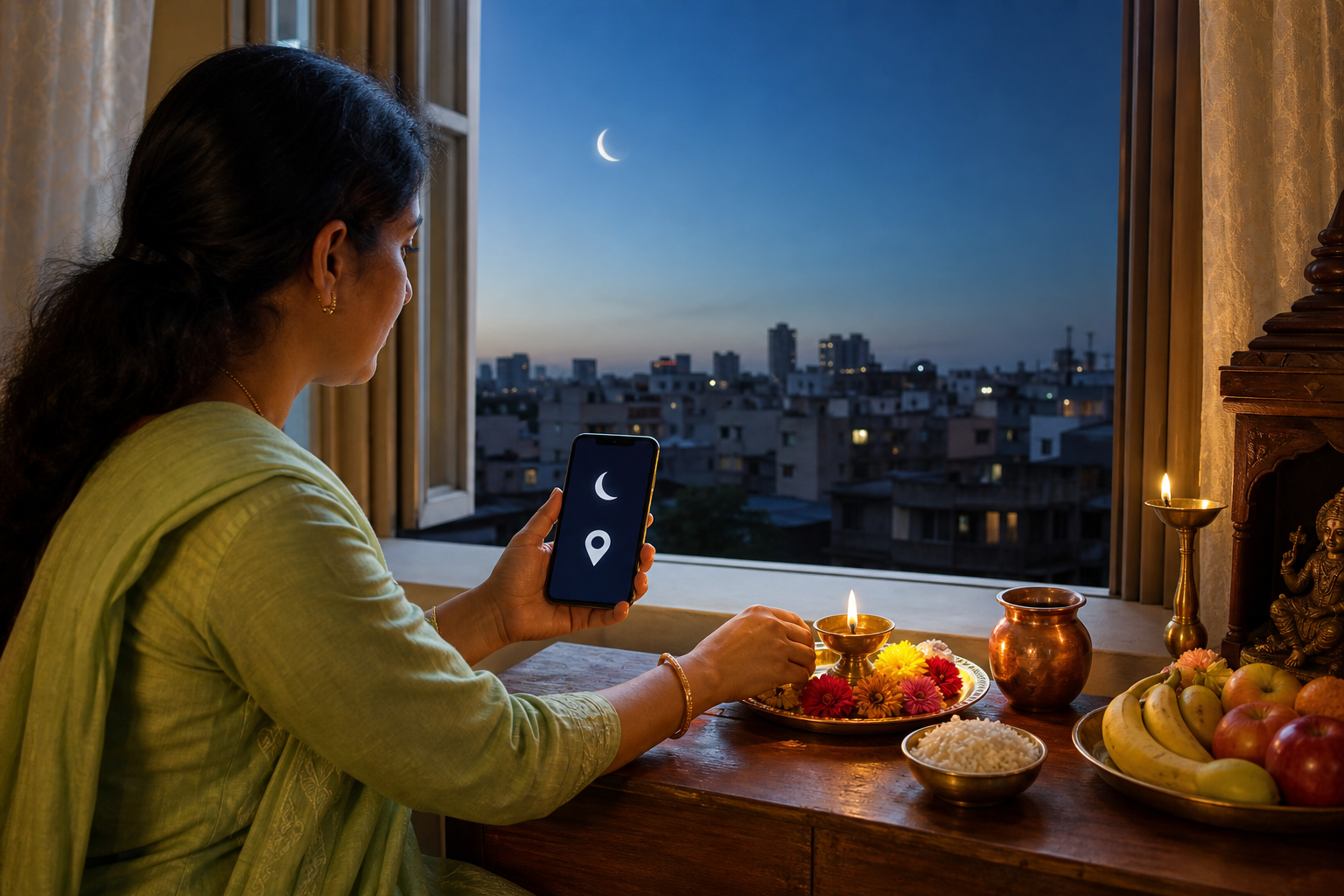
A Panchang clock time belongs to the location and time zone for which that calendar was prepared. Local sunrise can also matter when a vrata, festival, or household tradition assigns the observance according to the tithi prevailing at sunrise.
Before putting 6:47 PM into a ritual plan, check the city shown on the Panchang you actually follow. If no location is displayed, treat the time as a general reference rather than a minute-precise instruction. Do not average two conflicting calendars. Choose the city-specific Panchang accepted by your family, sampradaya, or temple and use it consistently.
- For general daily awareness, the Chaturthi-to-Panchami sequence may be all you need.
- If you specifically need a Chaturthi or Panchami period, confirm the transition in a Panchang calculated for your location.
- If you are observing a vrata or selecting a formal muhurta, also confirm whether your tradition uses the tithi at sunrise, the tithi during the act, or another observance rule.
This location check is especially important if your activity falls close to the evening transition. A small difference that is irrelevant to a morning prayer can decide whether a time near the boundary is treated as Chaturthi or Panchami.
A reliable way to plan your observance
- Set the calendar to the city where the observance will physically take place, using the applicable local time zone.
- Confirm the Chaturthi ending time for Sunday, August 16, 2026. The reference timing is 6:47 PM, but your city-specific result should govern a precise plan.
- Identify what your practice actually requires: any time on the civil date, a period within Chaturthi, a period within Panchami, or the tithi present at local sunrise.
- Compare the entire intended ritual window with the transition. If the act must remain within Chaturthi, allow enough time to finish before the locally verified boundary. If it requires Panchami, begin only after that boundary.
- If the observance crosses the transition, do not decide from the civil date or starting tithi alone. Follow the rule of your sampradaya, temple, or family tradition.
Under the listed 6:47 PM timing, anything completed earlier falls within the Chaturthi portion of August 16, while an observance begun after the transition falls within Panchami. An activity that begins before the boundary and ends afterward spans two tithis; whether that is acceptable depends on the observance rather than on a universal rule.
Do not infer a complete muhurta from the tithi alone. This limited information does not establish the nakshatra, rashi, or any separate good-time window for your location. If your decision depends on general auspiciousness rather than simply choosing between Chaturthi and Panchami, consult a complete local Panchang.
Key takeaways for August 16
- August 16, 2026 falls on a Sunday.
- The day remains in Shukla Paksha throughout the stated transition.
- Shukla Paksha Chaturthi lasts until 6:47 PM in the referenced timing.
- Shukla Paksha Panchami begins from 6:47 PM onward.
- The transition is a tithi boundary, not automatically an auspicious muhurta.
- For a precise vrata, puja, sankalpa, or ceremony, verify the time and observance rule for your city and tradition.
Open your city-specific Panchang before fixing the ritual hour, mark the local Chaturthi-to-Panchami boundary, and place the entire observance on the required side of it. If your practice depends on the sunrise tithi or crosses the boundary, confirm the governing rule with the temple or acharya you follow.
References
