
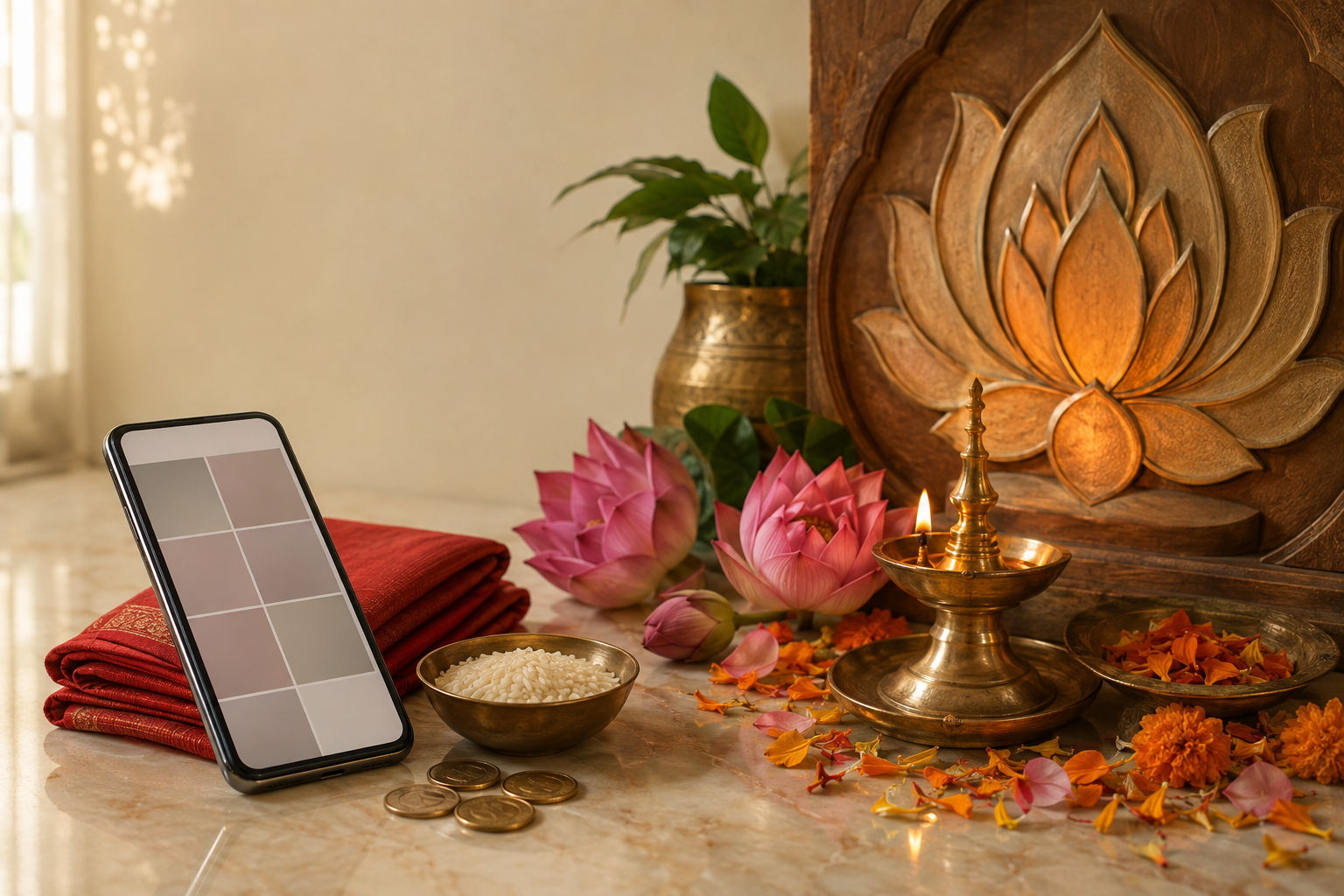
Your feed shows a spotless room, flowers, jewellery, gratitude rituals and a promise to “manifest abundance.” The creator calls it Lakshmi-maxxing. If you are Hindu, you may feel both recognition and unease: Lakshmi is being named, but is She being understood?
You do not have to choose between applauding every use of Hindu imagery and condemning every outsider who finds it beautiful. Ask a more useful question: does the content lead people toward Lakshmi as Devi and Hindu Dharma as a living tradition, or does it reduce Her to an aesthetic tool? That distinction tells you whether to welcome, clarify, challenge or disengage.
What Lakshmi-maxxing captures – and what it compresses

Lakshmi-maxxing is a social-media wellness trend built around qualities associated with Goddess Lakshmi, including beauty, abundance, purity, prosperity, cleanliness, gratitude and generosity. Those associations explain its appeal. They connect an attractive visual language with the ordinary desire to bring greater order, grace and purpose into life.
The compression happens in the word “maxxing.” Online, maxxing usually treats a quality as something to optimise: improve the room, appearance, confidence, income or personal brand. Lakshmi, however, is not merely a bundle of desirable traits. For Hindus, She is a worshipped Goddess. Beauty and prosperity may point toward Her, but they do not contain the whole of Her.
This is the first distinction to make in any conversation about the trend: a routine can be inspired by Lakshmi without being Lakshmi worship. A mood board is not a theology. A cleaned home is not automatically a puja. Gratitude and generosity may be worthy practices, but using them in a reel does not confer religious authority on its creator.
Before reacting, examine the content through these questions:
- Does it identify Lakshmi as a Hindu Goddess, or turn Her into a nameless “feminine abundance energy”?
- Does it present the routine honestly as Hindu-inspired, or claim that a newly assembled lifestyle is an authentic Hindu practice?
- Does prosperity include gratitude and generosity, or is it reduced to luxury, consumption and display?
- Are sacred names and images treated with respect, or used as decorative branding?
- When Hindus add context, does the creator listen, correct and credit, or dismiss the people whose tradition supplied the imagery?
No single answer settles every case. An account may credit Hinduism and still commercialise it crudely. Another person may begin with a shallow understanding but respond to correction with genuine interest. Judge the conduct and claims in front of you, not the creator’s surname, nationality or skin colour.
How to respond without wasting the opening
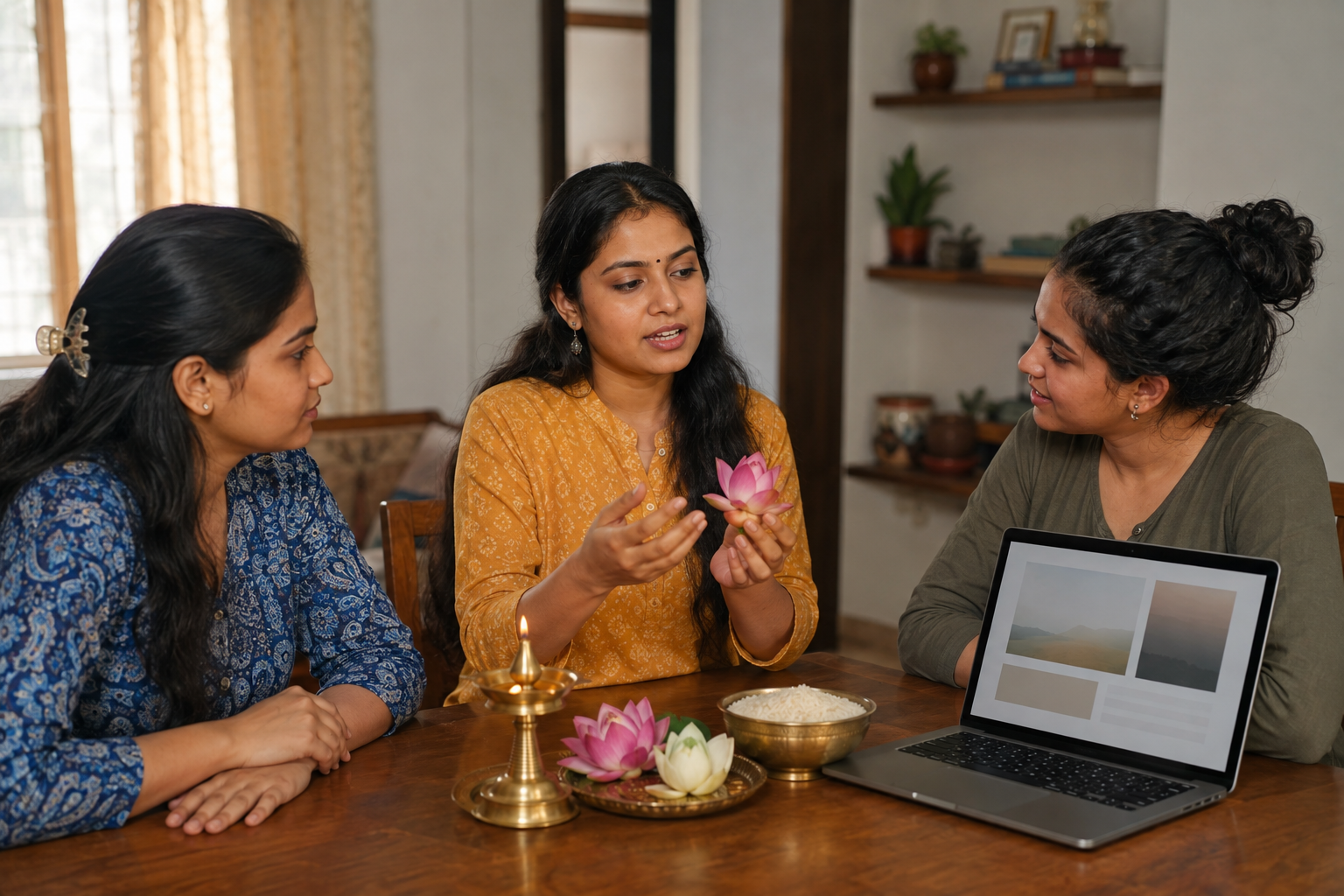
A public reply has two audiences. One is the creator. The other is everyone silently reading the comments. Write for the curious reader who may know nothing about Lakshmi and is deciding whether Hindu voices offer clarity or only hostility.
A useful response follows a simple sequence:
- Recognise what is accurate or sincerely attractive. This establishes that you are responding to the actual content rather than attacking interest in Hinduism itself.
- Name the missing religious fact. Say plainly that Lakshmi is a Hindu Goddess who is worshipped, not merely an archetype for wealth or femininity.
- Distinguish inspiration from practice. Ask the creator to describe a self-care routine as Lakshmi-inspired unless it comes from a recognisable Hindu tradition and is being represented accurately.
- Offer a next step. Invite the person to learn from a temple, a qualified teacher, a living sampradaya or a Hindu practitioner who can explain the relevant customs.
Your wording should match the situation. These are workable models:
- For sincere curiosity: "The connection with cleanliness, gratitude and generosity is a meaningful entry point. Lakshmi is also a worshipped Hindu Goddess, not just an abundance aesthetic, so it is worth learning about Her within Hindu tradition."
- For missing attribution: "Please name the Hindu origin here. Calling this a generic manifestation ritual removes Lakshmi from the living tradition in which She is worshipped."
- For an invented practice: "This may be your Lakshmi-inspired routine, but please do not present it as a traditional Hindu ritual unless you can identify the tradition and teacher behind it."
- For a commercial pitch: "Using Lakshmi’s name to sell this product creates a duty to explain the Hindu context and avoid promising material results that the product cannot guarantee."
- For mockery or deliberate disrespect: "Lakshmi is a sacred Hindu deity. This use is not harmless decoration; remove the disrespectful material and acknowledge why Hindus object."
Correct the central error instead of stacking every possible objection into the same comment. If the creator makes a correction, acknowledge it. If the person becomes abusive, save the relevant context, use the platform’s reporting tools when its rules are actually violated, and disengage. Do not dox, threaten or organise harassment. Defence of Dharma loses moral and persuasive force when it becomes personal intimidation.
Where appreciation ends and appropriation begins
“Appropriation” is often used as if it describes every encounter across a cultural boundary. That makes it less useful. A better approach distinguishes curiosity, adaptation, extraction and desecration, then responds proportionately.
- Appreciation names Lakshmi and Hinduism, treats sacred material respectfully, avoids false authority and remains open to correction. Welcome the interest and offer a path deeper.
- Shallow adaptation borrows appealing traits while leaving out religious meaning. Add context and ask for clearer labelling before assuming malice.
- Extraction uses Hindu sacred identity to build status, sell products or claim expertise while erasing Hindu origins or excluding Hindu voices. Challenge the commercial or authority claim directly.
- Desecration treats a worshipped deity as an object of ridicule or places sacred imagery in an intentionally degrading context. State the boundary firmly, document the use and seek removal through appropriate channels.
Commerce deserves special scrutiny because the incentive changes. A private beauty routine may simply be superficial. A paid course, product line or coaching programme can turn that superficiality into authority and profit. Ask what is actually being sold: an individual’s lifestyle, Hindu religious instruction, or a promise of wealth dressed in sacred language?
Do not treat manifestation content, devotional activity or a product carrying Lakshmi’s name as a guarantee of income, debt relief or investment success. Spiritual symbolism is not evidence for a financial claim. When money is involved, insist on honest descriptions and ordinary standards of proof.
Receptiveness is another strong signal. Someone who changes a caption, adds attribution and stops making unsupported claims has behaved differently from someone who deletes Hindu explanations while continuing to profit from the same imagery. Your response should register that difference. The goal is not to win a purity contest; it is to protect sacred meaning while leaving a genuine doorway open.
Build an online Hindu identity people can enter
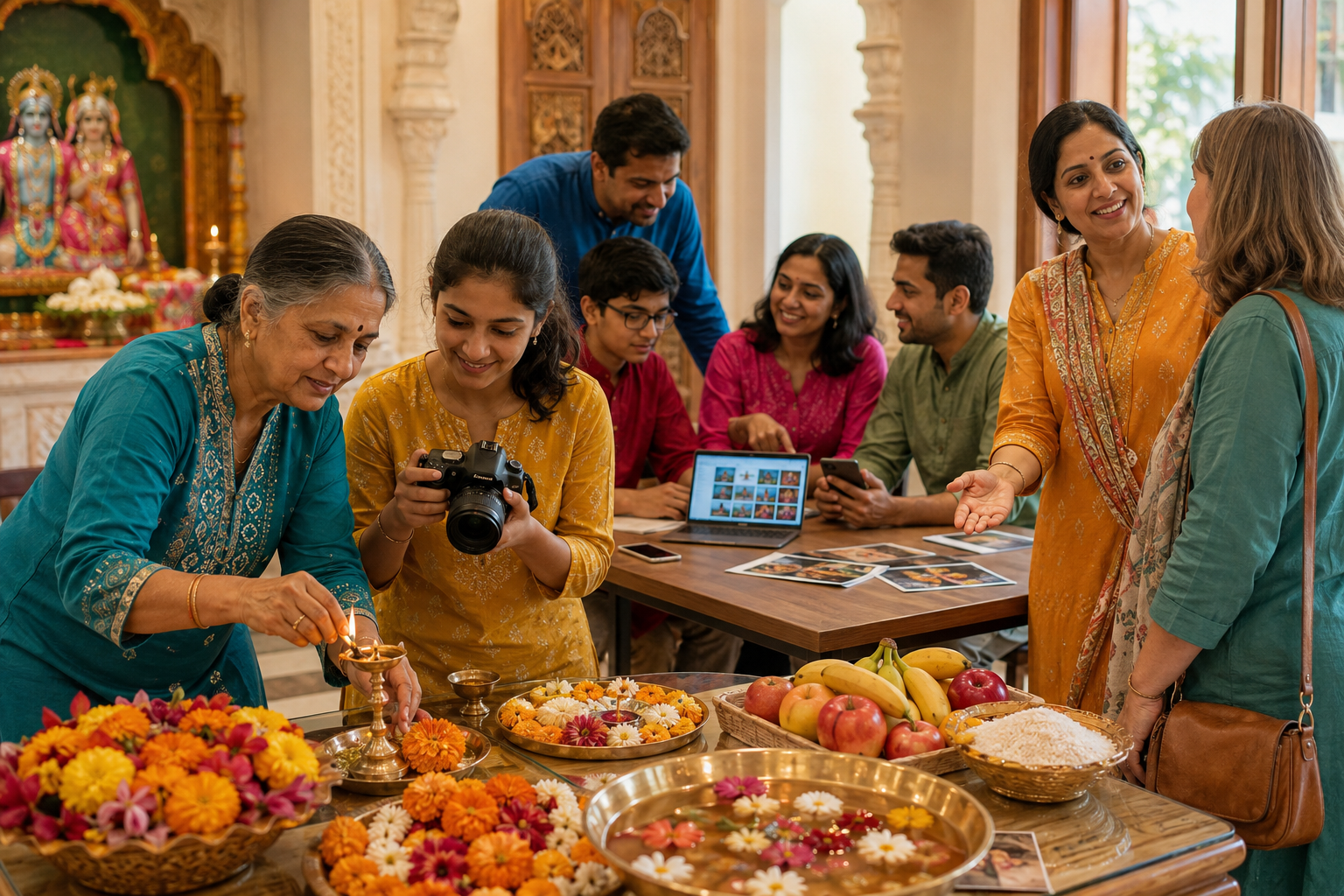
Hindus cannot control every trend, but we can make accurate Hindu identity easier to find than its imitations. That requires more than appearing in a comment section after something goes wrong. If your account discusses Dharma only when you are offended, a newcomer encounters Hindu boundaries without encountering Hindu beauty, discipline, philosophy or devotion.
The global encounter with Hindu Dharma did not begin with short-form video. Vivekananda and Yogananda developed audiences in the West, A.C. Bhaktivedanta Swami Prabhupada established ISKCON internationally, George Harrison embraced Hinduism, and Kauai Aadheenam developed a monastic Hindu presence in Hawaii. Celebrity interest does not validate Dharma; it shows that people outside India have long approached Hindu teachings through gurus, communities, music, temples and sacred symbols.
This history gives you a balanced position. Bharat is the civilisational homeland of Hindu Dharma, and removing that origin produces distortion. Yet Hindu identity cannot be reduced to ethnicity, a passport or loyalty to a political personality. A global seeker should not have to pretend that Lakshmi is detached from Bharat in order to approach Her, and a Hindu should not have to turn Dharma into an ethnic club in order to defend its roots.
If someone asks whether they can move from aesthetic interest toward Hindu practice, avoid a slogan such as “you can only be born Hindu.” Direct the person toward a living tradition. Sampradayas differ in teaching, discipline and forms of initiation, so no social-media account should promise a universal shortcut. A sincere invitation can be open without becoming vague: learn where a practice comes from, approach an appropriate teacher or community, and accept that commitment is more demanding than adopting an aesthetic.
If you create Hindu content, make the route from recognition to understanding visible:
- Name Lakshmi and Hindu Dharma early, rather than hiding the religious identity behind generic wellness language.
- Explain a Sanskrit term in plain language, but do not imply that a short definition exhausts its meaning.
- Say whether you are describing a family custom, a regional practice, a particular sampradaya or your own modern adaptation.
- Show affirmative practice and teaching between reactive posts about misuse.
- Keep civilisational context visible while distinguishing Dharma from party politics and status competition.
- Amplify Hindu women and younger diaspora practitioners who can address beauty, femininity and online culture in the language of the audience encountering the trend.
- Give curious people a credible next step: a local temple, an established community, a qualified guru or tradition-specific educational material.
Short content does not have to be shallow. A precise caption might say: "Lakshmi is worshipped in Hindu traditions as the Goddess associated with prosperity and auspiciousness. Cleanliness, gratitude and generosity can be inspired by Her symbolism, but a lifestyle routine is not the whole of Lakshmi worship." That sentence welcomes recognition, restores religious identity and prevents an invented routine from masquerading as inherited practice.
The wider lesson is not that Hinduism needs to become fashionable. Dharma does not acquire worth from an algorithm. The opportunity is that an algorithm can place Lakshmi’s name before someone who has never encountered Her. What happens next depends partly on whether Hindus offer a confident path beyond the image.
Key takeaways
- Celebrate sincere interest, but restore the essential fact that Lakshmi is a worshipped Hindu Goddess, not merely an abundance archetype.
- Distinguish a Hindu-inspired lifestyle routine from puja, inherited custom or tradition-specific religious teaching.
- Judge each use by attribution, accuracy, respect, commercial claims and willingness to accept correction.
- Use education for clumsy curiosity, direct challenge for extraction, and firm boundaries for deliberate disrespect.
- Do not answer cultural erasure with ethnic gatekeeping. Keep Dharma rooted in Bharat while giving sincere seekers a route into living traditions.
- Make positive Hindu teaching consistently visible so that a trend becomes a doorway rather than the public’s final understanding of Lakshmi.
The next time Lakshmi-maxxing appears in your feed, add what the format omitted: name Devi, identify the Hindu context and point toward genuine learning. Then publish something affirmative about Lakshmi before the algorithm moves on. Reclamation becomes durable when correction is followed by teaching.
References
