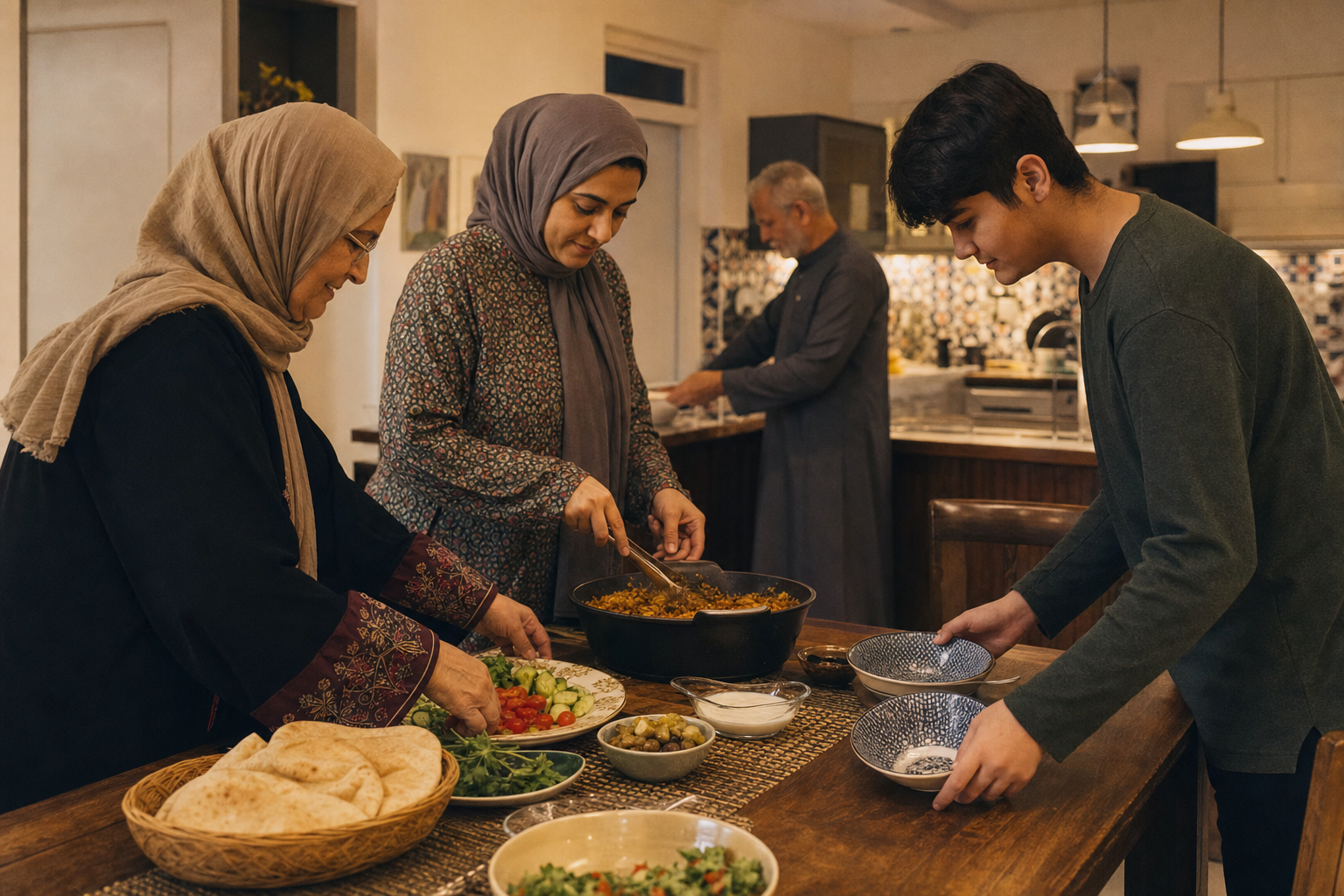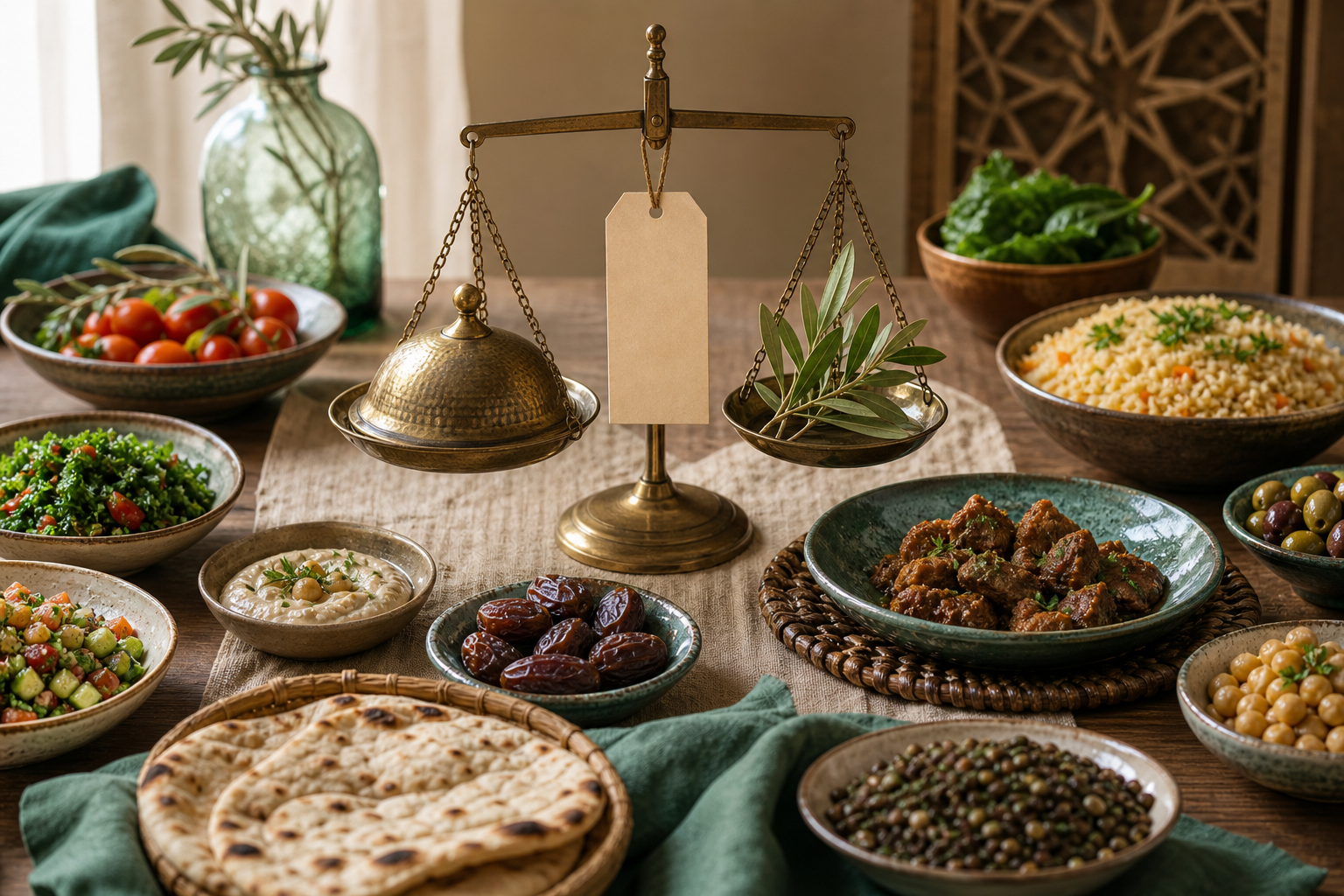
Halal food sits at the intersection of personal conscience, religious belonging, animal ethics and commercial regulation. Treating it only as a method of slaughter misses much of that complexity, but treating every halal label as evidence of a unified economic project goes beyond what the supplied material establishes.
A clearer discussion begins by separating the questions that are often compressed into one word: what halal means within Islamic jurisprudence, how it expresses identity, what ethical standards should govern food production, and how religious requirements become certification and market rules.
A moral category before it becomes a food label
The supplied Hindu Post article defines halal as that which is permissible or lawful under Islamic law. It presents halal alongside haram, or forbidden, as part of a broad classificatory framework governing conduct rather than food alone. The article illustrates that breadth by referring to financial and social practices as well as dietary rules.
This distinction matters because a supermarket label represents only one practical expression of a larger religious vocabulary. At the food counter, halal may appear to be a product attribute. For an observant consumer, however, choosing that product can be an act of fidelity to a moral boundary. The transaction therefore carries both ordinary consumer meaning and religious significance.
Religious identity should not be reduced to uniform behaviour. Individuals and communities can differ in interpretation, observance and the importance they assign to certification. Halal is consequently best understood as a shared normative category whose application may still involve judgement, trusted authorities and personal conviction.
Four ethical questions hidden inside one debate
Public arguments about halal often mix distinct kinds of ethical concern. The source notes that colloquial discussion can reduce the term to ritual slaughter or even use it as a general metaphor for killing. That linguistic shortcut can obscure the different standards by which a food practice might be assessed.
The first question is theological: what does a religious tradition permit or require? The second is empirical: how are animals actually handled, transported and killed in a particular supply chain? The third concerns consumer ethics: are ingredients, processes and certifications represented honestly? The fourth is civic: how can institutions respect religious practice while preserving voluntary choice for people with different convictions?
These questions need different evidence. A scriptural or jurisprudential explanation can clarify religious permissibility, but it cannot by itself establish comparative animal-welfare outcomes. Conversely, evidence about conditions in a facility does not settle the religious meaning of the practice. Claims about cruelty, compassion or superiority require information about actual procedures and outcomes, none of which is supplied in the excerpt.
A responsible ethical assessment would therefore examine welfare conditions consistently across production systems rather than assuming that a religious designation answers every question. It would also distinguish criticism of a verifiable practice from generalisations about the identity of the people who observe it.
When religious observance becomes market governance
The Hindu Post article advances a broader thesis: halal should be investigated as a regulatory and economic framework, not merely a dietary preference. It points toward certification, institutionalisation and global trade as the arenas in which a moral category can acquire commercial influence. This is the most consequential claim in the supplied excerpt, but it is presented there as an argument to explore rather than demonstrated with market figures, institutional comparisons or documented trade effects.
Any certification regime translates an abstract standard into operational decisions. Someone must define its scope, decide what counts as compliance, inspect or audit participants, authorise labels and address disputes. Producers may then organise sourcing and handling around those requirements, while consumers use the resulting mark as a signal of trust. In this limited sense, a religious rule can become part of market governance without ceasing to be a matter of personal observance.
That observation does not establish that halal institutions form a single coordinated system or possess a particular degree of economic power. Such conclusions would require evidence about certifying bodies, standards, fees, supply chains, enforcement and market concentration. Because only one article excerpt was supplied, its wider economic thesis cannot be corroborated across independent publications here.
The most useful policy questions are therefore concrete ones: Is participation voluntary? Is the label accurate and its standard intelligible? Can consumers identify the practices relevant to their own convictions? Are welfare and safety rules applied consistently? Are certification authorities accountable for the claims they approve? These tests permit scrutiny without either trivialising religious identity or presuming an unsupported institutional motive.
Key takeaways
- According to the supplied source, halal and haram constitute a broad religious framework of permission and prohibition, not merely a classification of meat.
- A halal food label can function simultaneously as an aid to religious observance, a commercial signal and the endpoint of a certification process.
- Religious permissibility, animal welfare, truthful labelling and freedom of choice are separate ethical questions requiring different evidence.
- The source proposes that halal has systemic economic significance, but the supplied excerpt does not provide enough evidence to measure or independently confirm that claim.
- Constructive scrutiny should focus on identifiable standards, practices and institutions rather than stereotypes about consumers or communities.
Future discussion will become more precise when participants identify which layer of halal they mean and match each claim with the evidence it requires. That approach leaves room for religious conviction, ethical criticism and transparent markets without collapsing them into a single political slogan.