
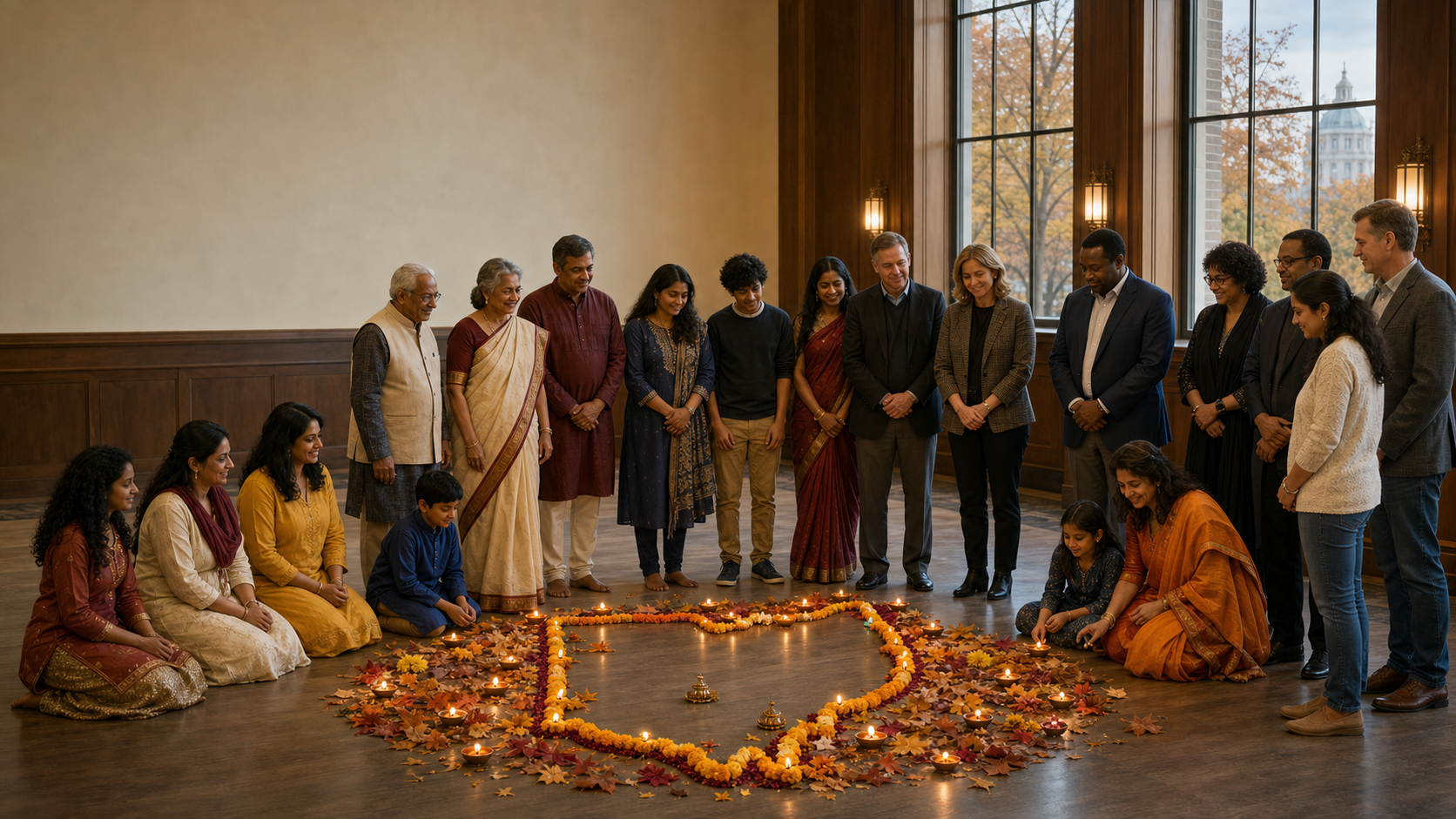
If you help at a temple or Hindu community group in Ohio, you may be wondering whether Hindu Heritage Month recognition changed anything beyond the proclamation ceremonies. It did: Hindu heritage gained formal acknowledgment from the state and from communities across Ohio. But the lasting value will come from what residents build around that acknowledgment.
In October 2025, Governor Mike DeWine issued a state proclamation while nearly 20 municipalities issued local proclamations. That combination matters. State recognition gives the observance wider visibility, while municipal recognition connects it to the officials, families, temples, and civic institutions closest to everyday life.
What Ohio officially recognized, and what it did not

The named municipalities were Shaker Heights, Solon, Parma, Westlake, Maple Heights, Brookpark, Middleburg Heights, Twinsburg, Avon Lake, Richfield, Cleveland, Brunswick, Berea, Richmond Heights, Rocky River, Seven Hills, Independence, and Strongsville. Their proclamations joined the statewide recognition issued by Governor DeWine.
That is a substantial civic achievement, but it should be described precisely. Ohio had a state proclamation for Hindu Heritage Month, and the listed municipalities had their own proclamations. A proclamation is an official public acknowledgment. It should not be described as a statute, a statewide public holiday, a school curriculum requirement, or a new legal entitlement unless a separate law or policy establishes one.
This distinction does not diminish the achievement. It protects it. Inflated claims are easy to challenge and can distract from what actually happened: public institutions acknowledged Hindu Americans, their heritage, and their contributions to Ohio. When you discuss the milestone, use the exact language of recognition and keep a copy of the relevant proclamation available.
Government recognition does not confer legitimacy on Hindu heritage; Hindu traditions do not need a proclamation to become worthy. The civic purpose is different. Public institutions should reflect the people they serve, and formal recognition tells Hindu residents that their history and presence belong within the public story of Ohio.
The civic process mattered as much as the ceremonies
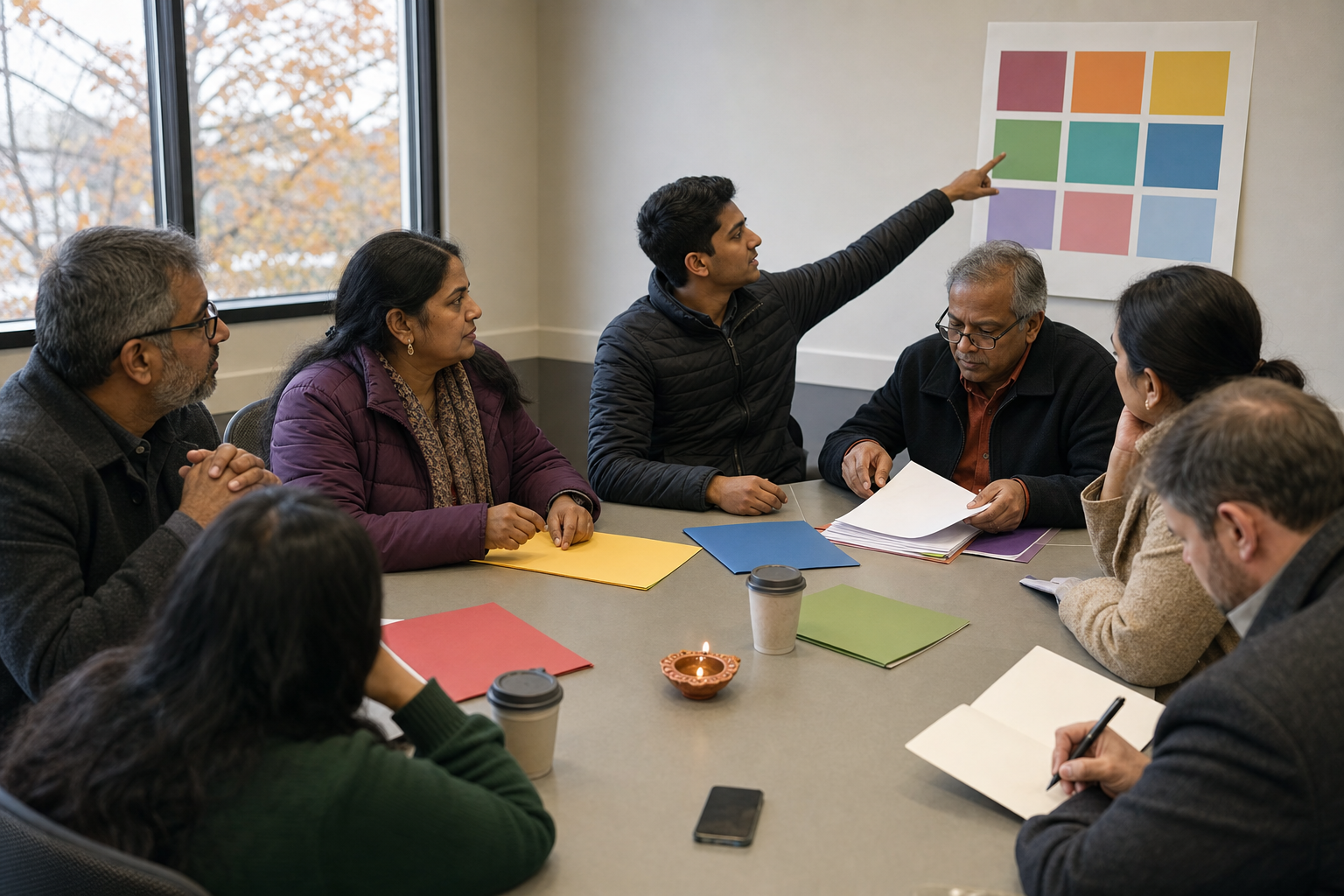
The recognitions grew from participation by young families, temple members, and other volunteers who contacted officials, attended council meetings, and received proclamations in person. The Cleveland chapter of the Coalition of Hindus of North America helped coordinate the effort. This was not recognition delivered to a passive audience. Hindu Ohioans entered civic spaces and explained their heritage in their own voices.
That face-to-face element is important. An official who meets local Hindu families is no longer dealing with an abstract demographic category. Residents become known constituents, community partners, physicians, educators, engineers, business owners, artists, parents, and students. The proclamation opens a relationship that can continue after Hindu Heritage Month ends.
If you participate in a future presentation, do more than pose for the photograph. Prepare a concise explanation of what the month recognizes. Connect Hindu heritage to contributions people can observe in their own community. Explain dharma as an ethical orientation expressed through responsibility and service, and place compassion, inclusivity, and respect for different paths in language a broad civic audience can understand.
- Bring verified local examples rather than relying on sweeping national claims.
- Invite families and young people to speak so that officials encounter a living community, not only organizational representatives.
- Thank the officials and staff members who handled the request, then retain their contact details for future educational or cultural work.
- Record who participated, what questions arose, and which explanation connected most clearly with the audience.
There is also an important Dharmic balance to maintain. Hindu Heritage Month should remain recognizably Hindu. At the same time, values such as compassion, ethical living, service, pluralism, and universal respect can create honest points of connection with Buddhist, Jain, and Sikh communities. Connection should reveal kinship without treating distinct traditions as interchangeable.
Ohio’s two-year momentum offers a repeatable civic model
Ohio’s work was not confined to one October. The 2025 results followed 17 Hindu Heritage Month recognitions secured in 2024. The movement from 17 recognitions to nearly 20 municipal proclamations and a state proclamation shows the practical value of returning, following up, and widening the circle of participating communities.
A community seeking recognition elsewhere can adapt that pattern without waiting for a large statewide campaign:
- Define the exact request. Ask for a proclamation recognizing October as Hindu Heritage Month. Do not combine it with unrelated policy demands.
- Start with residents. A request grounded in people who live, work, worship, study, or operate businesses in the municipality gives officials a clear local reason to engage.
- Present an accessible Hindu account. Name Hindu heritage directly, describe local contributions, and explain Dharmic values without hiding the tradition behind generic language.
- Offer public participation. Tell the relevant office that residents are willing to attend a council meeting or proclamation presentation and briefly explain the observance.
- Close the civic loop. Thank participants, preserve the proclamation, share accurate information with the community, and maintain the relationship rather than returning only when the next request is due.
- Build continuity. Treat each recognition as a foundation for the next year and as a credible example when approaching a neighboring municipality.
The underlying mechanism is simple: distributed local participation makes a broad campaign possible. One central organization cannot substitute for residents who know their city, can attend its meetings, and can show officials that Hindu heritage is part of local civic life.
Turn formal recognition into public understanding
A request officials can act on
Before sending a request, ask the mayor’s office, city clerk, or other appropriate municipal contact how that jurisdiction handles proclamations. Procedures differ, so obtain the current instructions directly rather than assuming another city’s process applies.
Your request packet should identify resident contacts, state the requested month, explain the local relevance, and offer a community representative for the presentation. Keep unsupported statistics and partisan language out of it. Officials need a clear civic request, not a complete account of Hindu civilization.
Sample wording: We are residents of [City] requesting a proclamation recognizing October as Hindu Heritage Month. Hindu American families contribute to our community through education, healthcare, engineering, business, and the arts. This recognition would also affirm the values of dharma, compassion, inclusivity, and universal respect. Community members would be glad to attend a public presentation and explain the observance to our neighbors.
Replace the bracketed language and general claims with details you can verify locally. If your community has temple programs, charitable work, cultural instruction, or long-standing professional contributions that can be documented, describe them briefly and accurately.
A follow-through plan residents can see
A proclamation becomes more useful when the public has an opportunity to encounter the heritage being recognized. Choose an activity your community can deliver well, such as a temple open house, an educational program, a youth-led cultural presentation, or a service activity connected to the values named in the proclamation.
Keep institutional boundaries clear. A municipal proclamation does not automatically authorize a school lesson, library display, or event in another public institution. Approach each institution separately, follow its procedures, and present the proclamation as evidence of civic recognition rather than as a command that the institution must participate.
Preserve the record as carefully as you celebrate it. Save a readable copy of the proclamation, the issuer’s name, the date, the municipality, the wording used, and the names of community contacts. That archive will help future volunteers avoid rebuilding the campaign from memory and will make later public claims easy to verify.
Count more than proclamations when judging progress. Ask whether officials now know whom to contact, whether young Hindus had a meaningful role, whether neighbors learned something accurate, whether a public activity followed the ceremony, and whether the community is prepared to continue the relationship. Those outcomes tell you whether recognition is becoming part of civic life.
Key takeaways
- Ohio’s October 2025 milestone combined a state proclamation from Governor Mike DeWine with proclamations from nearly 20 municipalities.
- The achievement was formal civic recognition, not evidence of a new statute, mandatory curriculum, or statewide public holiday.
- Resident participation gave the campaign its substance: families, temple members, and volunteers contacted officials, attended meetings, and accepted proclamations.
- The 2025 results built on 17 recognitions in 2024, showing why continuity and relationship-building matter.
- The strongest next step is to pair accurate recognition with public education, preserve the civic record, and prepare for continued engagement.
If your municipality participated in 2025, decide what visible community contribution will accompany its next recognition. If it did not, prepare a concise resident-led request, verify the local proclamation process, and ask. Ohio’s experience shows that Hindu civic presence grows when communities return to public life with accuracy, confidence, and a willingness to serve.
References
