
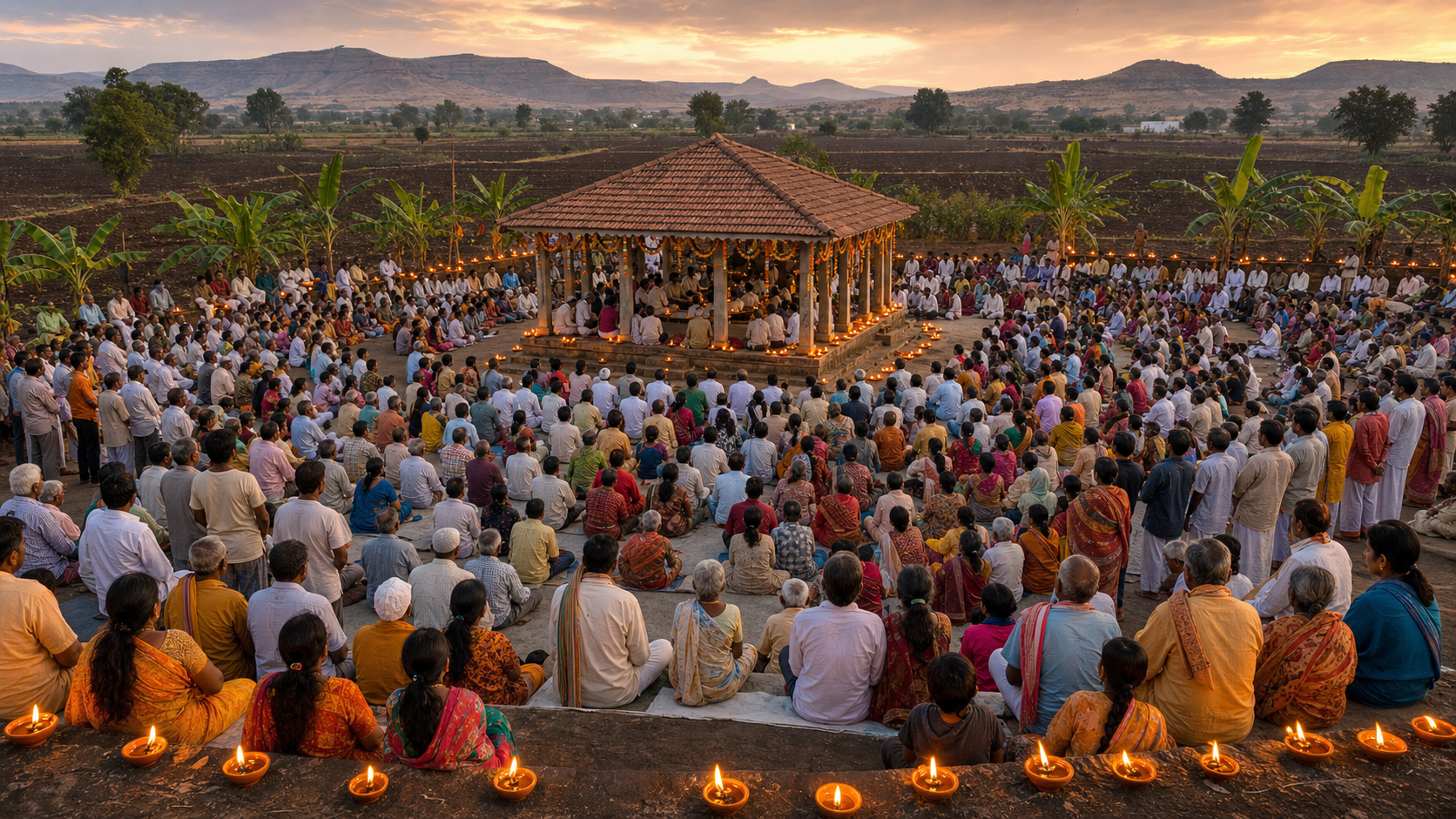
If news of Jalgaon’s Hindu Rashtra-Jagriti Sabha reached you through a speech, photograph, or forwarded message, the useful question is not only how large the gathering was. It is whether the event offers a credible model for Hindu unity that you can support or reproduce in your own community.
The answer depends on what happens after the assembly. Thousands convened in Jalgaon around dharmic values, cultural heritage, harmony, and community responsibility. That is significant. Yet a crowd becomes a community only when shared language is defined carefully, differences are respected, and public pledges become accountable seva.
Key takeaways
- The established significance of the Jalgaon gathering lies in its combination of Hindu unity, cultural continuity, respectful dialogue, and service.
- Rashtra was presented at the Sabha as an ethical and social community grounded in dharma, not merely as a narrow political demand. That event-specific meaning should not be imposed on every use of the term.
- Dharmic solidarity does not require Hindu, Buddhist, Jain, and Sikh traditions to surrender their distinct teachings, institutions, or practices.
- The strongest follow-through is a bounded local project with consent, named responsibility, a clear result, and a public account of what was completed.
What the Jalgaon gathering actually establishes
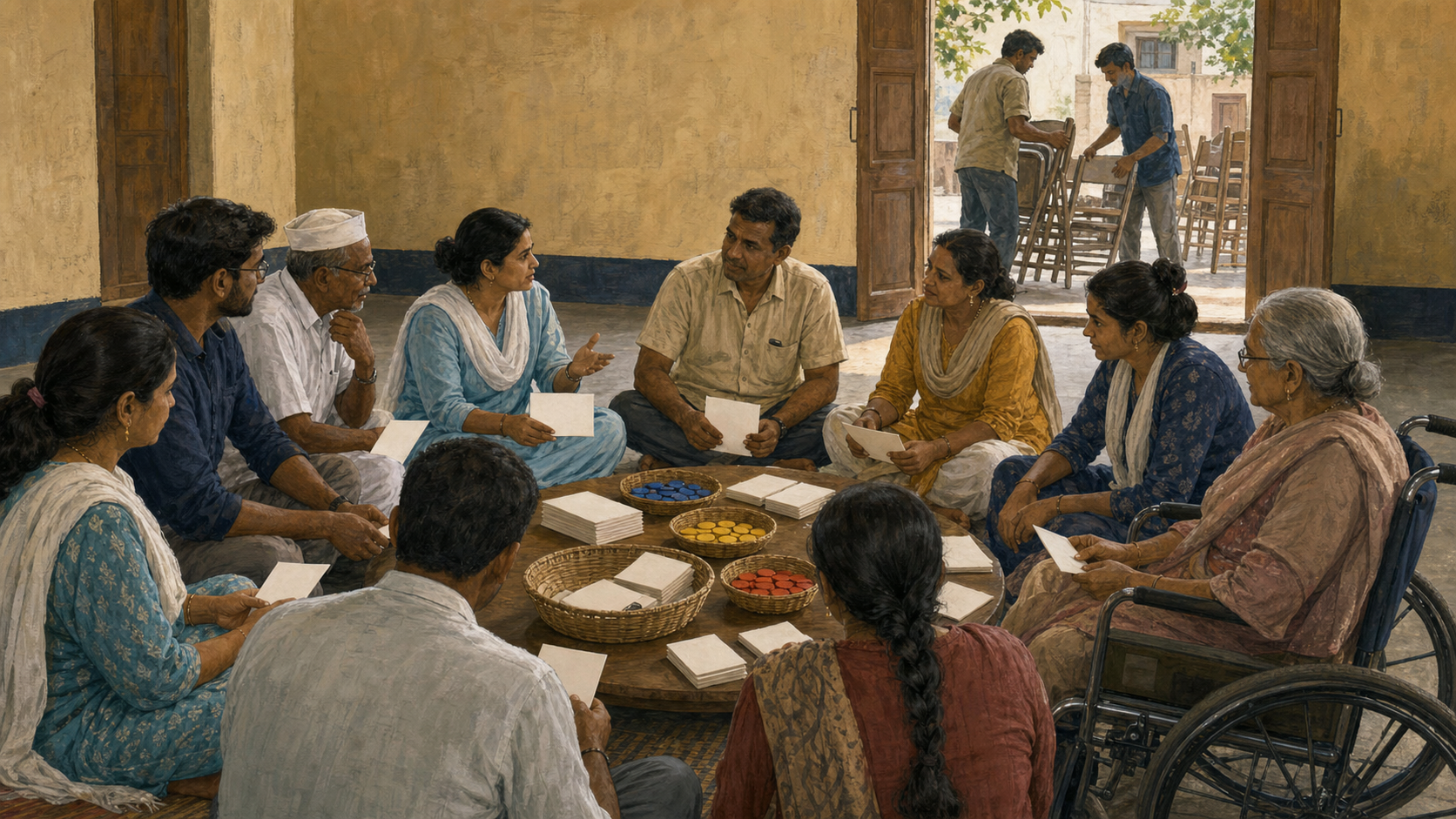
The Hindu Rashtra-Jagriti Sabha brought thousands of people together in Jalgaon for a public affirmation of Hindu unity. Its stated priorities extended beyond collective devotion. They included heritage preservation, care for sacred spaces, educational support, youth engagement, ethical conduct, respectful dialogue, and collaborative seva.
That combination matters. Cultural confidence becomes durable when it asks something of the participant. Preserving a temple, transmitting knowledge, mentoring a young volunteer, or serving a local need requires discipline after the speeches have ended. The gathering therefore gives you a better test than attendance alone: did it create relationships and responsibilities capable of surviving the event?
The Sabha also placed Hindu unity within a wider dharmic horizon encompassing Hinduism, Buddhism, Jainism, and Sikhism. Read that as an ethical aspiration toward civilizational kinship. Do not turn it into an unverified claim that every Buddhist, Jain, or Sikh institution participated in or formally endorsed the event. Respectful solidarity begins by distinguishing an invitation to common ground from an assertion of organizational consent.
If you share information about the Sabha, keep the description precise: thousands gathered in Jalgaon around Hindu unity, heritage, harmony, and seva. Do not add a date, venue, speaker roster, institutional endorsement, or formal resolution unless you have verified it independently. A cause does not become stronger when its supporters decorate a sound claim with details they cannot establish.
Define Rashtra and unity before asking for agreement
Hindu Rashtra is a phrase that different listeners may interpret differently. At Jalgaon, Rashtra was framed as an ethical and social community shaped by dharma, non-violence, plural perspectives, and mutual respect. That framing places duties before domination: preserve what is sacred, serve society, seek truth, and make room for more than one spiritual path.
You should still ask any organizer using the phrase to explain what it requires in practice. Does it demand honest conduct from one’s own side? Does it protect the dignity of another sampradaya? Does it produce service open to people beyond the organizing circle? Does it restrain demeaning rhetoric? A definition that cannot answer such questions is too vague to guide community life.
Ahimsa and Anekantavada help sharpen the test, but they should be used accurately. Ahimsa asks us to restrain needless harm in conduct and speech. Anekantavada is a specifically Jain articulation of the many-sided character of reality and the limits of a single viewpoint. These concepts can support dialogue across dharmic traditions without pretending that every tradition explains them identically.
The same honesty should govern the word unity. Hindu unity does not mean that Shaiva, Vaishnava, Shakta, Smarta, folk, regional, and other traditions must collapse into one ritual or authority. Wider dharmic fellowship certainly does not mean that Hindus, Buddhists, Jains, and Sikhs become interchangeable. Unity is strongest when it establishes a common moral floor while leaving each tradition free to maintain its own theological and institutional home.
Build solidarity without flattening the sampradayas
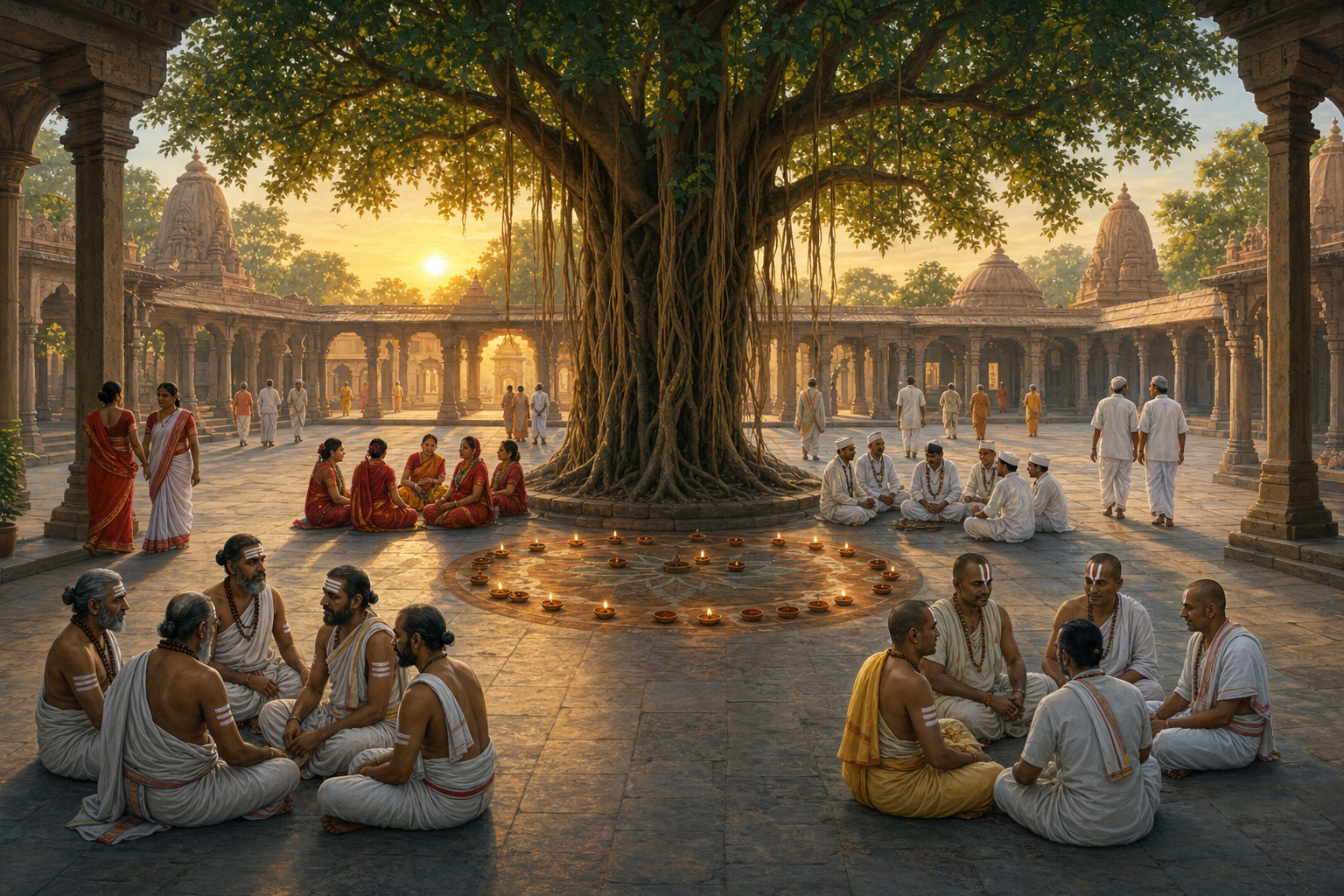
A practical coalition should state what its members are doing together and what remains outside the coalition’s scope. Heritage care, relief work, education, neighborhood service, and defense of lawful access to sacred spaces may provide common work. Questions of doctrine, initiation, ritual authority, or internal discipline should remain with the communities to which they belong.
Use the following safeguards when organizing a similar gathering:
- Let each participating tradition describe itself. Do not assign beliefs to a Buddhist, Jain, Sikh, or Hindu sampradaya merely to make the program sound more unified.
- Separate participation from endorsement. Attendance at a public event does not automatically authorize the use of a person’s or institution’s name in later advocacy.
- Design collective prayer or reflection so that nobody must violate the discipline of their own path. Shared silence, separately led invocations, or a clearly explained cultural program may be more honest than an artificial blended ritual.
- Record genuine disagreements instead of forcing a decorative consensus. A coalition can cooperate on seva even when its members retain different understandings of theology, history, or public policy.
- Give young people operational responsibility. Documentation, heritage research, volunteer coordination, educational work, and follow-up are more formative than treating youth as an audience for speeches.
These boundaries do not weaken unity. They prevent resentment and misrepresentation from being stored beneath a ceremonial display of agreement. Plurality becomes a civilizational strength when people can cooperate without being asked to disappear.
Make the next sabha produce visible local seva
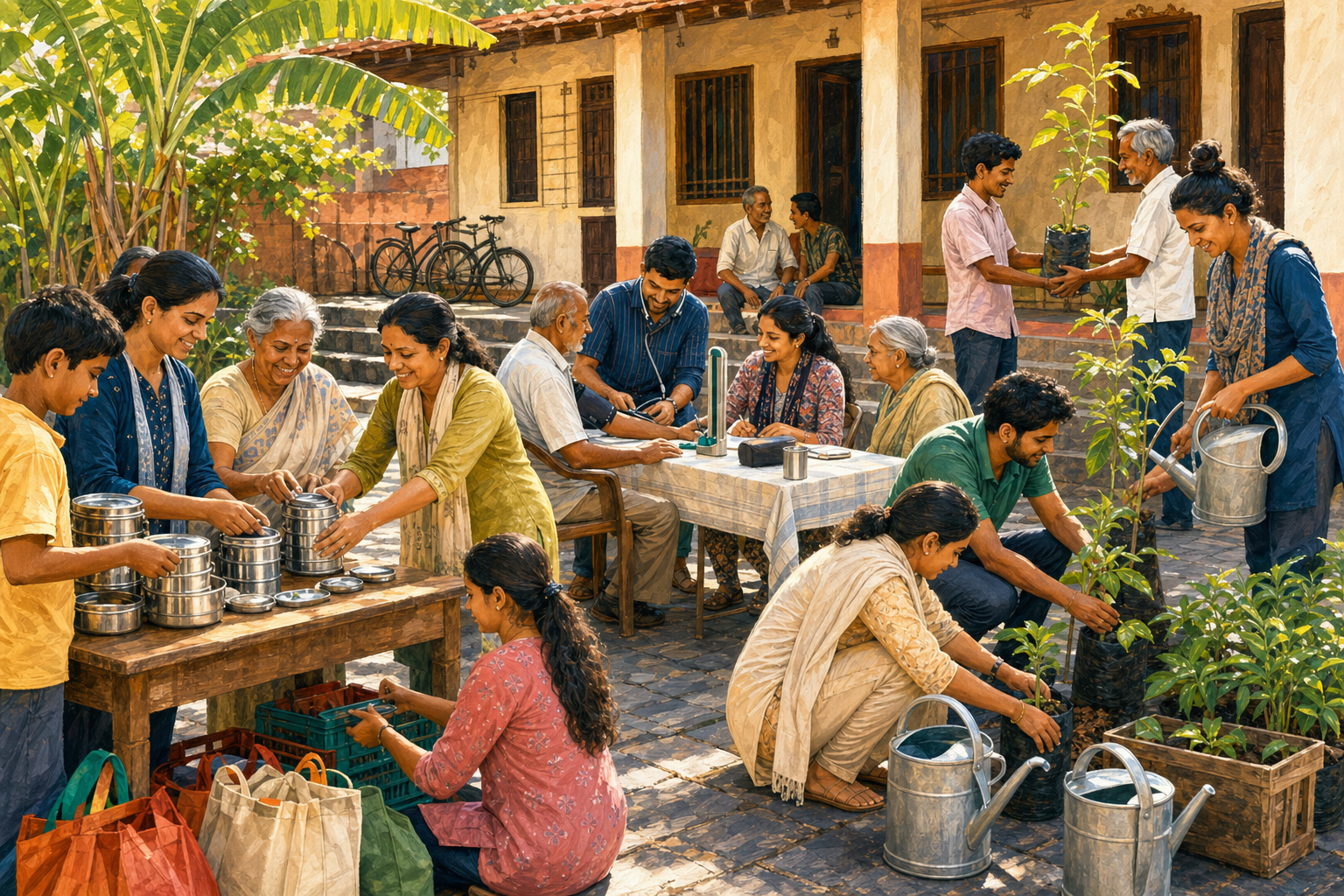
If you want to carry the Jalgaon spirit into your locality, begin with one bounded need rather than another expansive pledge. Choose work that fits the themes already placed at the center of the Sabha: sacred-space care, heritage preservation, educational support, youth participation, or dialogue across communities.
Build the project around a simple accountability test:
- Purpose: state the local need in plain language. A phrase such as heritage awareness is too broad; identifying, documenting, and responsibly transmitting a defined body of local knowledge is actionable.
- Consent: ask the temple trust, institution, community, or intended beneficiaries what help is actually wanted. Seva should answer a need, not create a stage for the volunteer.
- Scope: decide what completion looks like before collecting volunteers. Keep the first effort small enough that the group can finish it and learn from it.
- Ownership: assign responsibility to named people or participating bodies. Collective responsibility without an owner often becomes no responsibility at all.
- Plurality: write down what participants share and where they remain autonomous. This is especially important when several sampradayas or dharmic religions are involved.
- Follow-through: publish a plain account of what was done, what remains incomplete, and who is responsible for the next step. Do not substitute photographs of the launch for evidence of completion.
Apply the method carefully to sacred spaces. Contact the responsible custodians before cleaning, moving, repairing, cataloguing, or photographing anything. Volunteers should not alter an object, structure, inscription, or ritual area without permission and appropriate competence. Heritage preservation can be damaged by enthusiastic but unauthorized intervention.
For education, define the learner and the intended outcome. A youth session on shared dharmic values should distinguish common ethical concerns from tradition-specific teachings. When a community’s doctrine is discussed, ask a knowledgeable practitioner from that community to review the material. Accuracy is itself a form of respect.
For dialogue, choose a concrete question and end with a concrete output. Participants might agree on a service project, a process for handling misrepresentation, or a method for supporting a local heritage institution. Dialogue that produces neither understanding nor responsibility soon becomes ceremonial.
Before you forward the next slogan or attend the next gathering, ask who owns the follow-through and what result the community expects to see. If there is no answer, offer a bounded project and help carry it to completion. Jalgaon’s deeper promise will be fulfilled wherever public unity matures into disciplined, truthful, and respectful seva.
References
