
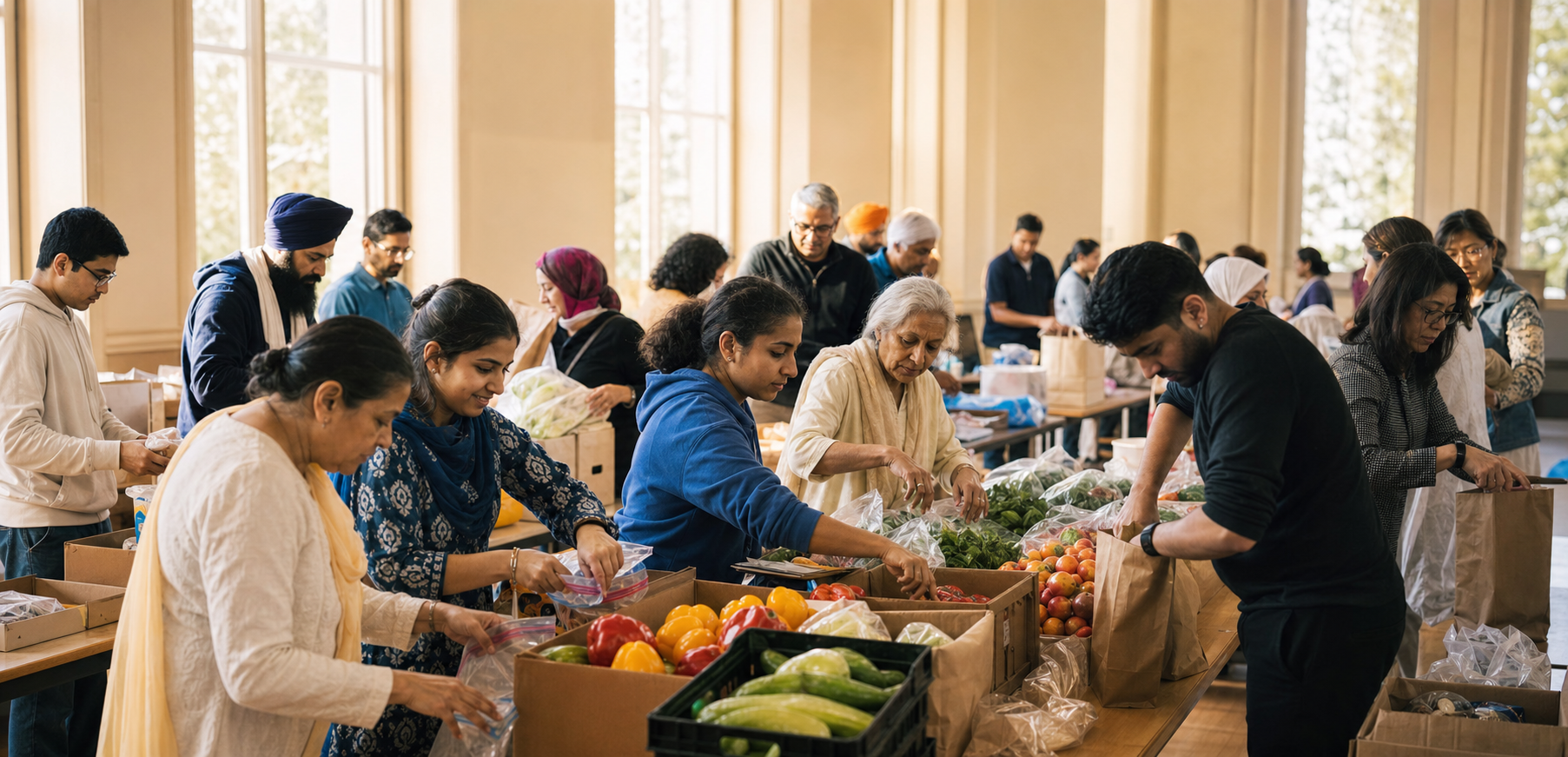
You may already have willing people: temple volunteers, Sikh sevadars, Jain families, Buddhist practitioners, teachers, professionals, and young people who want to help. The difficulty is getting them around one table without reducing unity to a photograph, a slogan, or an argument over whose theology should lead.
If you are forming a local Dharmic council, reviving a dormant association, or trying to coordinate several institutions, build in sequence: agree on conduct, define authority, complete one useful project, and earn the right to grow. A community becomes dependable through repeated service and accountable decisions, not through the size of its opening event.
Key takeaways
- Build unity around shared conduct and public service, not forced agreement on doctrine.
- Adopt a one-page charter before collecting money, issuing statements, or using a member institution’s name.
- Use seven operating streams to see the whole field, but begin with only two: seva and transparent planning.
- Run a small, recurring service project before attempting a large conference, campaign, or permanent institution.
- Protect trust with written safeguards, factual incident records, visible accounts, and a defined correction process.
Begin with a common Dharmic floor, not a merged theology

Dharmic unity does not mean pretending that Hindu, Buddhist, Jain, and Sikh traditions teach the same metaphysics. Their doctrines, disciplines, institutions, and histories remain distinct. Cooperation becomes honest when no participant must conceal those differences as the price of admission.
The common floor should govern conduct rather than belief. Ahimsa restrains the means you use. Karuna and daya direct attention toward suffering. Seva and dana turn concern into work. Satya requires accuracy even when a misleading claim would help your faction. Aparigraha places limits on possession and institutional appetite. Sarbat da bhala asks whether the outcome contributes to the welfare of all.
Bhagavad-gita 5.29 supplies a particularly useful discipline for Hindu-led organization. It identifies the Supreme as the ultimate beneficiary of sacrifice, the proprietor of all worlds, and the well-wisher of every being. Srila Prabhupada distilled these three relationships for public communication in 1966. Applied to community work, they produce three practical rules: resources are held in trust, leadership is service rather than personal enjoyment, and no program may treat another being as disposable.
A Buddhist participant need not affirm a Vaishnava account of divine proprietorship in order to support stewardship and compassion. A Jain participant need not soften the rigor of ahimsa or aparigraha. A Sikh participant need not detach seva from courage and responsibility. The platform should let each tradition reach shared civic duties through its own authoritative vocabulary.
Use three layers to keep this distinction clear:
- Conviction: Each participating institution retains authority over its teachings, worship, initiation, discipline, and representation.
- Conduct: Everyone accepts truthfulness, nonviolence, restraint, dignity, financial integrity, and service.
- Cooperation: Members act together only where the purpose, method, beneficiaries, and risks have been explicitly agreed.
Before approving a proposal, ask three questions: Who benefits? Who bears the cost or risk? Would we use the same language if a respected person from another Dharmic tradition were in the room? A project that depends on humiliation, collective blame, or the concealment of facts has already failed the Dharmic test, whatever cause appears on its banner.
Write a one-page charter before creating a public platform

Enthusiasm is useful at the first meeting and unreliable by the fifth. People remember verbal agreements differently, especially when money, publicity, institutional names, or political pressure enters the room. A one-page charter gives the group a standard that can outlast the mood of its founders.
Put one sentence of purpose at the top. A workable version is: We preserve the independence of our traditions while cooperating in truthful, nonviolent, and service-oriented work for community well-being. Then settle six matters in plain language:
- Scope: Name the neighborhood, town, campus, or district being served. Do not claim to represent an entire religious community unless a legitimate mandate exists.
- Doctrinal independence: State that joint activity does not authorize one member to interpret, endorse, or speak for another tradition.
- Conduct: Prohibit hate, dehumanization, threats, deliberate misinformation, provocation, and pressure to participate in another tradition’s worship.
- Decisions: Define who may propose, approve, pause, or cancel a project. Record both the decision and the person responsible for carrying it out.
- Money and assets: Require a budget, receipts, two-person review, disclosure of conflicts, and a written account after each project. No one should approve their own reimbursement.
- Names and communication: Require explicit permission before using an institution’s name, logo, premises, mailing list, photographs, or public endorsement.
The core team needs functions, not ornamental titles. Assign a convener, a project coordinator, a treasurer or record keeper, a communication lead, and a safeguarding or risk lead. One volunteer may cover more than one function during the pilot, but financial approval and project leadership should not rest entirely with the same person.
Representation must also change decisions. If a youth representative, a woman, a smaller institution, or a minority tradition is present but never receives information early enough to shape a proposal, the seat is ceremonial. Circulate the agenda before the meeting, record objections without caricaturing them, and send minutes within a fixed period. Seven days is a reasonable local standard if the charter does not specify another.
Keep the charter short enough to read aloud. Detailed financial, safeguarding, and event procedures can sit in separate policies. The charter’s job is to establish the promises that nobody may suspend merely because a controversy feels urgent.
Use seven operating streams, but activate only what you can sustain
A useful seven-function model for grassroots Dharmic organization separates work that is often mixed together. It helps you notice missing capacity before a gap becomes a crisis:
- Seva: Deliver relief or a recurring public benefit. The first deliverable should be one project card naming the need, beneficiary, lead, budget, risks, and review date.
- Shiksha: Provide values education, heritage learning, or legal and civic literacy. Begin with one session that has a named teacher, a defined audience, and materials participants can examine.
- Samskara: Support the transmission of rites, etiquette, family responsibilities, and intergenerational practice. Begin by documenting what local families are actually at risk of losing.
- Samvaad: Create a process for dialogue and dispute resolution. Begin with a listening circle governed by time limits, accurate restatement, and no personal accusations.
- Suraksha: Establish lawful safety, de-escalation, safeguarding, and risk awareness. Begin with an emergency contact sheet and named responsibility for each event.
- Sanskriti: Preserve language, festivals, arts, places, and community memory. Begin with a small, consent-based inventory rather than an ambitious archive nobody can maintain.
- Satya-sankalpa: Keep plans evidence-based and reporting transparent. Begin with a decision log, basic accounts, and a quarterly public update.
This model is a map, not a command to create seven committees immediately. New groups usually dilute responsibility by launching too many programs at once. Begin with seva and satya-sankalpa: do one useful thing and document it honestly. Add samvaad when multiple institutions need a regular way to resolve differences. Add the remaining streams only when a named person, a realistic schedule, and enough resources exist to keep the promise.
Every proposed stream should pass a continuity test. Ask who will run it when the founder is traveling, tired, or no longer in office. Ask where the records will live, who can access them, and which expenses recur. If the answer is one person’s phone, memory, or private account, you do not yet have a community function. You have an individual effort that the community may lose without warning.
Do not confuse scale with maturity. A modest language class that meets reliably, protects children, pays its expenses transparently, and develops a second teacher is institution-building. A large gathering with no follow-through may create enthusiasm, but it has not yet created capacity.
Let a twelve-week seva cycle create trust before expansion
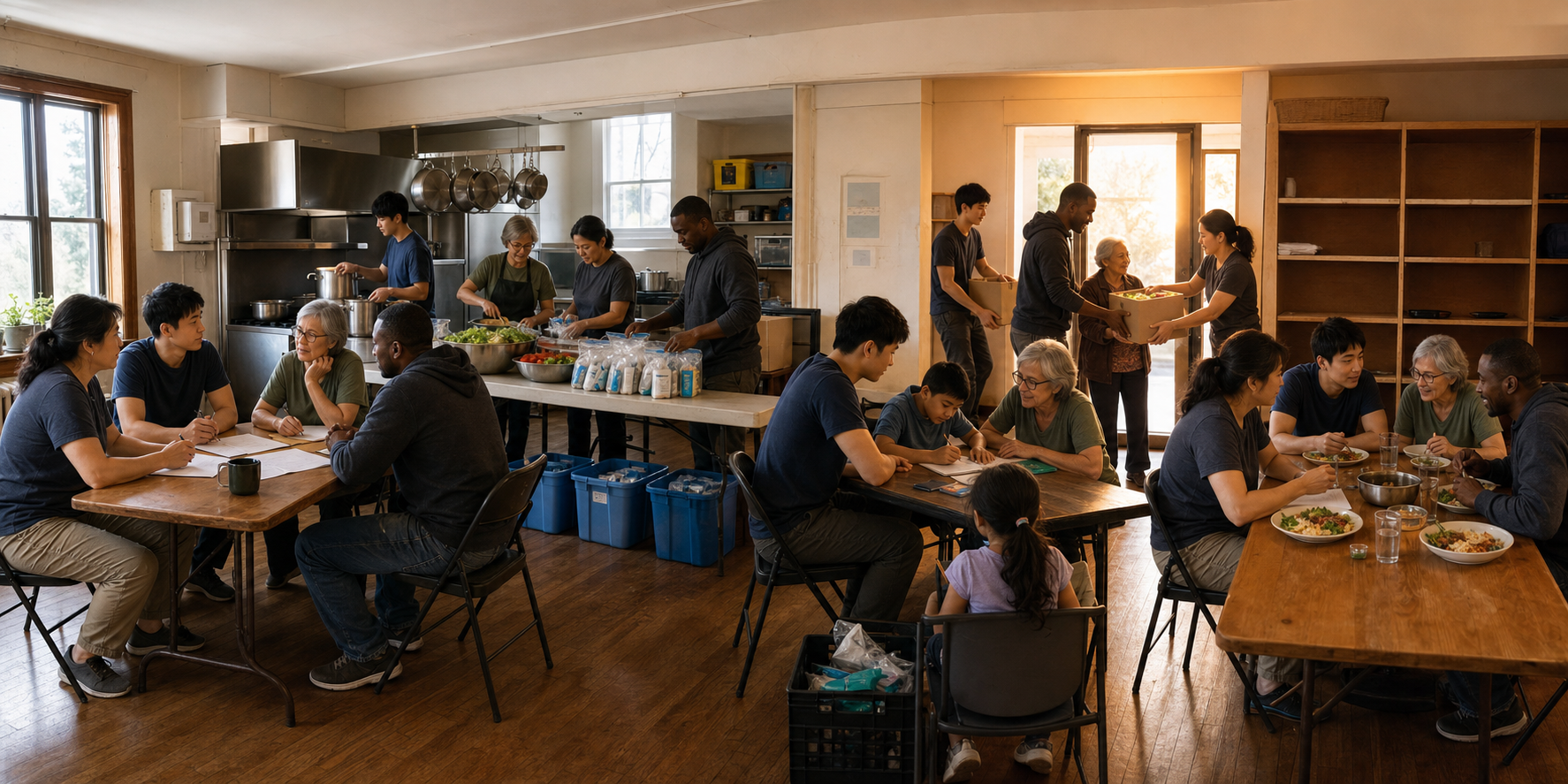
The best first project is useful even if no speech is delivered and no photograph is published. Community kitchens, ecological cleanups, heritage classes, youth programs, and local relief can all unite people, but the right choice depends on actual capacity. A food project requires hygiene and distribution planning. A cleanup requires permission, equipment, and safe disposal. A youth activity requires safeguarding. Do not label a project simple merely because volunteers find its purpose appealing.
A twelve-week pilot is long enough to reveal whether the group can listen, decide, deliver, account, and improve:
- Week 1 – listen: Ask each participating institution to name one local need, one asset it can contribute, and one risk it cannot accept. Record the answers before proposing a solution.
- Week 2 – choose: Select one project that addresses a visible need, permits meaningful work by several partners, has manageable safety and legal requirements, and can be measured without invading anyone’s dignity.
- Weeks 3 and 4 – prepare: Confirm the local partner or beneficiary, permissions, budget ceiling, volunteer roles, safety plan, communication rules, and cancellation authority. Put every item on one project card.
- Weeks 5 to 10 – deliver: Run the activity at a predictable cadence. Keep a simple attendance and expense record. Note problems while they are fresh instead of reconstructing them at the end.
- Week 11 – review privately: Ask what worked, what caused friction, who carried invisible labor, whether anyone was placed at unnecessary risk, and what should stop or change.
- Week 12 – report publicly: Publish the purpose, work completed, volunteer contribution, money received and spent, unresolved issue, and next decision. Protect private information and do not turn beneficiaries into promotional material.
Measure the result that matches the project. Useful indicators can include volunteer hours, continued youth participation, cultural practices documented, dialogue sessions completed, legal-literacy sessions delivered, and use of services by vulnerable residents. Grassroots organizers have used these kinds of participation, cultural, capacity, and integrity measures to create a quarterly learning loop.
Numbers need interpretation. Ten people who return, learn their roles, and can train others may matter more than a large one-time audience. Volunteer hours may show effort without proving that the service met the need. Pair each count with one short explanation: what changed, what remains uncertain, and what the next cycle will test.
Repeat the pilot once before adding a major new program. The second cycle reveals whether the first success came from a durable process or from extraordinary effort by a few people. If the same volunteers remain overloaded, improve role design before recruiting more beneficiaries or making larger promises.
Protect unity under pressure and build a credible first year
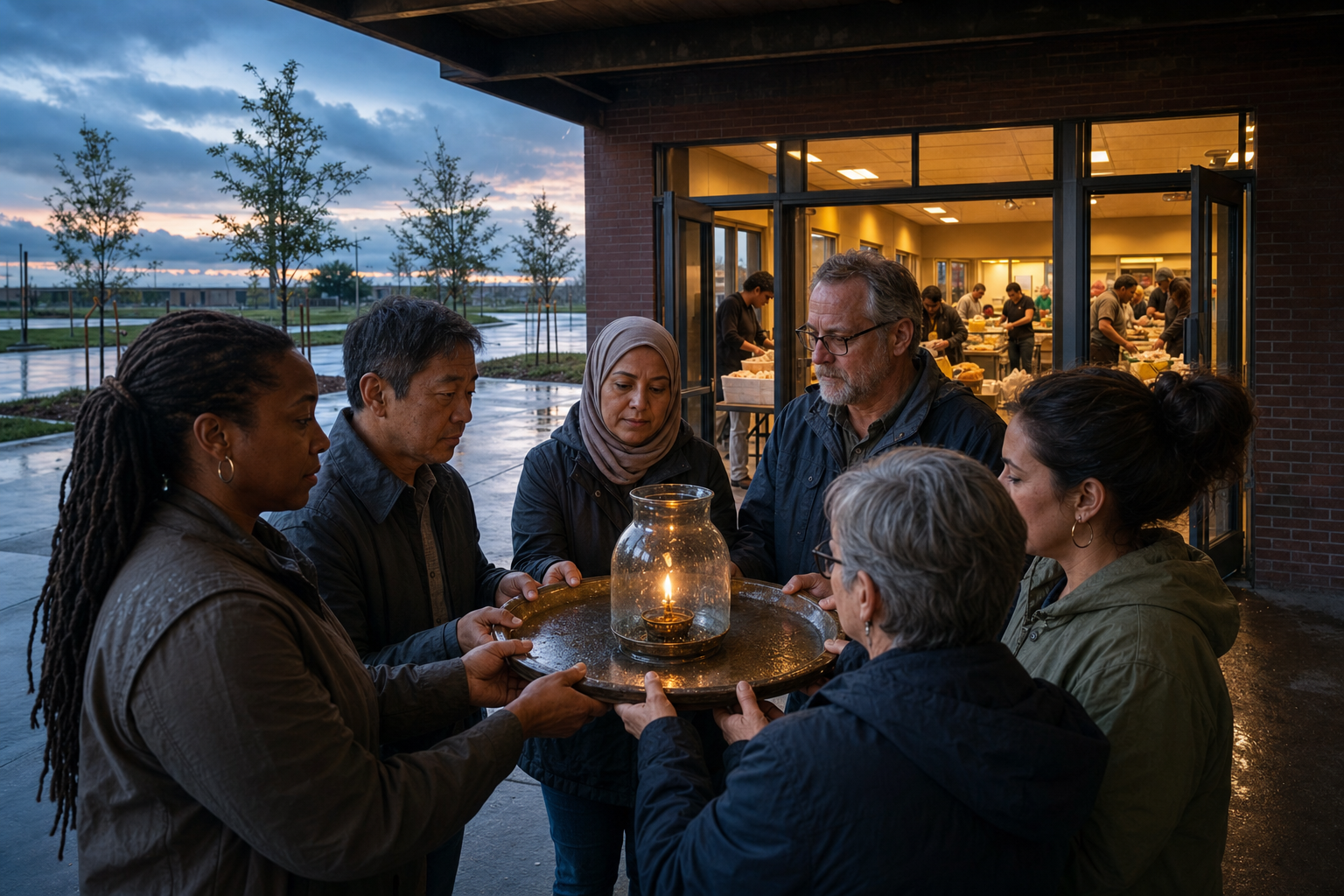
A unity platform is tested when an allegation spreads, an event becomes tense, an institution feels misrepresented, or a leader wants an immediate public response. Speed can make a group appear decisive while destroying the trust it took months to build. Create the response process before you need it.
When a disputed claim enters the group:
- Pause forwarding and public comment through official channels.
- Record the exact claim, where it originated, what is directly observable, and what remains interpretation.
- Ask two designated people to verify material facts and contact the affected institution privately.
- Separate the grievance from the proposed remedy. A real concern does not automatically justify every demanded action.
- If safety, criminal conduct, defamation, privacy, or another legal issue may be involved, seek qualified local advice and use the appropriate authorities rather than conducting a social-media trial.
- Record the decision. If the group circulated something inaccurate, correct it through the same channels that carried the error.
Incident notes should be factual: time, place, observable words or actions, witnesses, immediate risk, and action taken. Do not guess motives or assign collective guilt. Limit access to people with a legitimate role. A file of sensitive allegations is not a publicity archive.
For public events, name responsibility for crowd flow, first response, liaison with the venue, and the safety of women, children, elders, and people with disabilities. Publish a code that prohibits hate, disinformation, threats, and provocation. These de-escalation, safeguarding, documentation, and liaison practices turn nonviolence from a sentiment into an operating standard.
Nonviolence does not mean ignoring danger or suppressing legitimate grievances. It means using proportionate, truthful, lawful means while protecting people from retaliation and spectacle. Any appeal to proprietorship or Dharma that licenses contempt contradicts the equally important duty of universal well-wishing toward every being.
Once the pilot works, use the first year to establish a rhythm:
- Months 1 to 3: Map participating institutions, approve the charter, assign core roles, and complete the first seva cycle.
- Months 4 to 6: Correct the process, run a second micro-project, begin a shared calendar, and hold the first structured inter-Dharmic dialogue.
- Months 7 to 9: Train youth as program stewards, offer legal-literacy and digital-safety sessions, and document one vulnerable area of local cultural heritage.
- Months 10 to 12: Review finances, participation, safeguards, cultural outcomes, and leadership load. Publish a year-end account and approve only those commitments the next team can sustain.
This sequence reflects a practical twelve-month community roadmap: a representative team, a short charter, two documented service projects, quarterly dialogue, recurring legal and digital education, youth stewardship, and transparent updates. Adapt the frequency to local capacity, but publish the cadence so members know when decisions and accounts are due.
A sixty-minute monthly meeting can remain disciplined: five minutes for conflicts and charter compliance, ten for results since the last meeting, twenty for the next project decision, ten for safety and safeguarding, ten for accounts, and five for named commitments. Put each commitment beside a person and a date. Anything without an owner is a wish, not a decision.
At your next gathering, do not begin by asking everyone to endorse a grand vision. Bring a blank one-page charter, identify one local need that several traditions can serve without doctrinal compromise, and book the review date before launching the work. If you can serve, account, correct, and return for a second cycle, Dharmic unity has already moved from aspiration to institution.
References
- Dandavats – From Second Avenue to a Global Ethos: Srila Prabhupada’s 1966 Peace Formula for Dharmic Unity
- Hindu Jagruti Samiti – Sakal Hindu Sammelan in Padel, Devgad: 400+ Unite to Galvanize Dharma-Rakshan and Harmony