
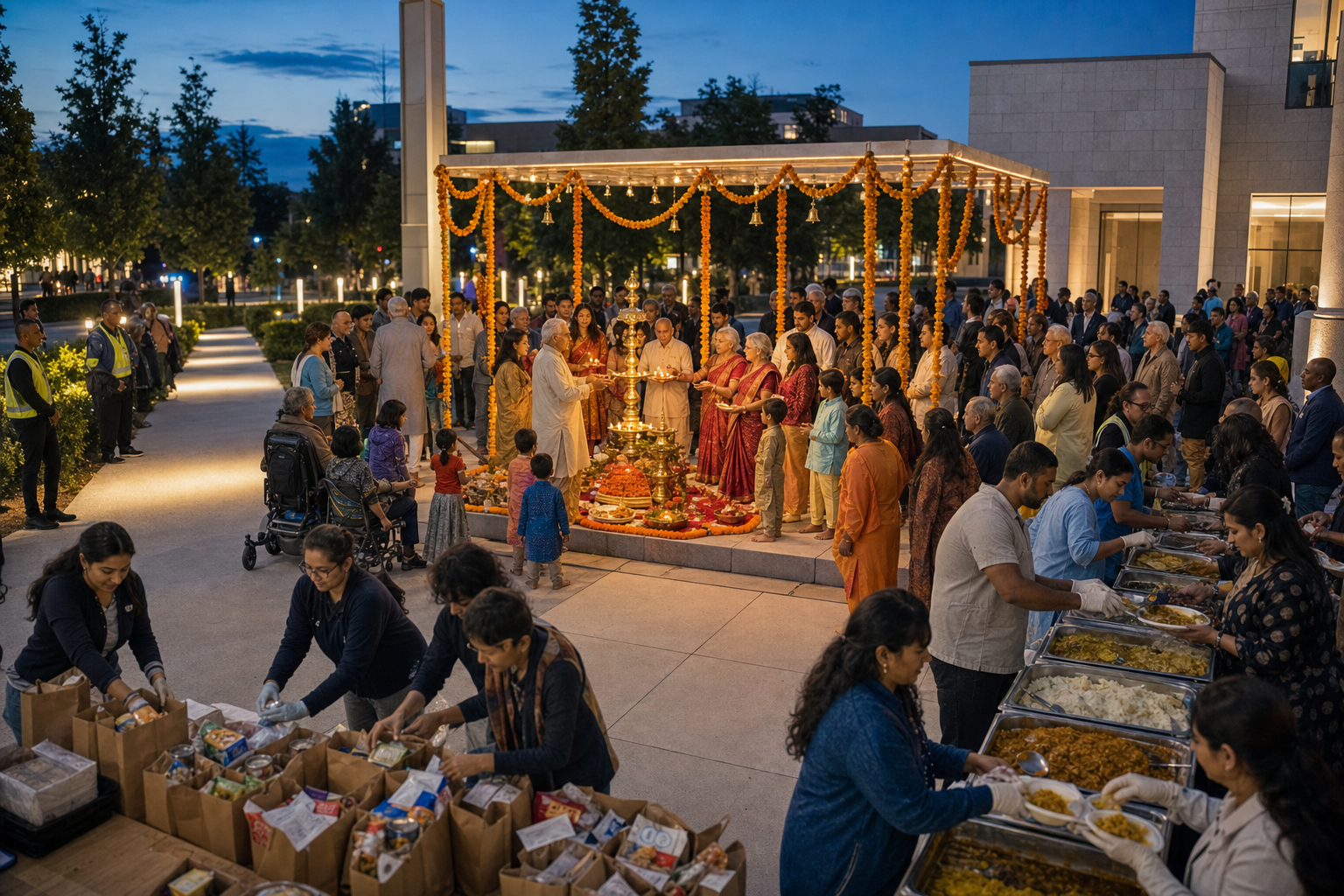
If you are trying to take a puja, festival, film, procession, seva project or teaching out of a family room and into a school, park, cinema or town hall, the difficult question is not whether diaspora life will change its presentation. It will. The question is whether you will direct that change without surrendering the tradition’s integrity.
The most reliable approach is to protect the sacred core, explain enough for a newcomer to enter respectfully, connect the gathering to a public good and prepare for hostility without allowing fear to dictate the culture. That gives you something more durable than visibility: a tradition that can be practised, understood, defended and handed on.
Build every public gathering around three clear layers
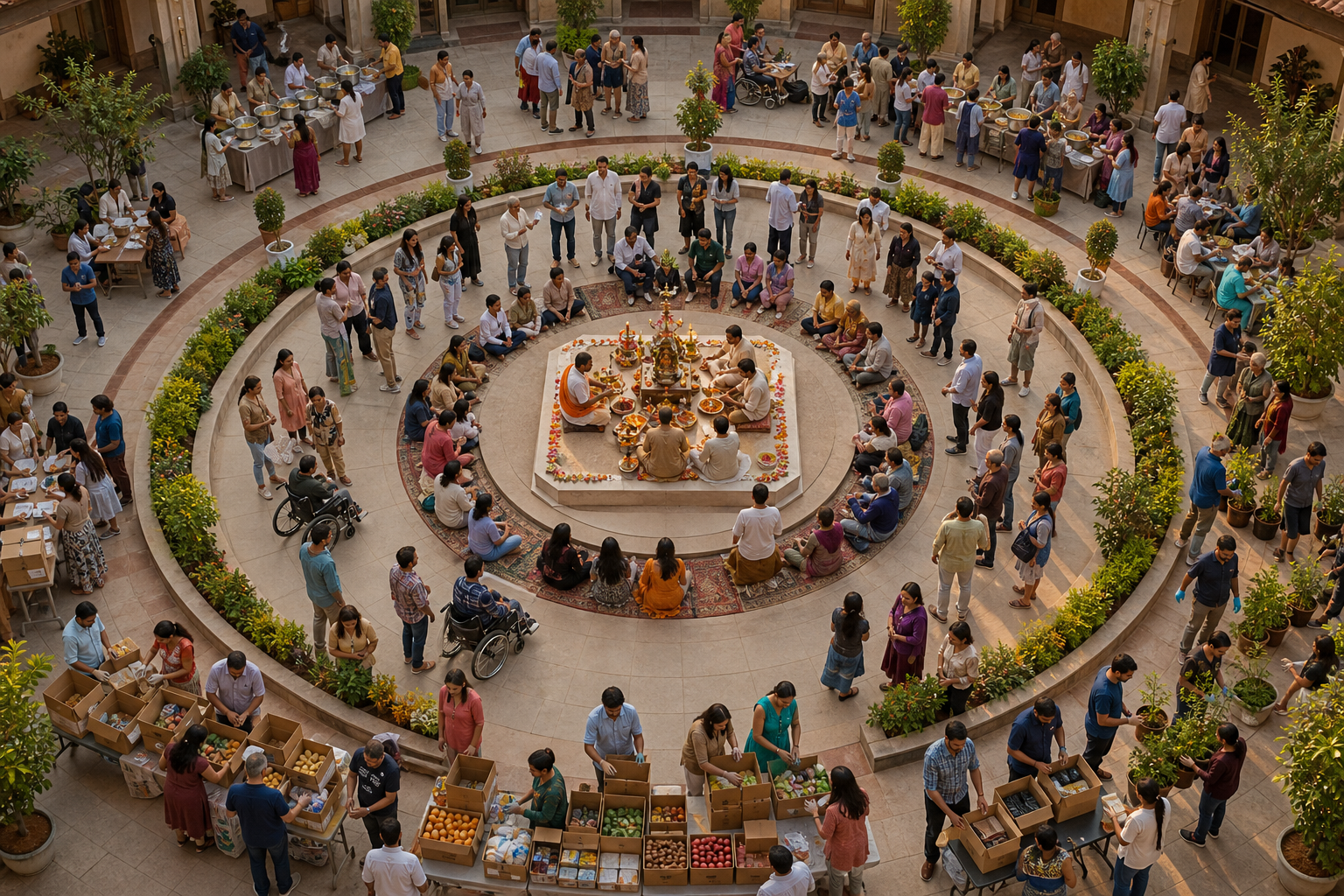
A diaspora event often fails in one of two directions. It can become so inward-facing that visitors see beautiful actions but cannot understand what they mean. Or it can be made so broadly accessible that the ritual becomes decoration for a generic multicultural celebration. Neither result gives the public a truthful encounter with Dharma.
You can avoid that choice by designing three layers deliberately:
- The sacred core: the prayer, teaching, image, recitation, offering, discipline or observance that makes the gathering what it is. Practitioners with recognised responsibility for the tradition should decide what belongs here and what may be adapted.
- The interpretive bridge: a concise explanation of what is happening, why it matters, how guests may participate and where respectful observation is more appropriate. This is translation, not simplification into whatever a host institution finds familiar.
- The civic contribution: the act of hospitality, service, education, charity or care through which the gathering benefits people beyond its regular membership.
London’s first public Kukur Tihar offers a useful example of this architecture. Puja, marigold garlands and red tika retained the recognisable Hindu observance, while gratitude for canine loyalty gave people from different backgrounds an immediate point of entry and support for Nepal’s KAT Centre connected affection for dogs with animal welfare.
The lesson is not that every observance needs to become an animal-welfare event. It is that the civic element should grow from the meaning of the tradition. A food drive can fit an annadana programme. Environmental care can fit a gathering centred on rivers, trees or the interdependence of life. Support for the vulnerable can express seva. The public contribution should disclose the ethic of the observance, not be attached as an unrelated publicity device.
Before approving an event plan, ask three questions in order: What must remain intact? What must a visitor understand? What good will the gathering do? If your team cannot answer the first question, the event is not ready to be interpreted. If it cannot answer the second, it is not ready for the public. If it cannot answer the third, it may be visible without becoming part of civic life.
Translate the tradition without flattening Dharmic differences
A newcomer usually needs practical orientation before philosophical detail. What is about to happen? Must shoes be removed? May someone decline tika, prasad, a bow or a photograph? Is a chant open to everyone? Which area contains objects that should not be handled? Can a visitor enter late or leave during the observance?
Answer those questions before the event and repeat the essentials at the entrance. Do not make a guest choose between accidental disrespect and anxious withdrawal.
A useful public-language kit contains:
- A short description naming the actual tradition, community and observance. Use Hindu, Buddhist, Jain or Sikh terminology where that is the truthful description instead of hiding everything under vague phrases such as Eastern spirituality.
- A pronunciation guide for the few terms guests will hear repeatedly, followed by a plain explanation rather than a misleading one-word substitute.
- Clear distinctions between actions that are required of practitioners, open to willing guests, or reserved for an initiated or designated person.
- A visible statement about photography, food, clothing, physical contact and access to sacred objects.
- The name or role of the person who can answer questions about ritual practice. Event volunteers should not improvise theology when they do not know the answer.
- A way for interested visitors to continue: the next gathering, a class, a seva activity, a temple or community contact.
The word Dharmic is valuable when it identifies civilizational kinship and space for cooperation. It becomes misleading when it erases difference. Hindu darshanas, Buddhist schools, Jain traditions and Sikh teachings are not interchangeable versions of one doctrine. Ahimsa, seva, gratitude, discipline and the interdependence of life can provide meeting points, but the traditions do not define every term in the same way or give it the same theological place.
Let each community describe itself in its own vocabulary. If an inter-Dharmic programme addresses compassion, for example, allow Hindu, Buddhist, Jain and Sikh participants to explain how compassion is cultivated within their own practices. Do not ask a single speaker to manufacture a synthetic creed on everyone’s behalf.
This distinction also matters for children raised in the diaspora. Giving them a costume and a stage appearance may produce a pleasant photograph, but it does not necessarily give them ownership. Give younger participants real responsibilities: learning the correct names of ritual objects, introducing a reading, explaining a symbol, helping with accessibility, interviewing elders for a community archive or coordinating a service activity. Participation becomes inheritance when a young person can explain what the community is doing and why.
Turn a one-day celebration into a repeatable public practice
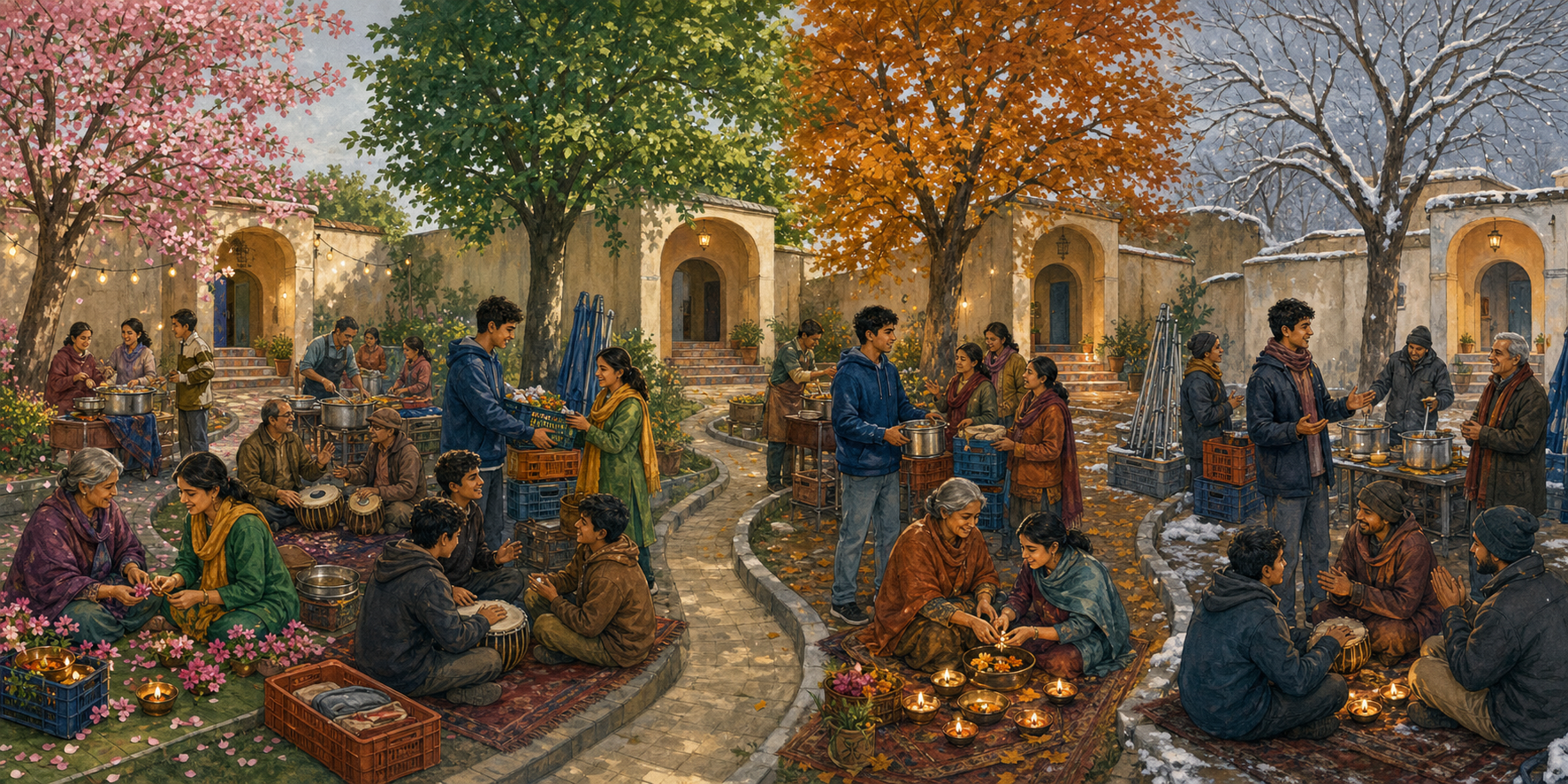
A successful gathering should leave behind more than photographs. It should make the next gathering easier to organise, safer to host and more intelligible to the public. Build that continuity into the plan from the beginning.
- Write the purpose in one sentence. Name the observance, the community hosting it and the public invitation. If the sentence could describe any cultural event, it is too vague.
- Separate essentials from adaptations. Make one list of elements required for religious or cultural integrity and another of elements that may change with the venue. A sacred recitation may be essential; seating, translation, sound equipment or the order of explanatory remarks may be adaptable.
- Map the people you are actually inviting. Regular practitioners, children, neighbours, civic representatives, journalists and curious passers-by need different kinds of orientation. Do not assume that everyone of Indian ancestry already understands the practice.
- Assign authority by function. Name a ritual lead, operations lead, accessibility contact, safety lead, media contact and welfare lead where animals or vulnerable participants are involved. One person may hold more than one role, but no responsibility should exist only in everyone’s imagination.
- Publish boundaries with the invitation. State the location, access arrangements, expected conduct, photography policy, food information and whether advance registration is required. Tell guests whether participation in blessings or ritual actions is optional.
- Design the path through the event. A visitor should be able to move from welcome to orientation, observance, explanation, fellowship or service, and then to a clear next step. Do not leave the meaning of the event to an emcee’s improvisation.
- Record what should survive. Preserve approved explanations, pronunciation notes, supplier contacts, access requirements, incident records and the changes requested by practitioners. Remove personal information that does not need to be retained.
Hospitality is most credible when it respects consent. Do not pressure a visitor to receive a mark, eat prasad, pose for a photograph or imitate a sacred gesture. Explain the invitation and make declining easy. Participation freely chosen carries more meaning than participation produced by social pressure.
If animals are involved, welfare outranks ceremony and photography. The handler controls whether an animal is approached or touched. Provide water, a quiet withdrawal area and a route away from crowds. Do not force an animal to wear a garland, receive tika or remain in a stressful setting. Ritual leadership determines the religious form; the handler determines what the animal can safely tolerate.
After the gathering, ask questions that reveal continuity rather than vanity: Did practitioners recognise their tradition? Could a newcomer explain the central meaning accurately? Were the boundaries clear? Did younger members hold substantive roles? Did the venue want to host the community again? Did anyone who attended take a next step? Attendance matters, but these answers tell you whether public culture is actually taking root.
Treat safety as a condition of cultural freedom
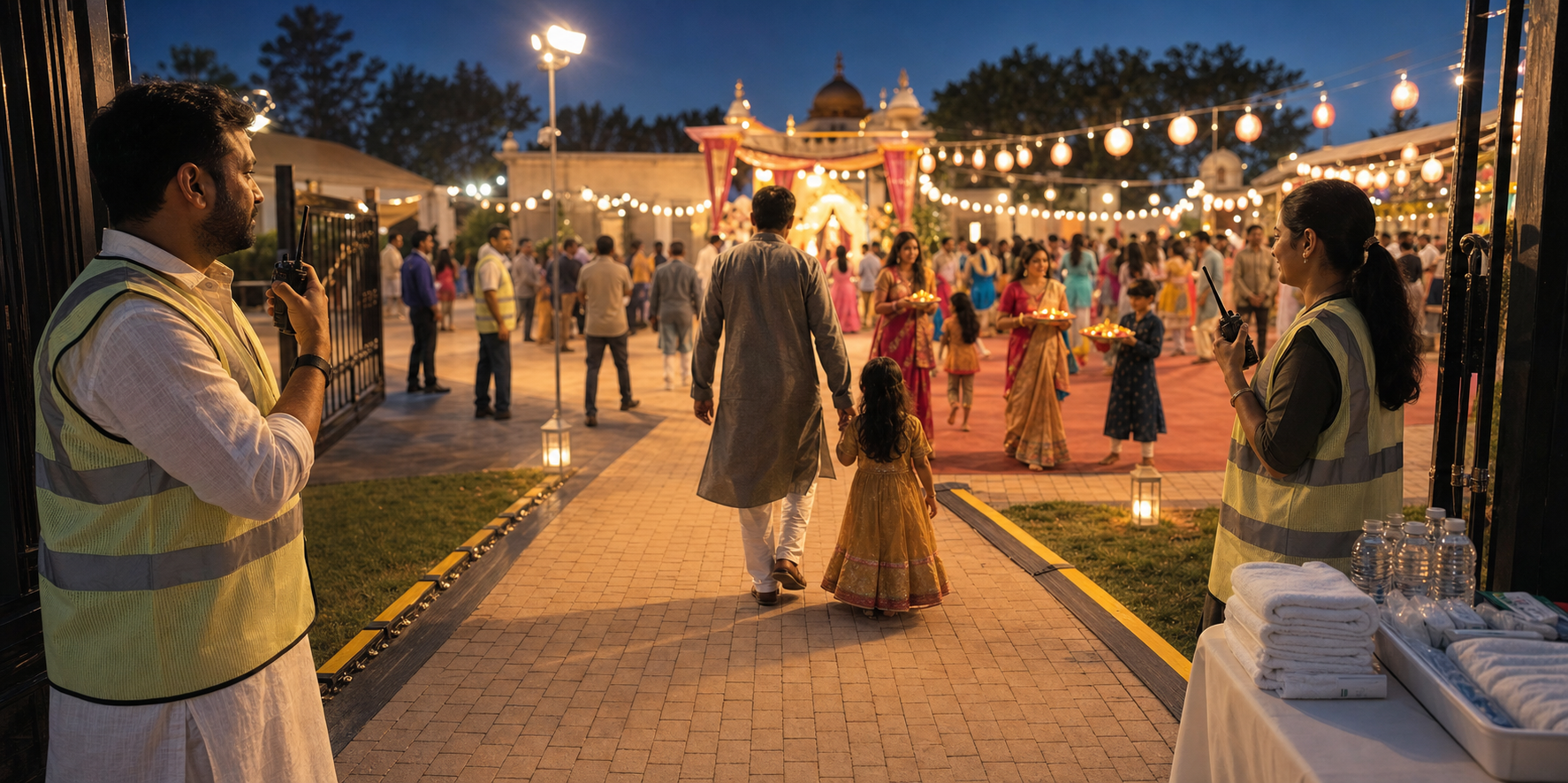
Openness does not require naivety. A public event cannot remain welcoming if organisers treat threats as a public-relations inconvenience or expect untrained volunteers to manage violence.
The Canadian experience shows why preparation matters. Indian and South Asian film screenings faced pepper spray, deliberately damaged screens, threats, shootings and arson between 2016 and 2025, with some theatres cancelling titles or suspending Indian screenings under pressure. Tamil, Telugu, Malayalam, Hindi, Sinhalese and other audiences experienced the practical result: families and venue workers had to consider physical danger before participating in ordinary cultural life.
Motive should still be handled carefully. Authorities have at times considered commercial competition and gang conflict in South Indian film distribution. Political intimidation has also entered the public climate. An organiser should not label an incident anti-Hindu, anti-Sikh or politically motivated before evidence establishes that conclusion. Uncertainty about motive, however, does not reduce the need to protect people or document a pattern of targeting.
Use three operating conditions:
- Routine: there is no known threat. Walk the venue, confirm exits, keep emergency contacts available, brief volunteers on who makes decisions and ensure that children and participants with mobility needs have a workable exit route.
- Heightened: the venue, event, film or community has been targeted before, or organisers have received hostile but not immediate communications. Inform venue management, preserve the messages, control access where appropriate, review evacuation and communication procedures, and consult local law enforcement or qualified security personnel about the specific risk.
- Immediate danger: there is a credible direct threat, weapon, fire, chemical release or suspicious act. Do not ask volunteers to investigate or confront anyone. Follow the venue’s emergency procedure, move people away from the hazard, contact local emergency services and pause or cancel the event when safety cannot be maintained.
Your written incident plan should identify who contacts emergency services, who directs attendees, who supports children and elders, who communicates with families, who preserves digital records and who speaks publicly. Volunteers should not chase an attacker, touch a suspicious item or publish an alleged identity while facts remain unverified.
After an incident, distinguish operational facts from interpretation. Record what happened, where, when, who was notified and what the venue did. Preserve threatening messages and request that the venue retain relevant security material. Share personal data only with people who need it for safety, investigation or support. Public statements should acknowledge known facts, avoid rumours and tell attendees where to obtain verified updates.
Security should protect participation rather than turn every guest into a suspect. Explain visible measures calmly, provide a contact for access concerns and keep the welcome function separate from enforcement where possible. A family arriving for Diwali, a film or a blessing should encounter a prepared community, not an atmosphere of panic.
Make solidarity reciprocal, visible and precise
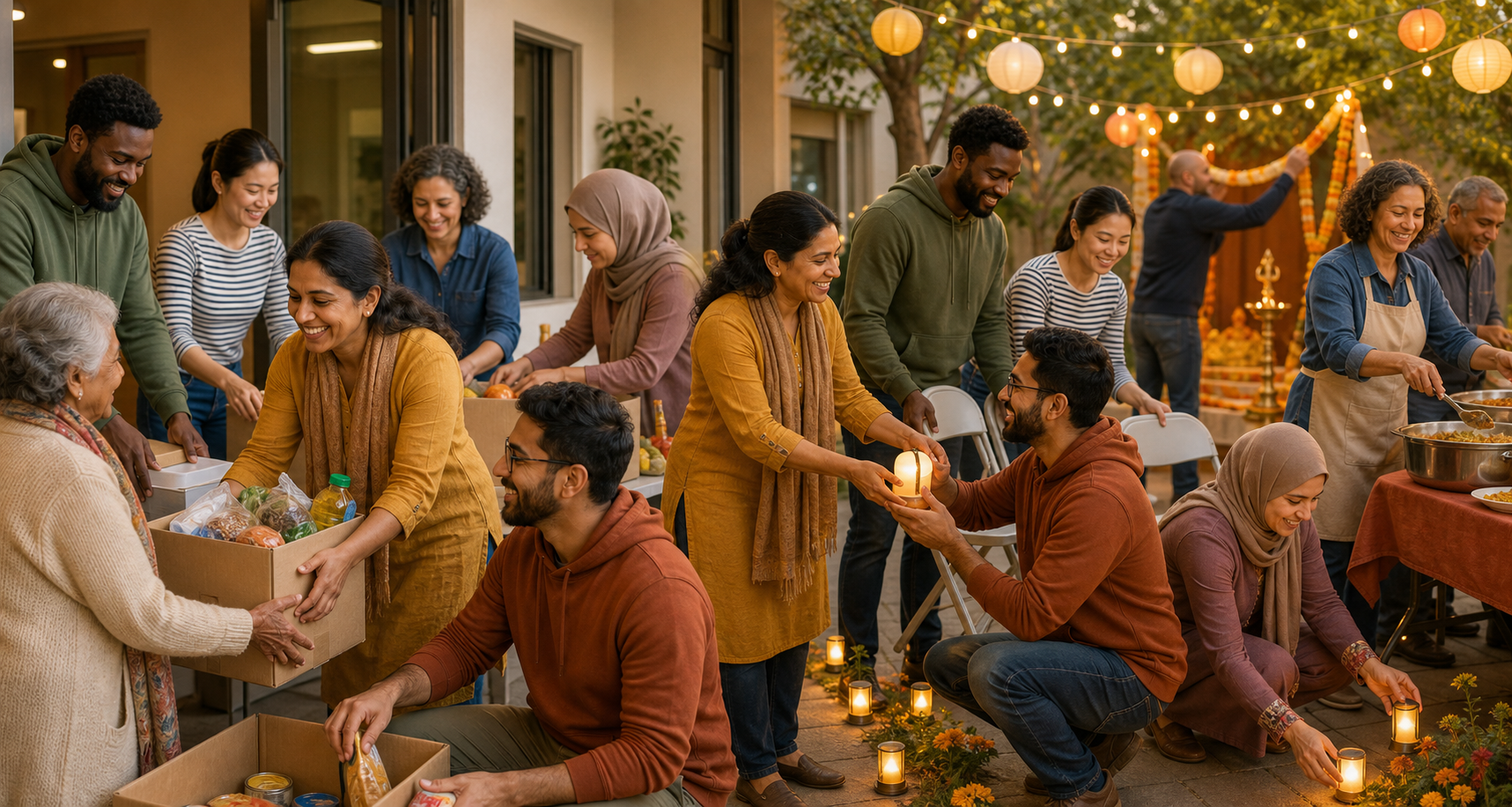
Dharmic solidarity is strongest when it does not depend on complete agreement. Hindu, Buddhist, Jain and Sikh communities can defend one another’s right to worship, gather, screen films and teach their children without pretending that their doctrines or political views are identical.
Apply the same rule consistently. Threats against a mandir do not become acceptable because someone has a dispute with Indian politics. Intimidation at a gurdwara cannot be dismissed because someone objects to a separatist movement. A Jain, Buddhist, linguistic or regional gathering does not have to prove that everyone approves of its views before it deserves physical safety. Protecting public culture means separating peaceful disagreement from vandalism, threats and violence.
Fringe actors must not be allowed to define an entire community. If an organisation uses Sikh, Hindu or any other identity while promoting collective exclusion, name the organisation and the conduct precisely rather than assigning guilt to millions of people. Collective blame weakens the very coalition needed to resist intimidation.
Create relationships before a crisis. A practical mutual-support compact can include:
- A trusted contact in each participating institution who can verify information quickly.
- A shared commitment to condemn threats against any peaceful religious or cultural gathering.
- An agreement that each tradition speaks for itself on doctrine and internal practice.
- Offers of attendance, stewarding, repair support or civic advocacy when another community is targeted, provided the affected community wants that help.
- A rule against forwarding unverified claims, inflammatory clips or alleged identities through community channels.
- Regular cultural exchange through teachings, service and hospitality rather than contact only after an attack.
A concise public response can say: We defend the right of this community to gather and practise its tradition safely. Disagreement never excuses threats, vandalism or violence. We support the safety of attendees and a lawful investigation based on evidence.
Key takeaways
- Keep authority over the sacred core with people responsible for the living tradition.
- Tell visitors what the observance means, how they may participate and which boundaries they must respect.
- Connect public service to the ethic of the gathering instead of adding a generic charitable gesture.
- Give younger members responsibility, vocabulary and a path to continued participation.
- Use a written safety plan that distinguishes routine precautions, heightened concern and immediate danger.
- Defend every peaceful Dharmic community by the same standard while refusing collective blame.
- Measure success by continuity: accurate understanding, substantive youth roles, trusted venues and a clear next step.
Choose one observance already on your community calendar. At the next planning meeting, write down its sacred core, interpretive bridge, civic contribution and named safety contact. Those four decisions can turn an annual display into a confident piece of public inheritance.
References
- Hindu Human Rights Blog — London Celebrates Its First Kukur Tihar, the Sacred Hindu Day of the Dogs
- CoHNA — Movies Under Attack: Hate Escalates in Canada
