
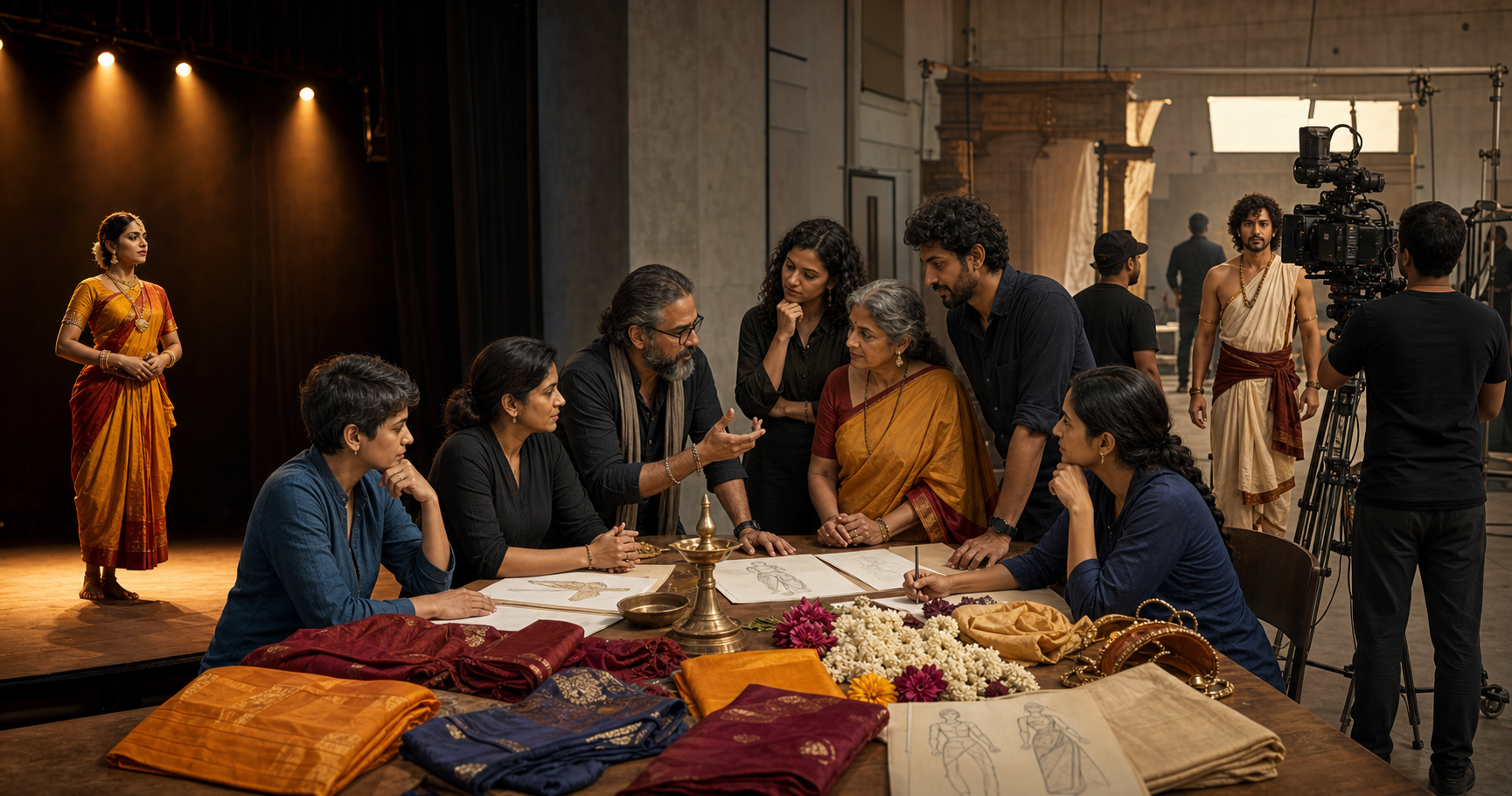
You are watching a film, play, television episode, or school production that uses Hindu deities, rituals, or language. Something feels wrong, but the usual labels do not tell you whether you have seen a daring adaptation, a careless mistake, or a caricature that can feed prejudice.
You can make that judgement without demanding that every Hindu character be virtuous or every sacred story be reproduced literally. The decisive question is more precise: what work is Hindu identity doing inside the story, and what will an audience believe about Hindu life after the performance ends?
Start with the story’s moral machinery
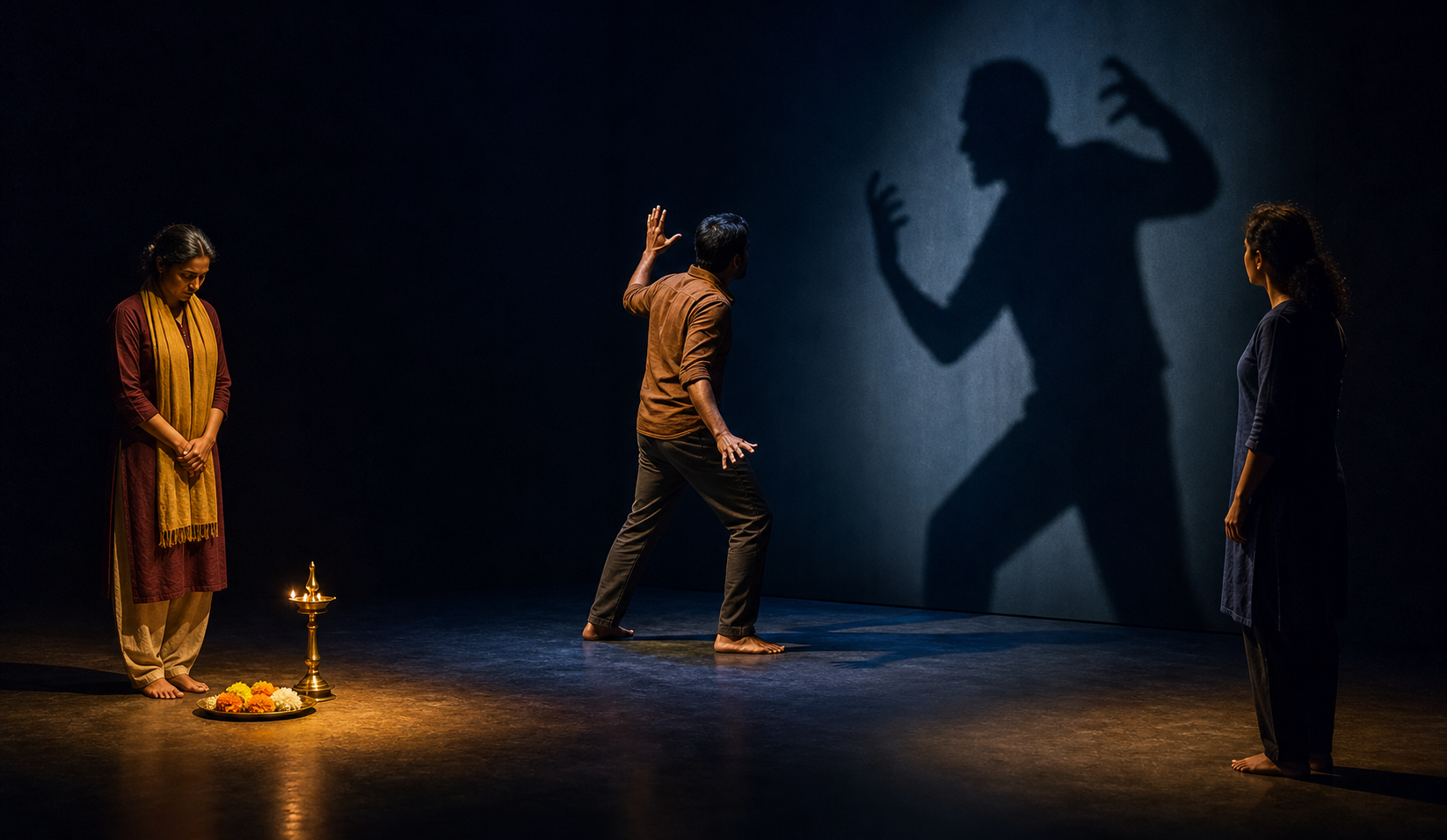
A deity’s image, a mantra, a temple, or a priest may appear for only a few moments, yet still determine how the audience understands the danger. Representation becomes suspect when Hindu identity does the explanatory work for cruelty: the villain is frightening not merely while being Hindu, but because the story has taught the audience to read Hindu symbols themselves as frightening.
Use these questions while watching or reviewing a script:
- Is the Hindu figure a person or a prop? A person has duties, relationships, choices, doubts, and consequences. A prop supplies exotic scenery, mystical powers, comic strangeness, or menace.
- Does the story explain what a sacred symbol means? It need not deliver a lecture, but it should not rely on the audience misunderstanding that symbol.
- Is one practice being presented as all Hinduism? A story may portray a particular sect, regional tradition, historical setting, or fictional group. Trouble begins when those distinctions disappear.
- Could the villain be condemned without condemning the religion? A corrupt priest is a character. A plot in which Hindu worship itself produces savagery makes a broader claim.
- Whose viewpoint gives the symbol meaning? If only outsiders interpret the tradition, practitioners become scenery inside a story about someone else’s fear or fascination.
Indiana Jones and the Temple of Doom offers a clear example. Released in 1984, it places a murderous cult and human sacrifice inside Hindu sacred language associated with Kali. The problem is not simply that the adventure contains villains. It is that a violent fringe narrative is allowed to stand in for Hindu ritual life, leaving viewers with little help separating invention from religious reality.
The mechanism matters. Colonial accounts of Thuggee supplied a ready-made tale of a mysterious Indian murder cult; popular entertainment then attached that tale to Hindu imagery and circulated the combination as spectacle. Repetition can make the association feel culturally authentic even when the chain began with sensational colonial framing rather than ordinary Hindu practice.
This test also prevents overreaction. An unsympathetic Hindu character is not automatically anti-Hindu. Neither is artistic disagreement with a Hindu teaching. Look for the causal claim: does the work portray a flawed human being, or does it use Hinduism as the reason that human being is irrational, cruel, or less civilised?
Separate adaptation, interpretation, and inversion
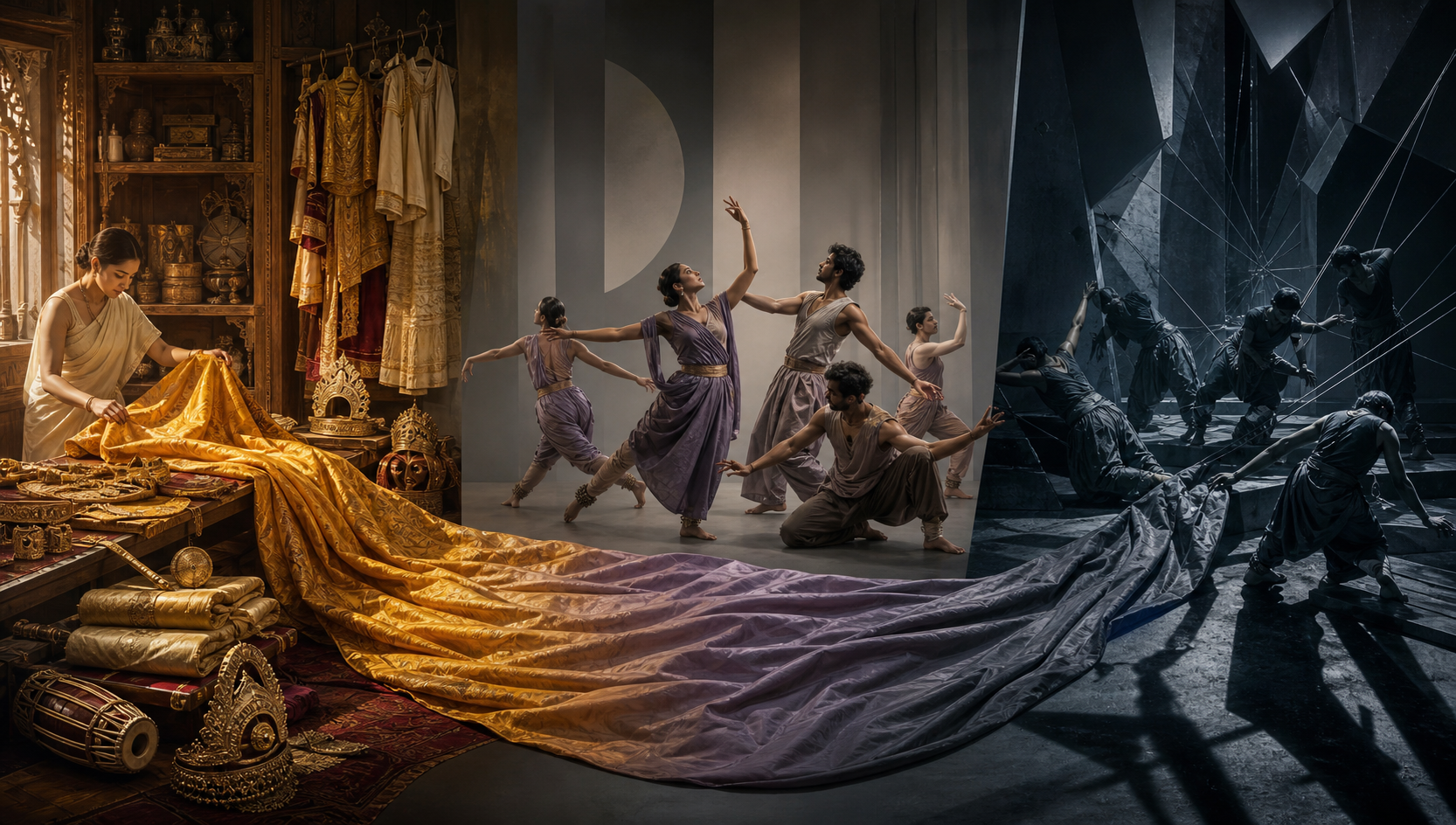
Faithful representation does not require literal reproduction. Hindu performance traditions have always made room for retelling, regional expression, devotion, music, dance, and interpretive emphasis. The useful distinction is not between change and no change. It is between a change that creates coherent meaning and a change that depends on false meaning.
| Storytelling mode | What it changes | The decisive check |
|---|---|---|
| Adaptation | Moves a familiar plot into a Dharmic setting or moral vocabulary. | Do the changed elements retain intelligible meanings within that setting? |
| Interpretive retelling | Foregrounds one devotional or philosophical lens while preserving the story’s central movement. | Is that lens presented as a particular path rather than the only possible Hindu view? |
| Inversion | Turns a sacred figure, object, or practice into shorthand for primitive danger. | Would the threat still work if the audience understood the symbol accurately? |
Kali demonstrates the difference. Her fearsome iconography does not make her a divine endorsement of cruelty. In mainstream Hindu understanding, Kali is protective and liberating, while her destruction points toward the defeat of ego and ignorance. Skulls and weapons can carry symbolic theological meaning. A story inverts that meaning when it treats the imagery as evidence that Hindu worship sanctions bloodlust.
A constructive adaptation moves in the other direction: it discloses its lens and uses that lens to illuminate the drama. In Simha Raja, the Bhaktivedanta Players reworked The Lion King through a Krishna conscious framework. The production retained the familiar narrative arc while bringing forward bhakti, seva, gratitude, ethical leadership, courage, and responsibility to the community. The devotional interpretation did not need to pretend that the original story was secretly Hindu. It invited the audience to encounter a familiar conflict through a particular Dharmic vocabulary.
When you assess an adaptation, therefore, ask what changed and why. A change in setting, language, or emphasis can be artistically fertile. A change that makes a sacred symbol mean its theological opposite merely because the false meaning is more frightening deserves direct criticism.
Build cultural accuracy into the creative process

Accuracy is not a final fact-check performed after the sets have been built. The underlying choices are made when writers decide who possesses moral agency, which practices need explanation, and whether a recognisable Hindu element is functioning as living religion or decorative shorthand.
Creators, directors, dramaturgs, teachers, and community theatre organisers can use the following workflow:
- Name the tradition precisely. Decide whether the character belongs to a Shakta, Krishna conscious, regional, familial, or other identifiable context. If the group is fictional, make that fiction legible. Avoid the generic label of a Hindu cult when the script has invented the belief system.
- Map meaning before spectacle. For every deity, ritual object, gesture, mantra, costume element, or place of worship, write down what it means to practitioners, what the plot asks it to mean, and where those meanings diverge. A deliberate divergence may be defensible; an unnoticed one is a warning.
- Consult while revision remains possible. Bring in a scholar familiar with the relevant Dharmic tradition, a practitioner who understands lived usage, and a reviewer able to anticipate audience interpretations. Consultation after filming can identify damage but cannot easily repair the story’s moral structure.
- Treat living places of worship as living communities. When a production uses an active mandir or another sacred setting, seek guidance about conduct, access, ritual boundaries, and filming. A visually impressive location is not an empty set.
- Include South Asian and diaspora voices in consequential roles. Casting matters, but so do writing, design, research, production, and review. Community participation is most useful where people can question assumptions and change decisions.
- Audit Dharmic conflation. Hinduism, Buddhism, Jainism, and Sikhism have relationships and shared ethical concerns, but they are not interchangeable collections of Indian-looking symbols. A stereotype aimed at Hindu practice can spill across these traditions when audiences have not been given the distinctions.
- Run the unfamiliar-viewer test. Ask someone with no prior knowledge to state, in one sentence, what the scene taught them about the religion. If the answer is broader and more hostile than the script intends, add context or revise the scene.
Strong representation does not require saintly characters. Hindu characters can be vain, frightened, compromised, funny, ambitious, or wrong. Temples can contain disagreement. Religious authority can be questioned. The essential discipline is to locate wrongdoing in a character, institution, or decision rather than using an entire tradition as the explanation for evil.
Dharmic ideas can also generate drama instead of merely decorating it. Dharma creates tension when duties compete. Seva becomes visible when a character serves without reward. Ahimsa complicates a choice made under threat. Bhakti can shape loyalty, surrender, courage, or gratitude. Pluralism lets characters pursue different paths without forcing the script to declare that only one has spiritual legitimacy. In devotional performance, compassion, non-harm, duty, and responsibility can carry a story while remaining accessible to families and younger audiences.
Respond to a harmful portrayal with precision

Calling a work offensive may communicate your reaction, but it rarely tells a writer, school, theatre, or fellow viewer what needs to change. A more effective response identifies the scene, the false association, the relevant meaning, and the likely audience takeaway.
- Describe what appears. Name the character, image, dialogue, or staging choice without first guessing the creator’s intention.
- State the association it creates. Explain whether the work connects Hindu worship with cruelty, irrationality, deceit, dirtiness, backwardness, or another stereotype.
- Correct one central meaning. Do not bury the issue under a complete lecture on Hinduism. Give the audience the fact needed to understand why the association fails.
- Explain the consequence. Say what an unfamiliar viewer is likely to infer about Hindu people or practice. This moves the discussion from personal taste to public meaning.
- Ask for a proportionate repair. Depending on the setting, that may be a revised line, contextual programme note, classroom discussion, corrected teaching material, consultation before a revival, or an opportunity for practitioners to speak.
For a child who has just seen Kali presented as a monster, a useful correction is short: “The story changed Kali’s meaning to make its villains frightening. In Hindu thought, she is a protective force whose destruction represents overcoming ego and ignorance.” That sentence names the invention and restores the theological meaning without asking the child to process a defensive argument about the entire film.
In a classroom, put two headings on the board: “What the scene asks us to feel” and “What the symbol means in the living tradition.” Let students identify the gap. A fuller lesson can decode Kali’s iconography, distinguish colonial Thuggee narratives from Hindu ritual life, and compare fictional spectacle with practitioner explanations.
Direct contact can correct what screen shorthand obscures. A guided visit to a mandir, gurdwara, vihara, or Jain derasar allows students to meet communities as communities rather than as borrowed imagery. The purpose is not to erase differences among Hinduism, Sikhism, Buddhism, and Jainism. It is to replace a vague category of exotic religion with identifiable people, practices, and ethical commitments.
If a distorted image becomes a taunt against a Hindu student or neighbour, do not let debate about the creator’s intentions displace the immediate issue. Name the mockery, correct the falsehood, and insist that a fictional image is not permission to demean a living community.
Key takeaways
- Judge representation by the moral function of Hindu identity, not merely by the presence of Hindu imagery.
- Separate a villain who happens to be Hindu from a story that makes Hinduism the cause of villainy.
- Adaptation can change setting and emphasis while preserving coherent sacred meaning; inversion requires the audience to misunderstand that meaning.
- Make criticism specific: identify the scene, the association, the correct context, the likely takeaway, and the requested repair.
- Creators should consult relevant scholars and practitioners before structural choices become expensive or impossible to change.
- Better stories emerge when dharma, seva, ahimsa, bhakti, and pluralism shape character decisions instead of appearing only as decoration.
Before you approve a script, share a criticism, or discuss a troubling scene with a child, write one sentence in this form: “The work uses this Hindu element to imply this claim, but within the tradition it means this instead.” If you can complete that sentence precisely, you have moved beyond vague discomfort and found the part of the representation that can actually be repaired.
Hindu representation will improve when we ask for more than flattering images. Ask for characters with moral agency, traditions with intelligible meanings, adaptations honest about their lens, and creators willing to learn before spectacle hardens into stereotype.
References
- DharmaRenaissance Blog — Temple of Doom’s Hinduism Problem: How Hollywood Stereotypes Fueled Hinduphobia and What Heals It
- Dandavats — Roaring Devotion: Simha Raja Reimagines The Lion King with a Krishna Conscious Lens, Uniting Audiences
