
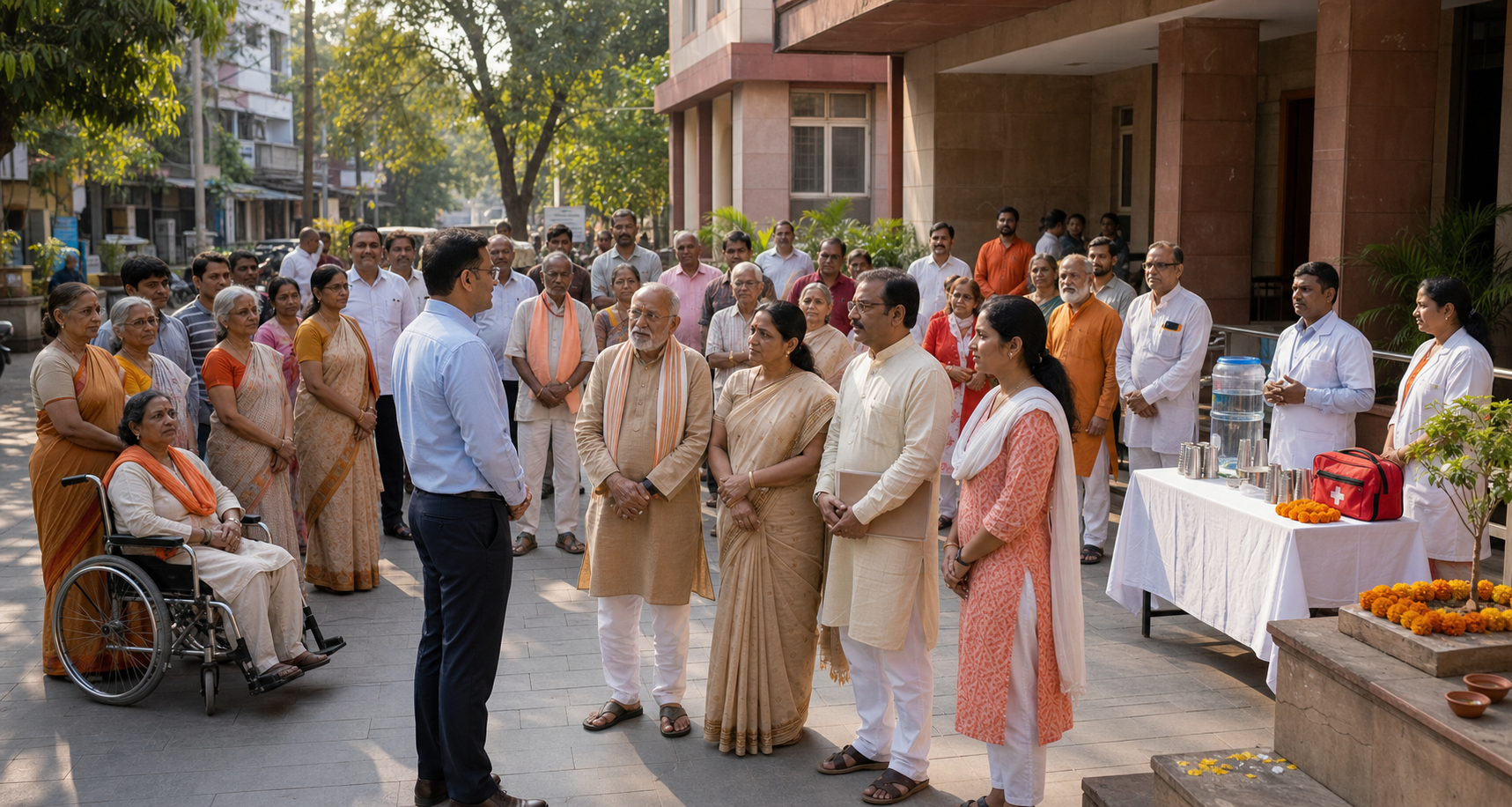
If a humiliating clip is circulating, a sacred bhajan has been mocked, or an allegation of abuse has shaken your town, your Hindu organisation may be asked to act before the facts and legal options are clear. What you do first will decide whether mobilisation protects dignity or turns a legitimate grievance into another injury.
A strong civic response follows a disciplined order: identify the harm accurately, protect the person at risk, pursue the remedy suited to that harm, and convert public energy into accountable service. A crowd can draw attention. Justice depends on what happens after the slogans stop.
Key takeaways
- Separate the underlying act, the circulation of digital material, and any broader cultural grievance. They may require different remedies.
- Never forward intimate or identifying material to demonstrate outrage. Preserve evidence privately and restrict who can access it.
- Run police reporting, cyber reporting, platform takedown, survivor support, and lawful public advocacy in parallel.
- Before calling a march or sabha, put permissions, marshals, confidentiality rules, verified language, and specific demands in writing.
- Use apology and restorative action for a cultural lapse; do not treat an apology as a substitute for investigating alleged abuse.
- Measure takedowns, complaint progress, support delivered, volunteers activated, and prevention work over the following three to six months. Turnout alone is not impact.
Match the response to the actual harm
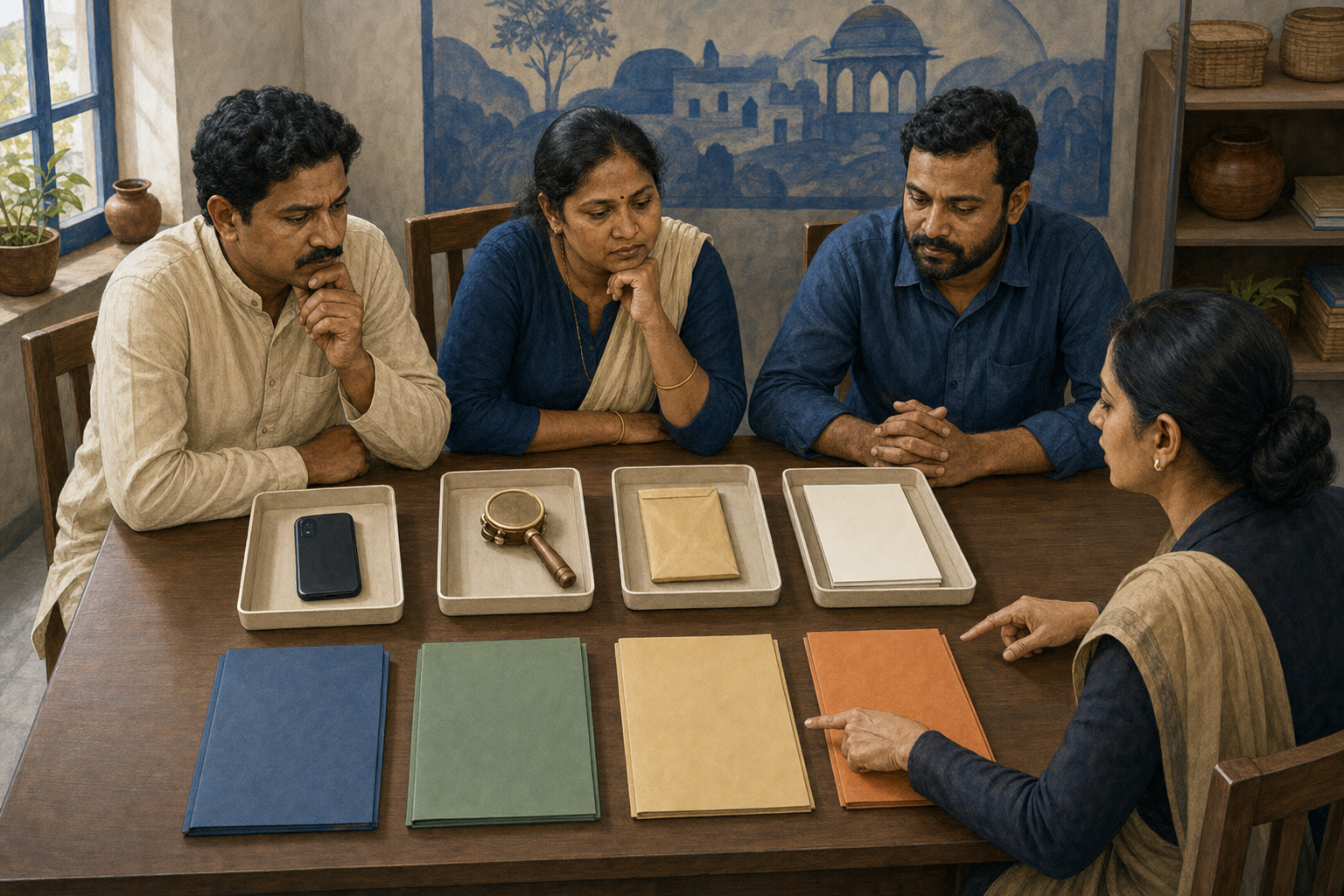
Precision is the first form of justice. Suspected assault, unauthorised circulation of intimate material, mockery of devotional music, and a general call for cultural awakening are not interchangeable. If you collapse them into one category of insult to Hindu society, you make it harder to protect the injured person and easier for opponents to dismiss the entire mobilisation as indiscriminate outrage.
| Situation | First objective | Essential guardrail |
|---|---|---|
| Suspected assault, harassment, stalking, or coercion | Personal safety, a prompt police complaint, careful evidence preservation, and professional support | Call the conduct alleged until it is established through lawful investigation and adjudication |
| Non-consensual intimate or sexual material in circulation | Rapid restriction of access, cyber reporting, evidence preservation, and strict confidentiality | Do not repost the material, expose the depicted person, or place copies in volunteer groups |
| Mockery of a deity, bhajan, or ritual | Verify the complete context, seek correction or a specific apology, and obtain legal advice if the facts may cross a legal threshold | Do not treat the intensity of public anger as proof that a criminal offence has occurred |
| A large awareness sabha or cultural campaign | Lawful assembly, public education, volunteer recruitment, and a service programme | Do not use attendance as the only evidence of success |
One incident may occupy more than one row. The alleged abuse of a girl and the unauthorised circulation of a recording are distinct harms even when they arise from the same event. Maharashtra organisations responding in Gadhinglaj demanded investigation, removal of the circulating material, and protection of the affected person’s dignity. Those demands belong on parallel tracks: taking a clip down must not destroy the investigation, while preserving evidence must not become an excuse to keep spreading it.
Dignity also does not mean shielding every assertion from scrutiny. A responsible organisation can hold three positions at once: the reported conduct is serious, the person reporting it deserves immediate protection, and guilt must be determined through due process. Karuna protects the vulnerable person; satya requires accuracy.
If image-based harm is involved, protect the survivor first

Circulation is not a footnote to the original wrong. Each share enlarges the audience, prolongs the injury, and makes the material harder to contain. A well-meaning volunteer who forwards a clip to several leaders may therefore reproduce the very violation the mobilisation is supposed to oppose.
Treat identity as confidential from the first phone call. Do not publish a name, face, voice, school, workplace, address, close relative, distinctive photograph, or local detail that allows neighbours to identify the person indirectly. The constitutional right to privacy affirmed in Justice K.S. Puttaswamy and the non-disclosure principles associated with Nipun Saxena make survivor privacy a legal and ethical obligation, not an optional courtesy.
Do not ask the affected person to repeat the account separately to every office-bearer. Designate one trusted liaison, with the person’s consent where legally possible, and let that liaison coordinate with counsel, police, support services, and the organisation. If the person may be a minor, say so immediately. POCSO brings specialised protections, child-friendly procedures, and mandatory-reporting obligations, so a community representative must not promise secrecy that would obstruct required reporting.
Preserve evidence without multiplying it
Electronic evidence can disappear quickly, but uncontrolled copying creates another risk. Use a restricted evidence record rather than a WhatsApp collection assembled by dozens of volunteers.
- Record the exact URL, account or profile handle, platform, visible upload time, date and time discovered, and the device on which it was seen.
- Preserve the original message, file, or device if it is already in the lawful possession of the complainant. Do not crop, annotate, compress, or overwrite the original.
- Take screenshots needed to show the account, page, caption, timestamp, or threat, but do not create unnecessary new copies of explicit imagery. When a minor may be depicted, ask police or a lawyer how the material should be preserved and transferred.
- Create an evidence index stating what was collected, when it was collected, who handled it, and where it is securely stored. Limit access to people with a defined role.
- Save police acknowledgements, cyber-complaint numbers, platform grievance numbers, takedown responses, and dates of every follow-up.
Formal rules govern the use of electronic records in court. A viral montage, screen recording of several forwarded messages, or edited compilation is not a safe substitute for the original records and a documented collection process. Let the investigating officer or a qualified lawyer advise on evidentiary certification in the individual case.
Report, remove, preserve, and support in parallel
- Police: Give the local police a factual chronology. Separate what the complainant directly experienced, what a witness directly observed, what was received digitally, and what is inferred. Where the facts disclose a cognizable offence, prompt FIR registration is part of the criminal process. Applicable charges depend on the conduct, content, age of the affected person, intent, evidence, and law governing the case; community leaders should not promise a particular charge or outcome.
- Cyber reporting: Submit the digital component through the National Cyber Crime Reporting Portal as well as the appropriate police channel. Include the evidence index and complaint identifiers without circulating the material through informal contacts.
- Platform grievance: Use the platform’s formal grievance system for every identifiable URL or account. For qualifying content depicting nudity or sexual acts, the IT Rules, 2021 provide an expedited route after a valid complaint from the individual or an authorised representative, typically requiring action within 24 hours. That narrow route should not be represented as a guaranteed 24-hour remedy for every insulting or embarrassing video.
- Evidence preservation: Takedown and preservation are different tasks. Removal limits public exposure; preserved platform logs may assist an investigation. Ask the investigating officer or counsel about an appropriate preservation request before relevant records are lost.
- Care and counsel: Offer access to a one-stop centre, the district legal services authority for eligible no-cost legal assistance, and hospital-based crisis or psychological support where needed. Support should follow the affected person’s needs, not the organisation’s publicity calendar.
No volunteer should confront the alleged offender, attempt to seize a device, or negotiate the return of material privately. Those actions can create safety risks, compromise evidence, and expose the volunteer or organisation to legal consequences. Use police and qualified counsel for case-specific decisions.
Build an assembly that authorities and the public can trust
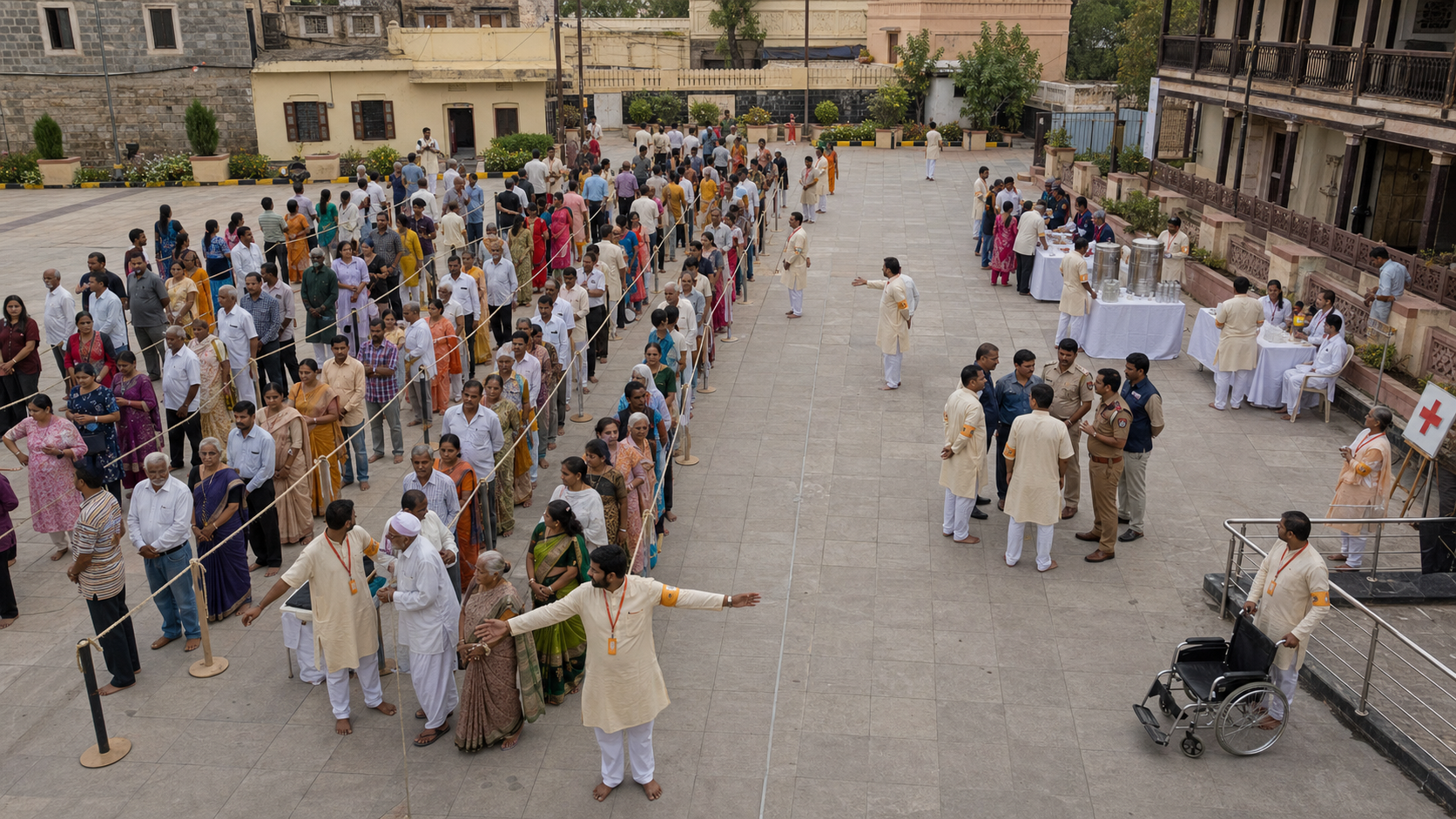
Article 19(1)(b) protects peaceful assembly, subject to the reasonable restrictions contemplated by Article 19(3). Article 25 protects freedom of conscience and religious practice within its constitutional limits. Neither protection is a licence for threats, obstruction, disclosure of a survivor’s identity, or collective punishment.
In Maharashtra, organisers should confirm the permissions and conditions applicable to the venue, route, expected attendance, and sound amplification with the district administration and police. Requirements can vary with the location and form of the event, so do not rely on what was accepted for a previous procession in another district.
Before announcing the mobilisation, put the operating rules in writing:
- Prepare a one-page brief separating verified facts, allegations, legal or administrative demands, and details that must remain confidential.
- Name an organiser responsible for official coordination and a separate liaison for police and emergency services.
- Use trained, visibly identifiable marshals. Their job is to guide movement and de-escalate, not to interrogate people or act as private enforcers.
- Mark entrances, exits, first-aid points, hydration stations, sanitation facilities, and an accessible route for elders and persons with disabilities. Provide a clear plan for children who become separated from guardians.
- Give speakers a written code: no threats, communal blame, unverified accusations, doxxing, descriptions of intimate material, or calls for extrajudicial punishment.
- Authorise one spokesperson to give factual updates. Other volunteers should direct questions to that person instead of improvising claims on camera.
- Set a de-escalation rule in advance. If tension rises, marshals pause movement, separate opposing groups, contact the police liaison, and follow the agreed dispersal plan.
- Arrange waste segregation and post-event cleanup. A dharmic gathering should leave the neighbourhood safer and cleaner than it found it.
Keep the public charter remedy-specific. For a survivor-centred case, the demands might cover prompt investigation, immediate restriction of unlawful content, confidentiality, support, and a timetable for official communication. For a cultural grievance, the demands might instead seek acknowledgement, removal of the offending performance, a meeting with devotees, and preventive changes. Mixing the two makes both weaker.
Your language should also reveal the discipline behind the mobilisation. Use verbs such as investigate, preserve, remove, report, support, correct, and prevent. Avoid punish, expose, or teach them a lesson. Satya governs what may be claimed. Ahimsa governs tactics. Karuna governs treatment of the vulnerable. Seva governs what happens after the gathering. This is not passivity; it is organised strength placed under dharma.
Where an event is genuinely pan-Dharmic, Buddhist, Jain, and Sikh participation can deepen the shared commitment to non-harm, compassion, restraint, and service. Such participation should be substantive rather than decorative: representatives should help shape the code of conduct, prevention work, or local service programme.
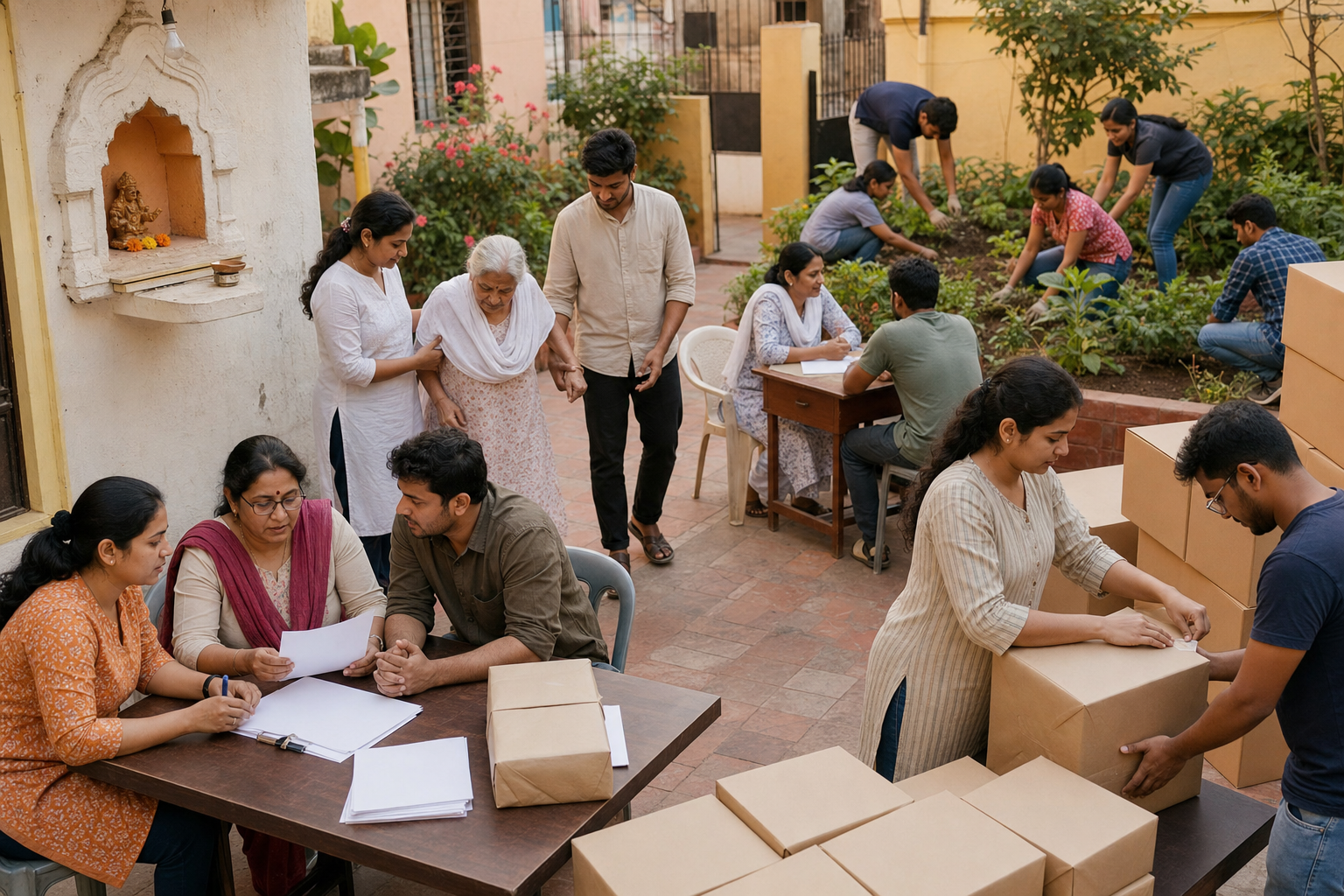
Turn mobilisation into repair that lasts
Know when an apology is the right remedy
A bhajan is not merely entertainment when it functions as prayer, inherited memory, and part of a family rite. That is why mockery of devotional music can injure collective dignity even if an outsider regards it as casual humour. In the dispute involving a bhajan associated with Shri Ekvira Devi, organised protest was followed by a public apology from the singer.
A useful apology is more than a hurried statement that someone was misunderstood. It should:
- identify the act clearly rather than hiding it behind vague language;
- acknowledge its effect without making remorse conditional on whether people were offended;
- remove or stop the offending performance where the speaker controls it;
- state what will change, such as set-list review, cultural-sensitivity orientation, or a community liaison empowered to pause a performance; and
- be followed by the promised corrective action.
Direct dialogue with devotees, mandir representatives, or a local cultural body can then test whether learning has occurred. The goal is neither forced humiliation nor endless punishment. Kshama and prayaschitta have meaning when acknowledgement is truthful and correction is visible.
Proportionality matters. An apology may resolve a cultural lapse, but it cannot replace investigation of alleged assault, coercion, voyeurism, stalking, or unlawful transmission of intimate material. Conversely, public offence at a performance does not by itself establish a criminal case. Indian law can address deliberate and malicious conduct aimed at outraging religious feelings, but intent, context, evidence, and the applicable legal test require assessment by police and qualified counsel. A complaint is a request for lawful examination, not a public verdict.
Measure what remains after the crowd goes home
The Akola Hindu Rashtra-Jagruti Sabha was reported to have drawn more than 16,000 participants. That figure was organiser-reported and lacked independent police or satellite corroboration, so it is best treated as an indicative estimate. Organisers of future events can improve credibility by publishing the counting method, venue area, density assumptions, controlled-entry data, and any independent estimate available.
Even a reliable headcount measures reach, not civic value. Review the following outcomes over the next three to six months:
- Protection: Which reported URLs were disabled, which remain live, whether evidence and platform logs were preserved, and whether confidentiality was maintained.
- Access to justice: Whether complaints received formal acknowledgements, counsel was arranged, the affected person reached appropriate support, and authorities supplied lawful status updates.
- Cultural repair: Whether a promised apology, removal, dialogue, set-list safeguard, or artist orientation actually occurred.
- Volunteer conversion: How many sign-ups became active participants in digital-safety education, women’s-safety work, legal-literacy sessions, heritage documentation, youth mentorship, cleanliness campaigns, or other seva.
- Event safety: Whether ingress and egress worked, medical or security incidents were recorded and reviewed, accessibility needs were met, and the site was restored after the gathering.
- Institutional improvement: Whether local schools, trusts, mandirs, community halls, legal volunteers, or support services adopted a repeatable procedure for future incidents.
Publish these results only in aggregate. Do not turn a transparency report into a route for identifying a survivor, witness, family, or child. A useful post-event brief records the attendance method, safety review, demands submitted, responses received, service outcomes, and unresolved actions without exposing protected people.
Before your organisation issues its next call for mobilisation, write down the remedy and the privacy rule first. If the leadership cannot state both on one page, it is not ready to call a crowd. That discipline is how Hindu civic strength in Maharashtra can defend dignity, command institutional attention, and leave behind more than a day of anger.
References
- Hindu Jagruti Samiti – Gadhinglaj Outrage: Hindu Organisations Protest Shiroli Pulachi Abuse, Video Circulation
- Hindu Jagruti Samiti – Akola’s Hindu Rashtra-Jagruti Sabha Draws 16,000+: Data-Driven Insights on Dharmic Unity
- Hindu Jagruti Samiti – Singer Apologises After Mocking Shri Ekvira Devi Bhajan, Protests Ignite Powerful Call for Respect