
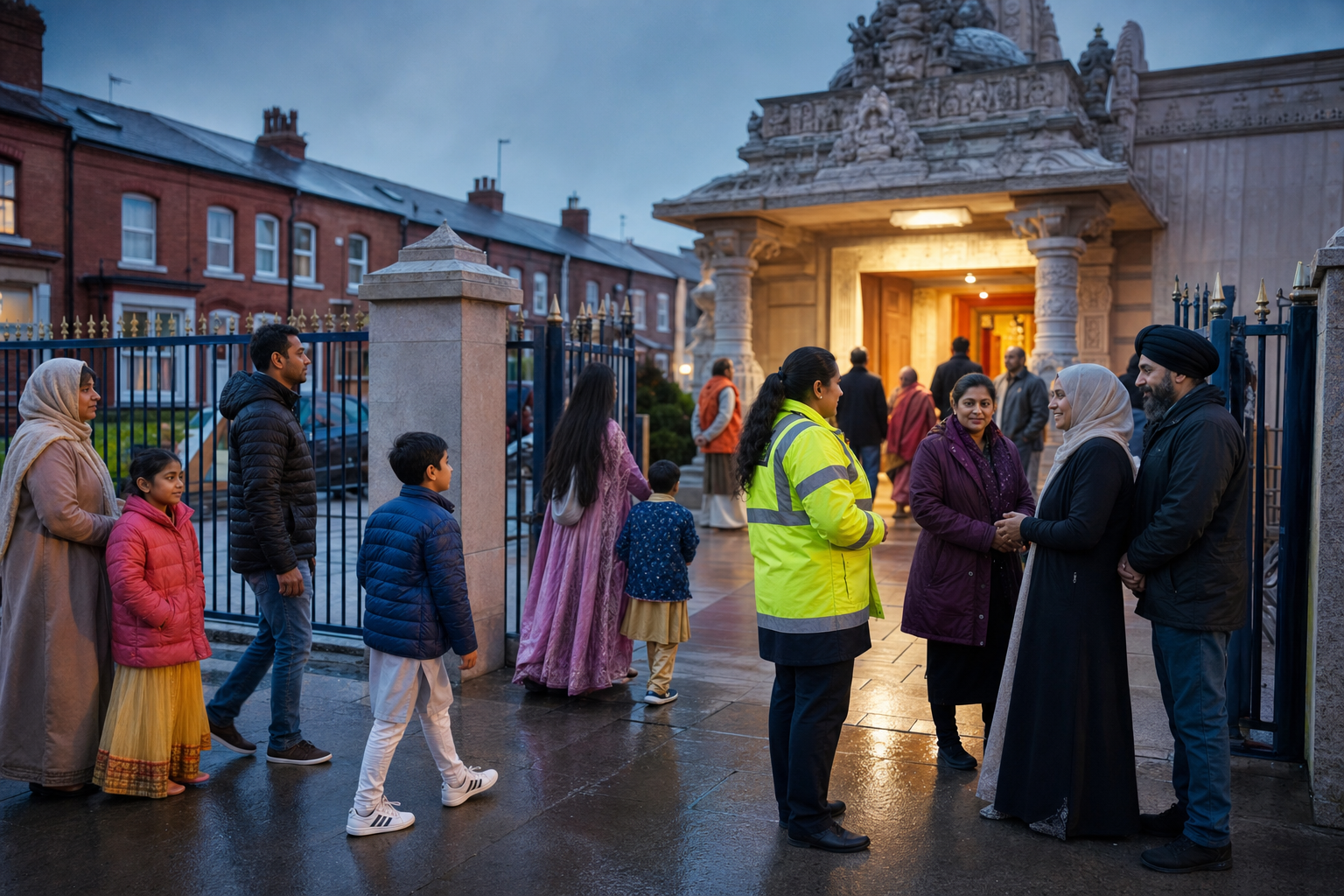
If you help run a British Hindu temple or festival, a public disturbance leaves you facing two pressures at once. Families want to know that the next gathering will be safe, while the wider conversation may push you either to minimise what happened or to blame an entire community. Neither response protects your people.
You do not have to choose between confronting anti-Hindu intimidation and preserving interfaith trust. The practical path is to document conduct precisely, insist on a fair investigation, strengthen safeguarding, and work with neighbours who defend the same freedom for every faith.
Equal protection is a process, not a reassuring slogan
Equal protection does not mean that every religious event receives an identical police deployment. It means that risk is assessed by consistent standards, Hindu worshippers are treated as legitimate users of public space, reported offences are examined without prejudice, and authorities learn from failures instead of quietly moving on.
A permitted Holika Dahan in Harrow reportedly drew families and civic representatives before attendees described intimidation and damage to equipment. Claims about the affiliations of those involved remained unverified. The important operational lesson is that civic approval alone does not make an event secure. Permission, prevention, emergency response, evidence handling, and follow-up are separate parts of the same job.
Before a major public observance, the organising committee should ask the council and police for five concrete arrangements:
- A named contact for planning and a separate contact or route for urgent escalation during the event.
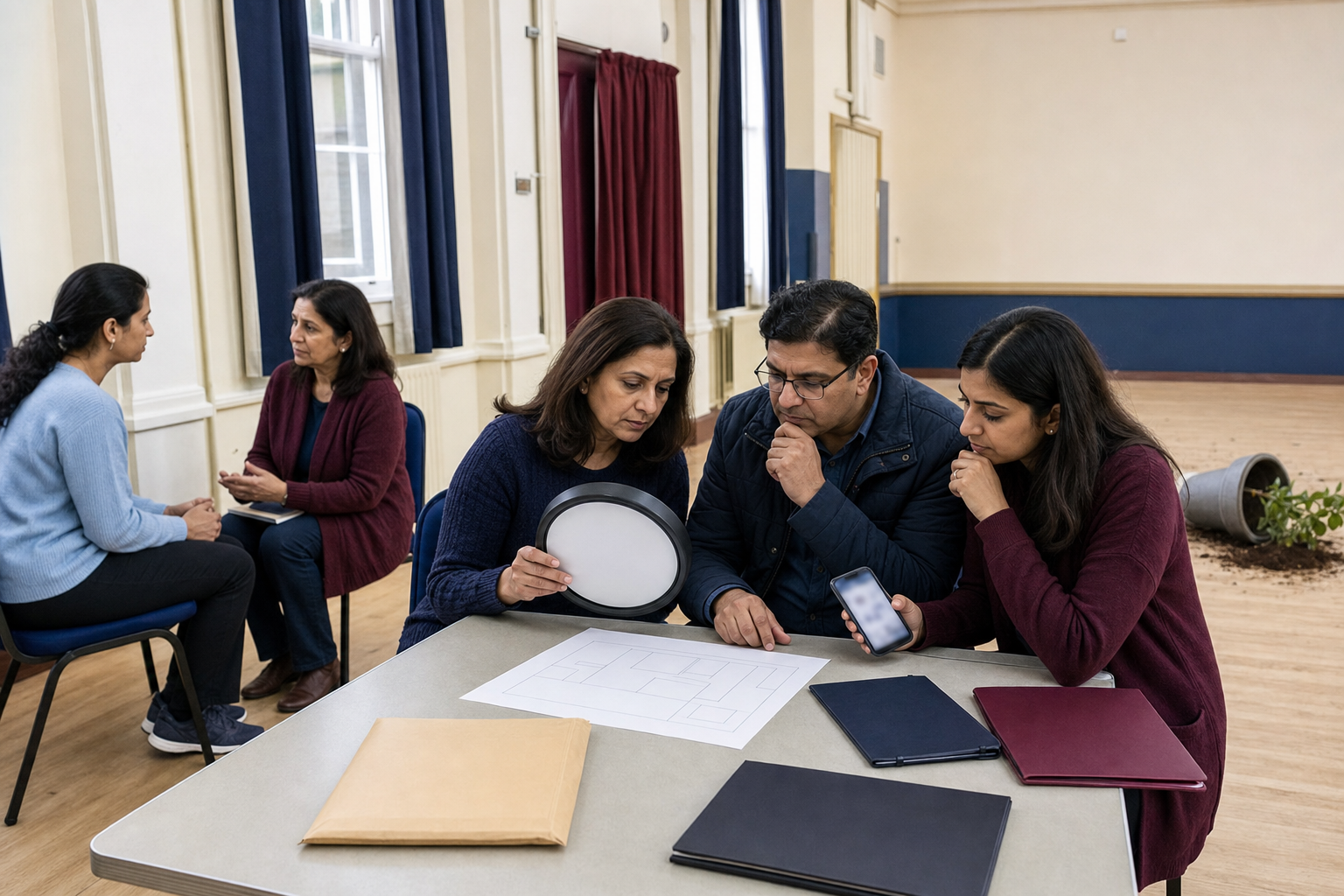
- A shared site plan showing entrances, exits, emergency access, the ceremonial area, equipment, and the places reserved for children, elders, or anyone needing assistance.
- Agreed thresholds for escalation, including unauthorised entry into a controlled area, threats, assault, equipment damage, or conduct that creates an immediate safeguarding risk.
- A clear method for obtaining and tracking an incident reference if something happens.
- A scheduled debrief after any serious disruption, with responsibilities and changes for the next event recorded in writing.
The legal framework matters, but it should be used accurately. The Equality Act 2010 protects people from discrimination on grounds including religion or belief. The Public Order Act 1986 addresses forms of threatening or abusive conduct, while police and prosecutors consider applicable guidance when evidence may show religiously aggravated offending. Organisers should record the conduct and any relevant words as faithfully as possible; they should not announce a legal conclusion before investigators assess the evidence.
If you believe an institution has discriminated against an individual or a Hindu organisation, preserve the correspondence and seek advice from a qualified UK solicitor. A community volunteer should not guess at legal remedies or procedural deadlines, because an inaccurate assumption can weaken an otherwise legitimate complaint.
Build a festival safety plan that families can actually follow
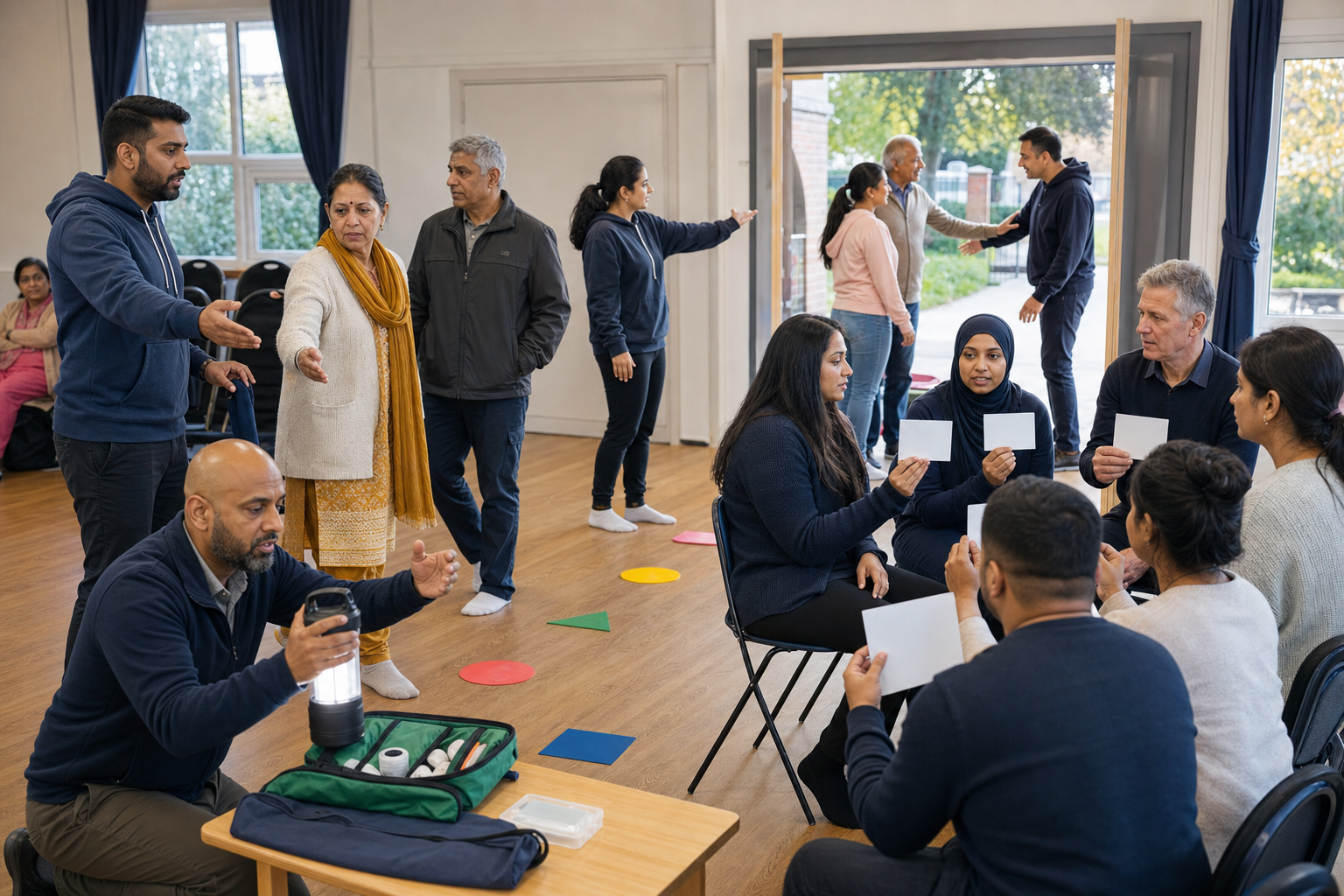
A risk assessment that sits in a folder is not a safety system. The useful test is whether a steward, parent, guest, or visiting dignitary knows what to do when an ordinary celebration suddenly becomes tense. Give people short instructions and distinct responsibilities.
- Map movement before discussing security. Mark how families enter and leave, where queues form, which routes must remain open, and where people can move without crossing a confrontation.
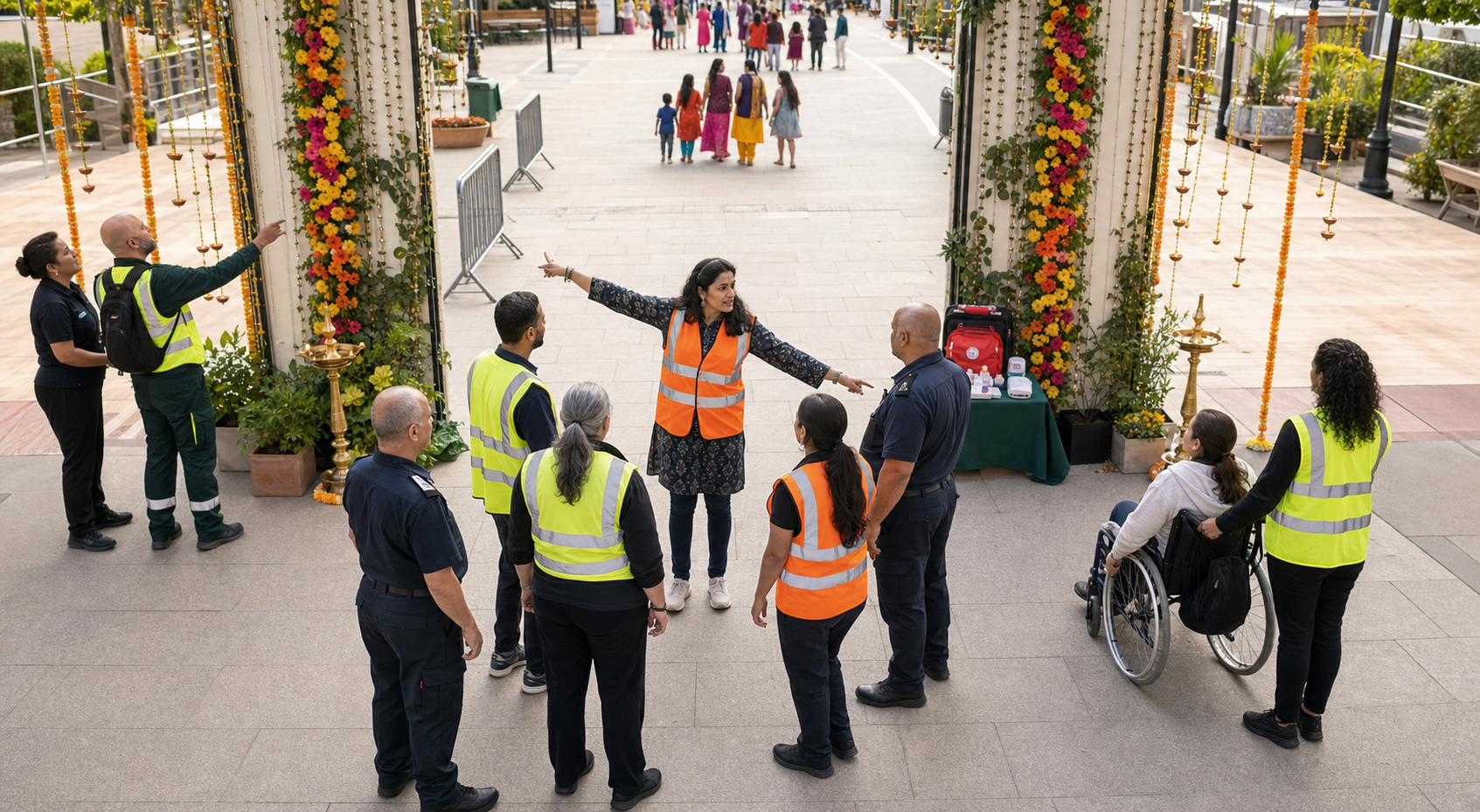
- Assign named roles. Identify an event lead, an authority liaison, a safeguarding lead, and an evidence-log keeper. One person should not try to perform all four jobs during an incident.
- Brief stewards on observable triggers. They need to recognise blocked exits, crowd compression, aggressive entry, threats, physical contact, and damage. Their task is to guide people, summon help, and reduce danger, not to pursue or punish anyone.
- Create a supervised safe area. Children, elders, and distressed attendees need a known place away from entrances, loud disputes, ceremonial fire, and unsecured equipment. Parents should be told where it is at the start.
- Protect emergency access. Decorative barriers, food stalls, sound systems, and crowds must not obstruct the route needed by police, fire, or medical responders.
- Test the communication chain. Before opening, confirm who carries the relevant telephone numbers, who can use the public-address system, and how stewards receive an urgent instruction if normal sound equipment fails.
Visible perimeter management can remain friendly. A greeting point, clearly marked entrances, identifiable stewards, good lighting, and uncluttered routes tell ordinary guests where to go while making unauthorised interference easier to notice. The aim is confident hospitality, not the atmosphere of a checkpoint.
First-aid, bystander-intervention, de-escalation, and responsible self-defence awareness can strengthen preparedness. Any self-defence component should be led by a suitable instructor and centred on awareness, escape, protection of vulnerable people, and summoning help. It must never drift into retaliatory patrols, collective suspicion, or amateur enforcement.
Safeguarding continues after everyone goes home. A child who saw adults being threatened may become reluctant to attend the next celebration even if no physical injury occurred. Offer parents a factual account of what is known, explain what will change, create space for age-appropriate questions, and provide counselling signposting where distress persists. Do not pressure families to return before they feel ready.
Respond firmly without letting claims outrun evidence
During an active disturbance, move people away from danger and contact emergency services. Once immediate safety is under control, the quality of your documentation will determine whether authorities can reconstruct what happened. Social-media reach is not a substitute for an evidence file.
- Keep a chronological log of what was seen, heard, reported, and done. Mark clearly when an entry records a witness account rather than the log keeper’s own observation.
- Preserve original photographs and videos. Do not crop, caption, compress, or repeatedly forward the only copy.
- Record where each image was made, who holds the original, and whether that person is willing to provide it to investigators.
- Photograph damaged equipment and keep related repair or replacement records.
- Invite witnesses to write independent accounts before group discussion reshapes their memories. Ask for actions and exact words, not conclusions about identity or motive.
- Keep the incident reference, authority contact, submitted material, and subsequent correspondence in one controlled record.
Public communication should separate three kinds of information:
- Confirmed: the event’s status, location, broad sequence, documented damage, actions taken by organisers, and authority actions that can be substantiated.
- Alleged: conduct, words, motives, or associations described by witnesses but not yet established.
- Unknown: identities, organisational links, planning by others, or the full sequence outside the available footage.
This distinction is especially important when short video clips circulate. A clip may establish that a tense exchange occurred while revealing little about what preceded it, what happened outside the frame, or whether a claimed institutional affiliation is genuine. State that uncertainty. Do not publish identifying details of minors, encourage online identification campaigns, or convert an allegation against individuals into an accusation against Muslims as a whole.
Precision is not weakness. You can call conduct anti-Hindu when the available evidence supports that description, request a full and transparent investigation, and demand an explanation for an inadequate response. The strongest advocacy asks for identifiable outcomes: evidence reviewed, witnesses contacted, applicable offences considered, victims updated, response delays examined, and planning changed before the next event.
Make one committee member responsible for follow-through. An incident can disappear between organisations when everyone assumes someone else is tracking it. Keep a dated record of questions sent, answers received, promised actions, and unresolved points. Publish an appropriately redacted update to the community so families can see whether accountability is moving or stalled.
Make interfaith cohesion operational before the next crisis
Interfaith cohesion should never operate as a gag order on Hindus. A relationship that survives only when intimidation goes unnamed is not trust. Genuine cohesion allows Hindu leaders to describe harm clearly while Muslim, Christian, Jewish, Buddhist, Jain, Sikh, and other neighbours defend the equal right to worship and celebrate.
Begin with Dharmic cooperation. Ahimsa, seva, satya, daya, and maitri give Hindu, Buddhist, Jain, and Sikh organisations a practical language for non-violence, truthful advocacy, compassion, and public service. Sikh commitment to sarbat da bhala likewise directs attention to the welfare of all. These principles do not erase theological differences; they make coordinated civic action possible.
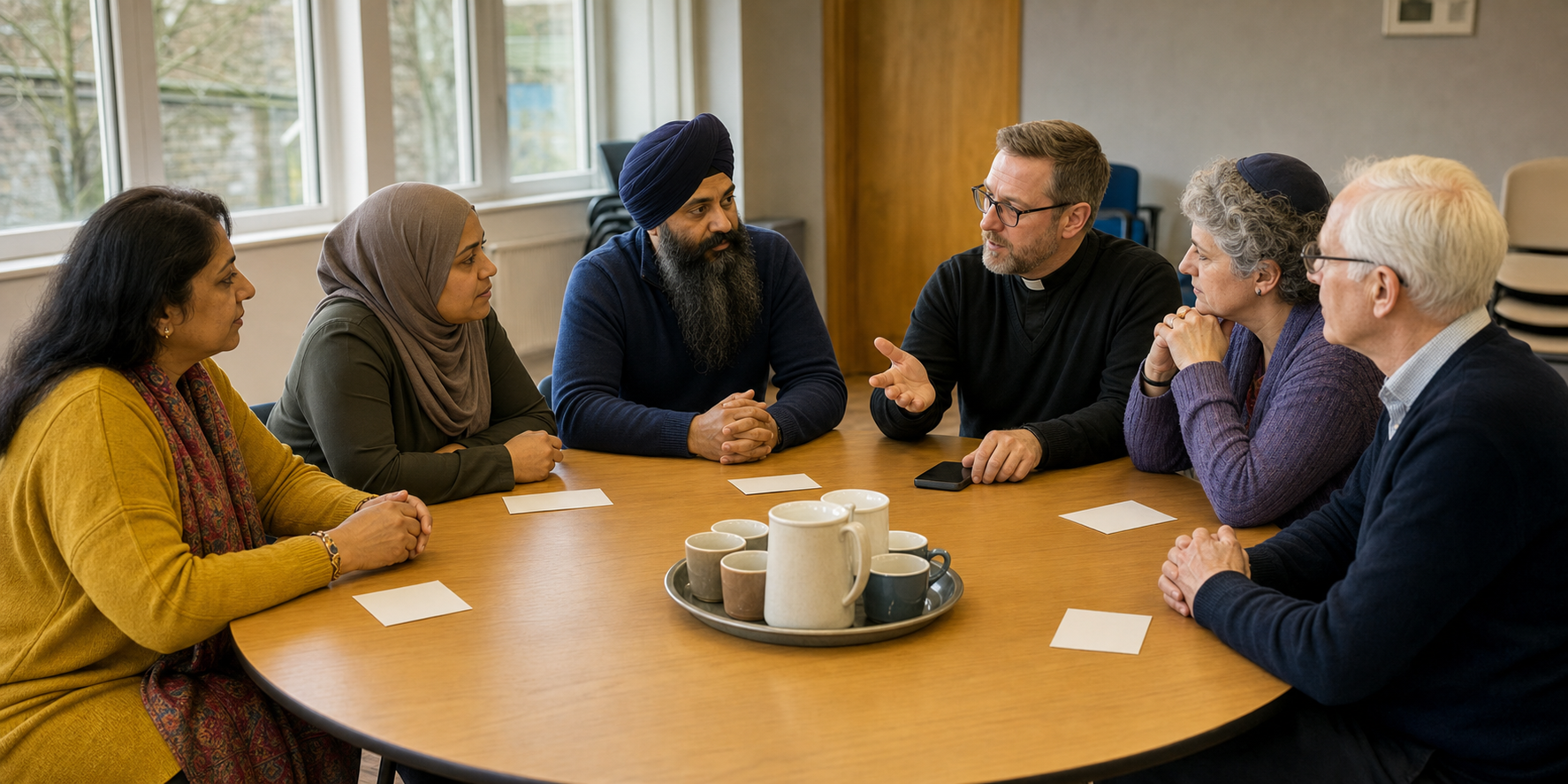
The Hertsmere model of structured dialogue, open houses, shared service, youth work, and accountable civic partnership shows what useful contact looks like. People build trust more reliably while solving a problem together than while exchanging ceremonial compliments from a stage.
- Hold reciprocal open houses. Explain worship, food practices, sacred objects, festival customs, and visitor etiquette in plain language, while leaving room for respectful questions.
- Run shared seva. Food relief, community kitchens, environmental care, and elder support give volunteers a common task and make relationships less dependent on senior leaders.
- Create a youth project. Young people can co-design arts, sport, or digital-storytelling work that strengthens cultural confidence without rewarding antagonism.
- Agree on a crisis contact protocol. Each participating institution should maintain a current contact who can verify facts, prevent rumours, and coordinate a principled public response.
- Prepare a joint-statement framework. It should affirm the right of Hindu families to gather safely, condemn intimidation as conduct rather than as a communal identity, support due process, reject collective blame, and name the next practical action.
- Schedule contact around the civic calendar. Meet before major public observances, not only after something goes wrong, and check dates across traditions so participation is genuinely possible.
A focused 90-day programme
You do not need a large new institution to begin. A credible 90-day programme can turn goodwill into visible capacity:
- Map temples, gurdwaras, Buddhist and Jain organisations, mosques, churches, schools, voluntary groups, council teams, and relevant emergency-service contacts.
- Convene a working group with a concise purpose, named representatives, rotating facilitation, safeguarding expectations, and transparent responsibility for any shared budget.
- Pilot one open-house programme across participating sites, with clear visitor briefings and accessible opportunities to ask questions.
- Deliver one shared seva project addressing a local need such as food support, youth enrichment, elder isolation, or care for public space.
- Publish a contact list and calendar so residents know what exists, where to participate, and whom to approach.
Over the following six to twelve months, partners can add a quarterly dialogue with a concrete theme, a youth ambassadors programme, and a community arts or heritage event. Keep the programme accessible through step-free venues, hearing support, quiet space, plain-English information, translated summaries where feasible, childcare options, and help with transport barriers.
Measure whether the relationships are becoming useful. Track which organisations participate, how often people volunteer across institutional boundaries, how many new working contacts endure after an event, and whether attendees report greater trust, belonging, and perceived fairness. Also record who is missing. A well-attended programme can still fail if the same established circle attends every time while young people, elders, recent arrivals, or smaller traditions remain outside it.
Key takeaways
- Equal protection means consistent risk assessment, effective response, fair investigation, and documented learning – not merely permission to hold an event.
- Give safety responsibilities to named people and rehearse the communication chain before families arrive.
- Separate confirmed facts, witness allegations, and unknowns in every incident update.
- Challenge Hinduphobia through precise evidence and specific demands, without assigning collective guilt to another faith.
- Build interfaith trust through repeated service, youth work, open houses, and crisis protocols that remain useful when relations are tested.
Before your next public celebration, secure the authority contacts, walk the site with your safeguarding lead, test the escalation route, and invite trusted Dharmic and interfaith partners into the planning. That is how equal protection becomes something families can see rather than a promise they are asked to trust.
References
- DharmaRenaissance Blog – Harrow, London Holika Dahan Disruption: What Happened, Why It Matters, and a Path to Unity
- DharmaRenaissance Blog – Hertsmere Community Conference at Wyllyotts Theatre: Interfaith Collaboration for Cohesion
