
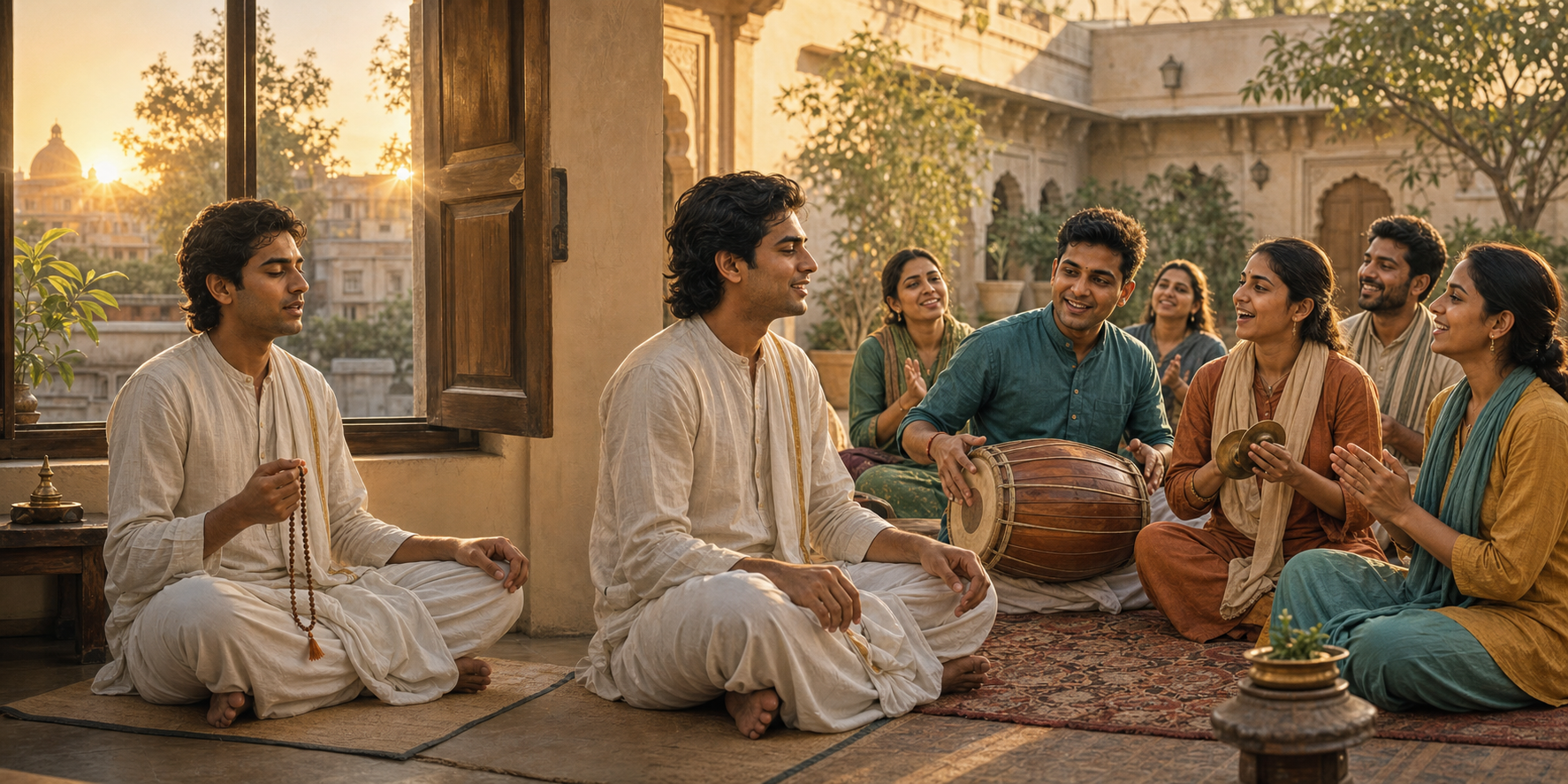
If chanting comes easily in a gathering but disappears from your life when you return home, you do not need to choose between private discipline and communal joy. You need to understand what each setting is meant to do.
Personal chanting teaches you to return your attention to the Divine name without waiting for the right atmosphere. Sankirtana lets that attention become a shared offering through listening, leading, and responding. Practised together, they keep devotion from becoming either an isolated routine or a passing musical experience.
The first choice: chant alone or enter the circle?
Strictly speaking, sankirtana is congregational chanting of the Divine names. Quiet or audible mantra repetition by yourself is personal chanting; in many traditions, repeated personal mantra practice is called japa. The distinction is useful because the two settings ask different things of you.
When you chant alone, there is no collective rhythm to carry a wandering mind. You learn to begin without excitement, hear the mantra carefully, and return after distraction. When you chant with others, you learn receptivity. You listen before responding, follow rather than compete with the leader, and contribute your voice without trying to dominate the sound.
| Your immediate need | Practice to favour | What to do first |
|---|---|---|
| Build steadiness on an ordinary day | Personal mantra repetition | Attach chanting to a dependable daily cue and keep the mantra consistent. |
| Move beyond isolation or self-consciousness | Congregational sankirtana | Stand where you can hear both the leader and the responding group. |
| Welcome people with no prior training | Simple call-and-response kirtan | Explain the response briefly, then let participants learn by hearing. |
| Connect devotion with understanding | Chanting followed by study or discussion | Let the singing remain uncluttered, then give questions their own space. |
Do not demand the same experience from both. Your personal practice may feel plain because it lacks instruments and a room full of voices. That plainness is not failure. A gathering may feel immediately uplifting because rhythm, melody, and shared participation support attention. That uplift is valuable, but it does not remove the need to cultivate steadiness when the gathering ends.
Make personal chanting a doorway, not a private performance
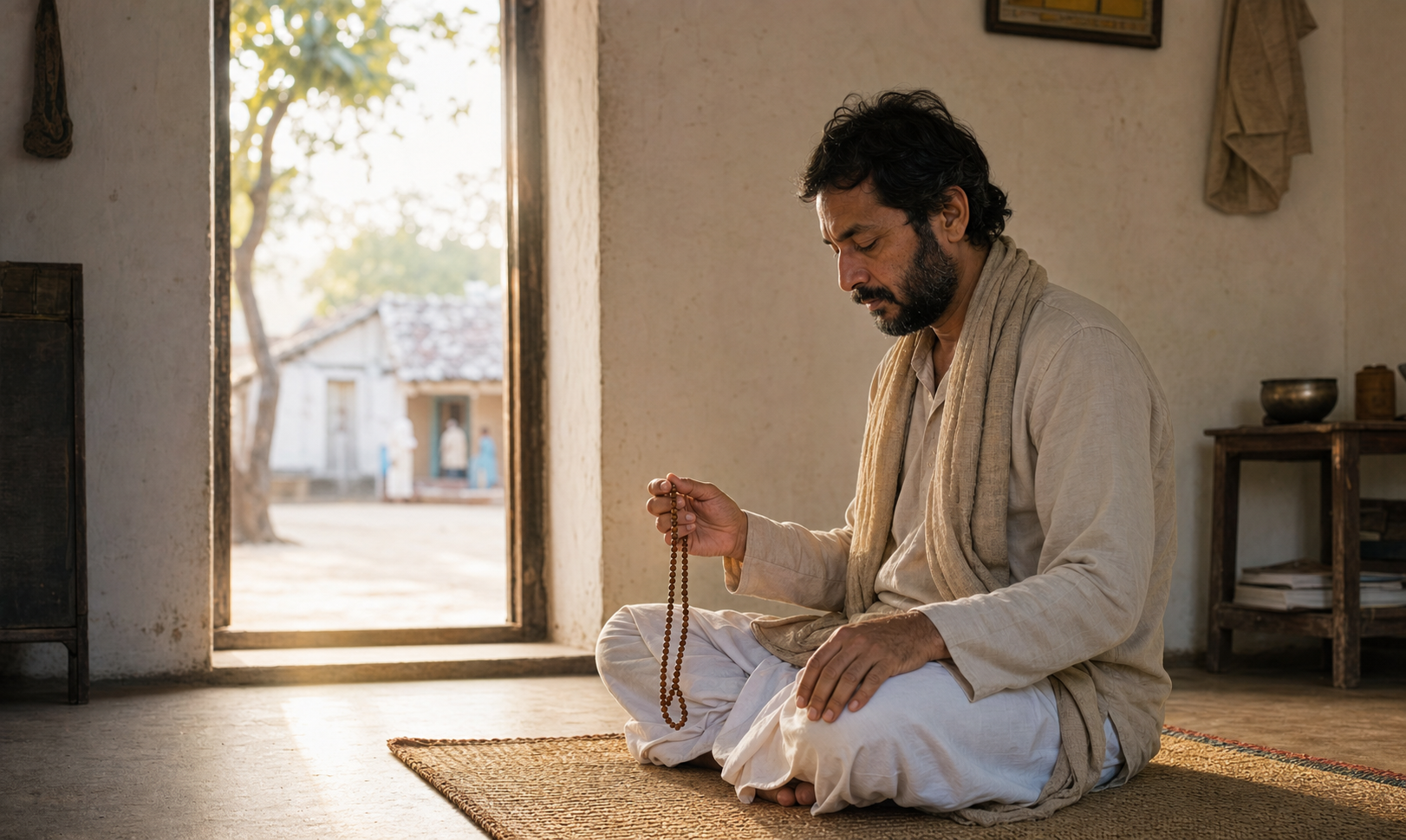
The most useful personal practice is the one you can resume without renegotiating it every day. Ambitious plans often create avoidable friction: a special room must be available, the mind must already be calm, or a particular mood must appear. Build around a stable cue instead. Chant after a regular act in your day, before competing demands scatter your attention.
- Choose the sacred formula with care. If you belong to a lineage or have received guidance from a guru, follow that instruction. The Hare Krishna maha-mantra is the best-known expression of Gaudiya Vaishnava sankirtana, but a mantra should not be treated as a disposable sound selected only for its mood.
- Begin by hearing. Pronounce the mantra clearly enough that your attention can rest on the sound. When the mind leaves, return to the next name rather than turning the distraction into a debate with yourself.
- Keep the musical demand modest. Melody can support remembrance, but personal chanting does not require vocal display. If ornamentation makes you listen to your own performance instead of the name, simplify it.
- Let repetition become attention, not automation. Familiarity can either deepen listening or make the mouth continue while the mind goes elsewhere. Notice which is happening, then restore deliberate hearing.
- Carry the practice into conduct. Before moving on, identify a concrete act of patience, honesty, restraint, or service that should express the devotion you have just cultivated.
The movement from hearing to participation matters. Many people first encounter bhakti by hearing others chant, then find themselves responding, asking what the mantra means, and becoming curious about scripture and daily discipline. Treat that sequence as a path you can continue consciously: hear, chant, inquire, study, and live what you are learning.
Do not judge a personal session solely by whether it produced calm. Some days the practice will reveal how scattered you already are. The useful action on such a day is not to manufacture a devotional feeling. It is to notice that you wandered and return to the sacred sound. That return is the discipline being formed.
Lead congregational chanting so others can actually join
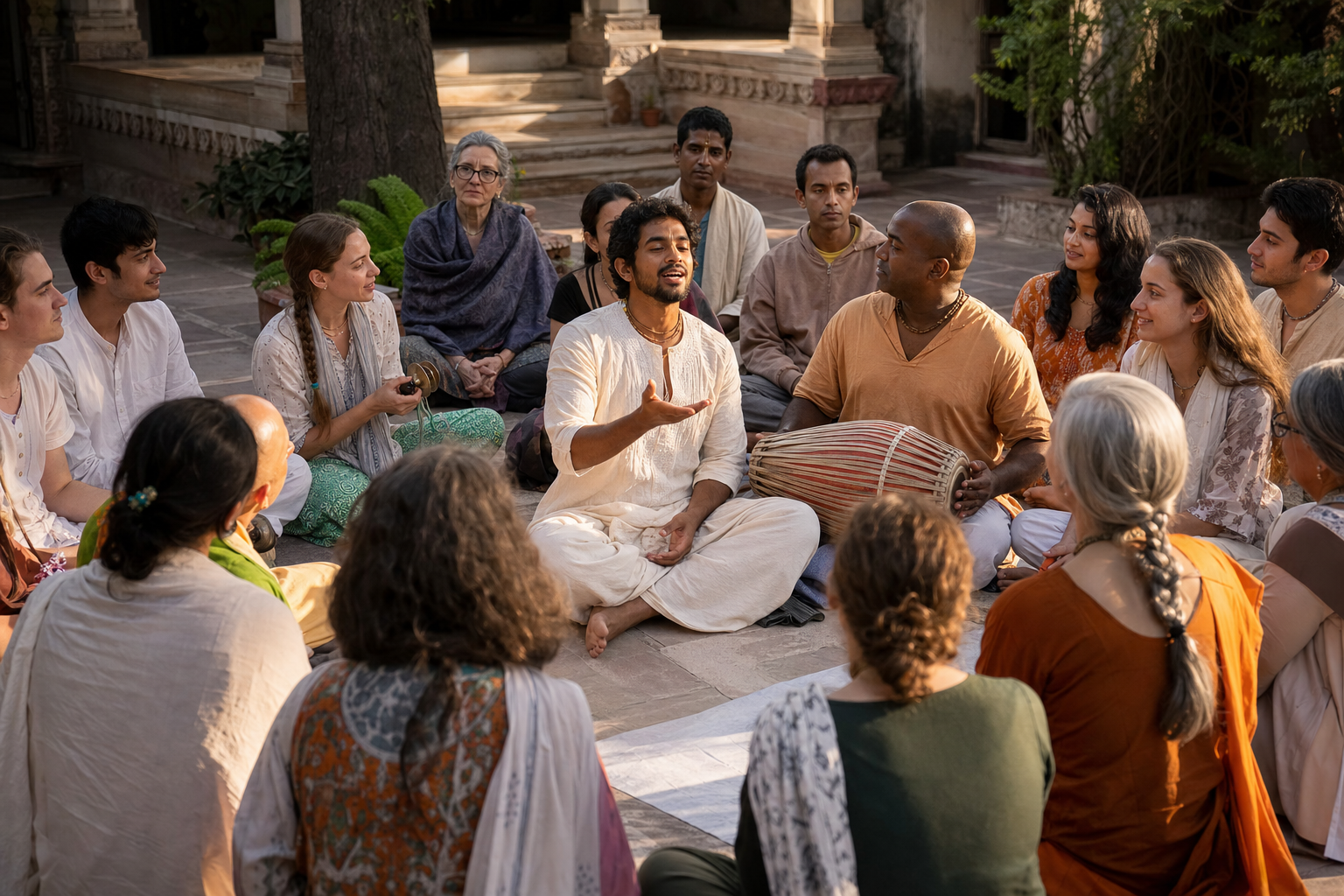
A sankirtana gathering is not made inclusive merely by admitting everyone into the room. People must be able to understand how to participate. Call-and-response lowers that threshold because nobody needs to know an entire composition before offering a voice. The leader carries a practical responsibility: make the response audible, learnable, and singable.
- Offer a manageable phrase. If participants repeatedly enter late or fall silent, the melodic line may be too long or too ornamented. Simplify before assuming they are uninterested.
- Keep the pitch accessible. A leader may be comfortable at the top of a range that strains everyone else. Listen to the responding voices and adjust.
- Let rhythm support the mantra. Percussion should help the group enter together. If participants can hear the instruments but not the sacred names, the balance has been lost.
- Make leadership visible without making it theatrical. Newcomers should know when to listen and when to answer. Clear pacing usually serves them better than lengthy explanations during the chant.
- Leave room for quieter participation. Volume is not a measure of devotion. Some people will sing softly, listen before joining, or remain attentive without displaying emotion.
- Close deliberately. A clear ending allows the gathered energy to settle into prayer, silence, teaching, prasada, or service rather than dissolving into confusion.
Public sankirtana adds another responsibility. Keep pathways open, respect the norms of the place, and allow people to decline without pressure. The public chanting associated with Lord Chaitanya was presented as an inclusive and practical path, not as permission to turn sacred sound into territorial noise. Joy and consideration belong together.
Musical excellence can serve sankirtana, but it must remain service. A technically accomplished leader who leaves no space for the congregation has changed the relationship from participation to spectatorship. Ask a simple diagnostic question: can an unfamiliar person hear the pattern, respond without embarrassment, and remain part of the sound? If not, improve the facilitation before adding complexity.
This participatory structure also helps explain why sacred group recitation appears across Dharmic traditions. Sikh communities gather as sangat around kirtan; Buddhist communities undertake mantra and sutra recitation; Jain communities practise forms including stavan and samayik. These are meaningful parallels, not interchangeable theologies. Use them to recognise a shared Dharmic confidence in disciplined sacred sound while respecting each tradition’s objects of devotion, teachings, and inherited forms.
Judge the practice by what changes after the music
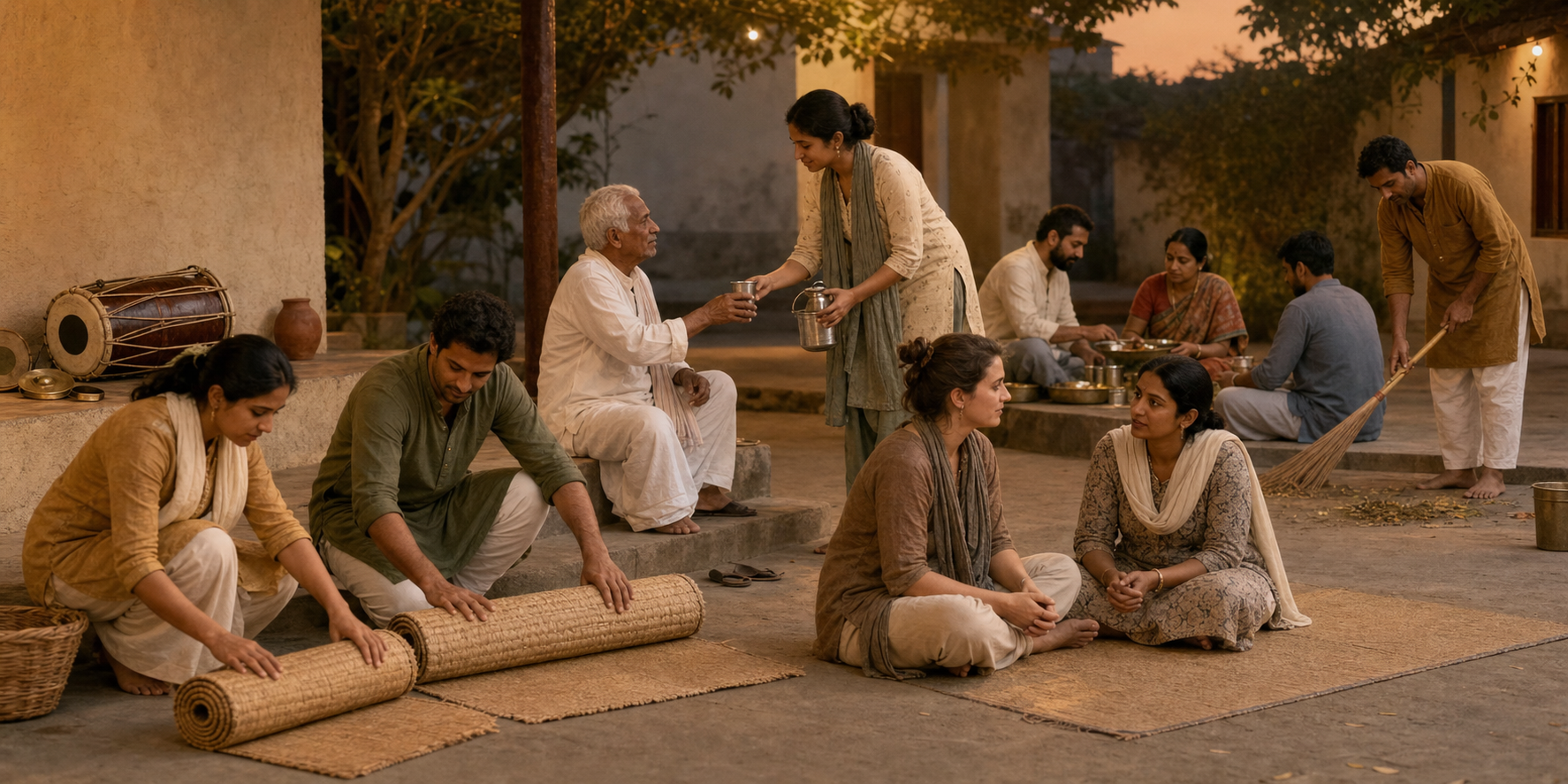
Rhythm, melody, repetition, and collective voices can make attention easier to gather. Shared music-making has also been associated with social bonding and emotional regulation. These human effects help explain why a newcomer may feel welcomed or settled before understanding the theology. They do not, by themselves, define the spiritual purpose of sankirtana.
Within bhakti, the Divine name is understood as non-different from the Divine. Chanting is therefore not merely a concentration exercise with a sacred label attached. It is invocation, remembrance, and service. This is why reducing sankirtana to a technique for producing pleasant feelings misses its centre, even when those feelings are genuine.
Use more demanding questions when you examine the fruit of your practice:
- Are you becoming more willing to hear, or only more eager to lead?
- Can you return to the name after distraction without irritation?
- Does the humility expressed while chanting survive disagreement after the gathering?
- Has devotional joy made you more available for service?
- Are you becoming curious about the mantra’s tradition, scriptures, and ethical demands?
- Does the gathering make room for people beyond its established inner circle?
These questions protect you from unreliable measures. A large crowd can remain passive. Loud singing can hide poor listening. Strong emotion can fade without changing conduct. Musical polish can coexist with vanity. Conversely, an unadorned gathering can cultivate careful hearing, mutual regard, and durable devotion.
When a gathering feels flat, diagnose the form before judging the practice. If newcomers remain silent, shorten the response and clarify the cue. If the room sounds competitive, reduce ornamentation and bring the congregation back into focus. If the energy rises during the music but vanishes afterward, connect the chanting to study, hospitality, prasada, or a shared act of service. The point is not to preserve a spiritual high. It is to give devotion somewhere to go.
Key takeaways
- Sankirtana is congregational chanting; personal mantra repetition prepares for it and carries its remembrance into daily life.
- Use personal practice to train steady hearing rather than to recreate the excitement of a gathering.
- In collective chanting, a clear response, accessible pitch, steady rhythm, and visible cues matter more than vocal display.
- Welcome newcomers through participation first, then give space for meaning, questions, scripture, and sustained practice.
- Recognise parallels with Buddhist, Jain, and Sikh sacred recitation without pretending that distinct Dharmic practices are doctrinally identical.
- Judge the fruit by humility, attention, ethical conduct, inquiry, and service after the singing ends.
At your next opportunity, make one deliberate move in each direction. Give the Divine name a dependable place in your own day, then enter or help create a gathering in which another person can participate without prior expertise. Personal steadiness and collective generosity are not rival paths. Each tests whether the other is becoming real.
References
